Ditching the beach for a winter city Brazilian couples start new lives in Winnipeg
Read this article for free:
or
Already have an account? Log in here »
To continue reading, please subscribe:
Digital Subscription
One year of digital access for only $75*
- Enjoy unlimited reading on winnipegfreepress.com
- Read the E-Edition, our digital replica newspaper
- Access News Break, our award-winning app
- Play interactive puzzles
*Billed as $5.77 plus GST every four weeks. After 52 weeks, price increases to the regular rate of $19.95 plus GST every four weeks. Offer available to new and qualified returning subscribers only. Cancel any time.
Monthly Digital Subscription
$4.99/week*
- Enjoy unlimited reading on winnipegfreepress.com
- Read the E-Edition, our digital replica newspaper
- Access News Break, our award-winning app
- Play interactive puzzles
*Billed as $19.95 plus GST every four weeks. Cancel any time.
To continue reading, please subscribe:
Add Free Press access to your Brandon Sun subscription for only an additional
$1 for the first 4 weeks*
- Enjoy unlimited reading on winnipegfreepress.com
- Read the E-Edition, our digital replica newspaper
- Access News Break, our award-winning app
- Play interactive puzzles
*Your next Brandon Sun subscription payment will increase by $1.00 and you will be charged $17.95 plus GST for four weeks. After four weeks, your payment will increase to $24.95 plus GST every four weeks.
Read unlimited articles for free today:
or
Already have an account? Log in here »
Hey there, time traveller!
This article was published 10/10/2019 (2557 days ago), so information in it may no longer be current.
They left Brazil’s vibrant culture, beaches and balmy weather for Winnipeg’s frozen, flooded flatlands; and they couldn’t be happier.
Hundreds of young Brazilian professionals have immigrated to Manitoba in the last three years and, rather than withering in the cold quiet, they’re feeling safe and optimistic and they are thriving.
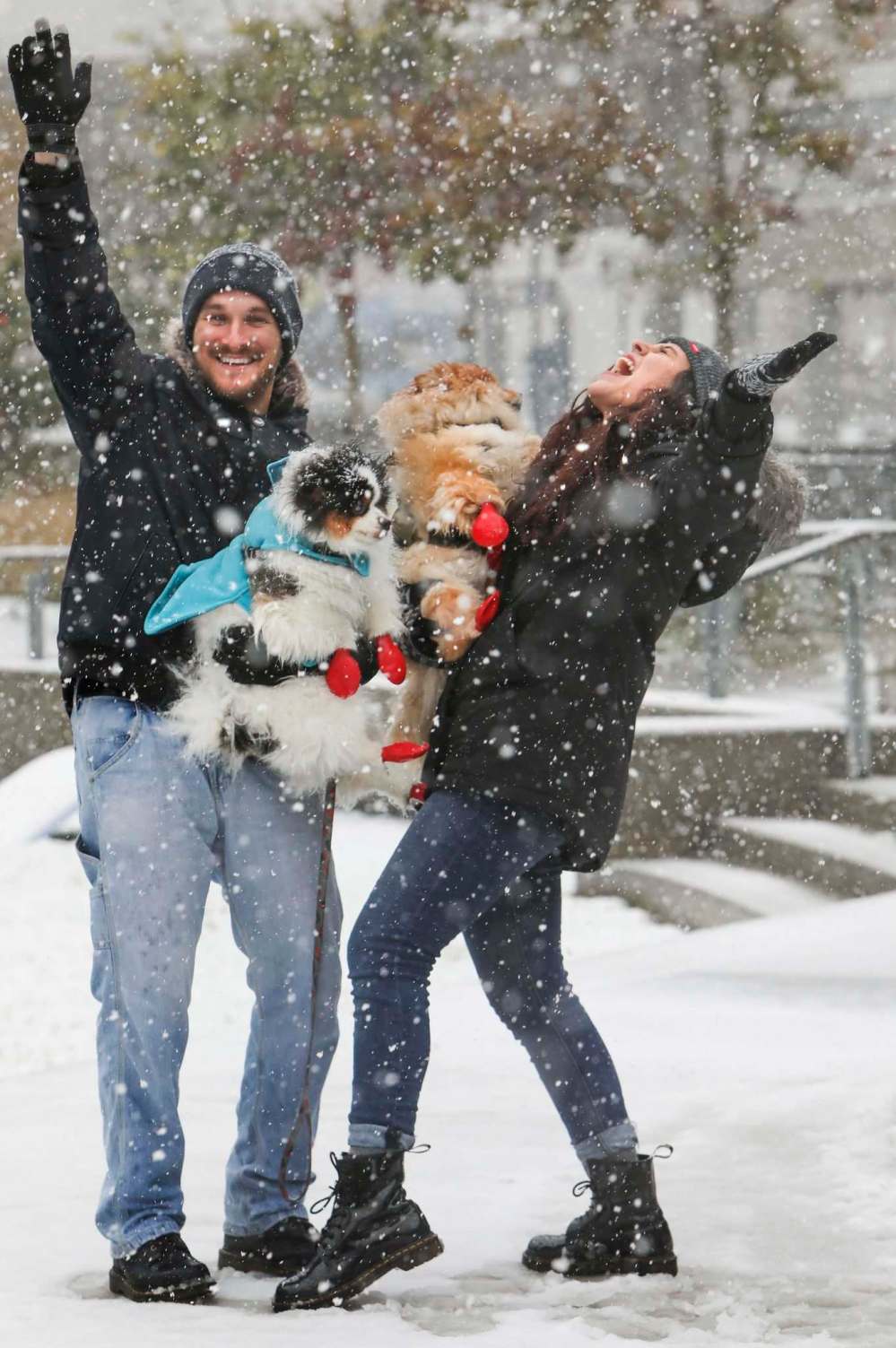
“I’m confident I know I can contribute to Winnipeg,” said Bernardo Mello. He left his job at the Brazilian Development Bank in Rio de Janeiro at the peak of his career. He immigrated to Canada with his wife, Melissa Pereira, and two German Spitz dogs, Bob and Lemmy, in April. He hasn’t looked back.
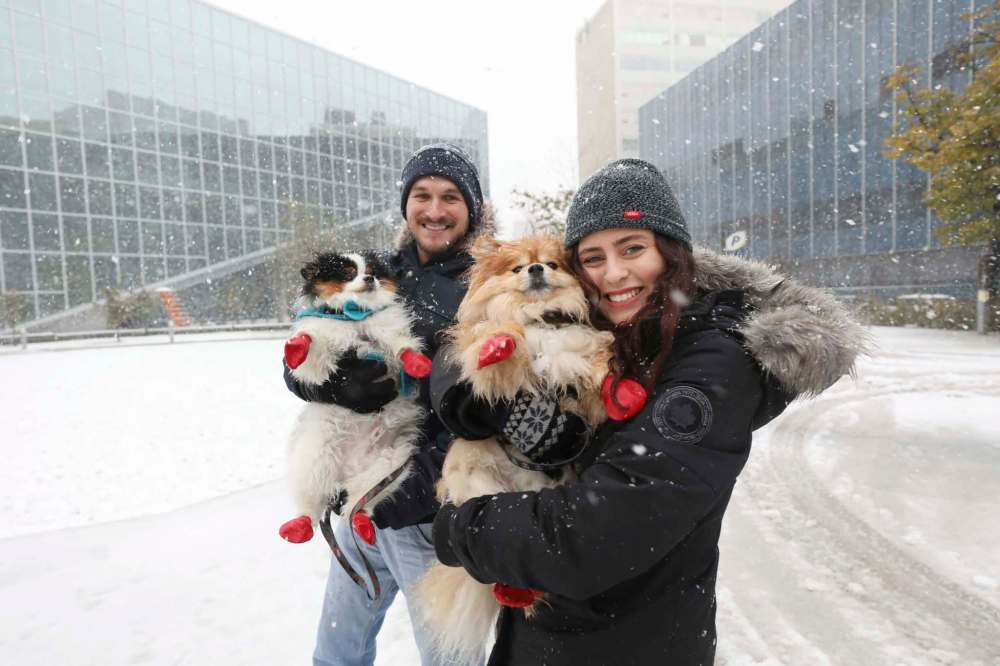
“Brazil is very unstable,” said the 35-year-old who holds a master’s degree in business administration.
He doesn’t like where his home country’s economy and politics are headed, especially since the election of far-right President Jair Bolsonaro. Mello and Pereira, who is studying business administration at Red River College, had visited Canada in the past and did their homework before choosing to settle in Winnipeg.
“I believe Winnipeg is growing, and it’s in the most stable province in Canada,” said Mello. He and Pereira are looking at neighbourhoods where they will buy a home and have children one day. For now, they live in an apartment with their dogs in downtown Winnipeg — a much safer place than Rio, where gun violence and dangerous driving are rampant, he said.
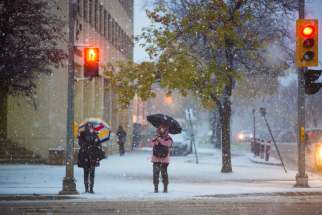
“There’s no traffic here,” said Mello, who loathed the one-hour commute each way to work and back in Rio. He’s started his job search here and was looking forward to experiencing his first snowfall. “I’m excited,” he said.
Immigration from Brazil growing in Manitoba
2019: 229 (as of June)
2018: 226
2017: 154
2016: 64
2015: 48
75 per cent of immigrants from Brazil have come to Manitoba through the provincial nominee program.
In 2018, Brazil was the sixth-largest source country for all international students to the province, with 610 valid study permit-holders at year end.
— Source: Manitoba government
In the last three years, more than 700 immigrants from Brazil have settled in Manitoba. Most are skilled workers who applied through the provincial nominee program. More than 100 Brazilians were hired by SkipTheDishes after the Winnipeg-based tech company conducted recruitment trips to Brazil in late 2017, and again in the middle of 2018, a company spokesperson said.
In 2016, when Kathy Pacheco and her husband immigrated from Curitiba, Brazil, they didn’t know any Brazilians in Winnipeg.
‘I believe Winnipeg is growing, and it’s in the most stable province in Canada.’– Bernardo Mello
“Now I know 20 to 25 couples,” she said before a weekly gathering of Brazilian women at one of their homes downtown.
“A lot them are building families and getting houses,” said Pacheco. The South Americans left their home country for many of the same reasons as generations of Winnipeg immigrants before them.
“In Brazil, things now are very difficult,” said Pacheco, who has university degrees in business finance and education. “The politics are very extreme, there’s a lot of violence, there’s no jobs. It’s not the place I wanted to raise my kids,” said the 32-year-old. She hopes she and her husband will have two children some day. For now, they’re still getting settled. She’s working at MPI and wants to become a certified accountant.
She’s grateful for the weekly gathering of the women from Brazil. “We start talking and we have the same problems and issues,” she said. “It’s very, very important emotionally,” she said. “It’s hard when someone doesn’t have your same background.”
Her fellow expats understand when she talks about the quiet reserve of some Canadians, and how that can be “intimidating,” she said. “We are very welcoming and always talking and gesturing. Sometimes, people think we’re too much,” she said.
“We like to celebrate,” said Pacheco, who was looking forward to a “Canadian” Thanksgiving dinner one night this weekend followed by a Brazilian get-together the following night.
That “joie de vivre” is something English language tutor Janine Legal sees in her growing list of Brazilian clients, many of whom have become friends.
“I attended a Brazilian baby shower and what a sight to behold,” said Legal. “I’d never seen so many well-dressed people in a fancy room decorated top to bottom for a baby shower. And they have birthday parties every month for the first year of life. Brazilians love parties — for everything.”
carol.sanders@freepress.mb.ca

Carol Sanders
Legislature reporter
Carol Sanders is a reporter at the Free Press legislature bureau. The former general assignment reporter and copy editor joined the paper in 1997. Read more about Carol.
Every piece of reporting Carol produces is reviewed by an editing team before it is posted online or published in print — part of the Free Press‘s tradition, since 1872, of producing reliable independent journalism. Read more about Free Press’s history and mandate, and learn how our newsroom operates.
Our newsroom depends on a growing audience of readers to power our journalism. If you are not a paid reader, please consider becoming a subscriber.
Our newsroom depends on its audience of readers to power our journalism. Thank you for your support.
Related Articles
Storm continues to pound region; city, Hydro struggling to keep up with deteriorating conditions