Saying the names Curator moved by anger and sadness to create an exhibition celebrating the life stories of COVID’s earliest, most isolated victims
Read this article for free:
or
Already have an account? Log in here »
To continue reading, please subscribe:
Digital Subscription
One year of digital access for only $75*
- Enjoy unlimited reading on winnipegfreepress.com
- Read the E-Edition, our digital replica newspaper
- Access News Break, our award-winning app
- Play interactive puzzles
*Billed as $5.77 plus GST every four weeks. After 52 weeks, price increases to the regular rate of $19.95 plus GST every four weeks. Offer available to new and qualified returning subscribers only. Cancel any time.
Monthly Digital Subscription
$4.99/week*
- Enjoy unlimited reading on winnipegfreepress.com
- Read the E-Edition, our digital replica newspaper
- Access News Break, our award-winning app
- Play interactive puzzles
*Billed as $19.95 plus GST every four weeks. Cancel any time.
To continue reading, please subscribe:
Add Free Press access to your Brandon Sun subscription for only an additional
$1 for the first 4 weeks*
- Enjoy unlimited reading on winnipegfreepress.com
- Read the E-Edition, our digital replica newspaper
- Access News Break, our award-winning app
- Play interactive puzzles
*Your next Brandon Sun subscription payment will increase by $1.00 and you will be charged $17.95 plus GST for four weeks. After four weeks, your payment will increase to $24.95 plus GST every four weeks.
Read unlimited articles for free today:
or
Already have an account? Log in here »
Hey there, time traveller!
This article was published 05/05/2023 (1254 days ago), so information in it may no longer be current.
In the spring of 2020, Megan Davies was confronted by a terrifying number: 82 per cent of Canada’s first-wave COVID-19 deaths were residents of long-term care facilities.
Art preview
COVID in the House of Old
Curated by Megan Davies
- Millennium Library, 251 Donald St.
- To May 13
The failures of Canada’s residential care system would mount, and swiftly. Vulnerable people living out their last days in incredible isolation, with loved ones trying to eke out time with them through panes of glass. Burned-out care workers attempting to beat back the pandemic’s waves with dwindling resources. The loneliness and fear, the rage and grief.
These became defining, enduring images of COVID-19’s ravages on our most vulnerable population.
“As a historian of aging, as a caregiving daughter, as a former home support worker and researcher of home support and researcher of the history of residential care, I wasn’t at all surprised by what happened in care facilities,” Davies says.
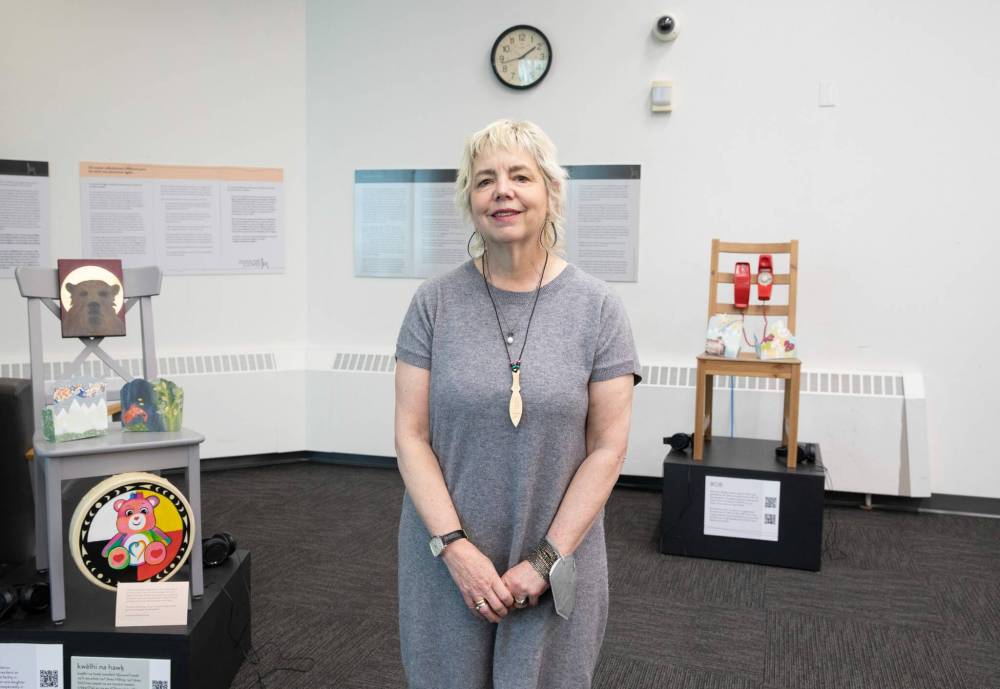
“But I was so sad. And I was so angry. And I just thought, ‘I don’t want to do a research project. I want to do something that is going to move people and make them think.’”
And what better way to do that than with stories? Davies is the curator, writer and interviewer behind COVID in the House of Old, a touring storytelling exhibit that is currently on view at the Millennium Library.
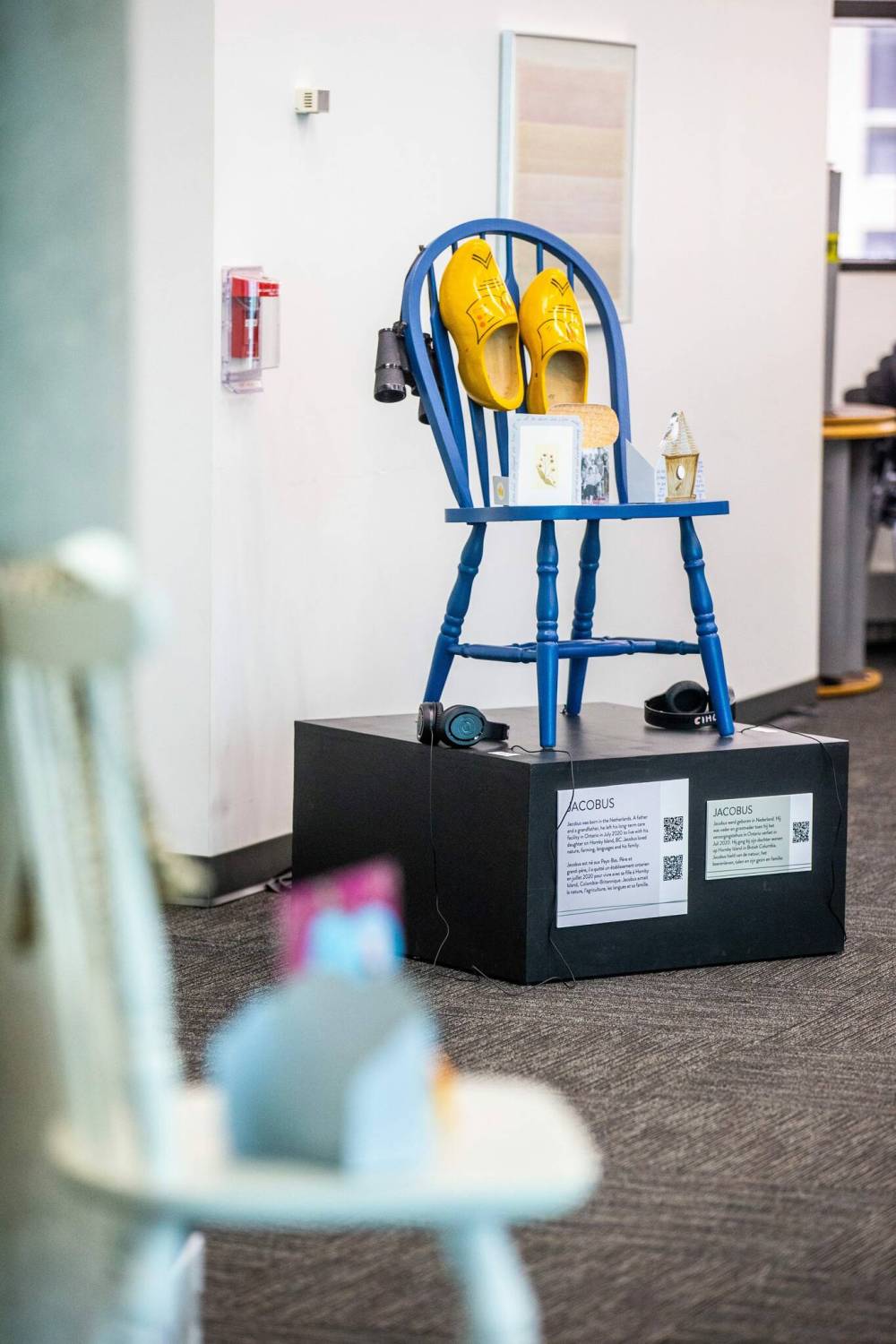
The exhibit is composed of seven wooden chairs, each representing a life altered forever by COVID’s wildfire presence in long-term care.
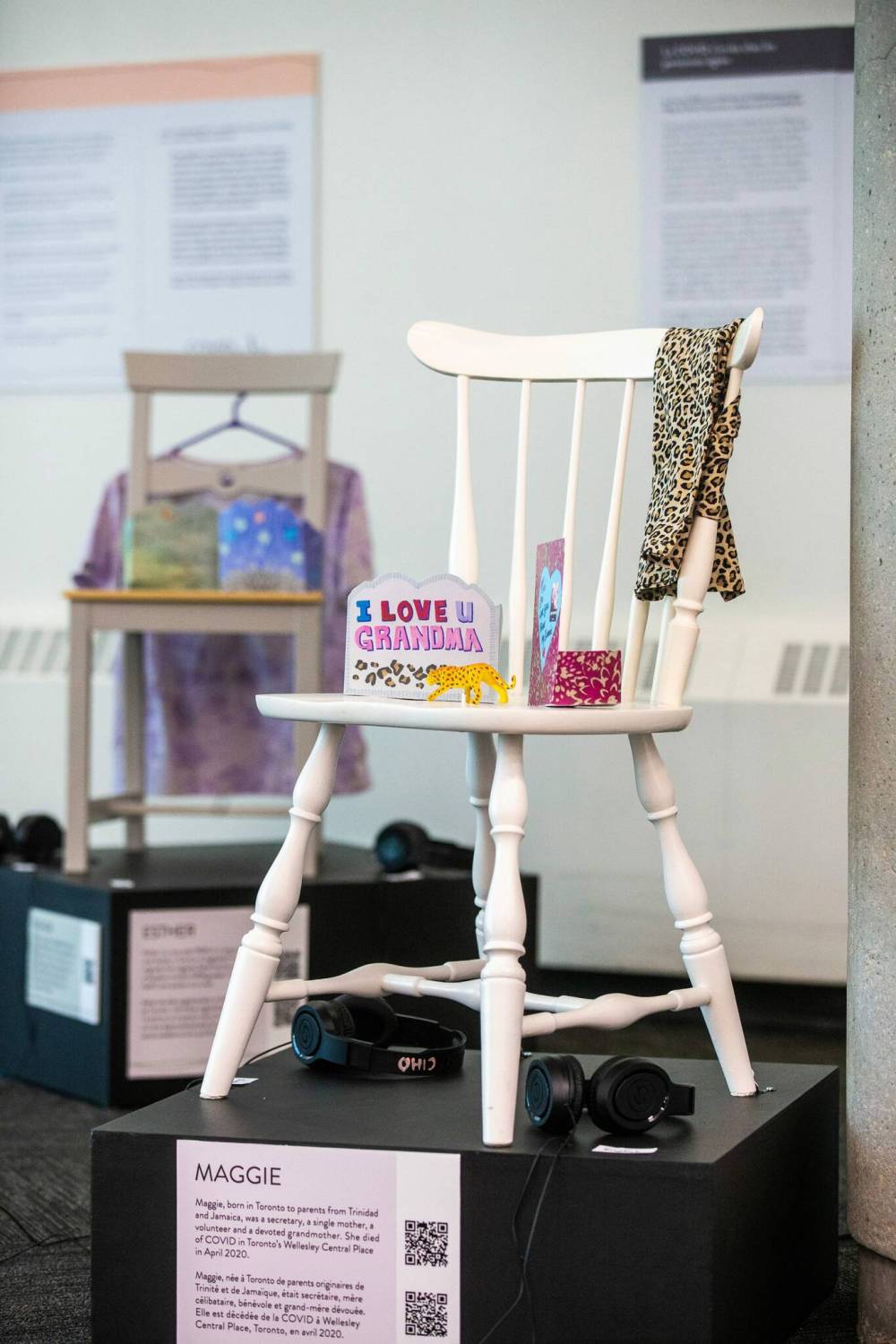
Each chair features audio from interviews conducted in 2021 with family members of residents who died from COVID-19 — such as Maggie, the scrappy single working mom born in Toronto to parents from Trinidad and Jamaica, who once picked up all her granddaughter’s friends during a blizzard so she could have a 10th birthday party.
Or Moon, a tiny woman with a big presence who raised a family in Hong Kong before moving to Vancouver and who never left the house without her purple silk scarf.
Others feature first-hand accounts from survivors and front-line care workers, such as Esther, a care aide in a long-term care facility in Toronto, originally from Uganda.
Of the seven chairs, five have placards in the person’s first language, which is part of the Canadian story of COVID in care, too, Davies says.
“When Moon, who spoke Cantonese, was dying, she was in a facility where there was nobody who spoke her language,” Davies says. ”That speaks volumes about the way in which we regard elderly people, and the way in which all the fault lines in the residential care system were laid bare by the pandemic.
“But the pandemic did not create those. Those are old fault lines.”
Indeed, many families were unable to care for their elders the way they wanted to in Canada’s long-term care facilities, which still bear the marks of colonialism.
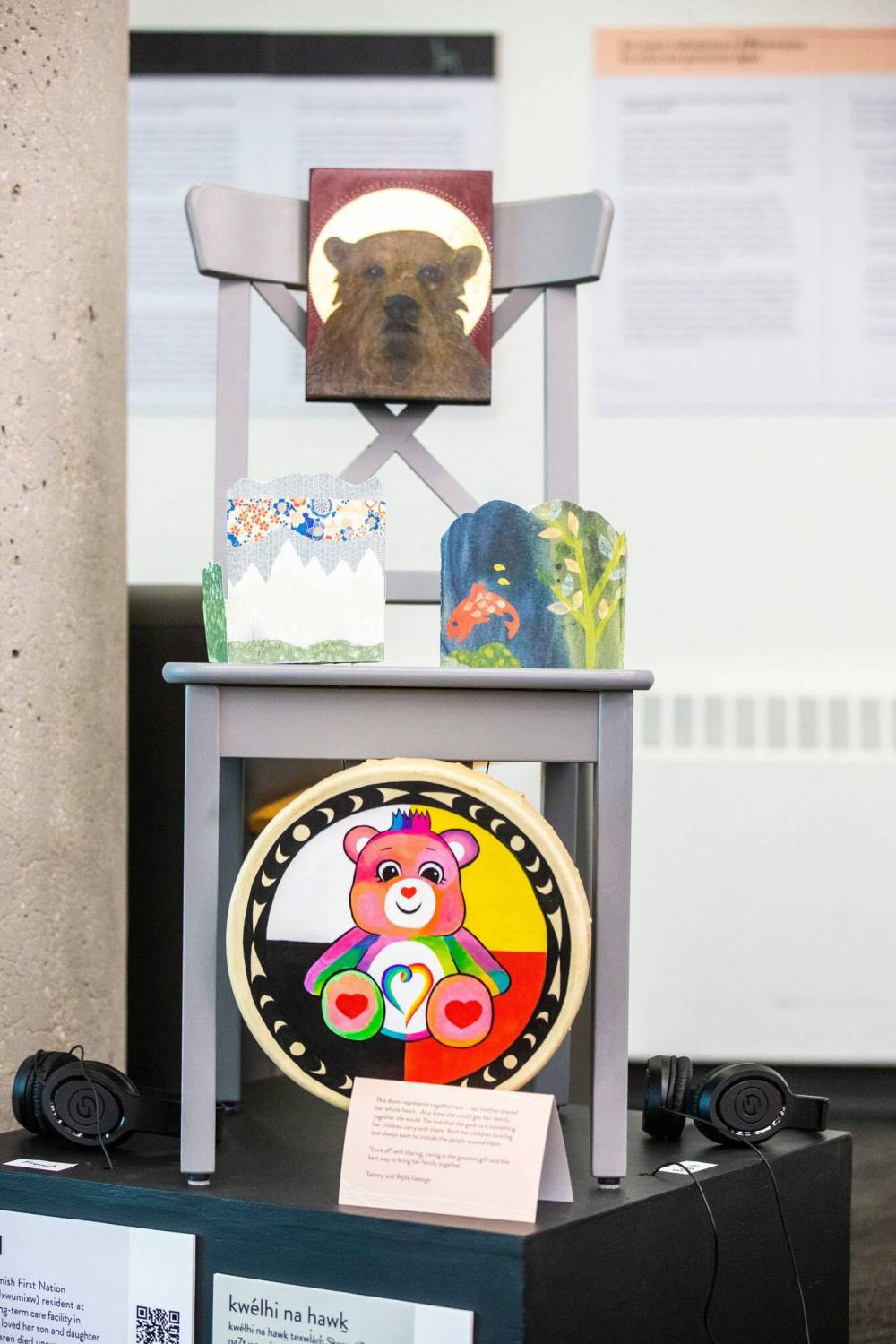
But COVID in the House of Old is also about reimagining elder care and, as Davies learned through her research, there are many other models that could serve as a framework — including the Wikwemikong Nursing Home in Northern Ontario, to which one of the chairs is dedicated.
“There’s a really important truth-and-reconciliation piece that was gifted to me in this project, and that’s the signposts the Wikwemikong Nursing Home chair provides for us about culturally appropriate care, about community, about humour, and fun,” Davies says. “A place where people are cared for with respect.”
Being entrusted with these stories has been a gift and a responsibility, Davies says.
“I call it the Kleenex project,” she says, choking up. “And I have a relationship with chairs, right? They are people to me.”
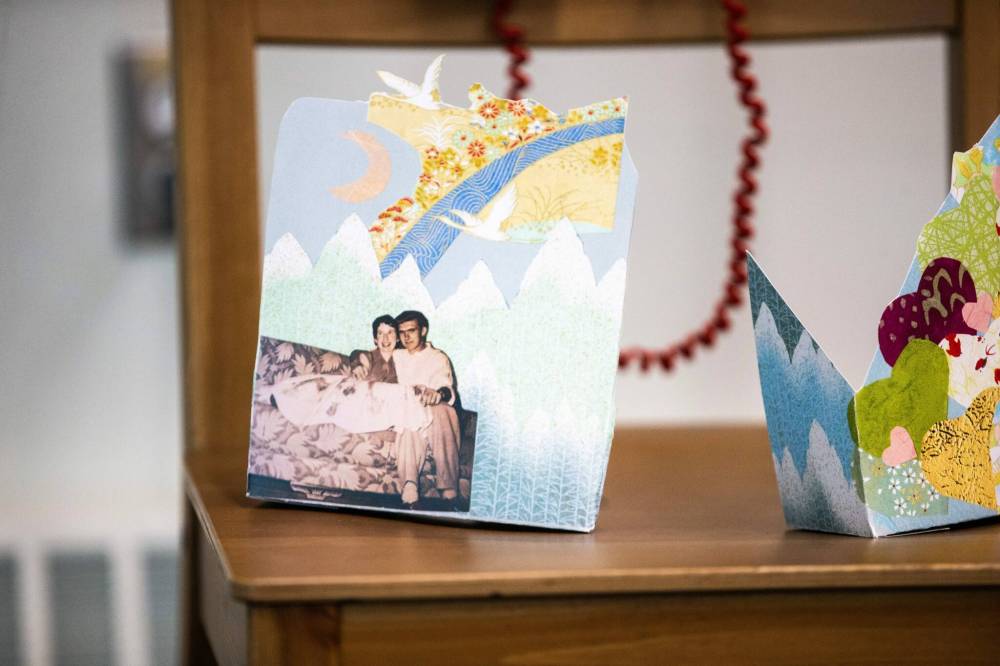
Those who visit the exhibition will have space to express their own memories or experiences of COVID in care, as well as their thoughts on the state of elder care in Canada, in the exhibition’s Story Space.
“On the first iteration of this exhibit, people would come, and they’d read about it, and hear other people’s stories, and they were like, ‘I want to share my story; I haven’t had a space to do this,” says project manager Celeste Billung-Meyer. “And so, in the second iteration, Megan decided that we needed to develop a space for people to share.”
Winnipeg is the first location to feature a Story Space. There are four ways for participants to share their stories: collage/art project, typewriter, computer or voice recorder.
Davies hopes these stories will drive change. National in scope, this project is both an important record of what happened in long-term care and a blueprint to move forward.
“I think we need to hold this difficult history,” Davies says. “And the best way to do that is to actually look at it and reflect and learn. And then go, ‘OK, who do we want to be as Canadians in the future? How do we want to be with our elders?’ And be so aware that it’s not just our elders, it’s our caregivers, and our future selves.”
COVID in the House of Old is on view until May 13.
jen.zoratti@winnipegfreepress.com

Jen Zoratti is a columnist and feature writer working in the Arts & Life department, as well as the author of the weekly newsletter NEXT. A National Newspaper Award finalist for arts and entertainment writing, Jen is a graduate of the Creative Communications program at RRC Polytech and was a music writer before joining the Free Press in 2013. Read more about Jen.
Every piece of reporting Jen produces is reviewed by an editing team before it is posted online or published in print – part of the Free Press‘s tradition, since 1872, of producing reliable independent journalism. Read more about Free Press’s history and mandate, and learn how our newsroom operates.
Our newsroom depends on a growing audience of readers to power our journalism. If you are not a paid reader, please consider becoming a subscriber.
Our newsroom depends on its audience of readers to power our journalism. Thank you for your support.