

Tropical Storm Oscar disintegrates en route to the Bahamas after killing 7 people in Cuba
Advertisement
Read this article for free:
or
Already have an account? Log in here »
To continue reading, please subscribe:
Digital Subscription
One year of digital access for only $75*
- Enjoy unlimited reading on winnipegfreepress.com
- Read the E-Edition, our digital replica newspaper
- Access News Break, our award-winning app
- Play interactive puzzles
*Billed as $5.77 plus GST every four weeks. After 52 weeks, price increases to the regular rate of $19.95 plus GST every four weeks. Offer available to new and qualified returning subscribers only. Cancel any time.
Monthly Digital Subscription
$4.99/week*
- Enjoy unlimited reading on winnipegfreepress.com
- Read the E-Edition, our digital replica newspaper
- Access News Break, our award-winning app
- Play interactive puzzles
*Billed as $19.95 plus GST every four weeks. Cancel any time.
To continue reading, please subscribe:
Add Free Press access to your Brandon Sun subscription for only an additional
$1 for the first 4 weeks*
- Enjoy unlimited reading on winnipegfreepress.com
- Read the E-Edition, our digital replica newspaper
- Access News Break, our award-winning app
- Play interactive puzzles
*Your next Brandon Sun subscription payment will increase by $1.00 and you will be charged $17.95 plus GST for four weeks. After four weeks, your payment will increase to $24.95 plus GST every four weeks.
Read unlimited articles for free today:
or
Already have an account? Log in here »
Hey there, time traveller!
This article was published 22/10/2024 (740 days ago), so information in it may no longer be current.
SAN JUAN, Puerto Rico (AP) — Tropical Storm Oscar disintegrated Tuesday as it headed toward the Bahamas after making landfall in Cuba as a Category 1 hurricane, killing at least seven people and unleashing heavy rains on an island also hit by an unrelated massive power outage.
Oscar’s remnants were located some 75 miles (115 kilometers) east-southeast of Long Island in the Bahamas on Tuesday afternoon. The maximum sustained winds dropped to 35 mph (55 kph) as the remnants moved northeast at 12 mph (19 kph), according to the National Hurricane Center in Miami.
The remnants were expected to drop up to 4 inches (10 centimeters) of rain across the southeastern Bahamas and the Turks and Caicos Islands.
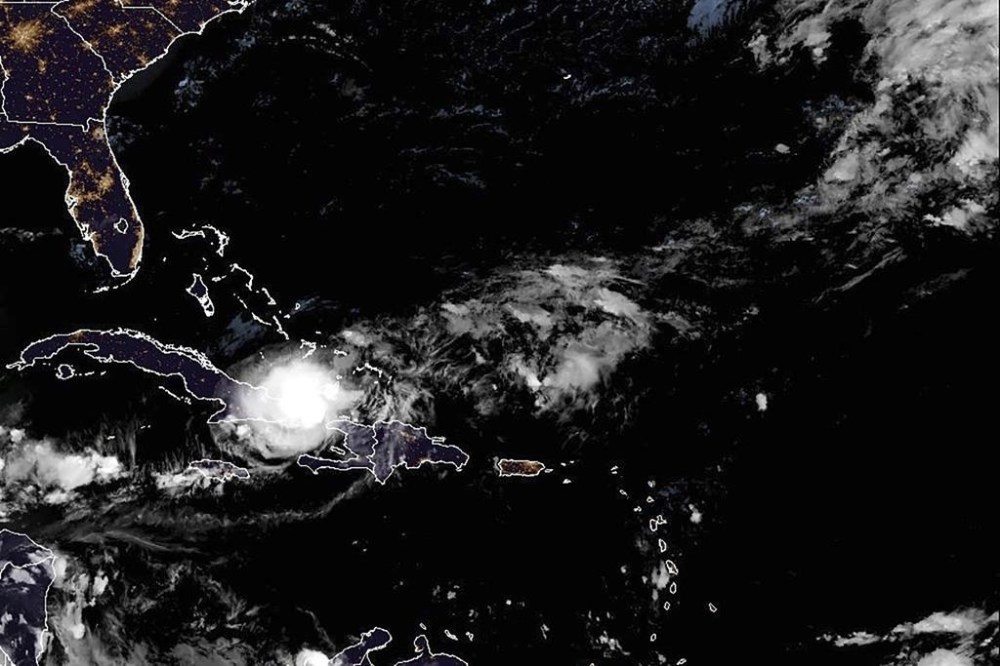
The storm made history as the smallest recorded hurricane, with a wind field of only about 6 miles (10 kilometers) across. It caught many by surprise as it made landfall in Grand Inagua Island in the Bahamas on Saturday and a second landfall in eastern Cuba late Sunday before making a sharp U-turn and heading back to the Bahamas.
“It’s not often we see a colossal failure in hurricane forecasting,” Michael Lowry, a hurricane specialist and storm surge expert, wrote in an analysis. He noted no models indicated Oscar would strengthen into a hurricane.
Oscar dropped at least 15 inches (38 centimeters) of rain in parts of eastern Cuba on Monday, with forecasters warning of heavy flooding and possible landslides. The seven deaths were reported in the province of Guantánamo.
The storm hit as Cuba struggled to recover from a massive blackout that also sparked a handful of small protests and a stern government warning that any unrest will be punished.
Oscar was the 15th named storm and the 10th hurricane of the Atlantic hurricane season, which begins June 1 and ends Nov. 30.
Long-range models are forecasting that another storm could develop in the central Caribbean in about a week.
“One last gasp may be in store for the Atlantic as we turn the calendar to November,” Lowry wrote.
The National Oceanic and Atmospheric Administration predicted an above-average Atlantic hurricane season this year because of record-warm ocean temperatures. It forecast 17 to 25 named storms before the season ends, with four to seven major hurricanes of Category 3 or higher.
Meanwhile, Kristy strengthened into a hurricane in the eastern Pacific Ocean Tuesday and was expected to remain away from land as it grows more powerful, forecasters said.
The storm was 590 miles (950 kilometers) west-southwest of Acapulco, Mexico, and was moving west at 18 mph (30 kph). It had maximum sustained winds of 75 mph (120 kph), according to the hurricane center.
Kristy was expected to continue moving over open waters without threatening land. There were no coastal watches or warnings in effect.
Related Articles
MLB wants the Tampa Bay Rays to play in the area if hurricane-damaged Tropicana Field is unfit





Advertisement Advertise With Us