

Spiritual reflections on coronavirus pandemic

Advertisement
Read this article for free:
or
Already have an account? Log in here »
To continue reading, please subscribe:
Digital Subscription
One year of digital access for only $75*
- Enjoy unlimited reading on winnipegfreepress.com
- Read the E-Edition, our digital replica newspaper
- Access News Break, our award-winning app
- Play interactive puzzles
*Billed as $5.77 plus GST every four weeks. After 52 weeks, price increases to the regular rate of $19.95 plus GST every four weeks. Offer available to new and qualified returning subscribers only. Cancel any time.
Monthly Digital Subscription
$4.99/week*
- Enjoy unlimited reading on winnipegfreepress.com
- Read the E-Edition, our digital replica newspaper
- Access News Break, our award-winning app
- Play interactive puzzles
*Billed as $19.95 plus GST every four weeks. Cancel any time.
To continue reading, please subscribe:
Add Free Press access to your Brandon Sun subscription for only an additional
$1 for the first 4 weeks*
- Enjoy unlimited reading on winnipegfreepress.com
- Read the E-Edition, our digital replica newspaper
- Access News Break, our award-winning app
- Play interactive puzzles
*Your next Brandon Sun subscription payment will increase by $1.00 and you will be charged $17.95 plus GST for four weeks. After four weeks, your payment will increase to $24.95 plus GST every four weeks.
Read unlimited articles for free today:
or
Already have an account? Log in here »
Hey there, time traveller!
This article was published 22/03/2020 (2392 days ago), so information in it may no longer be current.
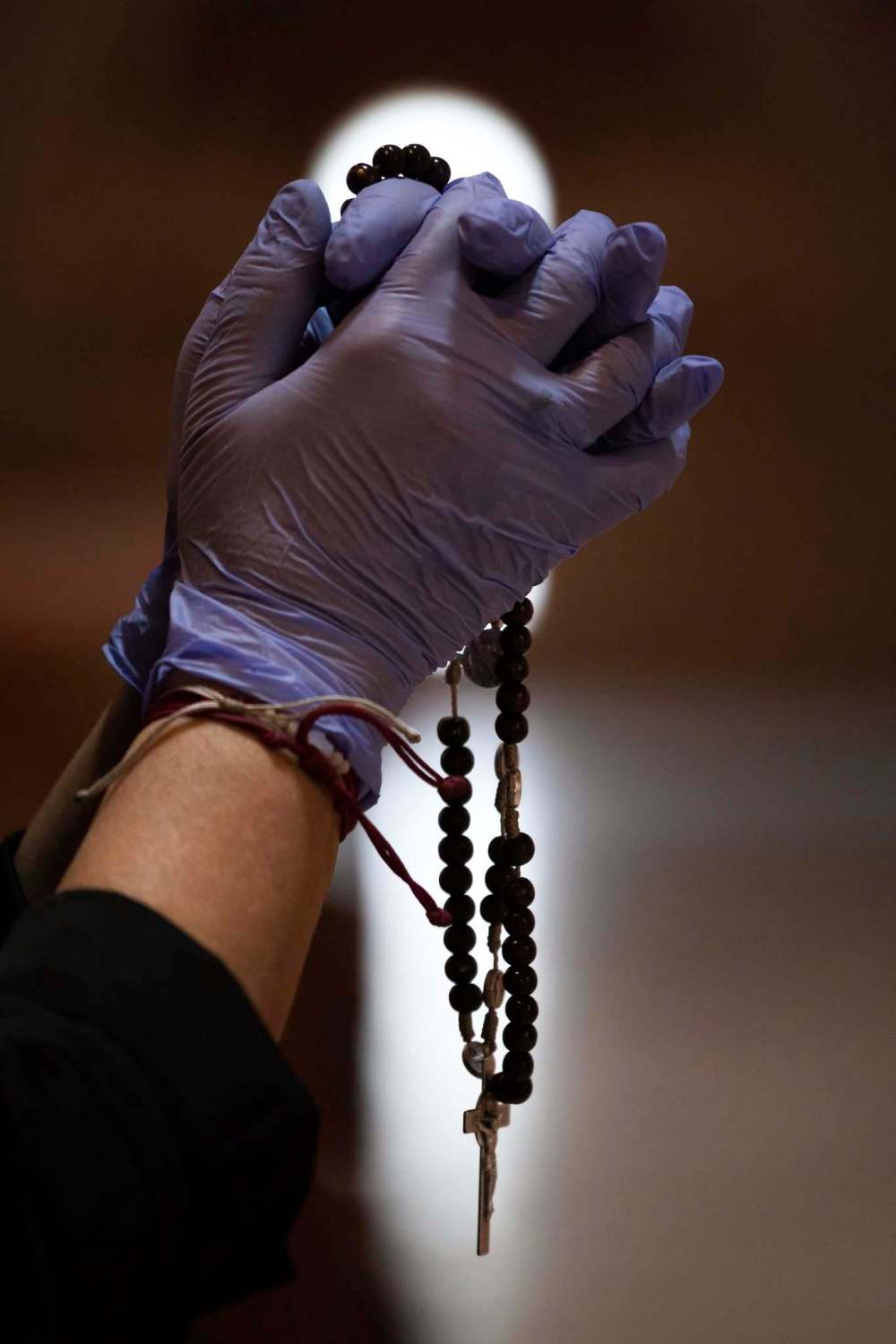
Since Manitobans have been living with the reality of COVID-19 for about two weeks now, here are a few reflections on what this experience looks like from a religious perspective.
For Christians who are now self-isolating in their homes, it could be seen as a way to more fully understand the Jewish concept of Sabbath. (My Seventh Day Adventist friends excepted) That’s what poet Lynn Ungar noted in her poem titled Pandemic. It reads, in part:
“What if you thought of it
as the Jews consider the Sabbath —
the most sacred of times?
Cease from travel.
Cease from buying and selling.
Give up, just for now,
on trying to make the world
different than it is.
Sing. Pray. Touch only those
to whom you commit your life.
Center down.”
Even without a pandemic to force us to slow down, that’s good advice. Perhaps when the crisis has passed we will find a new appreciation for a slower pace of life.
Then there are all the clergy who are trying to do their jobs under new and challenging conditions. How do they serve their congregations and take care of themselves at the same time?
Writing in Christian Century, Ellen R. Campbell, who teaches pastoral theology and care at Union Seminary, provided some tips — which would be useful for anyone at this time.
The first one is to stay healthy yourself. Like airline attendants say in the safety briefing before take-off: If the oxygen masks drop, put on your own mask first before helping anyone else.
“Model for others how to show up without panic,” she wrote. Doing that “can be part of pastoral care.”
Clergy should also be a non-anxious presence.
“Showing up calm, emotionally present, and free from anxiety engenders trust and provides the right kind of care in any crisis, from papercut to pandemic,” she said. “People will borrow our calm and compassion to assist them in reducing their own anxieties.”
Other ways to respond, she said, include showing up for people, even if just digitally; listening, especially to those who feel overwhelmed by the crisis; leaning into God’s sustaining presence; not being afraid to talk about worst-case scenarios; not downplaying people’s fears; praying; and feeling free to tag-out when worn out.
Also, she shared, we should remind each other of the long view.
“God’s loving presence was here before the universe itself, and it will be here long after the universe has passed away. Seeing ourselves as part of a much larger picture offers groundedness and hope. It can help us maintain a sense of hopefulness about God’s loving presence in our lives, even when circumstances threaten to dim our hope.”
For John Stackhouse, professor of religious studies at Crandall University, the pandemic is a time to think theologically.
“Most basically, we find reassurance that God reigns, that Jesus is Lord, and that nothing happens in the world that God does not govern, let alone that takes God by surprise,” he wrote on Context Beyond the Headlines.
“Suffer as we will, and God will work good out of even this widespread evil.”
It’s also a time to think about the profound inequality of our world, he said — and what people of faith can do to make things better.
When public health crises occur, “they bring to the surface deep problems that have long deserved attention and now must be faced,” he said. “In particular, long-standing exploitation of the many by the few leaves the people vulnerable to pestilence.”
COVID-19 is making things worse, he stated. “But, God helping us, let’s resolve also to make the world better.”
Rabbi Anibal Mass of Shaarey Zedek synagogue sees the pandemic as a time to focus on faith in God.
“If we believe in God, we can trust God is doing everything for my very best,” he said, adding it’s also important to not let the bad news about the virus be the only thing we pay attention to.
“We need to think about what we put inside ourselves, what we read, listen to and watch,” he said, suggesting people read, watch and listen to things that give them hope.
A final thought: Maybe the pandemic is also time for a new beatitude, as Kyle Penner, associate pastor at Grace Mennonite Church in Steinbach noted. ““Blessed are they who flatten the curve, for they shall save lives.”
faith@freepress.mb.ca
The Free Press is committed to covering faith in Manitoba through our Religion in the News project. This reporting continues because readers like you step forward to fund it.
Donate now to support our reporting on religion.
Your donation is eligible for a charitable tax receipt.
BECOME A FAITH JOURNALISM SUPPORTER
John Longhurst has been writing for Winnipeg's faith pages since 2003. He also writes for Religion News Service in the U.S., and blogs about the media, marketing and communications at Making the News.
Our newsroom depends on a growing audience of readers to power our journalism. If you are not a paid reader, please consider becoming a subscriber.
Our newsroom depends on its audience of readers to power our journalism. Thank you for your support.
The Free Press is committed to covering faith in Manitoba through our Religion in the News project. This reporting continues because readers like you step forward to fund it.
Donate now to support our reporting on religion.
Your donation is eligible for a charitable tax receipt.
BECOME A FAITH JOURNALISM SUPPORTER
John Longhurst has been writing for Winnipeg's faith pages since 2003. He also writes for Religion News Service in the U.S., and blogs about the media, marketing and communications at Making the News.
Our newsroom depends on a growing audience of readers to power our journalism. If you are not a paid reader, please consider becoming a subscriber.
Our newsroom depends on its audience of readers to power our journalism. Thank you for your support.
Related Articles
Manitoba registers 20th case of COVID-19 on Sunday
Advertisement Advertise With Us
Advertisement Advertise With Us
The Free Press acknowledges the financial support it receives from members of the city’s faith community, which makes our coverage of religion possible.