

Life as we don’t know it
Wide-eyed, weary, worried Winnipeggers navigate an unfamiliar, unsettling new pandemic reality

Advertisement
Read this article for free:
or
Already have an account? Log in here »
To continue reading, please subscribe:
Digital Subscription
One year of digital access for only $75*
- Enjoy unlimited reading on winnipegfreepress.com
- Read the E-Edition, our digital replica newspaper
- Access News Break, our award-winning app
- Play interactive puzzles
*Billed as $5.77 plus GST every four weeks. After 52 weeks, price increases to the regular rate of $19.95 plus GST every four weeks. Offer available to new and qualified returning subscribers only. Cancel any time.
Monthly Digital Subscription
$4.99/week*
- Enjoy unlimited reading on winnipegfreepress.com
- Read the E-Edition, our digital replica newspaper
- Access News Break, our award-winning app
- Play interactive puzzles
*Billed as $19.95 plus GST every four weeks. Cancel any time.
To continue reading, please subscribe:
Add Free Press access to your Brandon Sun subscription for only an additional
$1 for the first 4 weeks*
- Enjoy unlimited reading on winnipegfreepress.com
- Read the E-Edition, our digital replica newspaper
- Access News Break, our award-winning app
- Play interactive puzzles
*Your next Brandon Sun subscription payment will increase by $1.00 and you will be charged $17.95 plus GST for four weeks. After four weeks, your payment will increase to $24.95 plus GST every four weeks.
Read unlimited articles for free today:
or
Already have an account? Log in here »
Hey there, time traveller!
This article was published 21/03/2020 (2395 days ago), so information in it may no longer be current.

It was a week that shook Manitoba, Canada and the world. A week of uncertainty, fear and isolation, but also of charity, resilience and hope. A week where news flew so fast it was almost impossible to follow, where situations changed hour by hour, and where all of a sudden nothing seemed solid.
It was the week that everything became different. Here, glimpses of how some Manitobans lived it.
Monday, March 16
In news that will send shock waves throughout Canada, the prime minister announces the nation is closing its border to non-citizens or non-permanent residents, except for Americans. As for Canadians, “if you are abroad, it is time for you to come home,” he says, although anyone with COVID-19 symptoms will not be allowed in.
Manitoba confirms its eighth presumptive case, a man in his 80s who had recently travelled.
3 p.m.
Kristian Enright is grateful that his boss made the phone call personally, although the news still comes as a shock. He’d worked as an events facilitator at McNally Robinson in Grant Park for five years, and the bookstore was like home to him. He expected his hours would be cut back, but not severed.
Now, along with most of the store’s part-time staff, he is laid off. It happened so fast.
“It’s just this weird evacuation feeling of reality that is so unsettling,” he says. “It’s very uncanny in some ways. Everything is closed. It feels so sudden. Not that it’s not done for good reason, we obviously want to prevent this thing from becoming worse, but it’s just been so immediate.”

For now, he is enduring. As a writer, he does not fear isolation. It has been a good friend to him at times. He has an apartment he can hole up in comfortably, he has tutoring gigs and he can work as an editor.
“I’m luckier than a lot of other people,” he says. “Because we really don’t know the duration of this thing, it’ll feel very different if it persists beyond a couple of months, but other people have it way worse. I have things I can fall back on.”
Still, he worries about finding enough human contact the longer it goes on. He thinks about what the lack of it will mean: the value of sharing a meal with a friend, for instance. And he worries about folks living with depression or anxiety, as he has. It’s hard enough navigating life without this “huge meta-narrative hanging over it,” he says.
“I’m hoping to get more of a communal sensibility about it, and more of a citizenship-of-the-world feeling,” Enright says. “We are all in this crazy thing together. It’s not an anger about my situation, it’s just a realization that, ‘Wow, this is hitting my life quite personally.'”
In the days that follow, a wave of layoffs will sweep across Canada as businesses shut down or scale back hours while social-distancing measures set in. Tens of thousands are out of work within days. Some economists predict it will be the worst single-month loss of jobs in Canadian history.
Enright reaches back to a quote by author William Gibson. It seems to capture the moment.
“When you want to know how things really work, study them when they’re coming apart.”
Tuesday, March 17
The province announces that casinos will close at midnight. Licensed daycares and preschools will close Friday afternoon. Ontario announces its first death from COVID-19. There are seven new cases in Manitoba, bringing the provincial total to 15. Alberta, B.C. and Ontario declare states of emergency.
8 a.m.
The first grocery store Carlos Sosa took his client to didn’t have any toilet paper. The second one didn’t, either. It wasn’t until they got to the third, a big-box outlet near Polo Park, that they found 24 rolls of no-name brand paper, the most affordable option on the client’s thin Employment and Income Assistance budget.
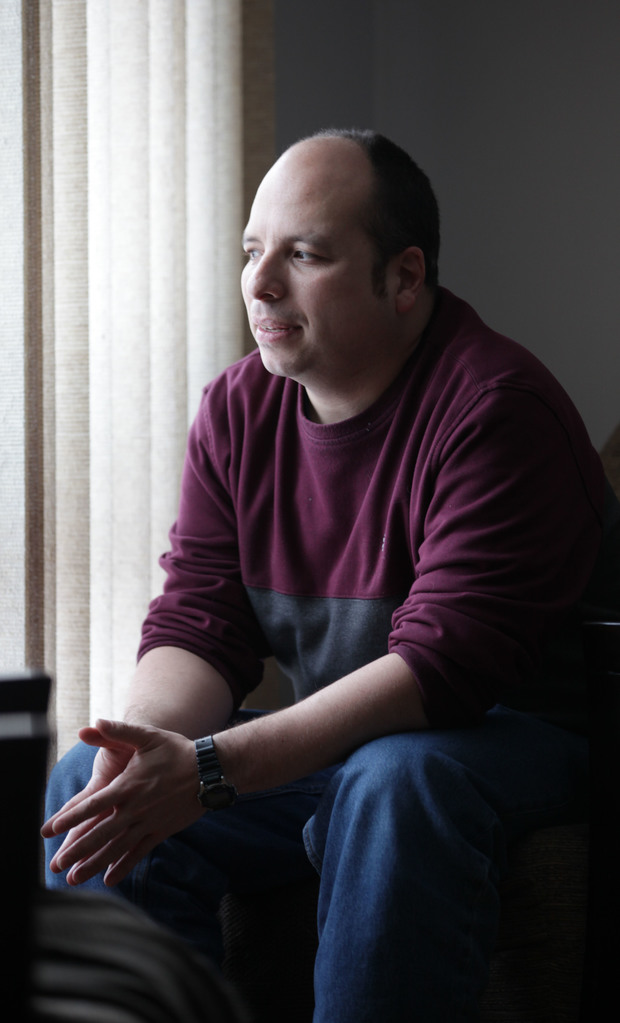
Sosa worries about his clients. There are three of them, all adults with intellectual disabilities who live on their own. Some are more vulnerable than others. One has good family support and he’ll be fine in the long run, Sosa thinks. But there is another client who has nobody else in his life, really. He relies on Sosa for support.
Even in normal times, that client is isolated. His main points of connection to the wider community are the regular visits he makes to local swimming pools and the Millennium Library. Both are closed now, and the client doesn’t really understand why his comforting routine is gone. He is becoming more anxious.
Just as concerning are the empty shelves. Last week, another of Sosa’s clients needed toilet paper; stores were out of all but the priciest brand. He tried to explain that to the client, who became frustrated: he can’t afford expensive things with his paltry EIA support.
Sosa wishes the people hoarding essential goods would understand that it puts vulnerable people at risk. And as a longtime advocate for people with disabilities, he is worried about what will happen to those who need the most help.
“It’s absolutely critical that (all three levels of government) understand that people with intellectual disabilities, or disabilities in general, are a marginalized population,” Sosa says. “A lot of these individuals were already very isolated, they’re even more isolated right now. They’re so vulnerable.”
●●●
12:45 p.m.
On a window at Fionn MacCool’s there are five words, applied to the glass in old-fashioned gold letters.
“We’re all in this together.”
Over the nearly three years since the pub opened, co-owner Jay Kilgour has walked past that phrase every day, but never really paused to think about it. The words were just part of the esthetic of the place. Now, as he wrestles with the decisions he’s had to make, they have come into stark focus.
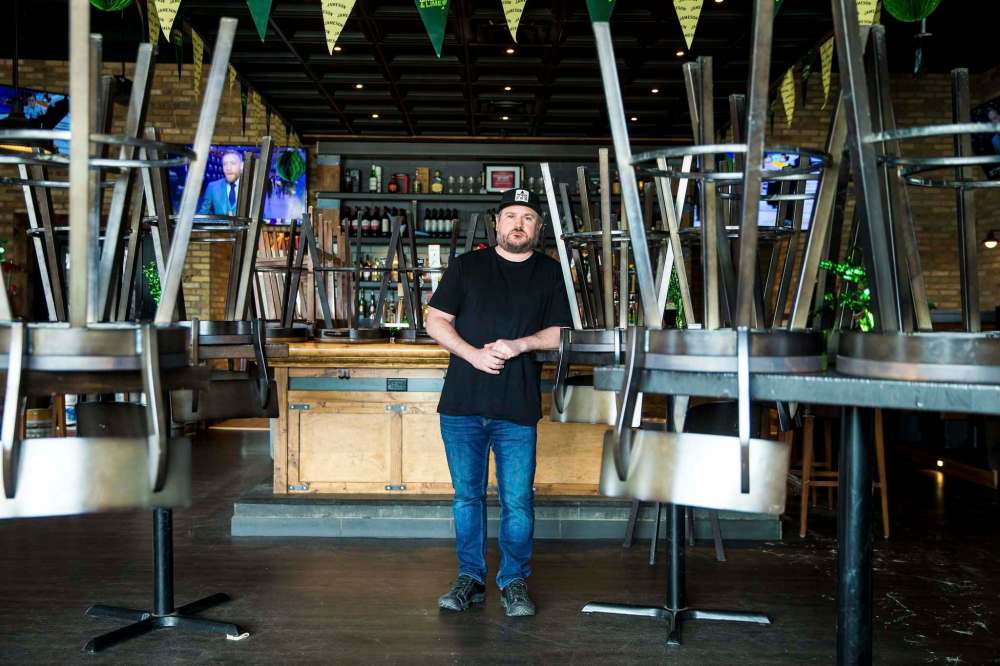
It is lunchtime on St. Patrick’s Day and the pub is clad for the occasion. Green-and-white garlands are draped over the booths, while tables are resplendent with sprigs of metallic foil clover. It should have been bustling with people; just 48 hours earlier there were 40 reservations booked for lunch and a big party was anticipated in the evening.
Now, it’s closed to everything except takeout and delivery. In the morning, Kilgour helped cook even as he blinked back tears: he’d just had to lay off about 70 staff from Fionn’s two locations. The best thing he could do for them, he thought, was make a firm decision so that they could start applying for Employment Insurance quickly.
The decision wasn’t easy. On Sunday night, Kilgour knew the pub would have to close soon; when Canada’s chief public health officer Theresa Tam recommended limiting gatherings to no more than 50 people, he thought briefly about hiring security to keep the St. Patrick’s Day crowd within that limit.
But then he thought about videos people would take partying at his pub, even as Canada braced to withstand the crisis. He thought about the dangerous message that would send. And he knew that, even though the St. Patrick’s Day revenue is crucial for venues such as his, it wasn’t as important as doing the right thing.
“Even if we were following those rules, it would appear careless,” he says. “It would have been very easy to close at end of day today, but that would have been irresponsible just to capture a little bit of sales. For the safety of our staff and our guests, it just made sense. God forbid somebody get sick in here. I’d have to live with that.”
On the same day, dozens of other Winnipeg restaurants made the same decision. Kilgour, like others, went on to donate unused food to chef Ben Kramer’s charity effort, making meals for Main Street Project and other non-profits.
“It’s tough to take a stand, but it’s easier when you do it with other people,” he says. “The community is really tight in Winnipeg, and Winnipeggers, especially, recognize things like that.”
In some ways, Kilgour has had a unique window onto what a pandemic can mean. His wife, Erin Schillberg, is an epidemiologist: in 2014, she spent months on the ground in Sierra Leone, working to battle the ebola epidemic.
“That weighs very heavily on me,” he says. “I’ve witnessed what it’s done to communities in places she’s worked, and how some of them have never recovered. There’s all these debates about whether COVID-19 should have this much media around it… that’s the wrong argument right now. Let’s just get it taken care of.
“All these alarms are being sounded for a reason. And if we can learn from the places it’s hit harder, then we should.”
Wednesday, March 18
Canada and the U.S. announce that the border will close Friday to all non-essential traffic, which now includes Americans coming to Canada. Ottawa unveils an $82-billion emergency package. An elderly man in Quebec becomes that province’s first death from the virus. Saskatchewan declares a state of emergency.
An Ottawa Senators player becomes the first NHLer to test positive. Two new cases in Manitoba are added to the total.
11 a.m.
As the beat of the music begins to rise, Hannah Rose Pratt climbs on the bike. Her legs start to pump forward. She calls out to her audience, giving directions: roll those shoulders back, she says. Hear the melody building. Picture it like a wave of water, pooling at your feet, building some of the connection everybody’s been missing.
On a normal day, the riders in this spin fitness class might answer as they push their bodies through the movement, connecting with Pratt’s message. But today the vault — as Wheelhouse Cycle Club calls the dark, candle-lit space — is empty. Anyone riding along with her is watching at home on their phone.
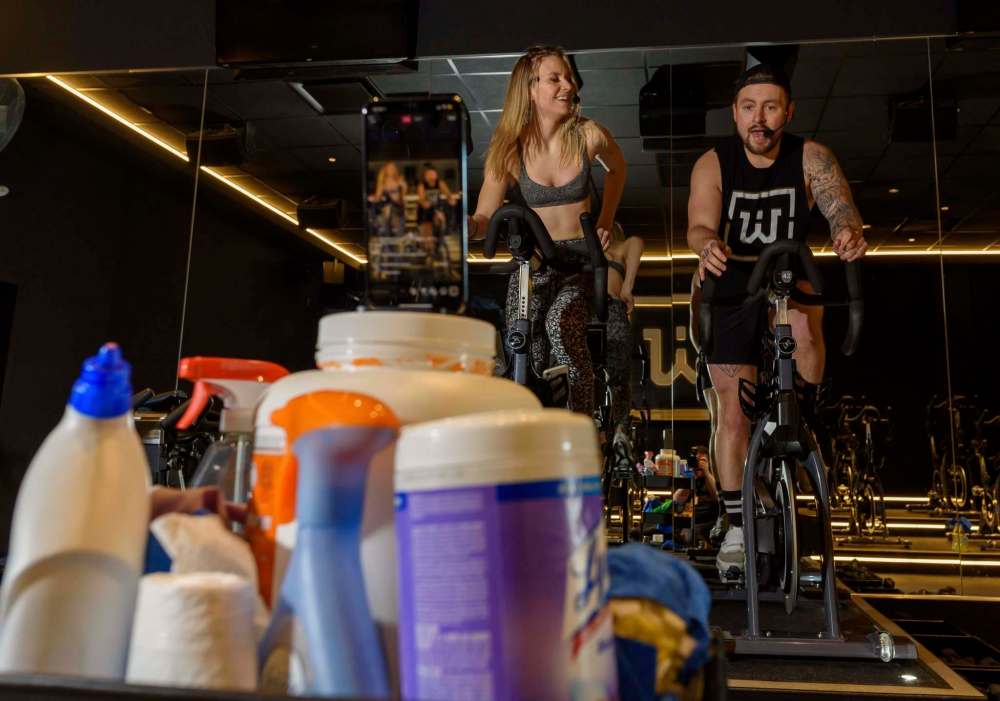
It’s strange to teach a class on live Instagram video like that, she says. It feels more tiring than usual, because the vault itself doesn’t feel so alive: she just has to trust that people are watching and feeling the vibe.
“I just had to think about the audience through the phone and sort of remembering the energy that we would feel in the room, so I could evoke that in myself,” Pratt says. “It’s this reciprocal conversation when you’re leading a class. You’re getting energy from the riders, you’re saying words that resonate with them, and they start cheering.”
On Monday, when Wheelhouse announced it would close, Pratt sat down and cried. She wholeheartedly supported the decision and she has a day job, so she’ll be fine; but four times a week, she finds her own peace in the vault, in connecting with the riders, in building a community through fitness.
That part, at least, she can keep doing. On Tuesday, the studio announced it would rent out its bikes and lead classes on Instagram. Within minutes, all 41 bikes were claimed. A few recipients cried when the bikes were delivered to their homes; they’d be able to keep riding.
It’s not just the fitness. So many of the riders aren’t there just for the workout. Pratt, who openly advocates for mental health, says many have approached her to say the classes help them get through rough patches.
“To lose that as a part of your routine, it’s almost like a lifeline for some people,” she says. “To all of a sudden have that sucked away… that part of this whole thing is so daunting. We don’t know how long it’s going to last or how we’ll get through it.
“So trying to create some sense of normalcy, and access people where they are and make sure they feel connected even if they’re not physically there, is important.”
Thursday, March 19
The head of Saskatchewan’s medical association tests positive. He believes he got it at a curling bonspiel for medical professionals the previous weekend in Edmonton. In Manitoba, teachers arrive to classrooms nearly emptied of students. At one school, so few kids show up they combine what used to be five classes into one.
1:09 p.m.
Jennifer Dame taps out a Facebook post and hits send. It’s a message to the group We Got This — Winnipeg, which sprung up as a place to offer and receive help as pandemic containment measures spread. Dame joined the group earlier in the week, and she and her mom, Susie Dame, had spent two days helping deliver supplies.
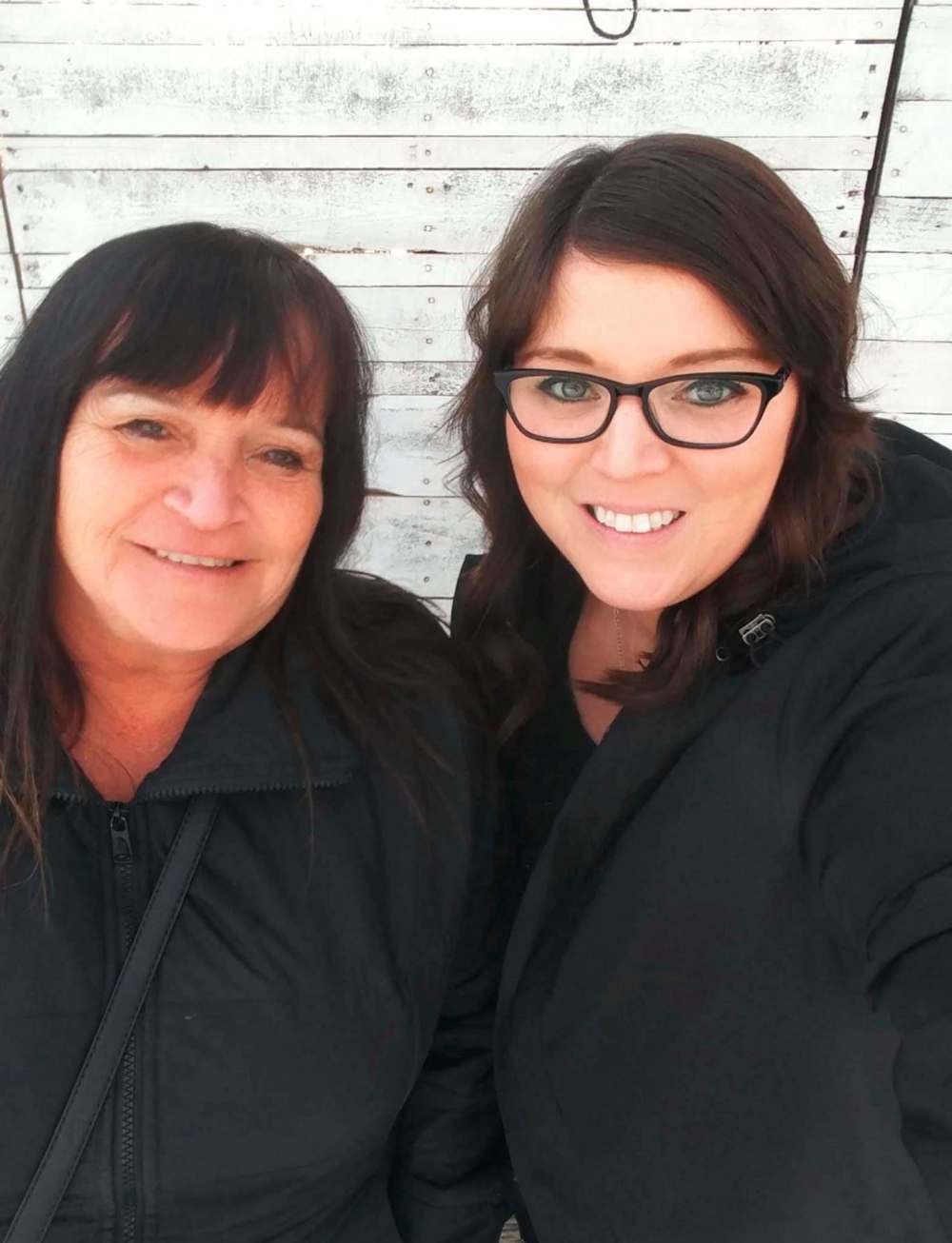
Now, feeling rundown after hopping in and out of stores all week, the pair are deciding to self-quarantine.
“I almost feel like, maybe everybody should do that,” Dame says. “Go help for a couple of days and then self-isolate.”
But she still has supplies she wants to offer the group, to anyone able to pick them up: some soap, a few bottles of cleaning spray, toothpaste and toothbrushes. Things that she and her mom picked up on their own dime, hoping it could help folks struggling to find supplies, or who are isolating at home.
Their week’s nine deliveries took them all over the city — from Charleswood to Transcona, from Elmwood to St. Vital. They never met the people they helped, many of them single mothers — which resonated; Susie was a single mom — they left the items on porches.
When Jennifer thinks about what inspired them to do it, her voices catches a little in her throat.
“It’s scary, and we just felt like somebody has to help,” she says. “There has to be helpers. My mom and I thought, ‘There’s a lot of people who need help right now, and at this time we’re healthy and able, so let’s do that.'”
Friday, March 20
The global death toll from COVID-19 passes 10,000. Manitoba declares a 30-day state of emergency. The province will now enforce a 50-person limit on gatherings. It also announces a $27.6-million fund to support child-care efforts, especially those for essential workers.
2 p.m.
Nancy Greenwalt cradles her pipe in her hands, and begins the sacred ceremony. She is at home, but she is not alone; across North Point Douglas, others are doing the same, joining together in prayer as they do at the cusp of every solstice and equinox, feeling the resonance of their shared connection.
In normal times, they would have done this together at the Gonzaga School gymnasium. Organizers moved the pipe ceremonies there, after the gatherings grew so popular that the cozy North Point Douglas Women’s Centre could no longer fit them; in this community, many people find healing through traditional ways.
These are not normal times. Last week, the centre’s Women’s Warrior Circle had its usual Thursday-night meeting. There’s no way to know when they will see each other again and the loss is keenly felt.
“It really made me heartsore because a lot of us depend on each other for that companionship and those teachings,” Greenwalt says. “We’re unable to give hugs anymore. We can’t see each other’s faces. All of us are so bonded and miss each other greatly right now.”
After the meetings were suspended, Greenwalt thought of the upcoming spring equinox pipe ceremony. At 64 and with existing respiratory health complications, the Anishinaabe elder has been self-isolating at home. Still, she knew that now, more than ever, her community needed that connection.
They’ve been so resilient already. Over the last week, she’s seen on Facebook how North Point Douglas residents have come together, helping each other by delivering groceries or dropping off diapers. Theirs is not a wealthy neighbourhood; they will need to lean on each other to ride out this storm.
With that in mind, Greenwalt, along with other grandmothers and pipe carriers of their circle, extended an invitation: they couldn’t come together at Gonzaga School, as they usually would. But they could still hold their pipe ceremony at the same time in their own homes, feeling each other’s presence through the spirit of prayer.
Now, she prepares her pipe, knowing others are doing the same along with her.
“It gives people hope,” she says. “It gives people a sense of security that ceremonies are still happening. They’re being supported in that way through prayer, and through the ceremony itself, by getting it done. It brings comfort.”
melissa.martin@freepress.mb.ca
Melissa Martin
Reporter-at-large
Melissa Martin reports and opines for the Winnipeg Free Press.
Every piece of reporting Melissa produces is reviewed by an editing team before it is posted online or published in print — part of the Free Press‘s tradition, since 1872, of producing reliable independent journalism. Read more about Free Press’s history and mandate, and learn how our newsroom operates.
Our newsroom depends on a growing audience of readers to power our journalism. If you are not a paid reader, please consider becoming a subscriber.
Our newsroom depends on its audience of readers to power our journalism. Thank you for your support.
Melissa Martin
Reporter-at-large
Melissa Martin reports and opines for the Winnipeg Free Press.
Every piece of reporting Melissa produces is reviewed by an editing team before it is posted online or published in print — part of the Free Press‘s tradition, since 1872, of producing reliable independent journalism. Read more about Free Press’s history and mandate, and learn how our newsroom operates.
Our newsroom depends on a growing audience of readers to power our journalism. If you are not a paid reader, please consider becoming a subscriber.
Our newsroom depends on its audience of readers to power our journalism. Thank you for your support.
Related Articles
Manitoba registers 20th case of COVID-19 on Sunday
Advertisement Advertise With Us
Advertisement Advertise With Us