

There’s money in merch
Musical acts add variety to concert keepsakes to raise much-needed cash, build relationships with fans

Advertisement
Read this article for free:
or
Already have an account? Log in here »
To continue reading, please subscribe:
Monthly Digital Subscription
$0 for the first 4 weeks*
- Enjoy unlimited reading on winnipegfreepress.com
- Read the E-Edition, our digital replica newspaper
- Access News Break, our award-winning app
- Play interactive puzzles
*No charge for 4 weeks then price increases to the regular rate of $19.00 plus GST every four weeks. Offer available to new and qualified returning subscribers only. Cancel any time.
Monthly Digital Subscription
$4.75/week*
- Enjoy unlimited reading on winnipegfreepress.com
- Read the E-Edition, our digital replica newspaper
- Access News Break, our award-winning app
- Play interactive puzzles
*Billed as $19 plus GST every four weeks. Cancel any time.
To continue reading, please subscribe:
Add Free Press access to your Brandon Sun subscription for only an additional
$1 for the first 4 weeks*
*Your next subscription payment will increase by $1.00 and you will be charged $16.99 plus GST for four weeks. After four weeks, your payment will increase to $23.99 plus GST every four weeks.
Read unlimited articles for free today:
or
Already have an account? Log in here »
Hey there, time traveller!
This article was published 06/12/2019 (2192 days ago), so information in it may no longer be current.
Merchandise has always served an important function for both fans and musicians. It’s a way to rep fandom; T-shirts, stickers, pins and the albums themselves are tangible ways to express love for an artist or band. For musicians, it’s extra money in bank.
And as streaming has increased and artist revenue from music sales continues to drop, merch has become even more important.
According to the Global Licensing Survey 2019, produced by trade body Licensing International, worldwide retail sales of licensed goods related to music properties were worth US$3.48 billion in 2018, up from US$3.33 billion in 2017 and US$3.08 billion in 2016. That increase in merch sales is helping bridge the revenue gap caused by streaming and downloading and offers an alternative keepsake for those who are no longer interested in purchasing a physical album.
“As a manager, when we’re putting together tours sometimes merch sales is what makes or breaks a tour, especially in the early days of a developing artist, when the guarantees or the earnings from ticket sales are a little bit lower you really need to lean into merch to make up some extra revenue,” says Stu Anderson, founder of Mighty Cypress Talent Inc., which works with Winnipeg artists such as the Bros. Landreth, Begonia and Royal Canoe, and events such as the Harvest Moon Festival.
“Generally you’re trying to pull in revenue from all different streams and merch has become an important piece of the puzzle for sure,” Anderson adds. “I don’t know if that’s a new thing though. I think it’s always been a bit of a staple but I think artists are having to get a little bit more creative on what they sell as merch because obviously the product, CD and vinyl, aren’t selling as much. They are selling, but artists carry a wider range of items to have at the merch table and that’s not a totally new trend, but you see it more often with developing artists. You’ll go to their merch table and they’ll have 10 pieces of merch to offer up.”
The demand for merch from fans has resulted in what artists offer for sale at concerts or online, whether they are A-list superstars or the greenest of performers. Manitoba musicians have started to amp-up their merch game; singer-songwriter Begonia partnered with Winnipeg jewelry designers Sunday Feel to create a custom necklace she sold at her merch table during her 2019 tour, Joey Landreth has designed custom guitar pedals and sells them at his merch table, Micah Erenberg creates screen prints on old clothes, Screaming at Traffic produced a colouring book that was a partner piece to one of their music videos.
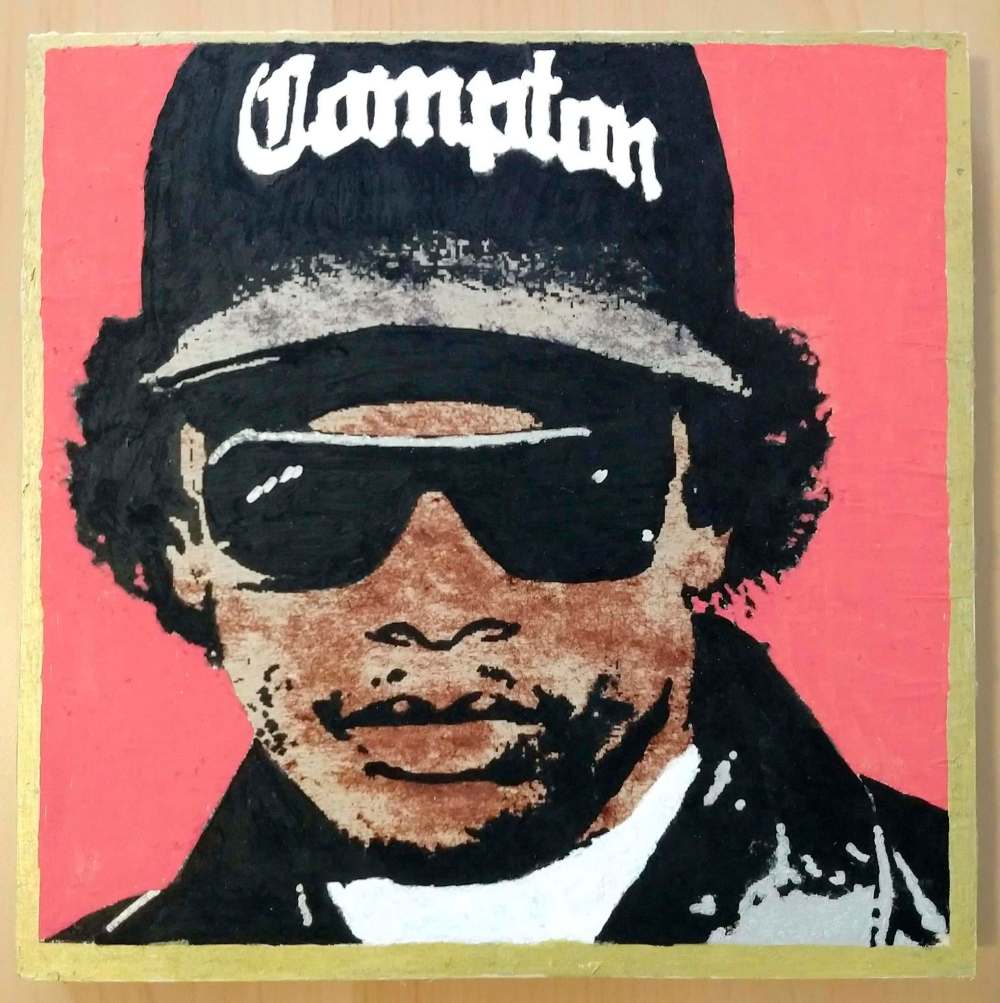
And rap duo Machina II sells portraits of other rappers, painted by band member Angelo Lamsen’s girlfriend, Jane Hunter.
“It’s a cool display piece, like the art piece will grab their attention to look at some of the other merch that we have,” explains Lamsen.
“People have said they really enjoy the artwork and it’s just another thing to add on. A lot of people have shirts and hats and nobody has paintings of other artists. It’s also an homage to some of the artists we enjoy as well or who influenced us. So we kind of take the approach that we’re fans of the culture and it’s about how we can display that. And it’s a one of a kind thing.”
Lamsen and bandmate Andrew Tolentino took part in Manitoba Music’s MMMerch Fair in September, an event designed to offer artists and music companies a space to sell their merch. The intention of the event — which happens again tonight at Fools and Horses, 379 Broadway, and features nine folks selling their wares — is to provide a way to connect with fans who may be unable to attend concerts or purchase merch online.
“Musicians have creativity that goes beyond music and their merch is another way for them to express that. Sometimes merch is only available at shows and if you don’t make it out, that’s a missed opportunity to support these talented Manitoba artists. This pop-up creates a different space to meet makers and buy local,” says Claire Boning, membership and events co-ordinator at Manitoba Music.
“Merch can be a reminder of a meaningful experience and it lets fans support and promote artists that matter to them. It can be a way for artists to share their creativity on another level and deepen that bond with their fans.”
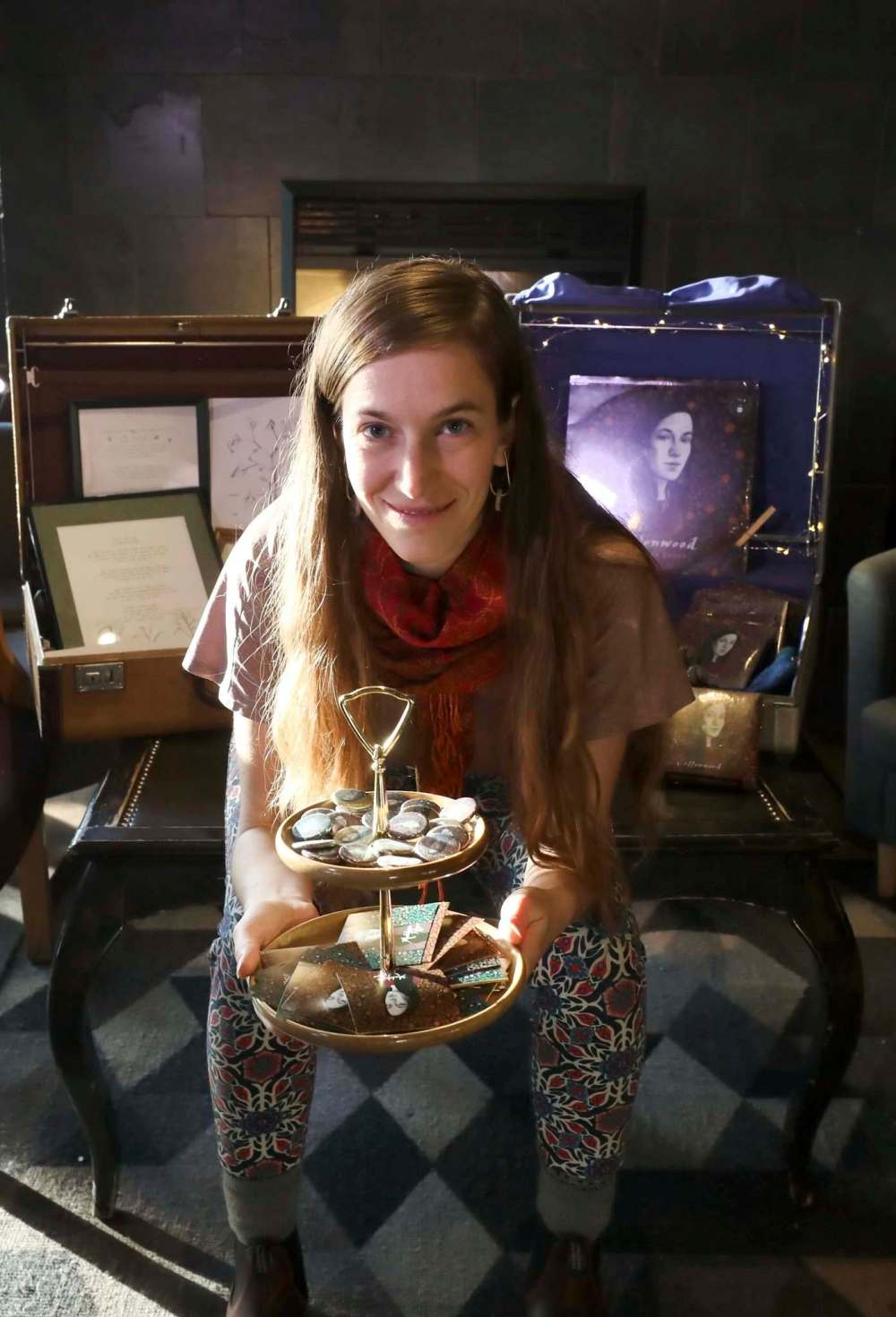
That specific artist-fan connection, by way of merch, is a lived experience for Winnipeg-based folk singer-songwriter Madeleine Roger. She offers numerous handmade pieces, including ink drawings and prints, lyric sheets and even cribbage boards, and says merch sales make up around 30 per cent of her income from touring.
“What I’ve noticed is that people who come to shows often want a memory from it and I think because so many people are streaming music they aren’t necessarily… I mean I’m still seeing people buy CDs and vinyl in the folk genre where there’s still a bit of an attachment to the physical music, but people who are listening to music are on streaming services often still want a token to take home with them. So I have found that people will just come to the merch table to chit-chat and will see the other weird stuff they want to grab that isn’t a CD,” says Roger.
Roger uses her merch as a way for fans to get to know her as a person beyond what she does with her music, but she has decided against including T-shirts in her merch line due to the amount of time and research it would take to find ethically sourced options — an important consideration for Roger.
Even the act of not selling T-shirts — which is a conversation starter in and of itself — allows fans to get to know more about her.
“I have other hobbies and interests outside of music and there came a time when I realized I wanted other merch on my table but I wanted it to be an extension of these other hobbies I have. I was already making cribbage boards for fun, so I decided to just make them in larger quantities and sell them. And for years I’ve been doing these doodle drawings, so I started getting really nice scans made of them so I could sell prints of my drawings,” Roger says.
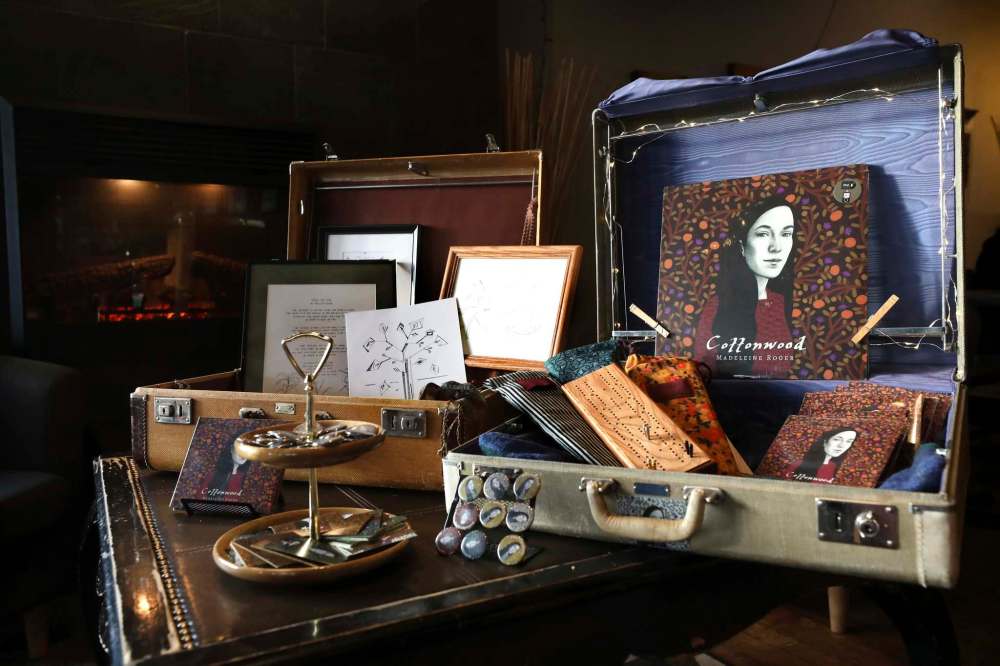
“It’s kind of nice because it’s something I like to do anyway, and if it ends up being a piece of merchandise someone can take home, all the better.
“I don’t want to be a part of this never-ending fashion chain, so I just decided I’m just not going to offer T-shirts but I’m going to do other things that I feel better about that are more in line with my values… a cribbage board is more of a representation of who I am than a T-shirt could ever be.”
erin.lebar@freepress.mb.ca
Twitter: @NireRabel
Our newsroom depends on a growing audience of readers to power our journalism. If you are not a paid reader, please consider becoming a subscriber.
Our newsroom depends on its audience of readers to power our journalism. Thank you for your support.
Our newsroom depends on a growing audience of readers to power our journalism. If you are not a paid reader, please consider becoming a subscriber.
Our newsroom depends on its audience of readers to power our journalism. Thank you for your support.
Advertisement Advertise With Us
Advertisement Advertise With Us