

Road tested
After touring for the better part of a year, Metric brings Art of Doubt to Winnipeg

Advertisement
Read this article for free:
or
Already have an account? Log in here »
To continue reading, please subscribe:
Monthly Digital Subscription
$0 for the first 4 weeks*
- Enjoy unlimited reading on winnipegfreepress.com
- Read the E-Edition, our digital replica newspaper
- Access News Break, our award-winning app
- Play interactive puzzles
*No charge for 4 weeks then price increases to the regular rate of $19.00 plus GST every four weeks. Offer available to new and qualified returning subscribers only. Cancel any time.
Monthly Digital Subscription
$4.75/week*
- Enjoy unlimited reading on winnipegfreepress.com
- Read the E-Edition, our digital replica newspaper
- Access News Break, our award-winning app
- Play interactive puzzles
*Billed as $19 plus GST every four weeks. Cancel any time.
To continue reading, please subscribe:
Add Free Press access to your Brandon Sun subscription for only an additional
$1 for the first 4 weeks*
*Your next subscription payment will increase by $1.00 and you will be charged $16.99 plus GST for four weeks. After four weeks, your payment will increase to $23.99 plus GST every four weeks.
Read unlimited articles for free today:
or
Already have an account? Log in here »
Hey there, time traveller!
This article was published 22/04/2019 (2420 days ago), so information in it may no longer be current.
When Canadian indie-pop/rock band Metric released its sixth full-length record, Pagans in Vegas, in 2015, many fans were left wondering,”Where did the guitars go?”
The band often used a specific kind of charging, gritty electric guitar line in their previous work: from Poster of a Girl to Breathing Underwater, Metric cultivated a recognizable sound rooted in a guitar-driven, in-your-face kind of catchiness. But Pagans was a step in a different, lighter — and somewhat confusing — direction.
So when it came time to decide on the track sequence for its newest release, 2018’s Art of Doubt, frontwoman Emily Haines says leading off with the guitar-forward Dark Saturday felt like the right choice to make.

https://www.youtube.com/watch?v=lVn2UM8-sKI
“We needed to reassure everyone who was like, ‘What happened to the guitars on Pagans?’” she says, laughing.
“The guitars are coming back and it’s not in a small way, and I’m so glad we decided to start with Black Saturday. Everything about it I feel like has been cathartic for people; that song is so fun to play live and it’s obviously a little vignette and a story and it’s not taking itself too seriously, but at the same time, it feels good.”
Metric has been touring Art of Doubt since before it was even released in September, road-testing the tracks while filling an opening slot on the Smashing Pumpkins’ Shiny and Oh So Bright tour through the U.S. in the summer of 2018. They’ve been on the road consistently since, taking the record to Europe and then back to the U.S. earlier this year, and are now doing a set of arena dates across Canada, including at Bell MTS Place tonight.
Haines hopped on the phone with the Free Press a couple of weeks ago to chat about songwriting and how doubt plays a crucial role in the record-creation process.
Free Press: You have been on the road with this record a lot already. How has it been touring through the U.S. with it?
Emily Haines: So good, and kind of surprising. I always have high hopes, lord knows, but it was just such a… I think at this point, considering the musical climate and a million other factors, it’s so extraordinary to me, the connection that we have and the resilience somehow of that connection within the band and then with the folks that are coming to the shows.
It just feels so legit and hard won and satisfying and genuinely rewarding, thank God. Imagine the alternative, where I’m like, ‘Well, I gave my life to this but…’
It’s an interesting perspective, too, because we had a band from Mexico, Zoé, that are really huge there with us and we also had July Talk, so every night we were like, ‘What’s up, U.S.A.? We’ve got Mexico and Canada here,’ and it was kind of a nice way to address the current themes without having to stand up there and talk about it.
And I loved the way it mapped out, kind of like our rehearsal for Canada, you know? We’re bringing our A game to Canada.
Free Press: I’d love to talk to you about songwriting, as you do all the writing for Metric. How do you differentiate between songs you write for Metric and songs you write for your solo projects?
Emily Haines: That’s a really good question. I’m always writing and it’s kind of… well you’re a writer so you know all about this, but it’s not like I’m that strategic about it, it’s more a process of a reveal, I feel. And some things are very obvious, and some things are not.
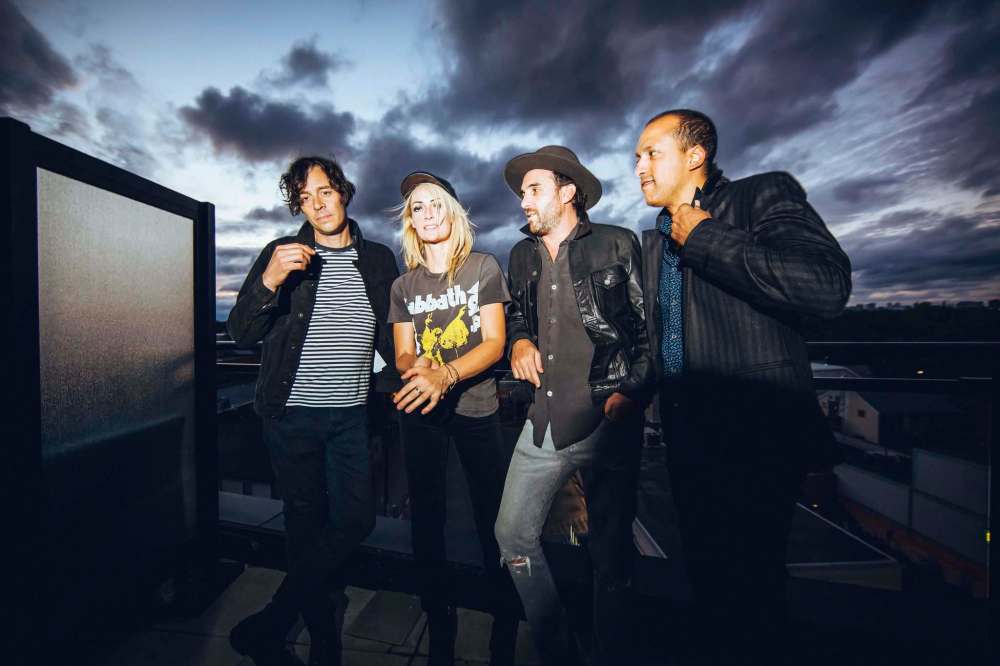
But in recent years I feel I’ve really been able to hone in on, particularly with Art of Doubt, I’m just trying to get to the heart of what is Metric? And when we really make people happy with a classic Metric song, what is that? Because there’s all kinds of things people can do, we’re experimental, we like to try things, but what is that magic ingredient?
So in the case of Art of Doubt, I was really thinking about my band and what this experience is live for people.
For example, the title track, I think, is the most Metric thing; that’s for me a real achievement in what I think the band is capable of, and when we play it every night, it’s like, ‘There we go!’ That’s what I started out doing 16-something years ago.
Free Press: How important is it to have the support of your bandmates when it comes to lyrical content? I mean, they have to believe in what you’re saying as much as you do for it to be genuine, right?
Emily Haines: Yeah, I mean that’s also an excellent question. It’s more like I’m not speaking for them but it’s important that we all understand what the hell I’m talking about (laughs). And that’s something that really differentiates us, I feel, and I look for in the world and I don’t see a lot, especially right now.
It seems very much a time of, like, everyone’s about themselves, and obviously there are fantastic writers and always have been, that it’s just about me and I have people backing me up, but it’s the story of me.
But it’s much more nuanced with Metric, because I feel like I’m writing about the story of the four of us, our friendship. The song Seven Rules is so deeply connected to experiences the four of us have had. And then even as it relates to those people who have been listening to our music, we’ve grown up together.
So songs like No Lights on the Horizon are kind of like, that’s pretty much me singing to the audience and I feel that when I was writing that, I felt the presence. It’s such a beautiful thing and such a privilege to have people around the world that are connected with me in such an intimate way.
Free Press: And because you do write from such a personal place, do you ever find it to be exhausting?
Emily Haines: (laughs) I wouldn’t say exhausting, but just so profoundly frustrating sometimes. You’re right, it is personal, but it’s kind of like this recipe that we came up with to begin with; we’ve never given it a name, but we know when we’ve found it, like what that Metric song is, what that feeling is.
It is that feeling of being intensely personal but it’s not introspective; it’s the idea of being courageously personal so that we’re all in it together and we’re all a little bit exposed, which is very different than being up there on your own.
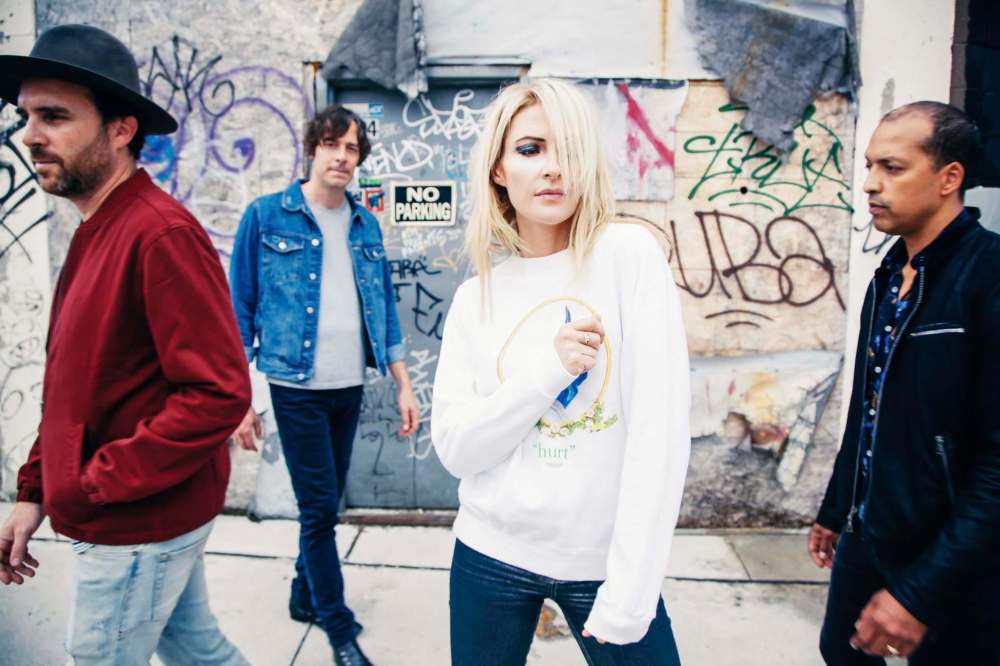
So, yeah, it’s a trip for sure, but I don’t know if I’d use the word exhausting. Sometimes you want things to be inspired and to have that feeling where the words are leaping of the page towards you, but the fact is there’s always just so much sweat that is require in addition to that.
Free Press: So thematically on this album, you revisit ideas or incarnations of the concept of doubt. Do you think doubt is ever useful?
Emily Haines: Yeah, I mean I think that was sort of the revelation — and I love that the phrase Art of Doubt can be interpreted so many ways — but I think that was what we came to, and in titling the record, that the conclusion line of the track is, “At its best, it’s all the art of doubt.” It’s really just what the process is.
We construct things, I’m speaking of the band and our process, we construct and we question and we are always pushing ourselves and then ultimately from that you end up with something.
And it’s constantly going toward what you don’t know, and going toward where you’re not strong and basically talking flaws and making them the foundation of things, reversing what logic would dictate (laughs).
So yeah, I think doubt… people should try it. If they’re not doubting, they haven’t read the newspaper lately, you know what I mean? There’s a lot of ways to interpret that line.
This interview has been edited and condensed for length.
erin.lebar@freepress.mb.ca Twitter: @NireRabel
Our newsroom depends on a growing audience of readers to power our journalism. If you are not a paid reader, please consider becoming a subscriber.
Our newsroom depends on its audience of readers to power our journalism. Thank you for your support.
Concert preview
Metric
Tuesday night, 6:45 p.m.
Bell MTS Place
Tickets $62.75-$80.75, available at Ticketmaster
Our newsroom depends on a growing audience of readers to power our journalism. If you are not a paid reader, please consider becoming a subscriber.
Our newsroom depends on its audience of readers to power our journalism. Thank you for your support.
Advertisement Advertise With Us
Advertisement Advertise With Us