

TV documentary explores ‘catfishing’ scandal

Advertisement
Read this article for free:
or
Already have an account? Log in here »
To continue reading, please subscribe:
Monthly Digital Subscription
$0 for the first 4 weeks*
- Enjoy unlimited reading on winnipegfreepress.com
- Read the E-Edition, our digital replica newspaper
- Access News Break, our award-winning app
- Play interactive puzzles
*No charge for 4 weeks then price increases to the regular rate of $19.00 plus GST every four weeks. Offer available to new and qualified returning subscribers only. Cancel any time.
Monthly Digital Subscription
$4.75/week*
- Enjoy unlimited reading on winnipegfreepress.com
- Read the E-Edition, our digital replica newspaper
- Access News Break, our award-winning app
- Play interactive puzzles
*Billed as $19 plus GST every four weeks. Cancel any time.
To continue reading, please subscribe:
Add Free Press access to your Brandon Sun subscription for only an additional
$1 for the first 4 weeks*
*Your next subscription payment will increase by $1.00 and you will be charged $16.99 plus GST for four weeks. After four weeks, your payment will increase to $23.99 plus GST every four weeks.
Read unlimited articles for free today:
or
Already have an account? Log in here »
Hey there, time traveller!
This article was published 28/10/2017 (2961 days ago), so information in it may no longer be current.
It is, without question, one of the most unusual and puzzling cases in recent Manitoba judicial history.
A high-profile pro-basketball star, an ambitious teenage internet-age celebrity and a lonely but startlingly resourceful young woman from an isolated Manitoba community became the key players in an elaborate “catfishing” scheme that nearly ruined a couple of lives and landed its unlikely mastermind behind bars.
CBC Docs POV takes an in-depth look at the case in the new locally produced film Indictment: The Crimes of Shelly Chartier, which has its TV première Sunday at 9 p.m on CBC.
The documentary, written and directed by Lisa Jackson and Shane Belcourt, and co-produced by Winnipeg-based Jeff Peeler of Frantic Films and Chris McIvor of FRANK Digital, delves deep into the tangled history and misguided motivations that led Chartier, a reclusive 28-year-old who lived in her mother’s home on the Chemawawin First Nation in Easterville, to become the author of a complex, deeply mischievous and occasionally nasty scheme involving invented identities and relationships that were stage-managed from afar.
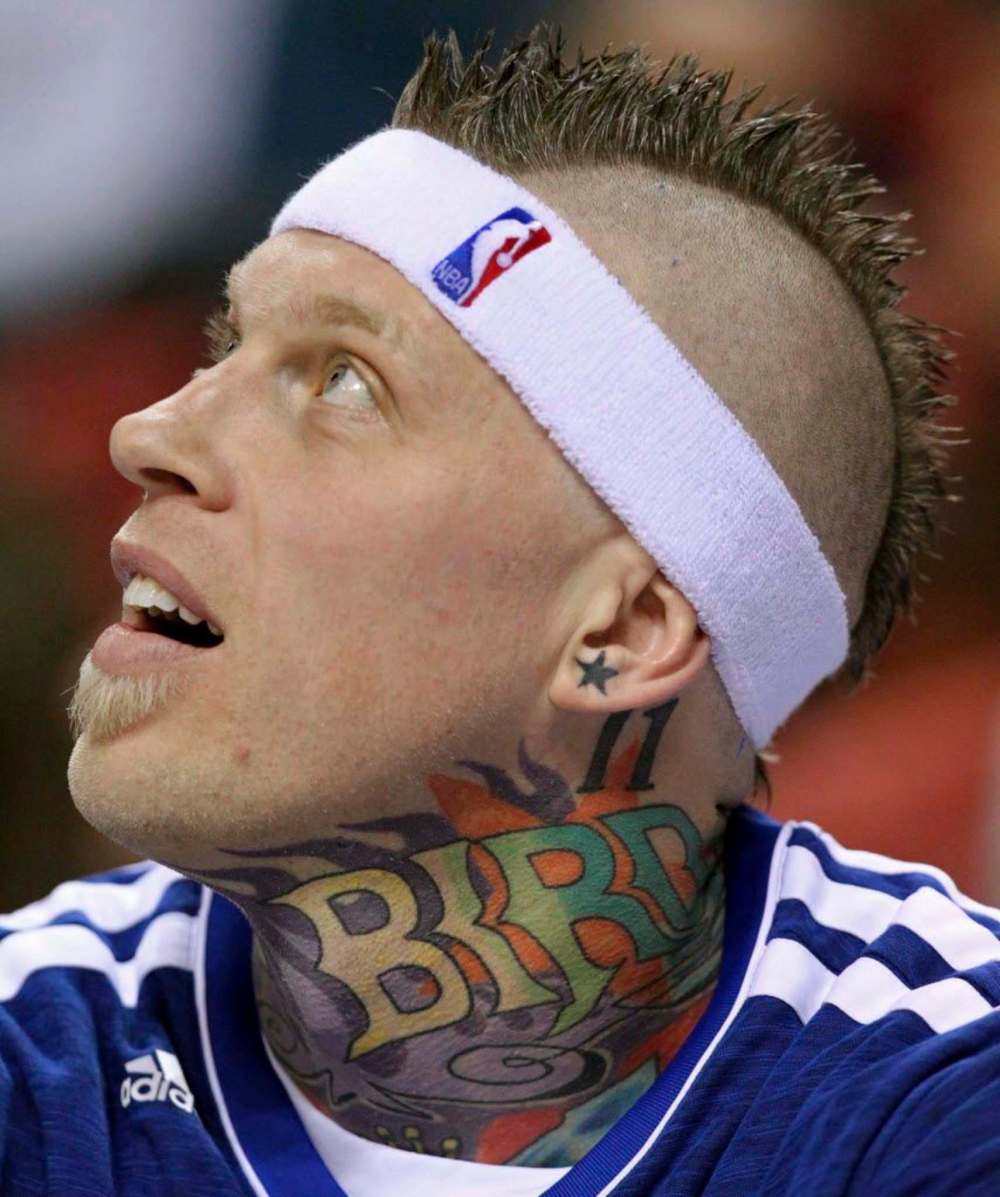
The headline-news portion of the story involved tattooed and flamboyant NBA star Chris (Birdman) Anderson, then with the Denver Nuggets, and L.A.-based aspiring online personality Paris Dunn (a.k.a. Paris Dylan), who became romantically entangled after “meeting” on Facebook.
The problem, as court documents would later outline, was that neither of them actually met the other; rather, each met a fake version of the other created by Chartier.
Guided by bogus-identity accounts created by the Manitoba woman, the two traded notes, then texts, then pictures, then nude pictures, and eventually arranged to meet in person for a weekend sexual encounter. “I got him laid, basically,” Chartier says in an interview recorded at the Women’s Correctional Centre after her conviction on a variety of charges. “All weekend, he got laid; and he text me after he put her on a plane and said, ‘It was nice meeting you. We had a lot of fun. You’re a cool girl.’ And I sent that to Paris, and she said, ‘Yeah, it was nice meeting you.’”
Chartier’s manipulations didn’t stop there, however. Before long, Dunn was receiving online requests from Anderson (but not really him), asking her to take part in a scheme to steal video-game codes from a game creator in Indiana. When she refused, the online Chris became angry, threatening to post her nude pictures online if she didn’t go along with the plan.

She warned the basketball player that she was only 17 years old, and that he’d get in trouble for posting photos. But they showed up online anyway, and when Dunn confessed her scandalous involvement to her parents, police became involved.
As recalled by Free Press reporter Mike McIntyre in a series of interview segments, the investigation that started with the search of Anderson’s home outside Denver and the seizure of his computers, on suspicion of crimes against children, soon turned its focus northward.
Chartier was arrested and charged with numerous offences, including impersonation, extortion, uttering threats and fraud. Justice was delivered in no uncertain terms, with a sentence of 18 months — the maximum requested by the Crown.
Halfway through the hour-long film, Chartier herself makes an appearance, sitting down with the filmmakers for a reluctant but ultimately rather candid discussion of her crimes and the life that led her to commit them.
Also weighing in are a number of psychologists and academics who seem amazed by what the Manitoba woman did.
“The emotional complexity,” UBC psychology professor Michael Woodsworth says. “If you really think about it, you’ve got someone with Grade 6, maybe Grade 7 education that has largely shunned any other type of interaction outside her immediate or near-immediate family, who was able to skilfully emotionally connect with these individuals, meet their needs and have them believe they’re engaged in these really fulfilling relationships, over years.
“That is not at all normal.”
As McIntyre explains, it later became apparent that the toxic triangle involving Anderson, Dunn and Chartier was not the only fake-identity situation in which the Manitoban was involved. She was, in fact, the centre of a wide-reaching web of multi-layered made-up personas and relationships.
“The fact she was able to basically pull all these strings like a master puppeteer and not trip herself up is nothing short of amazing,” he offers. “You would have almost thought she’d have to have maps and flow charts up in her house, just to keep track of ‘Which identity am I playing today, who am I to this person and who am I to that person?’”
On camera during her post-release interview session, Chartier presents as anything but a mastermind.
“I was stupid. I was bored. I was lonely. That’s the truth,” she says matter-of-factly.
Before it’s finished, the film shifts focus in another direction, and the titular indictment is aimed at the justice system and Canada’s treatment of Indigenous people.
Confronted with the family history that may have contributed to her psychological state and her criminal misdeeds, Chartier offers this:
“I believe I didn’t have an easy life.”
brad.oswald@freepress.mb.caTwitter: @BradOswald
Our newsroom depends on a growing audience of readers to power our journalism. If you are not a paid reader, please consider becoming a subscriber.
Our newsroom depends on its audience of readers to power our journalism. Thank you for your support.
TV REVIEW

Indictment: The Crimes of Shelly Chartier
Directed by Lisa Jackson and Shane Belcourt
Sunday at 9 p.m.
CBC
★★★1/2 out of five
Our newsroom depends on a growing audience of readers to power our journalism. If you are not a paid reader, please consider becoming a subscriber.
Our newsroom depends on its audience of readers to power our journalism. Thank you for your support.
Advertisement Advertise With Us
Advertisement Advertise With Us