

Nova Scotia to ban cellphone use in classrooms this fall
Advertisement
Read this article for free:
or
Already have an account? Log in here »
To continue reading, please subscribe:
Digital Subscription
One year of digital access for only $75*
- Enjoy unlimited reading on winnipegfreepress.com
- Read the E-Edition, our digital replica newspaper
- Access News Break, our award-winning app
- Play interactive puzzles
*Billed as $5.77 plus GST every four weeks. After 52 weeks, price increases to the regular rate of $19.95 plus GST every four weeks. Offer available to new and qualified returning subscribers only. Cancel any time.
Monthly Digital Subscription
$4.99/week*
- Enjoy unlimited reading on winnipegfreepress.com
- Read the E-Edition, our digital replica newspaper
- Access News Break, our award-winning app
- Play interactive puzzles
*Billed as $19.95 plus GST every four weeks. Cancel any time.
To continue reading, please subscribe:
Add Free Press access to your Brandon Sun subscription for only an additional
$1 for the first 4 weeks*
- Enjoy unlimited reading on winnipegfreepress.com
- Read the E-Edition, our digital replica newspaper
- Access News Break, our award-winning app
- Play interactive puzzles
*Your next Brandon Sun subscription payment will increase by $1.00 and you will be charged $17.95 plus GST for four weeks. After four weeks, your payment will increase to $24.95 plus GST every four weeks.
Read unlimited articles for free today:
or
Already have an account? Log in here »
Hey there, time traveller!
This article was published 06/06/2024 (866 days ago), so information in it may no longer be current.
HALIFAX – The use of cellphones and other personal electronic devices won’t be allowed during classroom hours at public schools across Nova Scotia beginning this fall.
Education Minister Becky Druhan announced a new provincewide directive Thursday, which will have students turn off their personal mobile devices and store them out of sight during instructional time.
Under the change, elementary schools will require students to store their devices for the entire school day, but junior high and high schools will be permitted to have their own rules regarding phone use during lunch and other breaks.
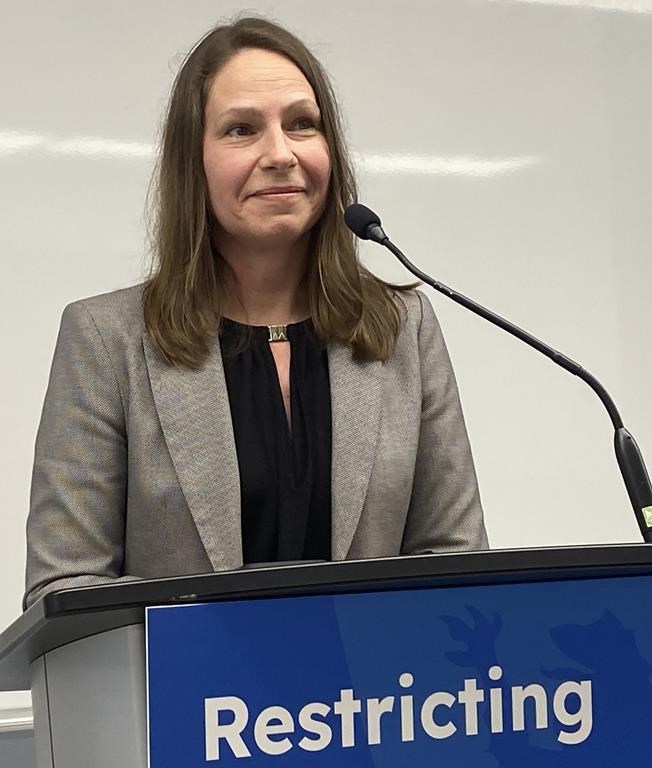
Druhan made the announcement at Clayton Park Junior High School in Halifax, which has had its own ban on the use of cellphones and personal devices since September.
“Research and experience tells us that there are benefits to limiting access to cellphones and personal mobile devices in schools,” said Druhan. “Classrooms that are free of those devices enhance learning, improve social interactions and improve and promote well-being.”
The minister said that although many schools have already instituted their own restrictions, it’s hoped the directive will help support all schools when the rules change in September.
“This directive will provide consistency and clarity for school staff, students and families,” she said. “This really sets our minimum expectations across the province for policies that schools will implement.”
The minister added that schools will ensure that parents and students are able to get in touch with each other during emergencies.
Clayton Park principal Trina Canavan called her school’s experience with banning the use of cellphones and personal devices such as earbuds and smart watches “incredibly positive.” The use of the devices is not allowed in classrooms, hallways, washrooms or on school grounds for the duration of any school day, she said.
“I’ve noticed an increase in student engagement both in academics and socially. Students are interacting with staff and their peers allowing all staff to get to know students better as people and as learners.”
Canavan said there’s also been a noticeable decrease in incidents such as the bullying that can result from the use of social media, while academic achievement in areas such as mathematics has improved because of greater focus in the classroom.
She said a key to the ban’s success has been communicating with students and their families about why various steps have been taken.
Lujain Elbatie, a Grade 8 student at the school, said she hasn’t missed using a cellphone during the school day and believes prohibiting their use leads to better interaction with teachers and other students.
“At school it’s actually a lot better because people focus more,” said Elbatie, who added that she’s also noticed effects outside of the classroom in places such as the school soccer field, which in the past was often deserted during breaks.
“This year when you go outside at lunch they have to do something, so they play basketball, they play soccer, they play volleyball,” she said. “It’s actually really creative and it’s really nice to have people actually playing.”
Elbatie, whom school administrators made available to speak to media, said that while she still likes her phone, she realizes “there’s more to life than just being on your phone.”
With Thursday’s announcement, Nova Scotia will join Ontario, Quebec and British Columbia, which already restrict cellphone use in schools, while New Brunswick also plans to implement its own restrictions in September.
This report by The Canadian Press was first published June 6, 2024.
Related Articles
Another province takes cellphones out of schools

Advertisement Advertise With Us
Advertisement Advertise With Us