

Women send powerful message in Olympic track and field
Advertisement
Read this article for free:
or
Already have an account? Log in here »
To continue reading, please subscribe:
Digital Subscription
One year of digital access for only $75*
- Enjoy unlimited reading on winnipegfreepress.com
- Read the E-Edition, our digital replica newspaper
- Access News Break, our award-winning app
- Play interactive puzzles
*Billed as $5.77 plus GST every four weeks. After 52 weeks, price increases to the regular rate of $19.95 plus GST every four weeks. Offer available to new and qualified returning subscribers only. Cancel any time.
Monthly Digital Subscription
$4.99/week*
- Enjoy unlimited reading on winnipegfreepress.com
- Read the E-Edition, our digital replica newspaper
- Access News Break, our award-winning app
- Play interactive puzzles
*Billed as $19.95 plus GST every four weeks. Cancel any time.
To continue reading, please subscribe:
Add Free Press access to your Brandon Sun subscription for only an additional
$1 for the first 4 weeks*
- Enjoy unlimited reading on winnipegfreepress.com
- Read the E-Edition, our digital replica newspaper
- Access News Break, our award-winning app
- Play interactive puzzles
*Your next Brandon Sun subscription payment will increase by $1.00 and you will be charged $17.95 plus GST for four weeks. After four weeks, your payment will increase to $24.95 plus GST every four weeks.
Read unlimited articles for free today:
or
Already have an account? Log in here »
Hey there, time traveller!
This article was published 08/08/2021 (1890 days ago), so information in it may no longer be current.
TOKYO (AP) — They set records everyone saw coming and others that surprised the experts.
They suffered, and battled, and spoke their truth in ways that hadn’t been heard before.
Over nine days at the near-empty Olympic Stadium, the women of track and field delivered a memorable show, both inside the lines and out.
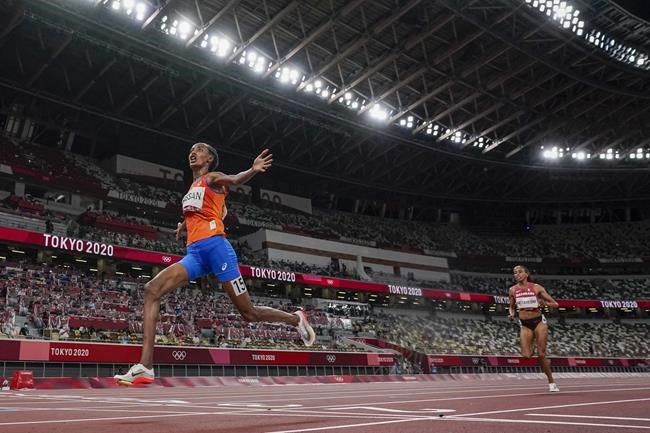
These are some of the athletes who defined the meet in Tokyo: Allyson Felix, Sydney McLaughlin, Sifan Hassan, Raven Saunders, Elaine Thompson-Herah.
Theirs was a sport in need of a good boost, not only because of the year-long delay sparked by the virus, but because no matter when they returned, Usain Bolt would no longer draw eyes to the track simply by showing up.
The women delivered — not so much with the feel-good, dance-a-minute vibe that Bolt brought, but with a series of inspiring performances and messages that showed the heart of their sport was still beating strong.
Some highlights included:
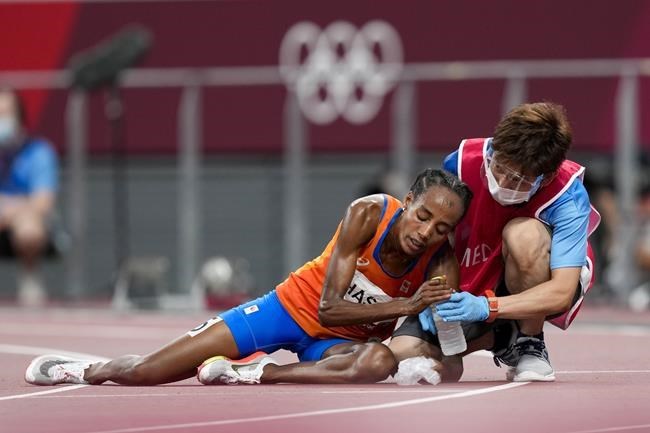
—Hassan and her unrelenting journey toward three medals — two gold and one bronze — in three of the longest races held on the track.
She started with gold in the 5,000 meters, then came back with bronze in the 1,500. She closed the show Saturday with a gold-medal run in the 10,000 — one in which her vision was so clouded by exhaustion that she admitted she could not see the finish line.
“I’m so happy,” she said after the odyssey — six races over eight nights covering 65 laps and 24 kilometers — was finally complete “I’m relieved. I’m finished. I can sleep.”
—McLaughlin, whose back-and-forth duals in the 400-meter hurdles with U.S. teammate Dalilah Muhammad reached a crescendo at the Olympics.
It was a race that had been much-anticipated and all but preordained to again reset the world record that one or the other had broken in three previous showdowns.
And they lived up to the hype. McLaughlin lowered her own mark to 51.46 seconds. Just as impressively, Muhammad’s silver-medal time of 51.58 would have been a world record, too.
“I think it’s two athletes wanting to be their best,” McLaughlin said, “and knowing there’s another great girl who’s going to help you get there.”
—The sprinters were fast through the leadup to the Olympics, so it wasn’t all that surprising to see that pace keep going in Tokyo.
But while most of the pre-Games buzz went to Jamaica’s Shelly-Ann Fraser-Pryce (100) and American Gabby Thomas (200), each of whom briefly staked their claim as the second-fastest women in history at their respective distances, it was Thompson-Herah who wound up there in the end.
After a slow start to the season because of an Achilles injury, Thompson-Herah swept the 100 and 200 sprints for the second straight time. One more like that and she’ll match Bolt.
She ran the 200 in 21.53 and set the Olympic record in the 100: 10.61 seconds. Though that record might not be the most formidable of the marks Florence Griffith Joyner set a generation ago, in 1988, it had been around every bit as long.
Flo Jo’s world records of 10.49 and 21.34 still stand. But for how long?
“By the Olympic finish, I’ll probably see what I’ve done,” said Thompson-Herah, who at 29, assures us she is not done yet. “At this moment, I’m just a normal girl.”
—The story of Raven Saunders was inspiration for anyone who has been overlooked or left behind. The Black, gay American shot putter started wearing “Incredible Hulk” masks to the field — a way of projecting her fierce competitive spirit, but also a lighter side underneath.
After she received her silver medal, Saunders crossed her arms and formed an “X” on the medals stand. “The intersection of where all people who are oppressed meet,” she explained.
It was the sort of message many believe should not only be tolerated,, but embraced, when Olympic athletes get their all-too-short time in the spotlight. The IOC, which after much debate and discussion over the past two years still chose to ban such demonstrations, said it would look into it. Any probe was set aside when Saunders’ mother died unexpectedly only hours after she won the medal.
—And Felix closed the show.
For five Olympics spanning 16 — make that 17 — years, she was epitome of class and speed. At 35 years old, she called it a career, but not without doing what she does better than any runner alive: Winning medals.
Her bronze in the 400 and gold in the 4×400 relay gave her 11. She now has more than any track athlete in history, save a Finnish distance runner, Paavo Nurmi, who won 12 between 1920 and 1928.
Felix has more to do. Since having her baby, Cammy, in 2018 she has transformed herself into one of the most outspoken advocates for women in sports.
“I feel like it’s definitely been a journey for me to get to the point where I guess I had the courage to do so,” Felix said.
She earned the platform with two decades of racing in which she won some, and lost some, and kept on coming back for more.
Now, it’s time to see who takes her place.
Earlier in the meet, someone asked Muhammad, the hurdler, what she thought about all this women’s dominance at the track – of America’s seven gold medals in track and field, they won five.
“Women do it better,” she quipped.
After watching them conquer records, overcome obstacles and make their messages heard over nine days and nights at the Olympic track, it was hard to say she was wrong.
___
More AP Olympics: https://apnews.com/hub/2020-tokyo-olympics and https://twitter.com/AP_Sports
Related Articles
Japan's PM thanks people for safe Olympics during pandemic





Advertisement Advertise With Us
Advertisement Advertise With Us