Boost to school funding drop in the bucket
Read this article for free:
or
Already have an account? Log in here »
To continue reading, please subscribe:
Digital Subscription
One year of digital access for only $75*
- Enjoy unlimited reading on winnipegfreepress.com
- Read the E-Edition, our digital replica newspaper
- Access News Break, our award-winning app
- Play interactive puzzles
*Billed as $5.77 plus GST every four weeks. After 52 weeks, price increases to the regular rate of $19.95 plus GST every four weeks. Offer available to new and qualified returning subscribers only. Cancel any time.
Monthly Digital Subscription
$4.99/week*
- Enjoy unlimited reading on winnipegfreepress.com
- Read the E-Edition, our digital replica newspaper
- Access News Break, our award-winning app
- Play interactive puzzles
*Billed as $19.95 plus GST every four weeks. Cancel any time.
To continue reading, please subscribe:
Add Free Press access to your Brandon Sun subscription for only an additional
$1 for the first 4 weeks*
- Enjoy unlimited reading on winnipegfreepress.com
- Read the E-Edition, our digital replica newspaper
- Access News Break, our award-winning app
- Play interactive puzzles
*Your next Brandon Sun subscription payment will increase by $1.00 and you will be charged $17.95 plus GST for four weeks. After four weeks, your payment will increase to $24.95 plus GST every four weeks.
Read unlimited articles for free today:
or
Already have an account? Log in here »
Hey there, time traveller!
This article was published 04/04/2023 (1282 days ago), so information in it may no longer be current.
The Stefanson government’s public schools funding announcement earlier this year was not quite as “astronomical” as originally advertised.
Education Minister Wayne Ewasko announced in February an overall funding increase of 6.1 per cent for school divisions for the 2023-24 year. It is the largest increase in at least 25 years. The minister said all school divisions will get an increase of at least 2.5 per cent. He described it as “astronomical, as far as an announcement goes.”
However, after accounting for inflation, rising student enrolment and an education property tax freeze, the purchasing power of that increase is less robust than it appears. Add to that the impact of multiple years of underfunding and the lingering costs of the COVID-19 pandemic and the announcement is not as out-of-this-world as the minister would have Manitobans believe.
That was made clear last week when school divisions submitted their financial plans to the province for the coming year. Most divisions are either treading water or have been forced to make minor cuts to services. None has been able to reinstate the cuts they were forced to make in recent years as a result of the Progressive Conservative government’s austerity measures.
Related Articles
Manitoba classrooms not spared in school board budget








Student enrolment in Manitoba has been on the rise since 2010, after four decades of decline. Yet operating grants from the province have not kept pace with that growth, at least not in recent years. Along with directives from the province to cap and freeze education property taxes, per capita spending by school divisions fell below one per cent a year on average from 2016-17 to 2021-22.
According to the province’s FRAME reports, per-student expenditures rose only 4.5 per cent during those five years, from $13,016 to $13,608. That’s below inflation and well short of what is required to maintain existing programming.
It forced many school divisions to reduce staffing levels, cut programs, such as library hours, and draw down emergency funds to pay for regular programming. The effects of that are still felt today.
Next year’s funding increase will not be enough to stop that bleeding. The Louis Riel School Division has had to use $2.4 million in emergency funds, normally reserved for one-time expenses, to balance its books. Pembina Trails School Division is planning to hire 29 new full-time-equivalent teaching positions, but the school division says provincial funding has not kept pace with rising student enrolment. It will be forced to eliminate full-day kindergarten.
In a rare move, River East Transcona’s board of trustees has taken out a bank loan to cover its operating costs next year. The school division said it had no choice but to borrow money to avoid deep cuts to services.
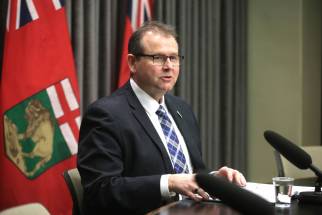
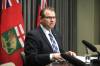
RUTH BONNEVILLE / WINNIPEG FREE PRESS FILES Education Minister Wayne Ewasko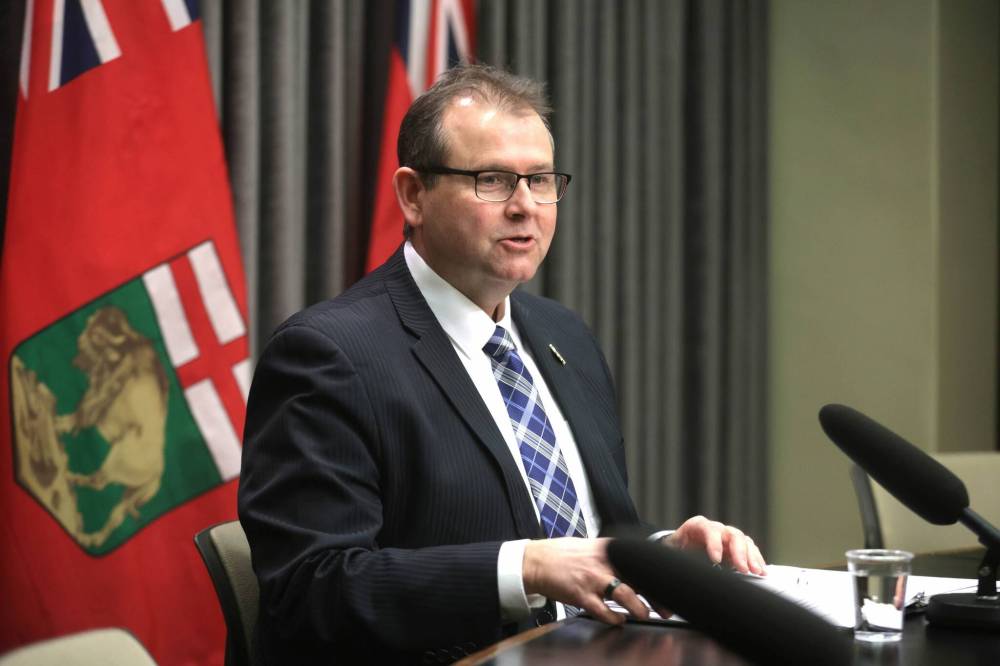
The Winnipeg School Division is one of the few divisions planning to expand its staffing levels next year, including hiring more bilingual teachers. Still, it has not been able to reinstate past cuts.
Meantime, Seven Oaks School Division is defying the province’s property tax freeze edict by raising local rates. The school division says the tax increase is necessary to avoid dramatic cuts to front-line services. Mr. Ewasko called that decision “remarkably cavalier and out-of-touch.”
What may be more out-of-touch is the notion that a one-year funding boost can offset seven years of below-inflation funding. The Tories’ austerity measures have had a severe impact on the quality of public education across the province. One year of modest grant increases will not change that, nor does it qualify as astronomical.