Technical Vocational Education
Please review each article prior to use: grade-level applicability and curricular alignment might not be obvious from the headline alone.

Young woman says she was on social media ‘all day long’ as a child in landmark addiction trial
7 minute read Preview Wednesday, Mar. 4, 2026
Sens captain Brady Tkachuk unhappy with White House AI video that insulted Canadians
4 minute read Preview Friday, Feb. 27, 2026
Burger King to bring AI-based voice coach to Canada later this year
3 minute read Preview Friday, Feb. 27, 2026
New football chinstrap designed to lessen force of blows to facemask
4 minute read Preview Friday, Feb. 27, 2026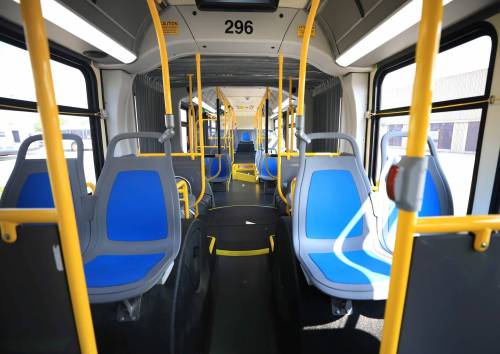
Eight of 10 people using bus to get downtown unhappy after system overhaul, BIZ survey reveals
5 minute read Preview Wednesday, Feb. 25, 2026
Winnipeg School Division proposes 9.3 per cent tax increase
4 minute read Preview Thursday, Feb. 26, 2026
Housing affordability challenges remain despite recent improvements: CMHC
3 minute read Preview Thursday, Feb. 26, 2026
Councillor calls for permanent bike lanes on Wellington stretch
5 minute read Preview Wednesday, Feb. 25, 2026
The surprising complexity behind the squeak of basketball shoes on hardwood floors
4 minute read Preview Thursday, Feb. 26, 2026
First Nations awaiting Hydro consults
5 minute read Preview Wednesday, Feb. 25, 2026
AI chatbots and teens — a sometimes deadly combination
4 minute read Preview Wednesday, Feb. 25, 2026Generalizations and facts
4 minute read Wednesday, Feb. 25, 2026Recently, I ran across a social media post with 100,000 followers which stated that “the media is the communist arm of the government.”
At first blush, it is easy to write off an outlandish comment like this as a function of a neurodegenerative illness or a psychological disorder.
Certainly, as a middle-of-the-road regular contributor to articles on the Think Tank page, I have never thought of myself as a communist. Truth be told, the Free Press neither offers me direction about what I write, nor do they pay me for my op-ed pieces. A post like this also does a grave disservice to the many dedicated journalists who ply their trade according to strict ethical guidelines.
At the same time, however, I realize that there are people who don’t read the Free Press because they believe that the mainstream media (MSM) have been co-opted and corrupted by government subsidies.
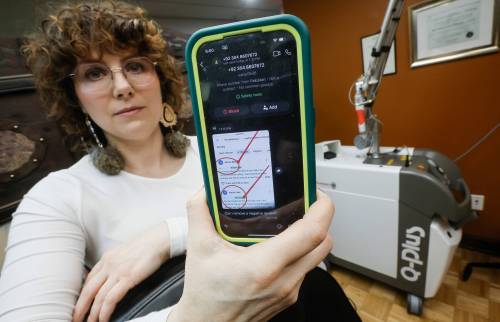
Tattoo removal business owners discover customers’ ink easier to erase than scammers’ damaging online reviews
6 minute read Preview Tuesday, Feb. 24, 2026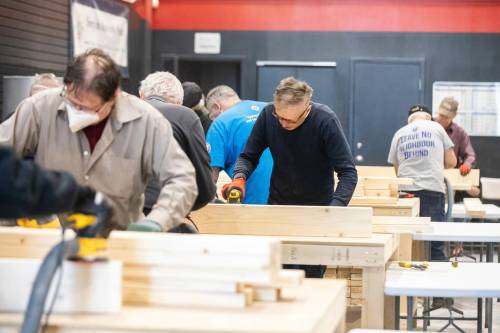
Organizations join forces to make First Nation kids’ dreams a little sweeter
4 minute read Preview Wednesday, Feb. 25, 2026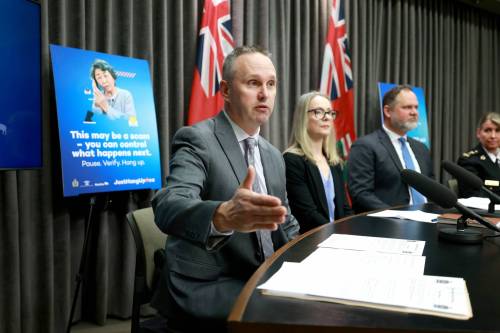
Police warn about AI use in sophisticated scam calls
3 minute read Preview Wednesday, Feb. 25, 2026
Unpredictable health-care costs a given, redundant health-system bureaucracy an unaffordable burden
5 minute read Preview Tuesday, Feb. 24, 2026
Waymo’s robotaxis now being dispatched in 10 major U.S. markets with expansion in Texas and Florida
2 minute read Preview Wednesday, Feb. 25, 2026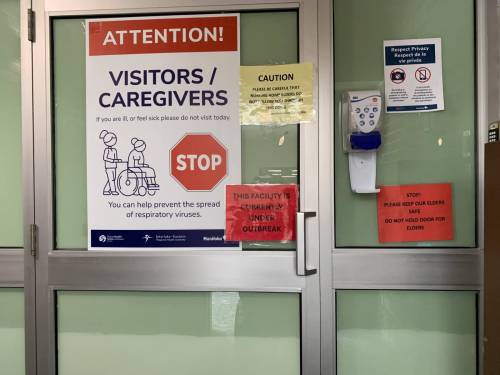
Sustained scabies outbreak frustrates families of PCH residents
4 minute read Preview Tuesday, Feb. 24, 2026
‘Electric vehicles work really well’
4 minute read Preview Tuesday, Feb. 24, 2026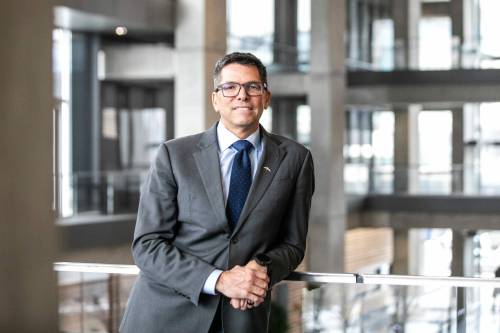
First Nations hopeful as Hydro’s first Indigenous chair eyes reversing years of enmity
5 minute read Preview Tuesday, Feb. 24, 2026
Belated Lunar New Year party a feast of Korean culture
3 minute read Preview Tuesday, Feb. 24, 2026In search of a better way to build Manitoba
4 minute read Tuesday, Feb. 24, 2026Manitoba was built through hard work, collaboration, and community. Every hospital, school, road, and bridge reflects the dedication of our construction industry. Today, the sector employs more than 57,000 Manitobans, contributes $4.2 billion annually to the provincial economy, and supports businesses in every region. We are proud of the role we play in building Manitoba’s future.
We are speaking out about the Manitoba Jobs Agreement (MJA) not to oppose the government’s goals, but to ensure public policy delivers real value, respects worker choice, and protects taxpayers. The practical consequences of the MJA are clear: fewer bidders, reduced competition, increased administrative burden, and higher project costs. When competition narrows, prices rise. When compliance complexity grows, risk premiums follow. All of this lands on a provincial budget already facing structural deficits.
The MJA imposes a specific labour relations structure on provincially funded projects exceeding $50 million. Successful bidders must hire union card-holding workers first if their own workforce is insufficient. Union membership becomes the deciding factor — not skill, experience, or performance. If the goal is to ensure Manitobans work on these projects, there is a simple solution: require contractors to certify that their workforce consists of Manitoba residents. A union card should not determine who is entitled to work on taxpayer-funded infrastructure. The agreement also introduces entirely new costs. All employers must pay 85 cents per hour worked to the Manitoba Building Trades Council; an unprecedented charge in Manitoba construction. On a typical school project, this payment alone can exceed $250,000, with no measurable benefit to taxpayers.
Open-shop contractors face additional costs, including compulsory union dues, numerous union fund contributions, and payments to third parties. Taken together, these requirements will add millions of dollars to publicly funded projects. It’s money that could otherwise be invested directly in classrooms, hospitals, and infrastructure.
Festival du Voyageur and the modern fur industry
4 minute read Tuesday, Feb. 24, 2026Festival du Voyageur, which wrapped up its 57th annual run this past weekend, is hard to pin down.
It is Western Canada’s largest winter festival and francophone event. It celebrates Indigenous history and culture. It used to hold staged gunfights or “skirmishes” and a casino.
It can be easy to forget that Festival du Voyageur is at its core a celebration of Canada’s fur trade history. Without the fur trade, there would be no Canada as we know it. Among other things, it was the engine of French settlement in North America and gave birth to the Metis Nation. At the same time, the fur trade had profound and lasting negative impacts on Indigenous communities and devastated local populations of beavers and other animals. Any event that commemorates a history as deeply contentious as that of the fur trade — especially one that draws tens of thousands of people each year — must do so responsibly.
Festival du Voyageur agrees.