

Picking up speed in first-, last-mile sector
Brandon-based Cando Rail & Terminals purchases Utah-based Savage Rail, absorbs 700+ U.S. employees

Advertisement
Read this article for free:
or
Already have an account? Log in here »
To continue reading, please subscribe:
Digital Subscription
One year of digital access for only $75*
- Enjoy unlimited reading on winnipegfreepress.com
- Read the E-Edition, our digital replica newspaper
- Access News Break, our award-winning app
- Play interactive puzzles
*Billed as $5.77 plus GST every four weeks. After 52 weeks, price increases to the regular rate of $19.95 plus GST every four weeks. Offer available to new and qualified returning subscribers only. Cancel any time.
Monthly Digital Subscription
$4.99/week*
- Enjoy unlimited reading on winnipegfreepress.com
- Read the E-Edition, our digital replica newspaper
- Access News Break, our award-winning app
- Play interactive puzzles
*Billed as $19.95 plus GST every four weeks. Cancel any time.
To continue reading, please subscribe:
Add Free Press access to your Brandon Sun subscription for only an additional
$1 for the first 4 weeks*
- Enjoy unlimited reading on winnipegfreepress.com
- Read the E-Edition, our digital replica newspaper
- Access News Break, our award-winning app
- Play interactive puzzles
*Your next Brandon Sun subscription payment will increase by $1.00 and you will be charged $17.95 plus GST for four weeks. After four weeks, your payment will increase to $24.95 plus GST every four weeks.
Read unlimited articles for free today:
or
Already have an account? Log in here »
Hey there, time traveller!
This article was published 23/02/2026 (224 days ago), so information in it may no longer be current.
In a move the company’s chief executive describes as “transformative,” Cando Rail & Terminals Ltd. has acquired a leading rail provider in the United States.
The Brandon-based company, which owns and operates first- and last-mile rail infrastructure, announced on Monday its acquisition of Utah firm Savage Rail.
Savage Rail is part of Savage Enterprises LLC, a family of companies headquartered in Salt Lake City.
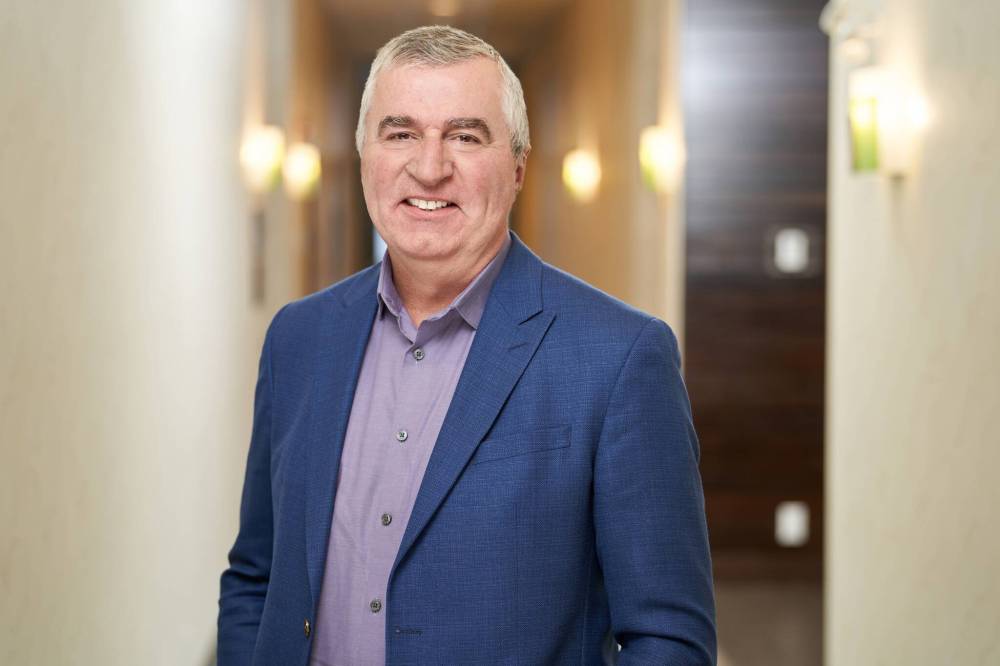
Supplied
Brian Cornick, president and CEO of Cando Rail & Terminals Ltd.
Terms of the deal, which is expected to close April 30, were not disclosed.
Savage Rail has a platform of rail assets in key markets, including along the U.S. Midwest, Gulf Coast and Southeast corridors. The transaction will accelerate Cando’s U.S. expansion plans, while strengthening its existing network in Canada, the company announced in a news release.
Cando has hired Savage Rail’s 736 employees to create a combined workforce of approximately 2,000 employees across Canada and the U.S., Brian Cornick, Cando president and CEO, told the Free Press.
Cando will maintain its global headquarters in Manitoba and plans to establish a new U.S. HQ in Salt Lake City.
Savage Rail’s executive team will become part of Cando’s executive team moving forward, Cornick said, adding the similarities between the two companies made the acquisition attractive.
“We have complementary footprints. We have complementary client bases (and) we provide the same services north and south of the border,” he said. “This is a transformative acquisition by Cando.”
The combined company is expected to operate a coast-to-coast network of assets in North America with no geographic overlap that will include 36 railcar storage, staging and or transload terminals; three short-line railways; more than 16,400 railcar staging and storage spots; and 80 first- and last-mile rail service operations, as well as access to all six Class I railroads.
The acquisition will allow for greater connectivity for customers, Cornick said. It enhances safety, reliability and service consistency, while enabling faster, more efficient movement of goods across supply chains.
“We are that entity that helps the shippers … get more product to market,” he said. “That’s really what we do — we just get product to market faster.”
Cando has operated in the U.S. in four or five different locations for the past 20 years, but the Savage Rail acquisition “truly launches us in the U.S.,” Cornick said. “We will be, post-closing, the largest North American-wide company in the first-mile, last-mile space.”
While no terms were released, Cornick said Cando has made $1.4 billion in capital investments over the last two years. “This acquisition was a large portion of that,” he said.
Jeff Roberts, president and CEO of Savage Enterprises LLC, was not available for an interview Monday.
In a statement to the Free Press, he said Savage signed the agreement because it knows expanded reach, investment and connectivity are critical to the ongoing success of the rail business.
“We’re genuinely excited to see what the combined business will achieve, and look forward to seeing our team members thrive in this new environment,” Roberts said.
Gord Peters and Rick Hammond founded Cando in 1978, as a small rail line dismantling and salvage company.
Today, the company employs approximately 150 people in Manitoba, including 90 in Winnipeg.
Barry Prentice, a University of Manitoba supply chain management professor, called Cando a progressive company that Manitobans can be proud of. He noted that last year, the company unveiled Canada’s first battery-powered locomotive.
Diesel-electric locomotives are a staple in the railway industry, but Cando’s lithium-ion battery-powered locomotive is zero emissions.
While he isn’t familiar with Savage Rail, Prentice described the acquisition as a good opportunity for Cando.
“Generally speaking, these things are good news,” Prentice said.
In addition to unveiling the battery-powered locomotive, Cornick said Cando opened a new $150-million terminal in Edmonton last year.
The company is currently twinning its Sturgeon Terminal in Alberta. It’s already the largest privately owned terminal in Canada, Cornick said, but once it’s complete, it will be the largest in the country, full stop.
Cando has further expansion plans moving forward.
“We’re still deploying hundreds of millions of dollars in capital investment every year for the next five years,” Cornick said. “We see a lot more growth going on, which is just absolutely incredible.”
aaron.epp@freepress.mb.ca
Aaron Epp reports on business for the Free Press. After freelancing for the paper for a decade, he joined the staff full-time in 2024. Read more about Aaron.
Every piece of reporting Aaron produces is reviewed by an editing team before it is posted online or published in print — part of the Free Press‘s tradition, since 1872, of producing reliable independent journalism. Read more about Free Press’s history and mandate, and learn how our newsroom operates.
Our newsroom depends on a growing audience of readers to power our journalism. If you are not a paid reader, please consider becoming a subscriber.
Our newsroom depends on its audience of readers to power our journalism. Thank you for your support.
Aaron Epp reports on business for the Free Press. After freelancing for the paper for a decade, he joined the staff full-time in 2024. Read more about Aaron.
Every piece of reporting Aaron produces is reviewed by an editing team before it is posted online or published in print — part of the Free Press‘s tradition, since 1872, of producing reliable independent journalism. Read more about Free Press’s history and mandate, and learn how our newsroom operates.
Our newsroom depends on a growing audience of readers to power our journalism. If you are not a paid reader, please consider becoming a subscriber.
Our newsroom depends on its audience of readers to power our journalism. Thank you for your support.
Advertisement Advertise With Us
Advertisement Advertise With Us