Democracy and governance in Canada
Please review each article prior to use: grade-level applicability and curricular alignment might not be obvious from the headline alone.
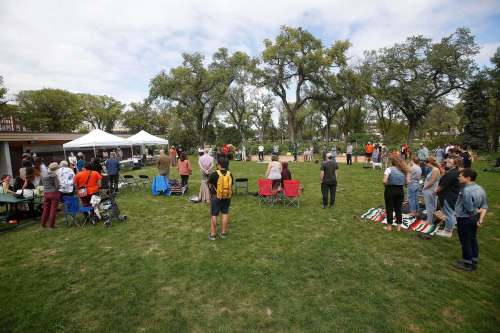
Group engages community on renaming Wolseley neighbourhood
4 minute read Preview Monday, Aug. 30, 2021Precedent-setting Treaty 1 case wraps up
4 minute read Wednesday, Mar. 4, 2026A precedent-setting trial that wrapped up in Winnipeg’s Court of King’s Bench at the end of February has called for a court to determine, for the first time in 150 years, whether the value of Treaty 1 annuities is subject to an increase after being frozen at $5 per person since 1875.
Time for unity, not party politics
5 minute read Monday, Mar. 2, 2026Like many of you, I watched the Olympics with a focus on both our women’s and men’s hockey teams, both of whom fell just short of gold medals, in losses to the U.S.
In the normal course of sports and national pride, this would always be a bit of a disappointment. I think it was heightened this year, given the insults and economic pain which the U.S. has inflicted upon us, their largest trading partner, over the past year.
To put it bluntly, we are a long way from the words of former president John F. Kennedy, who spoke of our relationship in a 1961 address to the Canada’s Parliament, saying, “Geography has made us neighbours. History has made us friends. Economics has made us partners. And necessity has made us allies.”
While we will remain neighbours to the U.S. and will always have a large trading relationship with them, the depth of our relations, as either a friend or an ally, will never be what it was.
Canadian sovereignty is not just about borders, but culture too
16 minute read Preview Saturday, Feb. 28, 2026
Solomon to meet OpenAI CEO Altman in wake of mass killings in Tumbler Ridge, B.C.
5 minute read Preview Saturday, Feb. 28, 2026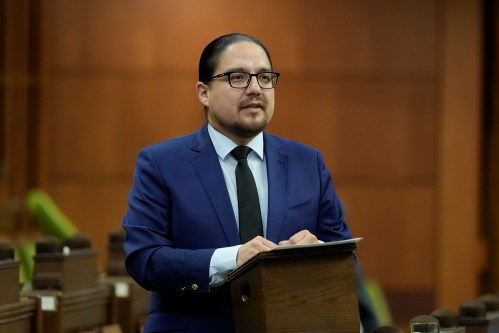
Opposition parties back changes to status rules in Indian Act, Liberals say not yet
5 minute read Preview Saturday, Feb. 28, 2026
Persian Gulf War vets still fighting for better recognition after 35 years
6 minute read Preview Saturday, Feb. 28, 2026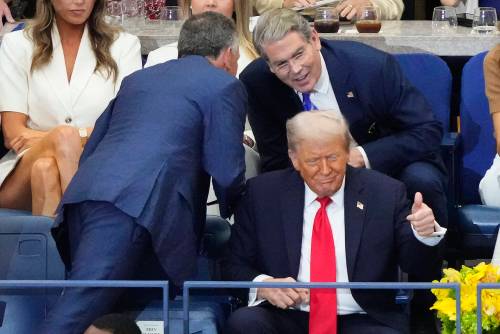
Trump plays games with Canada’s sovereignty
5 minute read Preview Thursday, Feb. 26, 2026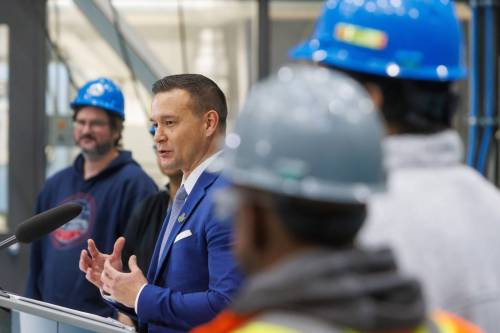
First Nations awaiting Hydro consults
5 minute read Preview Wednesday, Feb. 25, 2026
Unpredictable health-care costs a given, redundant health-system bureaucracy an unaffordable burden
5 minute read Preview Tuesday, Feb. 24, 2026In search of a better way to build Manitoba
4 minute read Tuesday, Feb. 24, 2026Manitoba was built through hard work, collaboration, and community. Every hospital, school, road, and bridge reflects the dedication of our construction industry. Today, the sector employs more than 57,000 Manitobans, contributes $4.2 billion annually to the provincial economy, and supports businesses in every region. We are proud of the role we play in building Manitoba’s future.
We are speaking out about the Manitoba Jobs Agreement (MJA) not to oppose the government’s goals, but to ensure public policy delivers real value, respects worker choice, and protects taxpayers. The practical consequences of the MJA are clear: fewer bidders, reduced competition, increased administrative burden, and higher project costs. When competition narrows, prices rise. When compliance complexity grows, risk premiums follow. All of this lands on a provincial budget already facing structural deficits.
The MJA imposes a specific labour relations structure on provincially funded projects exceeding $50 million. Successful bidders must hire union card-holding workers first if their own workforce is insufficient. Union membership becomes the deciding factor — not skill, experience, or performance. If the goal is to ensure Manitobans work on these projects, there is a simple solution: require contractors to certify that their workforce consists of Manitoba residents. A union card should not determine who is entitled to work on taxpayer-funded infrastructure. The agreement also introduces entirely new costs. All employers must pay 85 cents per hour worked to the Manitoba Building Trades Council; an unprecedented charge in Manitoba construction. On a typical school project, this payment alone can exceed $250,000, with no measurable benefit to taxpayers.
Open-shop contractors face additional costs, including compulsory union dues, numerous union fund contributions, and payments to third parties. Taken together, these requirements will add millions of dollars to publicly funded projects. It’s money that could otherwise be invested directly in classrooms, hospitals, and infrastructure.
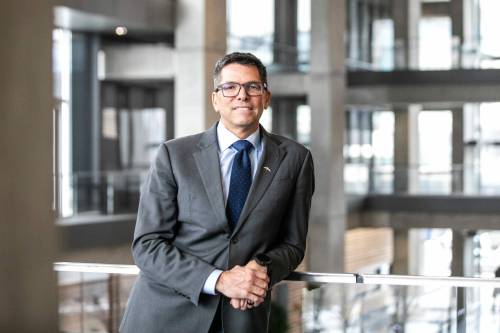
First Nations hopeful as Hydro’s first Indigenous chair eyes reversing years of enmity
5 minute read Preview Tuesday, Feb. 24, 2026
Eby says it looks like OpenAI could have prevented ‘horrific’ Tumbler Ridge killings
5 minute read Preview Tuesday, Feb. 24, 2026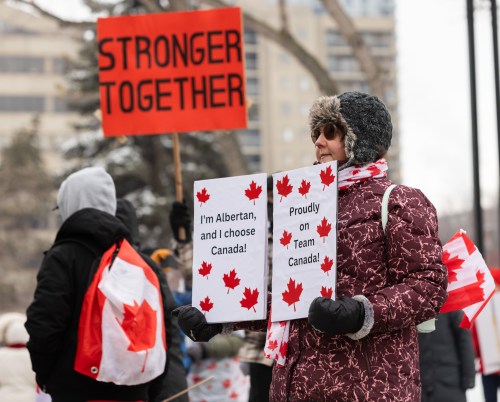
Albertans react to looming referendum during weekend rally, call-in radio show
4 minute read Preview Monday, Feb. 23, 2026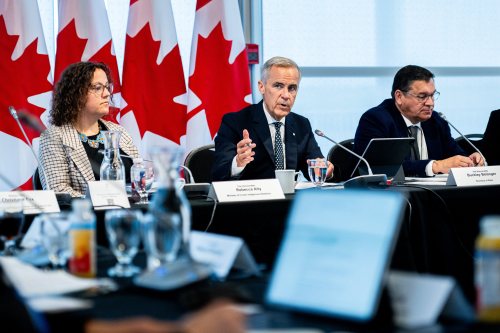
Indigenous leaders outline priorities for spring sitting of Parliament
6 minute read Preview Monday, Feb. 23, 2026
Alberta premier asks voters to bypass Indigenous rights
5 minute read Preview Saturday, Feb. 21, 2026
Alberta’s Smith to put immigration, Constitution questions on fall referendum
5 minute read Preview Saturday, Feb. 21, 2026
New report says youth should help guide Ottawa’s campaign against online exploitation
3 minute read Preview Thursday, Feb. 19, 2026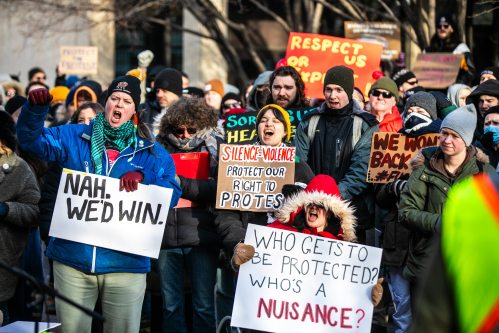
‘Nuisance’ protest bylaw stalled after hundreds object
5 minute read Preview Tuesday, Feb. 17, 2026Maintenance isn’t enough — we have to build
5 minute read Tuesday, Feb. 17, 2026For the third year in a row, the atmosphere in Manitoba’s staffrooms during the provincial school funding announcement has been one of cautious relief rather than the dread we came to expect for a decade.
As a high school teacher-librarian and a parent with a child in the public system, I want to begin by acknowledging the progress made.
After the lean, adversarial years of the Brian Pallister and Heather Stefanson governments, years defined by the looming threat of Bill 64 and funding increases that didn’t even cover the cost of a box of pencils, the current NDP government has chosen a different path.
This $79.8-million injection for the 2026-27 school year, building on the $104-million and $67-million investments of the previous two years, represents nearly a quarter-billion-dollar shift in how we value our children’s future. For the nutrition programs, the salary harmonization, and the simple act of treating educators as partners rather than enemies: thank you.
Ukrainian emergency visa holders expected to return after war: immigration department
5 minute read Preview Tuesday, Feb. 17, 2026City’s proposed ‘nuisance’ protest ban doesn’t pass Charter test
4 minute read Saturday, Feb. 14, 2026If the City of Winnipeg wants to protect public safety when it comes to protests, it should enforce laws that are already on the books.
What it should not do is pass a sweeping, constitutionally dubious bylaw that tramples on fundamental freedoms in the name of sparing people from being offended.
Yet that’s precisely what council is poised to do when it votes Feb. 26 on a proposed ban on so-called “nuisance” protests within 100 metres of a long list of “vulnerable social” locations — schools, hospitals, places of worship, post-secondary institutions, libraries, community centres, cemeteries and more.
On paper, the objective sounds noble: protect access, reduce intimidation, promote safety. In practice, the bylaw is far too broad, far too vague and far too discretionary to meet the Charter standard of a “reasonable limit.”
Protest bylaw goes too far
4 minute read Tuesday, Feb. 17, 2026From Minneapolis, to Tehran, to Bangladesh, people are taking to the streets to protest against perceived injustices.
Peaceful protest is a critically important line of defence against the unjust actions of governments.
Incredibly, here in Winnipeg, some members of our city council want to put strict limits on that essential right.
The proposed safe access to vulnerable infrastructure bylaw, if passed, would be the most draconian law of its kind in Canada.