Social Studies (general)

Please review each article prior to use: grade-level applicability and curricular alignment might not be obvious from the headline alone.

No Subscription Required

Tree-felling display home transport generates online buzz

Gabrielle Piché 3 minute read Preview
No Subscription Required

Tree-felling display home transport generates online buzz

Gabrielle Piché 3 minute read Saturday, Aug. 14, 2021

A Winnipeg display home that recently smashed into trees and street signs as it was transported via truck has now been to British Columbia, the Panama Canal and Oz — via the internet.

An online Manitoba starlet, Photoshopped images of the house in the city and beyond have gone viral.

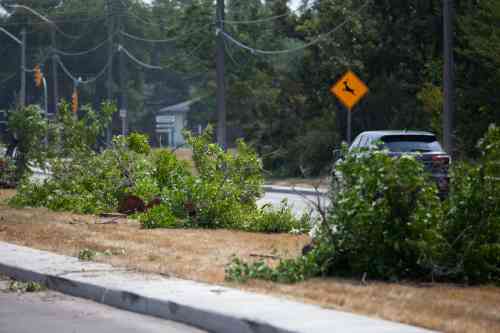
The home’s transport Saturday led to the destruction of nearly two dozen trees in the Charleswood neighbourhood along Roblin Boulevard, between Scotswood Drive and the Perimeter Highway. The house was too wide to fit on the road. It also hit several street signs.

The Winnipeg Police Service said officers arrested the driver, who’s facing a charge of mischief over $5,000. The incident is now subject to a provincial investigation.

Read
Saturday, Aug. 14, 2021

SUPPLIED
Darlene Kuchar created memes based on the Charleswood house debacle.

SUPPLIED
Darlene Kuchar created memes based on the Charleswood house debacle.
No Subscription Required

Pit bulls legal, ball pythons banned?

Gabrielle Piché 6 minute read Preview
No Subscription Required

Pit bulls legal, ball pythons banned?

Gabrielle Piché 6 minute read Wednesday, Aug. 11, 2021

Laura Baker has wanted a pit bull for 20 years, but hasn’t bought one because of the city’s ban.

“I just feel like the whole breed has been so misrepresented, misunderstood and given a raw deal in terms of being able to find loving homes,” the St. James resident said.

If proposed changes to a city bylaw pass, Baker will legally be able to own a pit bull, while it could become illegal to feed wildlife and to leave pets in vehicles at certain temperatures.

The city is looking for feedback on suggestions to its Responsible Pet Ownership bylaw. Winnipeg Public Service reviewed the rules this summer and came back with a number of ideas, including a removal of breed-specific bans.

Read
Wednesday, Aug. 11, 2021

Tim Smith / Brandon Sun files
If proposed changes to a city bylaw pass, Winnipeggers will legally be able to own a pit bull.

Tim Smith / Brandon Sun files
If proposed changes to a city bylaw pass, Winnipeggers will legally be able to own a pit bull.
No Subscription Required

Charleswood residents fume over destroyed trees

Joyanne Pursaga 4 minute read Preview
No Subscription Required

Charleswood residents fume over destroyed trees

Joyanne Pursaga 4 minute read Monday, Aug. 9, 2021

Frustrated residents are calling on the city and province to get to the root of the problem that led to the destruction of nearly two dozen mature trees in Charleswood on the weekend.

Early Saturday morning, a building moving company began to move a display home near the corner of Roblin Boulevard and Scotswood Drive. The home was too wide to clear mature trees along Roblin’s median.

When Winnipeg Police Service officers arrived to provide a previously scheduled escort for the movers at about 7 a.m. they discovered 17 trees had been cut down, allegedly by the driver of the vehicle hauling the house, police spokesman Const. Rob Carver said.

“Immediately, upon determining that the trees had been cut and linking it to this move, the move was halted and, ultimately, the driver (was) arrested,” said Carver.

Read
Monday, Aug. 9, 2021

Daniel Crump / Winnipeg Free Press. Felled trees line the median on Roblin Blvd from Scotswood Drive almost all the way to perimeter highway. The destruction is the aftermath of a house that was being moved from the Roblin Grove development in Charleswood on Saturday morning. August 7, 2021.

Daniel Crump / Winnipeg Free Press. Felled trees line the median on Roblin Blvd from Scotswood Drive almost all the way to perimeter highway. The destruction is the aftermath of a house that was being moved from the Roblin Grove development in Charleswood on Saturday morning. August 7, 2021.
No Subscription Required

Oh, Canada! We have a racism problem

Ruby Latif - Contributing Columnist, Toronto Star 4 minute read Preview
No Subscription Required

Oh, Canada! We have a racism problem

Ruby Latif - Contributing Columnist, Toronto Star 4 minute read Wednesday, Oct. 15, 2025

Sorry, Canada — as much as we like to believe we’re a multicultural country, we’re not as tolerant as we think we are.

Read
Wednesday, Oct. 15, 2025

Adrian Wyld - THE CANADIAN PRESS
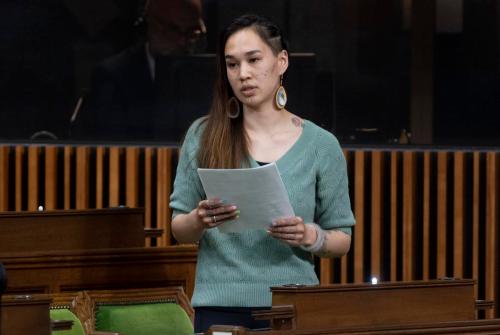
“We recently heard Nunavut MP Mumilaaq Qaqqaq state, ‘Every time I walk on House of Commons ground, I am reminded every step of the way that I don’t belong here,’” writes Ruby Latif.

Adrian Wyld - THE CANADIAN PRESS
“We recently heard Nunavut MP Mumilaaq Qaqqaq state, ‘Every time I walk on House of Commons ground, I am reminded every step of the way that I don’t belong here,’” writes Ruby Latif.
No Subscription Required

Bell MTS enhancing broadband for rural areas

Temur Durrani 2 minute read Wednesday, Jun. 23, 2021

Bell MTS is launching its Wireless Home Internet service for 12 communities across Manitoba, with enhanced broadband access for nearly 40,000 rural and remote locations to come by the end of 2021.

“It’s an exciting chapter for us and for all of Manitoba,” said Ryan Klassen, vice-chair of Bell MTS and Western Canada, in an interview Tuesday.

The new 5G-capable network will offer download speeds of up to 50 megabits per second and upload speeds of 10 Mbps, with no data overage fees on the 3500 MHz spectrum. It’s part of a recent $1.7-billion investment from telecommunications giant Bell Canada, as it expands across the country from province to province over the next two years.

“COVID-19 certainly accelerated the need for something like this, because we’ve all been relying more than we ever have on strong and trustworthy internet service,” Klassen told the Free Press. “But in many ways, it also predates that, because these are communities that haven’t had this kind of access before.”
No Subscription Required

Muslim Canadians’ Eid celebrations reflect diversity

Michelle Gazze 5 minute read Preview
No Subscription Required

Muslim Canadians’ Eid celebrations reflect diversity

Michelle Gazze 5 minute read Friday, May. 14, 2021

My earliest Eid memory is of my grandma cooking fresh, hot Sirnee — a soft, sweet, spiced, cooked dough made of flour and butter. That divine smell alone would make anyone excited to celebrate Eid.

Eid-al-Fitr (also called the “Festival of Breaking Fast” or just Eid) marks the end of Ramadan, the holy month in which Muslims fast daily from dawn until sundown. It is an opportunity to foster gratitude, discipline and deepen our connection with God, so we can live from a place of higher consciousness. Not for a single month, but for our entire lives.

Coming from a Guyanese family, I grew up with Hindu and Muslim family members. It wasn’t until my paternal grandparents immigrated to Winnipeg we started to celebrate Eid. After Ramadan, we would gather at their house to feast and enjoy West Indian sweets. We also spent more time in the community donating food hampers and strengthening our faith through acts of charity.

As Eid quickly approaches this week, most Muslims celebrate in the same religious sense, but cultural traditions differ from one country to another. A common assumption is being of Muslim faith is synonymous with Middle Eastern countries, but my Muslim friends and I represent the diversity in Islam.

Read
Friday, May. 14, 2021

Shafdar Gazze and Malina donate food hampers as a form of Zakat — almsgiving at the end of Ramadan.

Shafdar Gazze and Malina donate food hampers as a form of Zakat — almsgiving at the end of Ramadan.
No Subscription Required

Preserving stories of Muslim history in Manitoba

John Longhurst  3 minute read Preview
No Subscription Required

Preserving stories of Muslim history in Manitoba

John Longhurst  3 minute read Friday, Feb. 5, 2021

It was in the early 1900s when one of the first Muslims to live in Manitoba arrived in the province.

His name was Ahmed Awid, and he came from what is now Lebanon — one of perhaps fewer than 1,000 Muslims in Canada at the time.

Awid settled in Brandon, where he married a local woman and established two successful businesses before moving to Edmonton in 1928.

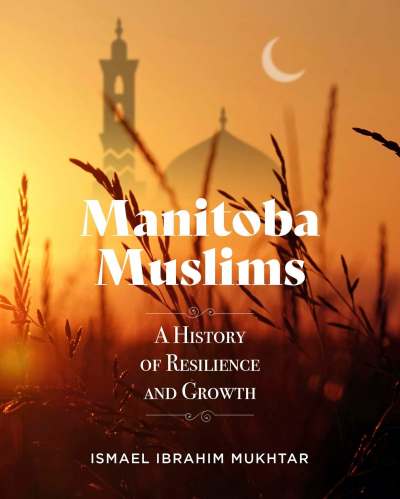
Awid’s story is one of many told in a new book: Muslims in Manitoba: a History of Resilience and Growth.

Read
Friday, Feb. 5, 2021
No Subscription Required

Association hopes library donation expands understanding of Islam

John Longhurst  3 minute read Saturday, Nov. 14, 2020

The Winnipeg Public Library will soon have new books about the Prophet Muhammad, thanks to a donation from the Manitoba Islamic Association.

“We want to provide factual information about Islam,” said Philip Bravo, who is responsible for adult non-fiction for the library.

The offer of free books will “help us fulfil our mission of enriching the lives of all Winnipeggers,” he said, adding the books will be made available in all of the city’s branches.

The idea for donating books about Islam grew out the recent attacks in France following depictions of the prophet, said Idris Elbakri, MIA’s board chairman.

No Subscription Required

Canadian demographics impact cultural shifts

Reviewed by Scott MacKay 3 minute read Preview
No Subscription Required

Canadian demographics impact cultural shifts

Reviewed by Scott MacKay 3 minute read Saturday, May. 2, 2020

‘Here we go again” was the first thought while unsealing Darrell Bricker’s newest study from the envelope the Winnipeg Free Press had sent to my isolated home. Surely this new work — Next: Where to Live, What to Buy and Who Will Lead Canada’s Future — would suffer the same cruel invalidation that every other pre-pandemic prognostication must experience in these strange times.

But in a sense, Bricker has dodged a COVID-19 bullet, as his focus throughout this volume is on Canadian demographics, complete with its recurrent reminder of how these mighty, slow-moving and mostly irreversible forces affect society today and tomorrow. Take that, pandemic.

Bricker is CEO of Ipsos Public Affairs, a global marketing research company. This is Bricker’s third book on population trends and follows Empty Planet and The Big Shift, both of which he co-authored with the Globe and Mail’s former chief political writer John Ibbitson. (Disclosure: This reviewer crossed paths with Bricker in the early ’90s while working at what was then the Angus Reid Group.)

Much of the focus of Bricker’s new solo work is on generational groups, particularly on what he maintains are the miscalculated “Perennials” (basically anyone over 55). It is these comfortable silver-haired boomers who continue to dominate and shape our social values and consumer trends, mostly by the sheer potency of their numbers and their relative prosperity.

Read
Saturday, May. 2, 2020
No Subscription Required

Indigenous, Muslim youth event seeks to build friendships

John Longhurst 2 minute read Preview
No Subscription Required

Indigenous, Muslim youth event seeks to build friendships

John Longhurst 2 minute read Saturday, Feb. 15, 2020

Indigenous and Muslim youth in Winnipeg are invited to get to know each other at a special gathering Sunday.

Longing for Belonging — sponsored by the Ma Mawi Wi Chi Itata Centre and the Islamic Social Services Association, with financial support from the Winnipeg Foundation — is a free event for youth ages 14 to 20. It’s happening at the United Way (580 Main St.) from 11 a.m. to 3 p.m.

Space is limited to 60 participants, but there is still room for a few more, event co-organizer Sarah Parkar of the Islamic association said.

The goal is to “provide a safe space where Indigenous and Muslim youth can learn about each other and break down stereotypes,” Parkar said.

Read
Saturday, Feb. 15, 2020

Mike Sudoma / Winnipeg Free Press
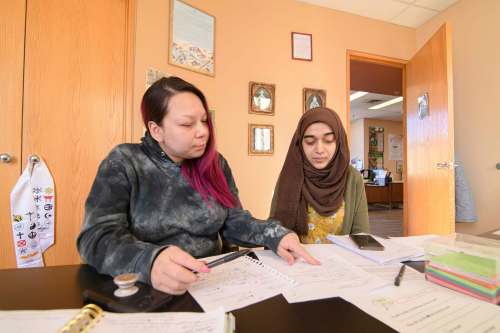
Youth Coordinator, Trisha North (left) and Sarah Parker (right of the Islamic Social Services Association discuss plans for this Sunday’s “Longing for Belonging” event which focuses on bringing Aboriginal and Muslim together.

Mike Sudoma / Winnipeg Free Press
Youth Coordinator, Trisha North (left) and Sarah Parker (right of the Islamic Social Services Association discuss plans for this Sunday’s “Longing for Belonging” event which focuses on bringing Aboriginal and Muslim together.
No Subscription Required

André Marchildon : son dynamisme au service de l’aérodynamique

Amélie DAVID de La Liberté pour le Winnipeg Free Press 3 minute read Saturday, Jun. 29, 2019

ANDRÉ Marchildon, un Franco-Manitobain de 25 ans, n’a plus beaucoup de temps pour lui-même. En ce vendredi de la mi-juin, ce Winnipégois rentre à peine de sa journée de travail qu’il doit déjà se préparer pour son prochain voyage au Texas. Dans ses valises, l’étudiant en ingénierie aérospatiale à l’Université de Toronto emporte une présentation de ses recherches.

Il vient de remporter la bourse Vanier pour ses recherches dans le domaine de l’aérospatiale. Ce prix prestigieux récompense chaque année une centaine d’élèves à travers le Canada pour leurs recherches dans les domaines des sciences humaines, des sciences naturelles, du génie ou encore de la santé, mais aussi leur implication sociale.

André Marchildon : “Cette bourse est une chance, car ça me permet d’aller à plus de conférences et de pouvoir présenter ma recherche à beaucoup plus de monde, comme c’est le cas avec cette conférence au Texas.” Il porte ainsi les couleurs de sa communauté au-delà des frontières du Manitoba.

Actuellement en maîtrise, l’étudiant cherche à rendre les algorithmes utilisés pour calculer le mouvement de l’air autour des avions plus efficaces.

No Subscription Required

Pas facile, le baseball au féminin

Manella VILA NOVA de La Liberté pour le Winnipeg Free Press 4 minute read Saturday, Aug. 4, 2018

Quand elle était enfant, Sophie Bissonnette n’avait pas d’intérêt évident pour un sport particulier. Ses parents ont donc décidé de l’inscrire au baseball, la passion de son père, Marc Bissonnette. Devenue elle-même amoureuse du sport, elle a joué pendant 15 ans dans des équipes masculines, puis féminines.

À ses débuts, le baseball était surtout l’occasion pour Sophie Bissonnette de passer du temps avec son père. “Il m’a toujours entraînée, et ça me plaisait beaucoup d’avoir ces moments avec lui. Dans ma première équipe, il y avait six filles et un garçon. Au fil des années, il y a eu de moins en moins de joueuses, jusqu’à ce que je sois la seule de mon équipe.”

Une situation qui a quelque peu préoccupé ses parents. “Ma mère était inquiète que je ne sois qu’avec des garçons. Mes parents m’ont proposé de passer au softball, pour être avec d’autres filles. Mais pour moi, c’est un sport complètement différent, et je ne voulais pas arrêter le baseball.”

Sophie n’a senti une différence que quand elle a commencé à jouer à haut niveau. “L’entraîneur me traitait comme les autres joueurs. Mais je n’étais pas la meilleure, et je sentais que je devais travailler plus fort, parce qu’il y avait des préjugés. Quand il y a 12 garçons et une fille sur le terrain, on remarque la fille et on prête plus attention à ce qu’elle fait. Mais j’avais ma place dans l’équipe, et j’étais prête à tout pour y rester.”
No Subscription Required

Chasser, pour avoir la conscience tranquille

Daniel Bahuaud de La Liberté pour le Winnipeg Free Press 4 minute read Preview
No Subscription Required

Chasser, pour avoir la conscience tranquille

Daniel Bahuaud de La Liberté pour le Winnipeg Free Press 4 minute read Saturday, Dec. 2, 2017

Vanessa Ahing a été végétarienne pendant plus de quatre années. Par refus de l’industrie de la viande qui, à son avis, est cruelle et nuit à l’environnement. Pourtant, un bon steak lui manquait. Pour réconcilier conscience et palais, un choix nouveau s’imposait...

Un soir de septembre, 2013, Vanessa Ahing rentrait de la campagne, où elle avait abattu son premier chevreuil. Souvenir de l’enseignante de 31ans: “J’étais toute seule. J’avais suivi une formation de chasse pour femmes, organisée par la Manitoba Wildlife Foundation. Mon chevreuil, coupé en quarts, était dans un sac de hockey dans le coffre de ma Honda Civic. C’était mon premier animal. Je voulais vivre l’expérience complète de la chasse. Donc pas question pour moi d’aller chez un boucher. D’ailleurs, j’étais étudiante. Je n’avais pas le fric pour me payer un tel service.

“Je me demandais comment j’allais faire pour préparer cette viande. Je n’ai pas été élevée dans une famille de chasseurs, ou même de jardiniers. Mes parents n’étaient pas prêts à avoir un chevreuil chez eux. Et moi, je vivais dans un petit appartement pour célibataires au centre-ville de Winnipeg.

“Il était tard. Trop tard pour dépecer l’animal tout de suite. Alors, j’ai ouvert les fenêtres de mon appartement. Je me suis endormie dans mon sac de couchage. Le lendemain, j’ai tapé ‘Comment couper de la viande de chevreuil’ sur YouTube. Et je me suis mise à l’œuvre.”

Read
Saturday, Dec. 2, 2017

Daniel Bahuaud photo
Vanessa Ahing: ‘Je mange du chevreuil, de la bernache et du canard. C’est la viande la plus naturelle qui soit.’

Daniel Bahuaud photo
Vanessa Ahing: ‘Je mange du chevreuil, de la bernache et du canard. C’est la viande la plus naturelle qui soit.’
No Subscription Required

Riel, le lien entre les francos d’Amérique

Daniel Bahuaud de La Liberté pour le Winnipeg Free Press  4 minute read Preview
No Subscription Required

Riel, le lien entre les francos d’Amérique

Daniel Bahuaud de La Liberté pour le Winnipeg Free Press  4 minute read Saturday, Nov. 18, 2017

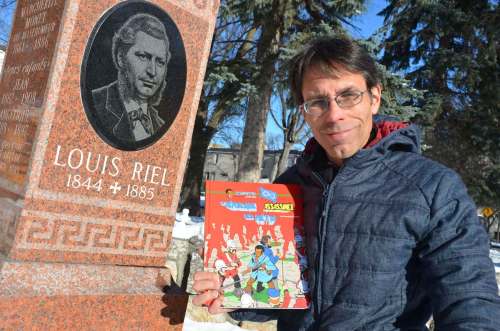
Pour Jocelyn Jalette, bédéiste de Joliette, au Québec, pas besoin d’être métis, ou manitobain, ou encore francophone en milieu minoritaire pour apprécier le combat, le triomphe et la tragédie de Louis Riel. Et voici pourquoi.

Dans La République assassinée des Métis, la bande dessinée de Jocelyn Jalette qui vient tout juste d’être publiée aux Éditions du Phoenix (www.editionsduphoenix.com), des personnages fictifs côtoient Louis Riel et Gabriel Dumont, mais aussi les politiciens Louis-Hippolyte Lafontaine, Louis-Joseph Papineau et Honoré Mercier.

Une palette de personnages pour mieux placer la résistance des Métis dans un contexte francophone plus large, comme le souligne l’auteur de 47 ans :

“Les liens sont étroits entre la résistance des Métis, Louis Riel et les francophones du Québec. Surtout quand on se rappelle que la lutte pour assurer un statut d’égalité entre le français, l’anglais, et les cultures francophone et anglophone, c’est l’affaire de tous les francophones.”

Read
Saturday, Nov. 18, 2017

Daniel Bahuaud photo
‘Toute la francophonie nord-américaine est liée’: Le bédéiste québécois Jocelyn Jalette a rendu hommage à Louis Riel en visitant, le 8 novembre dernier, la tombe du Père du Manitoba. Riel a été pendu le 16 novembre 1885.

Daniel Bahuaud photo
‘Toute la francophonie nord-américaine est liée’: Le bédéiste québécois Jocelyn Jalette a rendu hommage à Louis Riel en visitant, le 8 novembre dernier, la tombe du Père du Manitoba. Riel a été pendu le 16 novembre 1885.
No Subscription Required

Map-based history of Canada a marvel

Reviewed by Douglas J. Johnston 3 minute read Preview
No Subscription Required

Map-based history of Canada a marvel

Reviewed by Douglas J. Johnston 3 minute read Saturday, Oct. 28, 2017

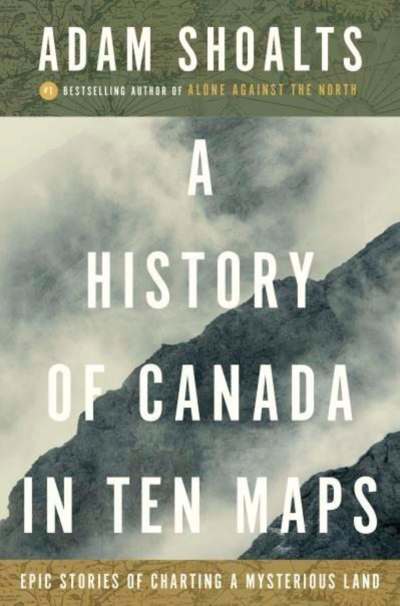
If you like maps, you’ll like this book; if you like both maps and crisply recounted Canadian history, you’ll love it.

Adam Shoalts is the author of a previous Canadian bestseller, 2015’s Alone Against the North, which recounted his exploration of the muskeg and river wilderness that is the Hudson Bay Lowlands.

The maps of his second book are springboards for his accounts of how this country’s vast expanses were charted.

Shoalts believes maps have been fundamental in shaping our view of Canada. He supports this belief by offering up pivotal moments in our country’s history via stories built around 10 specific maps, most of which, in turn, are the product of specific explorations.

Read
Saturday, Oct. 28, 2017
No Subscription Required

Book details 1953 Cold War experiments on Winnipeg

Carol Sanders 4 minute read Preview
No Subscription Required

Book details 1953 Cold War experiments on Winnipeg

Carol Sanders 4 minute read Friday, Oct. 13, 2017

Winnipeg was duped into being a “guinea pig” for American chemical warfare experiments in 1953, but no one knows what effect it had on city residents, a University of Manitoba pharmacology professor emeritus says.

“It’s too late now to do anything about it or to know what health effects it had on people,” Frank LaBella said Thursday of the aerosol cloud of zinc cadmium sulphide that was sprayed in Winnipeg to test ways of distributing chemical and biological warfare agents.

The deceitful operation by the United States army came to light in 1980 and is back in the spotlight with the publication of a book by an American researcher that includes declassified information. Behind the Fog: How the U.S. Cold War Radiological Weapons Program Exposed Innocent Americans, by Lisa Martino-Taylor, details the testing carried out in cities in the U.S. and Winnipeg (which resembled target sites in the Soviet Union).

“Nobody knew what was going on,” LaBella said. In 1953, Winnipeg city council was told civil defence authorities were testing the effects of smoke over the city using “harmless fluorescent powder.”

Read
Friday, Oct. 13, 2017

Jeff Roberson / The Associated Press Files
In her book, Lisa Martino-Taylor writes about how the U.S. government secretly exposed people in Winnipeg to dangerous radiation.

Jeff Roberson / The Associated Press Files
In her book, Lisa Martino-Taylor writes about how the U.S. government secretly exposed people in Winnipeg to dangerous radiation.
No Subscription Required

Traversant le Canada en 20 chansons

Manella Vila Nova 4 minute read Preview
No Subscription Required

Traversant le Canada en 20 chansons

Manella Vila Nova 4 minute read Saturday, Jul. 8, 2017

De La Rochelle à la Colombie-Britannique en passant par l’Acadie, le Québec, l’Ontario et les Prairies, voici le voyage que proposera la chorale québécoise En Supplément’Air dans la Cathédrale de Saint-Boniface à l’occasion du 150e anniversaire de la Confédération canadienne, le 11 juillet.

Le Chœur En Supplément’Air a été fondé en 2015 par Carole Bellavance, la directrice artistique de la chorale. “Cette année, le chœur compte 300 choristes de toute la province du Québec. Tous les étés, nous organisons une tournée avec une quarantaine d’entre eux. Nous sommes partis le 3 juillet pour un premier concert à Ottawa, puis nous nous rendrons à North Bay, Sault Sainte-Marie, Thunder Bay. Nous terminerons à Winnipeg le 11 juillet,” Bellavance a dit.

C’est la première fois que le chœur se déplace aussi loin à l’ouest du Canada. “Avec notre spectacle Le périple de la chanson francophone en Haute-Amérique, nous voulons faire valoir l’histoire de la chanson francophone au Canada à travers le temps. Nous avons choisi des chansons de partout pour mettre en valeur les régions. Le propos se prête bien à la grande aventure de la francophonie canadienne. J’ai profité du 150e anniversaire de la Confédération pour faire vivre aux choristes les chansons francophones canadiennes, et pas seulement québécoises.”

Harmonisé et orchestré par François Couture, le spectacle met la culture francophone au premier plan. “La culture francophone a été apportée de l’Europe. Pour illustrer cela, notre première chanson s’intitule Je pars à l’autre bout du monde. Au début du spectacle, on se sent vraiment à La Rochelle. Ensuite, on arrive dans les Maritimes avec des chansons qui reflètent l’histoire de l’Acadie, puis du Québec, et le développement de l’Ontario. Nous suivons le trajet de la chanson francophone, d’est en ouest.”

Read
Saturday, Jul. 8, 2017

Photo gracieuseté Carole Bellavance
Le Choeur En Supplément’Air lors d’un concert au Grand Théâtre de Québec.

Photo gracieuseté Carole Bellavance
Le Choeur En Supplément’Air lors d’un concert au Grand Théâtre de Québec.
No Subscription Required

Event aims to share what it means to be Muslim and Canadian

Brenda Suderman  4 minute read Preview
No Subscription Required

Event aims to share what it means to be Muslim and Canadian

Brenda Suderman  4 minute read Friday, Jun. 30, 2017

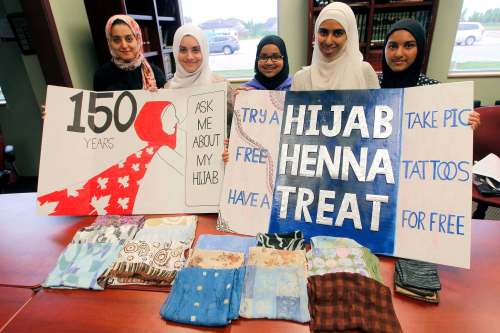
ALTHOUGH she’s still in high school, Maryam Islam already knows what it is like to face discrimination because she wears a head scarf as part of her Muslim beliefs.


“Whenever it’s a group activity or a class discussion, people may question before putting me in a group,” the Grade 10 student at Fort Richmond Collegiate says.

“Whenever I get into a group I try to be nice and kind and to show I’m not an alien.”

Read
Friday, Jun. 30, 2017

BORIS MINKEVICH / WINNIPEG FREE PRESS
Muslim women and girls are setting up a display at the Canada Day celebration at Assiniboine Park. From left, Shrooq Saber, Yasmine El-Salakawy, Isra Inam, Maryam Islam and Maria Islam.

BORIS MINKEVICH / WINNIPEG FREE PRESS
Muslim women and girls are setting up a display at the Canada Day celebration at Assiniboine Park. From left, Shrooq Saber, Yasmine El-Salakawy, Isra Inam, Maryam Islam and Maria Islam.
No Subscription Required

‘Cette terre n’a fait aucun mal’

Gavin Boutroy de La Liberté pour le Winnipeg Free Press 5 minute read Preview
No Subscription Required

‘Cette terre n’a fait aucun mal’

Gavin Boutroy de La Liberté pour le Winnipeg Free Press 5 minute read Saturday, May. 13, 2017

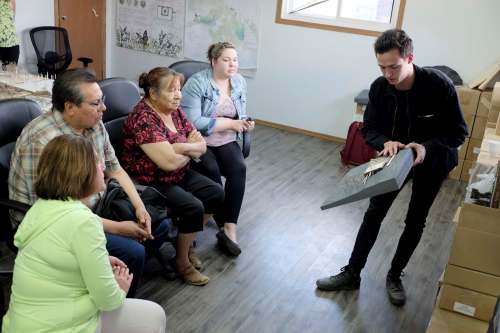
Le 3 mai, une caravane d’étudiants en architecture paysagiste de l’Université du Manitoba a été accueillie devant le bâtiment d’autogouvernement de la Nation Dakota de Sioux Valley. Ils ont présenté à un comité du conseil de bande leurs plans pour l’aménagement d’un centre de guérison sur les lieux de l’École industrielle indienne de Brandon.

L’École industrielle indienne de Brandon était un pensionnat autochtone où, de 1895 à 1972, des enfants autochtones étaient éduqués par divers ordres religieux selon la politique d’assimilation du gouvernement canadien. Le chef de la Nation Dakota de Sioux Valley, Vincent Tacan, indique qu’il y a grand nombre de survivants de l’ancien pensionnat dans sa Nation.

“Nous avons besoin de guérir. Nous sentons les effets intergénérationnels des pensionnats autochtones. Essayer d’aller de l’avant avant de guérir serait inutile.”

Le Sud-ouest du Manitoba n’a aucun centre de guérison avec un environnement approprié aux cultures autochtones. Le chef Tacan note que les membres de sa Nation en besoin de traitement doivent se rendre à Regina, ou encore en Alberta.

Read
Saturday, May. 13, 2017

Gavin Boutroy Photo
Della Mansoff, le chef Vincent Tacan, Leona Noel et Toni Pashe examinent la maquette de Gabriel Stacey-Chartrand.

Gavin Boutroy Photo
Della Mansoff, le chef Vincent Tacan, Leona Noel et Toni Pashe examinent la maquette de Gabriel Stacey-Chartrand.
No Subscription Required

Gripping drama Elle brings outdoor hardship to PTE's indoor stage

Randall King 3 minute read Preview
No Subscription Required

Gripping drama Elle brings outdoor hardship to PTE's indoor stage

Randall King 3 minute read Friday, Feb. 24, 2017

The medium of theatre doesn't necessarily lend itself to a story of survival in the wilderness.

There's a reason The Revenant was a movie and not a Broadway play.

And yet the historical drama Elle, an adaptation of the Governor General’s Award-winning novel by Douglas Glover of the same name by Toronto actress Severn Thompson, manages to be an engaging, gripping piece of work... even in the civilized Prairie Theatre Exchange environs in Portage Place.

Over the course of 90 minutes (without intermission), Thompson connects us to an extraordinary character, based on Marguerite de la Rocque de Roberval, a headstrong young Frenchwoman tantalized to a trip to Canada in 1542 by exotic tales of naked natives and strange customs.

Read
Friday, Feb. 24, 2017
No Subscription Required

Oka at 25, lessons in reconciliation

By Will Braun 5 minute read Preview
No Subscription Required

Oka at 25, lessons in reconciliation

By Will Braun 5 minute read Saturday, Jul. 11, 2015

It's been a generation since July 11, 1990, when a SWAT team piled out of a truck and advanced against a small Mohawk protest on a dirt road in the pine forest outside the Quebec village of Oka. What followed was a 78-day armed siege -- the most violent and consequential clash between indigenous people and the Canadian state in modern times.

What has changed during the past 25 years? What hasn't? And why has there not been another Oka despite repeated warnings about indigenous unrest across the country?

The crisis was sparked by a proposed golf course expansion and condo development that would have turned a Mohawk cemetery at Kanesatake into a parking lot. It represented something much bigger -- a history of inequality and a society divided by race and seething with anger.

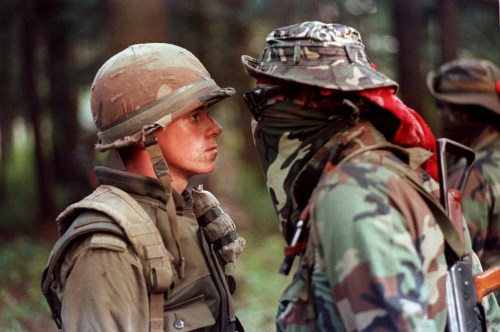
The images were jarring. Tanks rolled through quiet communities, white rioters burned effigies of Mohawk warriors, cars carrying Mohawk women and children were pelted with rocks as police stood by, and most iconic of all, a soldier and Mohawk Warrior stared each other down at point-blank range. Generations of tension compressed into the few inches between their steely faces. The nation was on edge.

Read
Saturday, Jul. 11, 2015

Shaney Komulainen / THE CANADIAN PRESS files
A Canadian solider and First Nations protester face off at the Kahnesatake reserve in Oka, Que., in September 1990.

Shaney Komulainen / THE CANADIAN PRESS files 
A Canadian solider and First Nations protester face off at the Kahnesatake reserve in Oka, Que., in September 1990.
No Subscription Required

Uncovering Canada’s Arctic sea battle

By Alexandra Paul 4 minute read Preview
No Subscription Required

Uncovering Canada’s Arctic sea battle

By Alexandra Paul 4 minute read Tuesday, Aug. 6, 2013

In 1697, a single French ship sank a British warship, captured a second ship and chased off a third ship.

It was an audacious act of war that nearly turned into a suicide mission, but the Battle of Hudson Bay is a forgotten chapter in Canada's history.

That could change with an intrepid group's plan to film an educational video in Churchill this summer for a curriculum kit aimed at high school students. And if they can find the ship that sank, it would be a bonus.

Three hundred years ago, an imperious colonial aristocrat pointed his sails north from New France (modern Quebec), departing with a fleet of wooden sailing ships.

Read
Tuesday, Aug. 6, 2013

Handout
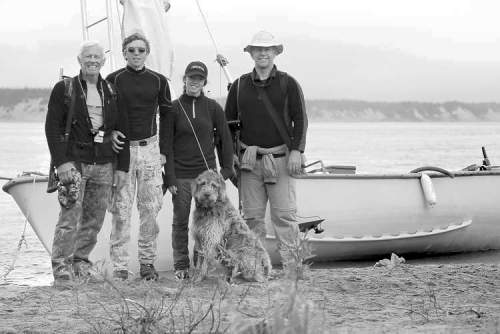
Johann Sigurdson III (from left) Johann Sigurdson IV, Mackenzie Collette and David Collette of the Fara Heim Foundation stand at the approximate location of the Battle of Hudson Bay in 1697.

Handout
Johann Sigurdson III (from left) Johann Sigurdson IV, Mackenzie Collette and David Collette of the Fara Heim Foundation  stand at the approximate location of the Battle of Hudson Bay in 1697.
No Subscription Required

Hardship, history live in rock of ancient fort

By Bill Redekop 5 minute read Preview
No Subscription Required

Hardship, history live in rock of ancient fort

By Bill Redekop 5 minute read Saturday, Jul. 13, 2013

CHURCHILL -- Samuel Hearne, English explorer and governor of Fort Prince of Wales in the late 1700s, claimed the beavers he let waddle around the stone fort made better pets than some cats and dogs.

"I kept several," he wrote in his journal, "... til they became so domesticated as to answer to their names...and follow as a dog would do; and they were as pleased at being fondled as any animal I ever saw."

You had to do something, after all, stuck in a fort made out of quartzite rock, on a desolate point overlooking Hudson Bay, buffeted by northern gales and frequent blizzards and surrounded by sea ice two-thirds of the year.

Fort Prince of Wales, built in the mid-1700s, is testament to the extraordinary mettle of those first immigrants, mostly Scots from the Orkney Islands, who plied the fur trade for the Hudson's Bay Co., and the First Nations people who traded with them.

Read
Saturday, Jul. 13, 2013

Photos by Bill Redekop/ Winnipeg Free Press
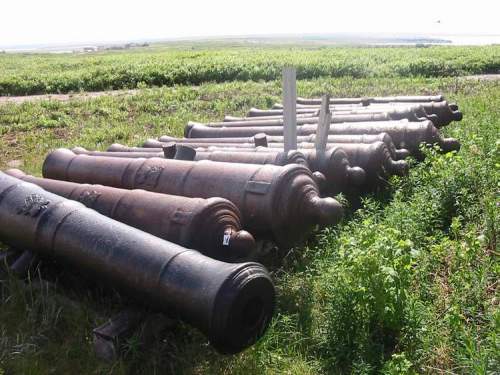
Cannon barrels stored outside fort.

Photos by Bill Redekop/ Winnipeg Free Press
Cannon barrels stored outside fort.
No Subscription Required

Canadian political culture grew out of War of 1812

Reviewed by Graeme Voyer 3 minute read Preview
No Subscription Required

Canadian political culture grew out of War of 1812

Reviewed by Graeme Voyer 3 minute read Saturday, Jun. 16, 2012

THE War of 1812 -- a conflict between Britain and the United States, much of it contested on Canadian soil -- was a decisive event in Canadian history.

The U.S. proved unable to conquer and annex Britain's Upper and Lower Canadian colonies, thus ensuring that Canada would develop as an independent nation within the British imperial orbit.

This summer marks the 200th anniversary of the outbreak of the war. Recent years have witnessed a flurry of scholarship on the conflict -- Ontario historian Wesley Turner's 2011 biography of British general Isaac Brock comes to mind -- but it is difficult to imagine a better introduction to the War of 1812 than this account by York University professor of political science James Laxer.

This military and diplomatic history of the War emphasizes the roles played by two inspired leaders on the British and Canadian side: Brock, the commander of the forces of Upper Canada and the head of its civil government; and his ally Tecumseh, a Shawnee chief who joined the British to fight the Americans who were systematically encroaching on native land.

Read
Saturday, Jun. 16, 2012

���

���