

Oka at 25, lessons in reconciliation
Advertisement
Read this article for free:
or
Already have an account? Log in here »
To continue reading, please subscribe:
Digital Subscription
One year of digital access for only $75*
- Enjoy unlimited reading on winnipegfreepress.com
- Read the E-Edition, our digital replica newspaper
- Access News Break, our award-winning app
- Play interactive puzzles
*Billed as $5.77 plus GST every four weeks. After 52 weeks, price increases to the regular rate of $19.95 plus GST every four weeks. Offer available to new and qualified returning subscribers only. Cancel any time.
Monthly Digital Subscription
$4.99/week*
- Enjoy unlimited reading on winnipegfreepress.com
- Read the E-Edition, our digital replica newspaper
- Access News Break, our award-winning app
- Play interactive puzzles
*Billed as $19.95 plus GST every four weeks. Cancel any time.
To continue reading, please subscribe:
Add Free Press access to your Brandon Sun subscription for only an additional
$1 for the first 4 weeks*
- Enjoy unlimited reading on winnipegfreepress.com
- Read the E-Edition, our digital replica newspaper
- Access News Break, our award-winning app
- Play interactive puzzles
*Your next Brandon Sun subscription payment will increase by $1.00 and you will be charged $17.95 plus GST for four weeks. After four weeks, your payment will increase to $24.95 plus GST every four weeks.
Read unlimited articles for free today:
or
Already have an account? Log in here »
Hey there, time traveller!
This article was published 11/07/2015 (4103 days ago), so information in it may no longer be current.
It’s been a generation since July 11, 1990, when a SWAT team piled out of a truck and advanced against a small Mohawk protest on a dirt road in the pine forest outside the Quebec village of Oka. What followed was a 78-day armed siege — the most violent and consequential clash between indigenous people and the Canadian state in modern times.
What has changed during the past 25 years? What hasn’t? And why has there not been another Oka despite repeated warnings about indigenous unrest across the country?
The crisis was sparked by a proposed golf course expansion and condo development that would have turned a Mohawk cemetery at Kanesatake into a parking lot. It represented something much bigger — a history of inequality and a society divided by race and seething with anger.
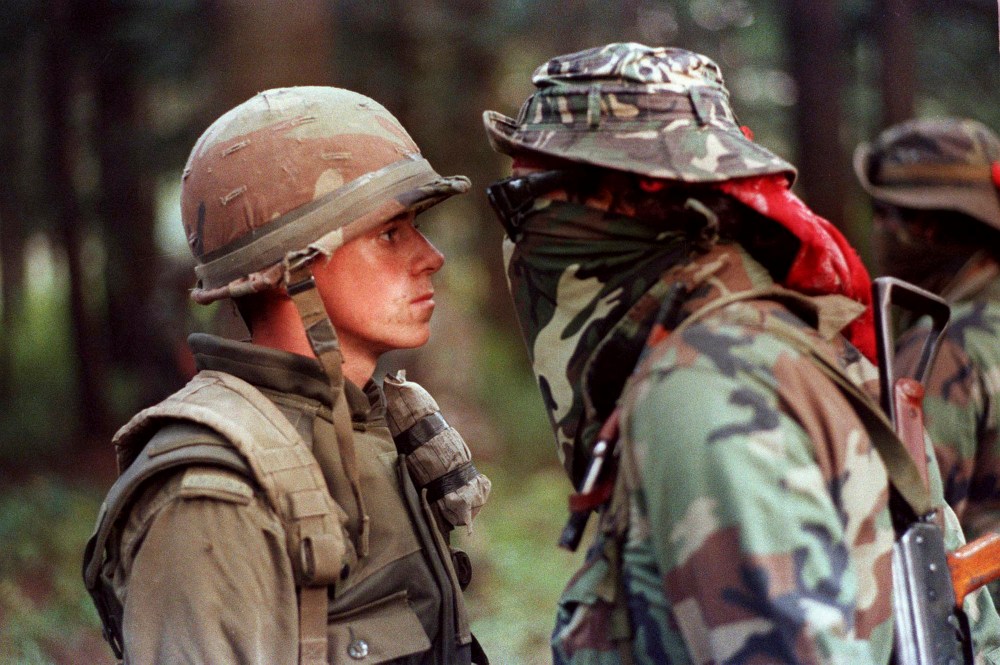
The images were jarring. Tanks rolled through quiet communities, white rioters burned effigies of Mohawk warriors, cars carrying Mohawk women and children were pelted with rocks as police stood by, and most iconic of all, a soldier and Mohawk Warrior stared each other down at point-blank range. Generations of tension compressed into the few inches between their steely faces. The nation was on edge.
Eventually, 50 Mohawks and supporters, surrounded by soldiers and razor wire, burned their weapons and walked out of the treatment centre where they had holed up for their final stand. They were not surrendering, just going home. They were roughed up and arrested. In the end, most avoided legal consequences.
The golf course was not expanded, and the condos were built elsewhere. The federal government bought the cemetery and 178 other small parcels of land that it holds for the benefit of the Mohawks, though they are not reserve lands. The total Kanesatake land base of 2,200 acres lies scattered in fragments about a larger area.
Aboriginal Affairs spokeswoman Michelle Perron pointed to a list of steps taken by the federal government from 1990 to 2010 to address Mohawk concerns at Kanesatake: infrastructure, transfer of certain powers and various stages of negotiation. Perron says Ottawa “is currently negotiating a specific claim” with the Mohawks.
The Mohawk relationship with Canada is still frayed. But it has not re-escalated to anything near 1990 levels. Nor have tense situations elsewhere in the country boiled over to that extent, though conflicts at Burnt Church, Gustafsen Lake, Ipperwash and Caledonia all involved overt aggression.
People such as Justice Murray Sinclair, former chief of the Assembly of First Nations Shawn Atleo and retired Armed Forces colonel Douglas Bland have noted the ongoing potential for violent revolt. Bland, whose books Time Bomb and Uprising explore the topic, has long argued conditions are ripe for an indigenous insurgency in Canada. That said, he believes Oka created something of a chill among governments. Bland says in most cases of confrontation the authorities back down, in part out of a fear of igniting a national uprising.
Last fall, several hundred Cree people evicted Manitoba Hydro personnel from the housing complex at the Jenpeg Dam and maintained control of the grounds for six weeks. Though this was far more confrontational than the dirt-road blockade near Oka, authorities opted for negotiation over force.
Consider the proposed Enbridge Northern Gateway Pipeline. Leaders representing a couple dozen B.C. First Nations have repeatedly said they will stand in front of bulldozers to stop the multibillion-dollar project. Though Ottawa approved the project last summer, it is still not clear Enbridge will proceed. What could have become an Oka-scale clash may well turn into a quiet and monumental victory for indigenous people.
Celebrated indigenous filmmaker Alanis Obomsawin says Oka was a national turning point. Her shocking and intimate portrayal of life on both sides of the Oka barricades, Kanesatake: 270 Years of Resistance, stands as the defining documentary about the crisis. Now 82, she says that in her travels to First Nations since 1990, people have often expressed gratitude to the Mohawks because governments took them more seriously after Oka.
An undercurrent of tension still flows through society. Many indigenous people are intensely frustrated by inequality. Animosity exists among segments of non-indigenous Canada. And the federal government seems willing to bet the electorate will let it get away with a fairly status quo approach to aboriginal policy and relegating the Truth and Reconciliation report to the same shelf as the Royal Commission on Aboriginal Peoples report that followed the Oka crisis.
Still, society has shifted. Indigenous people have more power. And people like former prime ministers Joe Clark and Paul Martin, former auditor general Sheila Fraser, pundit Allan Gregg and writer John Ralston Saul lend their gifts and moral clout to healing the race rift. Obomsawin’s last film, Tricky or Treaty?, which played at the 2014 Toronto International Film Festival, shows a more empowered indigenous determination and a lot less tension.
Canada is still not characterized by the image on the original treaty medallions in which a chief and white man stand tall shaking hands. The Oka country club is not hosting powwows or returning land to Mohawks. However, we are not staring each other down, bristling with hostility. We’re somewhere in between, inching toward reconciliation.
Will Braun is a writer from Morden. A version of this article first appeared in Canadian Mennonite magazine.