Notorious mother who murdered five-year-old daughter granted temporary absences from prison
Read this article for free:
or
Already have an account? Log in here »
To continue reading, please subscribe:
Digital Subscription
One year of digital access for only $75*
- Enjoy unlimited reading on winnipegfreepress.com
- Read the E-Edition, our digital replica newspaper
- Access News Break, our award-winning app
- Play interactive puzzles
*Billed as $5.77 plus GST every four weeks. After 52 weeks, price increases to the regular rate of $19.95 plus GST every four weeks. Offer available to new and qualified returning subscribers only. Cancel any time.
Monthly Digital Subscription
$4.99/week*
- Enjoy unlimited reading on winnipegfreepress.com
- Read the E-Edition, our digital replica newspaper
- Access News Break, our award-winning app
- Play interactive puzzles
*Billed as $19.95 plus GST every four weeks. Cancel any time.
To continue reading, please subscribe:
Add Free Press access to your Brandon Sun subscription for only an additional
$1 for the first 4 weeks*
- Enjoy unlimited reading on winnipegfreepress.com
- Read the E-Edition, our digital replica newspaper
- Access News Break, our award-winning app
- Play interactive puzzles
*Your next Brandon Sun subscription payment will increase by $1.00 and you will be charged $17.95 plus GST for four weeks. After four weeks, your payment will increase to $24.95 plus GST every four weeks.
Read unlimited articles for free today:
or
Already have an account? Log in here »
Hey there, time traveller!
This article was published 08/08/2022 (1531 days ago), so information in it may no longer be current.
The woman convicted in the abuse, torture and murder of her five-year-old daughter Phoenix Sinclair, sparking a massive public inquiry into Manitoba’s child-welfare system, has been granted a series of temporary releases to visit the family of her new wife and step-daughter.
The decision comes after a July 21 hearing, during which the Parole Board of Canada determined Samantha Dawn Kematch has made significant progress in prison and can be trusted to leave on escorted temporary absences.
The Free Press learned of the hearing through a review of parole documents.
In 2008, a judge sentenced Kematch and her former boyfriend, Karl Wesley McKay, to serve life sentences with no parole eligibility for 25 years for the first-degree murder of Phoenix.
Kematch and McKay repeatedly beat, terrorized, tortured and neglected the girl inside a Fisher River First Nation home roughly 200 kilometres north of Winnipeg.
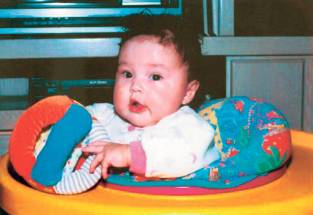
WINNIPEG FREE PRESS FILES Phoenix Sinclair was repeatedly beaten, terrorized, tortured and neglected during her short life. She died after a final deadly beating in 2005.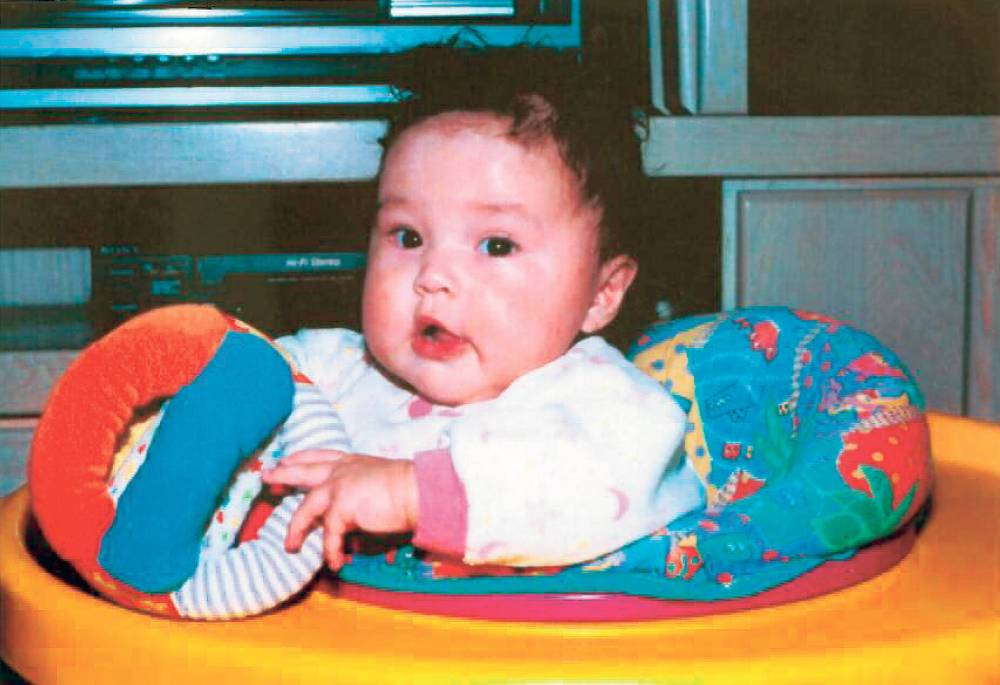
The trial heard the girl was subjected to abuse that included being shot with a BB gun and being forced to eat her own vomit. She was often confined to the unfinished concrete basement of the family’s home. There were other children in the home who saw the abuse that Phoenix was singled out for.
She died after a final deadly beating in 2005. Kematch and McKay wrapped the body in plastic and buried her. They continued to collect welfare payments with Phoenix listed as a dependent. The scam was discovered nine months later.
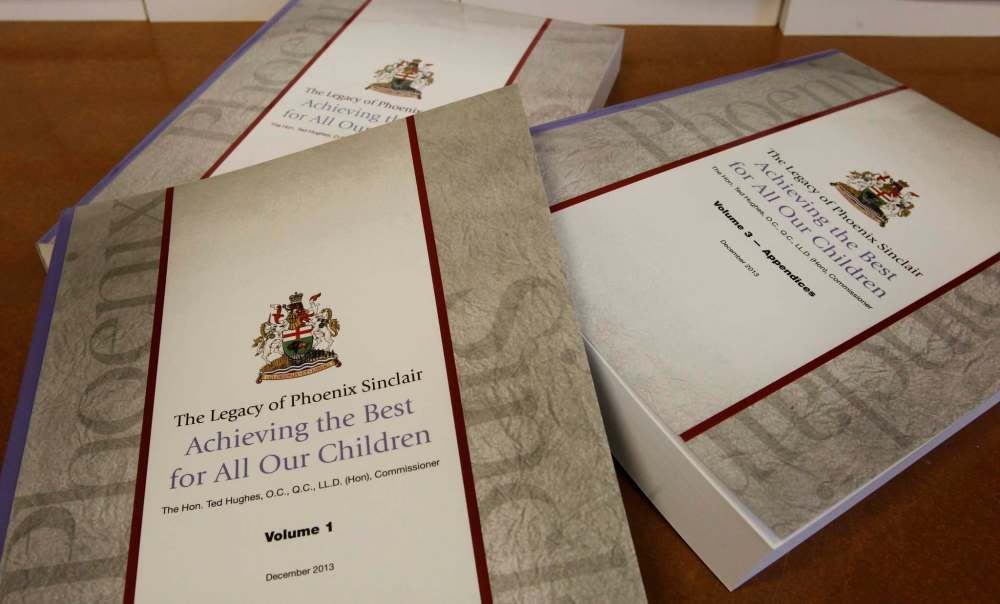
The girl’s death sparked a $14-million provincial inquiry into the child-welfare system.
The inquiry found social workers failed to keep tabs on Phoenix’s well-being and whereabouts, and often closed her file without seeing her. Social workers also failed to realize the man Kematch started living with in 2004 was McKay, who had a documented history of domestic violence that included beating a former girlfriend with the leg of a bathroom sink.
“Given the horrific nature of your crime, the board must exercise considerable caution when assessing your case for conditional release,” the parole report said. “That said… you have made sufficient observable and measurable change for the proposed ETAs.”
According to the Corrections and Conditional Release Act, an ETA is typically the first type of release granted to offenders. Kematch, now 40, has previously left the prison for approximately 20 of them for medical purposes.
The board has approved four more temporary leaves, two of which will allow her to visit the family and underage daughter of a woman she married while in prison.
The woman, who is not identified in the board’s report, is also a correctional inmate. The pair have been together for eight years, although it is unclear when they married.
Related stories:
The Correctional Service of Canada told the board the relationship appears to have had a “positive impact” on both women.
Kematch’s in-laws have gotten to know her over several years and are supportive of her relationship with their daughter. Both are fully aware of the crime Kematch committed and are not concerned about their granddaughter’s safety, they told the board.
Each four-hour visit will be supervised but Kematch will not be restrained inside the family’s home. Her spouse will not attend the visits but may in the future if the board also approves her for an ETA.
Kematch told the board her wife is somebody who “does not put you down or call you names” and said she believes this relationship is different from the abusive ones she experienced in the past.
The board also approved two ETA requests allowing Kematch to visit the home of an Indigenous elder.
While in prison, Kematch has made significant efforts to connect with her Indigenous culture, which she was unable to do during her troubled youth, she said.
She has worked with the elder for several years and has participated in many cultural activities, including ceremonies, feasts and smudging. Practising Indigenous traditions is helping her become the person she wants to be, she said.
Based on Kematch’s most recent correctional plan, her accountability and motivation ratings increased from moderate to high, and her reintegration potential went from low to moderate.
In making its approval decision, the board determined Kematch is unlikely to pose an “undue risk to society” during her temporary absences and would benefit from planned absences from the prison.
“The board believes that more exposure to your culture will aid you in your healing journey… (and) exposure to your in-laws will serve to help you in adjusting to broader social setting (sic) outside the institution,” the board said.
In March of 2022, an unnamed family member submitted a victim statement to express their “total opposition” to Kematch receiving any form of conditional release. The board took that into account while making its decision, it said.
Kematch has completed several rehabilitative programs focused on emotional management and communication, including attending mental-health sessions to address depression, anxiety and unresolved trauma.
Her social worker told the board she has “opened up a lot since first coming to prison” and accepts responsibility for her crime, adding she struggles with forgiving herself.
VIDEO STILL / FREE PRESS FILES The Parole Board of Canada has determined Samantha Dawn Kematch has made significant progress in prison and can be trusted to leave on escorted temporary absences.
The board described Kematch as “a work in progress” and credited her for expressing remorse.
“It took a while for you to develop trust… but you eventually came around and were able to talk about your crime,” the board said. “You are now able to communicate more effectively and express your emotions, which you did not do prior.”
Kematch said she is still grieving significant losses, including the death of family members and the loss of her Indigenous culture.
She went on to tell the board she grew up with no values and little guidance and said she suffered abuse from her mother that left her selfish, cold and detached.
Currently, Kematch has no relationship with members of her family, including her three children, who live with a relative and haven’t spoken to her in “some time,” she said.
“Your experiences growing up provides the board with context in understanding your turn to substances to cope, poor intimate relationship understanding as well as lacking the ability to properly parent children,” the board said.
A 2021 psychological risk assessment found Kematch has a low likelihood of reoffending violently, and if she did, it would likely involve heavy alcohol use.
Kematch admitted to having a history of drug and alcohol abuse and agreed with the board’s assessment that “loss of control is all but a certainty” when she uses substances.
She quit using drugs in 2003 and has not consumed alcohol since 2005, she said.
Kematch will be eligible for day parole in March 2028 and full parole in March 2031. The Parole Board of Canada said she can begin the application process six months before those dates.
— With files from The Canadian Press
tyler.searle@freepress.mb.ca

MIKE DEAL / WINNIPEG FREE PRESS The Law Courts building at 408 York Avenue. 211104 - Thursday, November 04, 2021.

Tyler Searle is a multimedia producer who writes for the Free Press’s city desk. A graduate of Red River College Polytechnic’s creative communications program, he wrote for the Stonewall Teulon Tribune, Selkirk Record and Express Weekly News before joining the paper in 2022. Read more about Tyler.
Every piece of reporting Tyler produces is reviewed by an editing team before it is posted online or published in print — part of the Free Press‘s tradition, since 1872, of producing reliable independent journalism. Read more about Free Press’s history and mandate, and learn how our newsroom operates.
Our newsroom depends on a growing audience of readers to power our journalism. If you are not a paid reader, please consider becoming a subscriber.
Our newsroom depends on its audience of readers to power our journalism. Thank you for your support.


History
Updated on Monday, August 8, 2022 4:15 PM CDT: Updates with final verison
Updated on Thursday, August 11, 2022 3:35 PM CDT: Clarifies Phoenix's death sparked a $14-million provincial inquiry.