Manitoba police to make do without roadside marijuana-screening devices: province
Read this article for free:
or
Already have an account? Log in here »
To continue reading, please subscribe:
Digital Subscription
One year of digital access for only $75*
- Enjoy unlimited reading on winnipegfreepress.com
- Read the E-Edition, our digital replica newspaper
- Access News Break, our award-winning app
- Play interactive puzzles
*Billed as $5.77 plus GST every four weeks. After 52 weeks, price increases to the regular rate of $19.95 plus GST every four weeks. Offer available to new and qualified returning subscribers only. Cancel any time.
Monthly Digital Subscription
$4.99/week*
- Enjoy unlimited reading on winnipegfreepress.com
- Read the E-Edition, our digital replica newspaper
- Access News Break, our award-winning app
- Play interactive puzzles
*Billed as $19.95 plus GST every four weeks. Cancel any time.
To continue reading, please subscribe:
Add Free Press access to your Brandon Sun subscription for only an additional
$1 for the first 4 weeks*
- Enjoy unlimited reading on winnipegfreepress.com
- Read the E-Edition, our digital replica newspaper
- Access News Break, our award-winning app
- Play interactive puzzles
*Your next Brandon Sun subscription payment will increase by $1.00 and you will be charged $17.95 plus GST for four weeks. After four weeks, your payment will increase to $24.95 plus GST every four weeks.
Read unlimited articles for free today:
or
Already have an account? Log in here »
Hey there, time traveller!
This article was published 10/10/2018 (2921 days ago), so information in it may no longer be current.
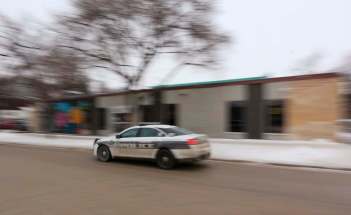
Police in Manitoba won’t be using a federally approved roadside marijuana-screening device at the outset of cannabis legalization Oct. 17, Justice Minister Cliff Cullen said Wednesday.
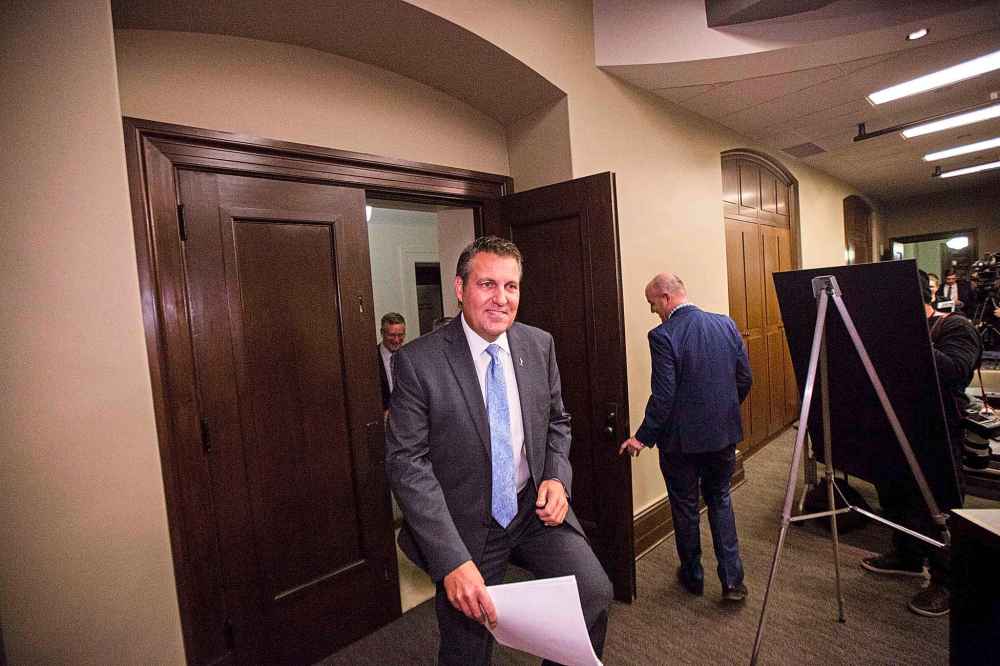
“Although the situation is not ideal, I have been assured by our police agencies that they will use the tools at their disposal, such as the physical co-ordination test, to get impaired drivers off the road,” Cullen told reporters during a news conference at the legislature one week ahead of the legalization date.
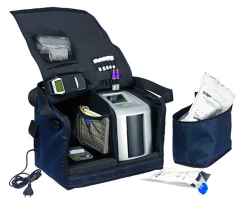
Due to “limited funding and supply,” the provincial government said, only 21 Dräger DrugTest 5000 devices will be available to Manitoba police in the 2018-19 fiscal year. Police in the province will get about $840,000 from the federal government to purchase as many as 111 of the $5,000 devices over five years, the province said.
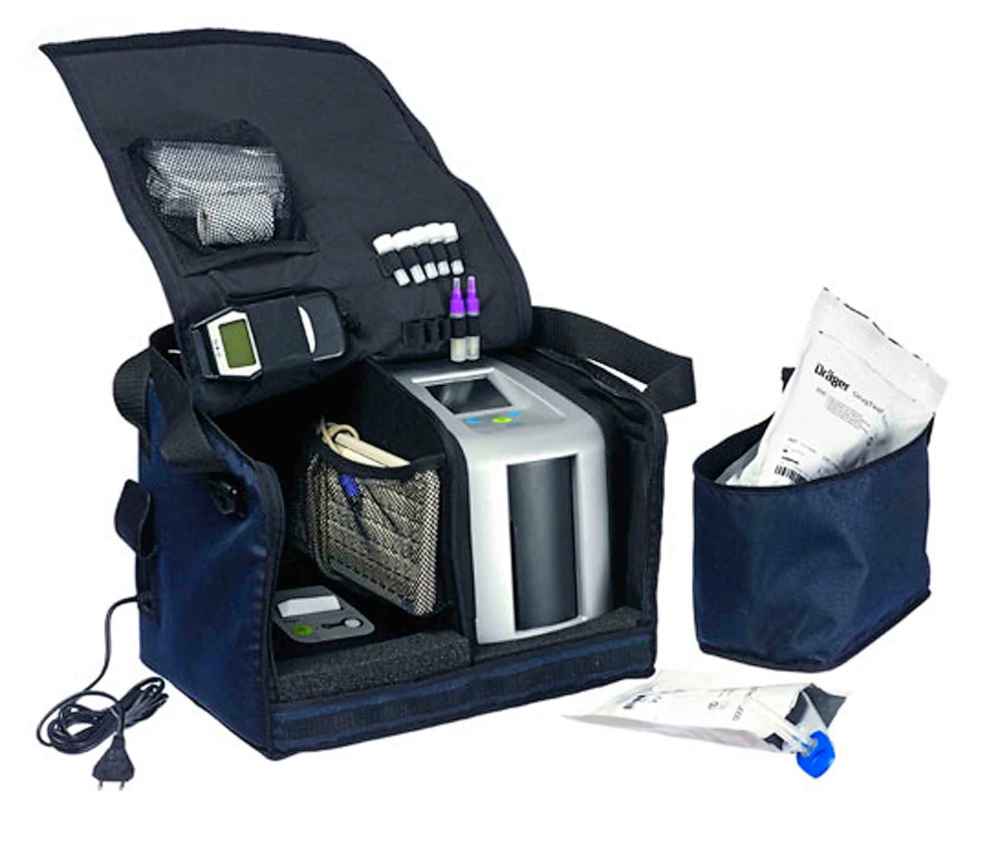
The Dräger device tests saliva for the presence of THC, the primary intoxicant in marijuana, which could help police decide if further impairment testing is required. But even without those devices, Cullen explained, police can still use existing roadside tests to determine whether a driver might be impaired by drugs.
The federal government is also giving Manitoba $5 million to train police officers in initial roadside sobriety tests and more formal drug recognition evaluations, Cullen said.
Cullen, along with Health, Seniors and Active Living Minister Cameron Friesen and Growth, Enterprise and Trade Minister Blaine Pedersen, hammered home a familiar Progressive Conservative refrain throughout the news conference: even though the federal government rushed into legalizing non-medical marijuana, Manitoba will be ready with an approach that puts health and safety first.
To that end, the ministers showed off a new, $350,000 public health messaging campaign developed by the provincial government that focuses on the potential risks of cannabis use, especially for youth. A sombre, 40-second animated video played for reporters warned cannabis can be addictive, “can lead to depression and anxiety,” “can harm your baby if you’re pregnant,” “will affect brain development,” and “will definitely impact your ability to drive” — then directed viewers to learn more by visiting the website Manitoba.ca/cannabis.
Videos such as that one, along with posters, social media messages and messages sent by traditional mail, should “blitz” Manitoba soon, said Minister Friesen.
“It took years to convince people in Canada of the dangers of drinking and driving,” he said. “It will take time for people to get educated, but the time to start is right away. So we’re confident that these resources will make a difference, but clearly as we continue down this path we’ll have more to say.”
Amidst ongoing uncertainty about exactly how many legal cannabis stores will be open in Manitoba on legalization day, Pedersen said the retailers themselves will be responsible for announcing opening dates and locations.
The provincial government expects about 30 stores in the initial stages of legalization, he said, with more stores opening “once the market takes hold.” About 12 store licences have already been issued by the Liquor, Gaming and Cannabis Authority of Manitoba, according to Pedersen.
“Our next step is to help facilitate retail in communities that may be underserviced after the first phase of the market is established,” the minister said.
The government is waiting to see the results of local plebiscites that could ban retail cannabis sales in some communities before moving forward on the next phase, he added.
“As we’ve said from Day 1, our goal is for 90 per cent of the population to have access to retail within a 30-minute drive, within two years of legalization.”
The trio of Tory ministers also said new cannabis-related fines will be released “very shortly,” adding to a series of already announced provincial cannabis fines such as a $2,542 penalty for growing marijuana at home.
One big question about legalization remains unanswered, said Pedersen: Manitoba still hasn’t signed onto an agreement with Ottawa that would give provinces 75 per cent of the revenue from a federal excise tax on cannabis.
(A government spokesperson clarified the province has “included a placeholder in our markup regime, so that if the federal government sends Manitoba a bilateral agreement to sign, retailers and consumers will not be impacted.”)
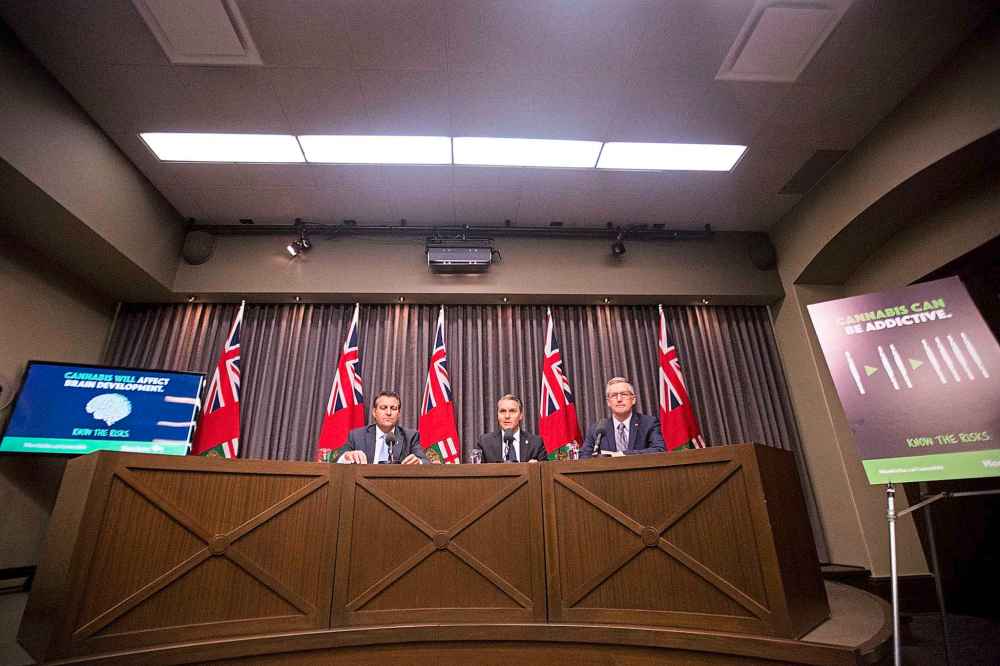
All three ministers told reporters they have no intention of trying cannabis after legalization.
solomon.israel@freepress.mb.ca
Twitter: @sol_israel