Looney Tunes cartoons bring opera to life
Read this article for free:
or
Already have an account? Log in here »
To continue reading, please subscribe:
Digital Subscription
One year of digital access for only $75*
- Enjoy unlimited reading on winnipegfreepress.com
- Read the E-Edition, our digital replica newspaper
- Access News Break, our award-winning app
- Play interactive puzzles
*Billed as $5.77 plus GST every four weeks. After 52 weeks, price increases to the regular rate of $19.95 plus GST every four weeks. Offer available to new and qualified returning subscribers only. Cancel any time.
Monthly Digital Subscription
$4.99/week*
- Enjoy unlimited reading on winnipegfreepress.com
- Read the E-Edition, our digital replica newspaper
- Access News Break, our award-winning app
- Play interactive puzzles
*Billed as $19.95 plus GST every four weeks. Cancel any time.
To continue reading, please subscribe:
Add Free Press access to your Brandon Sun subscription for only an additional
$1 for the first 4 weeks*
- Enjoy unlimited reading on winnipegfreepress.com
- Read the E-Edition, our digital replica newspaper
- Access News Break, our award-winning app
- Play interactive puzzles
*Your next Brandon Sun subscription payment will increase by $1.00 and you will be charged $17.95 plus GST for four weeks. After four weeks, your payment will increase to $24.95 plus GST every four weeks.
Read unlimited articles for free today:
or
Already have an account? Log in here »
Hey there, time traveller!
This article was published 04/04/2019 (2748 days ago), so information in it may no longer be current.
It’s entirely possible that your first introduction to the world’s most famous and enduring symphonic and operatic works came not from a music class but from Bugs Bunny.
TAKE FIVE
In a regular series, the Free Press will explore five great things. What did we miss? Send us your feedback at arts@freepress.mb.ca
In particular, the classic Looney Tunes and Merrie Melodies cartoons — produced by Warner Bros. between the 1930s and 1960s — were known for using famous classical compositions to great comedic effect, thanks in large part to the studio’s prolific composer/arranger/music director Carl W. Stalling, who averaged one score a week for 22 years. He was a master of the musical pun, using well-known cues for an added layer of humour. Sometimes, the music would drive the action: The Rabbit of Seville is now as much a classic of its genre as the opera that inspired it.
Conductor George Daugherty even created a show out of the compositions by Stalling and his successor Milt Franklyn. Bugs Bunny at the Symphony, which has been performed all over the world, including by the Winnipeg Symphony Orchestra, sees the original cartoons projected on a large screen with live symphony orchestra accompaniment.
“I wanted to find ways to pull people into the concert hall who didn’t normally come, and at the same time celebrate varieties of American symphonic and film music that didn’t normally get put on a concert stage,” Daugherty told the New Yorker in 2015. “I had loved these cartoons as a child, and I had no idea at the time that I was listening to Wagner and Rossini and von Suppé and Smetana and Tchaikovsky and Liszt and Strauss — all of the classical composers that were borrowed from.”
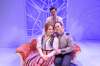
As the Manitoba Opera’s The Barber of Seville opens Saturday night at the Centennial Concert Hall, the Free Press looks at five times Bugs Bunny went highbrow.
A Corny Concerto (1943)
Two of Johann Strauss’s most famous waltzes, Tales from the Vienna Woods and The Blue Danube, anchor this slapstick send-up of Disney’s 1940 film Fantasia. For the first waltz, Bugs Bunny, Porky Pig (assuming the role of Elmer Fudd), and Porky’s hunting dog engage in a pas de trois in which Bugs gracefully dodges death and ends up flouncing off in a baby-blue tutu. The Blue Danube, meanwhile, sees a duckling-age Daffy try to join up with a trio of baby swans, gracefully swimming to the music, but repeatedly rejected by their mother. When the babies are kidnapped by a buzzard, Daffy saves them by transforming into a P-40 Warhawk fighter aircraft, complete with the “fighting tiger” paint scheme. (It was 1943, after all.)
Rhapsody Rabbit (1946)
This one is full of musical references. Bugs Bunny is performing Franz Liszt’s dramatic Hungarian Rhapsody No. 2 in a concert hall, and a mouse is antagonizing him from inside the piano. At one point he answers a ringing phone. “Eh, what’s up doc? Who? Franz Liszt? Never heard of him. Wrong number.” There’s a small nod to Rossini’s aria Largo al factotum from The Barber of Seville, with Bugs singing “Figaro, figaro, figaro” over a similar triad. Mouse and rabbit end up duetting on a boogie-woogie number and, when Bugs tries to blow the mouse up with a stick of dynamite, the mouse plays Taps, the solemn ceremonial bugle call. The best sight gag, though, involves an audience member obnoxiously hacking as Bugs sits down to play. The second time the cougher is heard, Bugs wordlessly pulls out a revolver and shoots him.
Rabbit of Seville (1950)
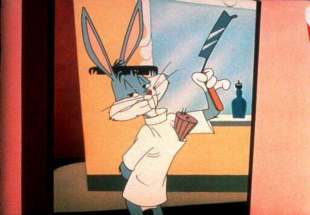
This short is essentially a zany, seven-minute, 31-second chase scene between Bugs Bunny and Elmer Fudd scored by Rossini’s famous overture from The Barber of Seville. Bugs blunders onto the stage of an amphitheatre set to show the opera, a gun-toting Fudd hot on his heels. When the curtain rises on a stunned Fudd, the quick-thinking wascally wabbit is already dressed as a barber, comb perched between his ears. Few reveals are funnier than Bugs operatically singing “How doooooo! Welcome to my shop, let me cut your mop.” He puts Fudd’s bald head through increasingly ridiculous indignities, including applying a fertilizer that makes a shock of red flowers sprout up from it. The whole thing culminates in the pair getting married — with Fudd the one in drag for once — and Bugs dropping his blushing bride into a giant cake that reads “the marriage of Figaro.”
What’s Opera, Doc? (1957)
Bugs Bunny and Elmer Fudd are at it again in this romp through several of Richard Wagner’s operas. This, of course, is the magnum opus that made it almost impossible to hear Ride of the Valkyries without hearing “kill the wabbit, kill the wabbit, kill the wabbit,” and gave us the famous scene featuring Bugs in drag as Brünnhilde, riding atop a fat horse. In 1992, the short became the first cartoon to be preserved in the National Film Registry at the United States Library of Congress, and is widely considered to be one of the greatest cartoons of all time.
Baton Bunny (1958)
In this one, Bugs Bunny assumes the role of a persnickety and easily flappable conductor who is to lead a symphony orchestra through Franz von Suppé’s A Morning, Noon, and Night in Vienna but is driven to distraction — and eventually madness — by an irritating fly. This is a rare Bugs Bunny cartoon in which the normally wise-cracking rabbit does not speak.
jen.zoratti@freepress.mb.ca
Twitter: @JenZoratti

Jen Zoratti is a columnist and feature writer working in the Arts & Life department, as well as the author of the weekly newsletter NEXT. A National Newspaper Award finalist for arts and entertainment writing, Jen is a graduate of the Creative Communications program at RRC Polytech and was a music writer before joining the Free Press in 2013. Read more about Jen.
Every piece of reporting Jen produces is reviewed by an editing team before it is posted online or published in print – part of the Free Press‘s tradition, since 1872, of producing reliable independent journalism. Read more about Free Press’s history and mandate, and learn how our newsroom operates.
Our newsroom depends on a growing audience of readers to power our journalism. If you are not a paid reader, please consider becoming a subscriber.
Our newsroom depends on its audience of readers to power our journalism. Thank you for your support.