

First Nations leaders blast Hydro, accuse utility of deflecting blame for ruinous power outage

Advertisement
Read this article for free:
or
Already have an account? Log in here »
To continue reading, please subscribe:
Digital Subscription
One year of digital access for only $75*
- Enjoy unlimited reading on winnipegfreepress.com
- Read the E-Edition, our digital replica newspaper
- Access News Break, our award-winning app
- Play interactive puzzles
*Billed as $5.77 plus GST every four weeks. After 52 weeks, price increases to the regular rate of $19.95 plus GST every four weeks. Offer available to new and qualified returning subscribers only. Cancel any time.
Monthly Digital Subscription
$4.99/week*
- Enjoy unlimited reading on winnipegfreepress.com
- Read the E-Edition, our digital replica newspaper
- Access News Break, our award-winning app
- Play interactive puzzles
*Billed as $19.95 plus GST every four weeks. Cancel any time.
To continue reading, please subscribe:
Add Free Press access to your Brandon Sun subscription for only an additional
$1 for the first 4 weeks*
- Enjoy unlimited reading on winnipegfreepress.com
- Read the E-Edition, our digital replica newspaper
- Access News Break, our award-winning app
- Play interactive puzzles
*Your next Brandon Sun subscription payment will increase by $1.00 and you will be charged $17.95 plus GST for four weeks. After four weeks, your payment will increase to $24.95 plus GST every four weeks.
Read unlimited articles for free today:
or
Already have an account? Log in here »
Hey there, time traveller!
This article was published 21/01/2026 (262 days ago), so information in it may no longer be current.
First Nations leaders have accused Manitoba Hydro of misleading the public and trying to deflect responsibility over the cause of Pimicikamak Cree Nation’s days-long power outage.
Manitoba Keewatinowi Okimakanak Inc., which represents northern First Nations, admonished Hydro after the Crown corporation said that while the outage’s definitive cause was still being investigated, at least one shotgun pellet was found in a transmission line that broke.
“MKO is appalled that Manitoba Hydro is now attempting to introduce new theories about the cause of the power outage,” the organization said in a news release.
Garrison Settee, grand chief of the Manitoba Keewatinowi Okimakanak (Mike Deal / Free Press files)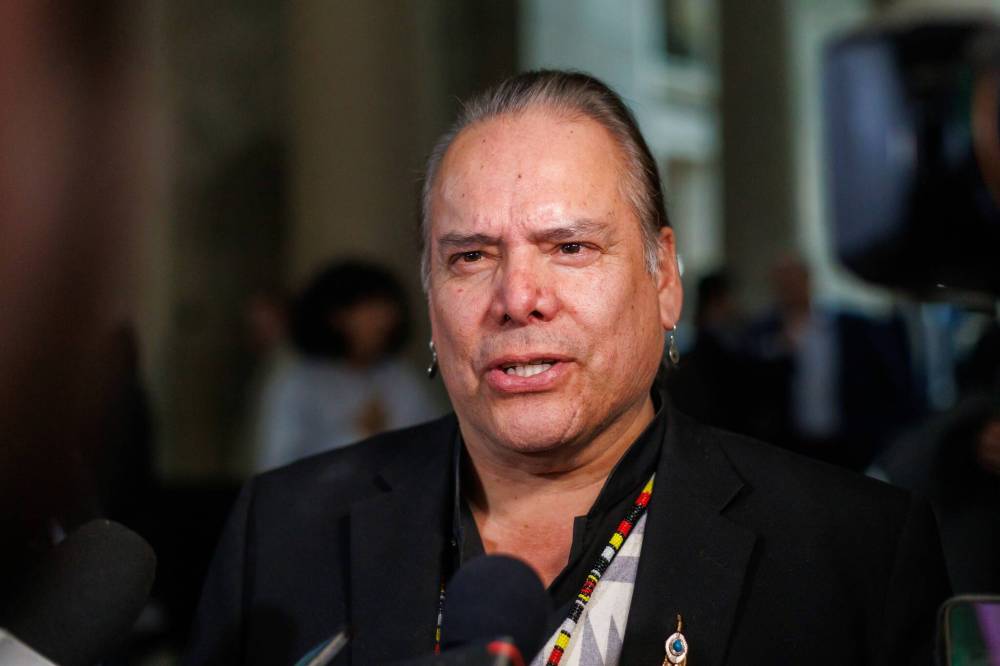
“This sudden shift in narrative is not only misleading, it is a blatant attempt to distract from Hydro’s own failures.”
MKO Grand Chief Garrison Settee demanded a meeting with Finance Minister Adrien Sala, who is responsible for Hydro, and Jamie Wilson, Hydro’s new board chair.
“This is callous and disrespectful treatment of citizens who have already been through so much trauma,” Settee said in the news release.
“This disrespect cannot be tolerated. Manitoba Hydro’s attempt to shift blame in the middle of a crisis shows a disturbing disregard for the well-being of Pimicikamak families.”
Settee was unable to comment Wednesday, an MKO communications officer said.
Sala told the Free Press efforts were underway to schedule a meeting involving himself, Pimicikamak Chief David Monias, Settee, Wilson and Hydro CEO Allan Danroth.
“This sudden shift in narrative is not only misleading, it is a blatant attempt to distract from Hydro’s own failures.”
“It does provide us with a good opportunity to better understand some of the further concerns that are being brought forward,” Sala said.
”This is about, at this point, working collaboratively with the community to make sure that we’re supporting their recovery and their ability to move forward.”
The four-day power outage, which began Dec. 28, led to pipes freezing and bursting in homes. Monias has said more than 4,000 residents were forced to leave.
Canadian Armed Forces members are helping to restore water treatment and sewer plants.
Manitoba Hydro workers spotted a downed line over the Nelson River about 10 kilometres from Pimicikamak Cree Nation, while flying over in a helicopter in late December. (Supplied)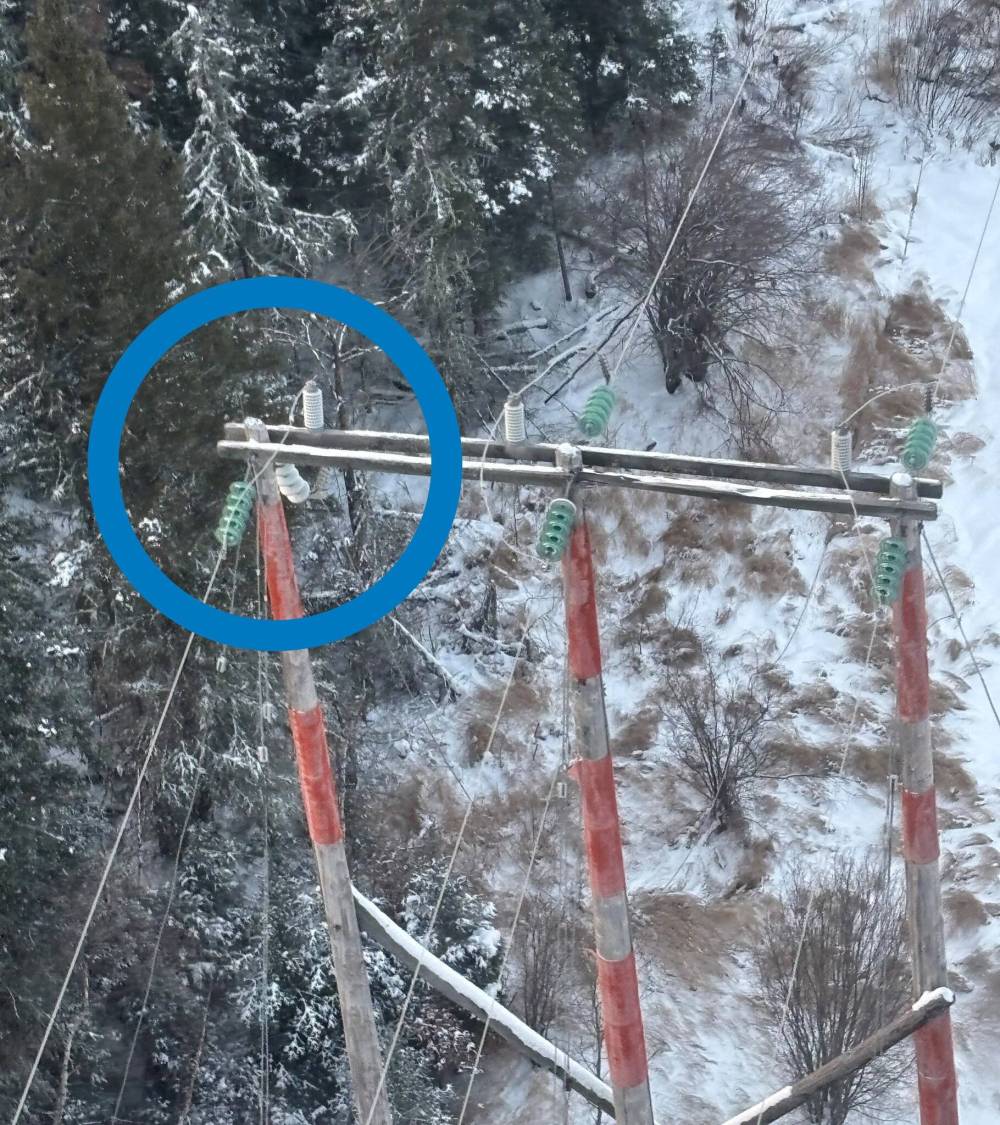
Wilson was not available for an interview Wednesday, Hydro spokesman Peter Chura said. The Free Press has unsuccessfully attempted to interview Wilson on other occasions since he was appointed in December.
Chura said MKO’s statement misrepresented information provided by Hydro in a news release Monday.
“This was a public safety message, reminding gun owners not to target electrical infrastructure, while also fulfilling our legal and regulatory obligations to communicate and take steps to prevent damage to our equipment and infrastructure when such damage is discovered,” Chura wrote in an email.
Hydro’s news release said the reminder stemmed from an inspection that discovered shotgun pellet damage to the broken line and aerial marker balls. The line crossed the Nelson River near Pimicikamak and the neighbouring community of Cross Lake.
“While it has not been established that the shotgun pellets caused the line break and subsequent outage, shooting at any electrical infrastructure can shorten its life, cause outages, and create safety risks for both the public and Manitoba Hydro employees,” the news release said.
Hydro said markers in three other locations were damaged by shotgun pellets. It was unclear when the damage occurred.
Chura said Monday the release of the information was “absolutely not” an attempt by Hydro to absolve itself of blame.
“This disrespect cannot be tolerated. Manitoba Hydro’s attempt to shift blame in the middle of a crisis shows a disturbing disregard for the well-being of Pimicikamak families.”
Sala said he didn’t know the news release was being sent.
“We think front-line Hydro workers did a really good job on the ground in getting this repair done as quickly as possible, but we can see why there is some frustration with the fact that a news release was put out that proposed a cause before it was confirmed,” he said. “I’m empathetic to some of the frustrations that we’ve heard regarding that release.”
Monias said Monday the outage happened on “an aging, neglected” power line. He said any claim about the cause is premature, and “distracts from the real issue of chronic infrastructure failure.”
Christopher Adams, adjunct professor in political science at the University of Manitoba, said it’s a little unusual for tensions like this to play out in public, but at the same time Pimicikamak is in an unusual crisis.
“It seems to be that things seem to be going a little bit off the rails for Manitoba Hydro and its image, both within the general community as well as within First Nations communities,” he said.
There is a history of disputes involving Pimicikamak and Hydro, some of which stem from the latter’s obligations under the 1977 Northern Flood Agreement.
MKO called for a comprehensive review of Hydro’s emergency-response protocols.
The province has asked Hydro to review its response to the outage and look at potential ways to improve electrical reliability for the area.
Tataskweyak Cree Nation Chief Doreen Spence, meanwhile, is scheduled to speak to media Thursday about new research on the “environmental impact” of Manitoba Hydro operations on the Churchill River.
chris.kitching@freepress.mb.ca
Chris Kitching is a general assignment reporter at the Free Press. He began his newspaper career in 2001, with stops in Winnipeg, Toronto and London, England, along the way. After returning to Winnipeg, he joined the Free Press in 2021, and now covers a little bit of everything for the newspaper. Read more about Chris.
Every piece of reporting Chris produces is reviewed by an editing team before it is posted online or published in print — part of the Free Press‘s tradition, since 1872, of producing reliable independent journalism. Read more about Free Press’s history and mandate, and learn how our newsroom operates.
Our newsroom depends on a growing audience of readers to power our journalism. If you are not a paid reader, please consider becoming a subscriber.
Our newsroom depends on its audience of readers to power our journalism. Thank you for your support.
Chris Kitching is a general assignment reporter at the Free Press. He began his newspaper career in 2001, with stops in Winnipeg, Toronto and London, England, along the way. After returning to Winnipeg, he joined the Free Press in 2021, and now covers a little bit of everything for the newspaper. Read more about Chris.
Every piece of reporting Chris produces is reviewed by an editing team before it is posted online or published in print — part of the Free Press‘s tradition, since 1872, of producing reliable independent journalism. Read more about Free Press’s history and mandate, and learn how our newsroom operates.
Our newsroom depends on a growing audience of readers to power our journalism. If you are not a paid reader, please consider becoming a subscriber.
Our newsroom depends on its audience of readers to power our journalism. Thank you for your support.
Related Articles
Pimicikamak’s $20-M in unpaid Hydro bills pales in comparison to what Hydro owes First Nation, chief says








Advertisement Advertise With Us
Advertisement Advertise With Us
History
Updated on Wednesday, January 21, 2026 5:25 PM CST: Adds quotes, details