

Danger followed when this Afghan family sought refuge in Ukraine
Advertisement
Read this article for free:
or
Already have an account? Log in here »
To continue reading, please subscribe:
Digital Subscription
One year of digital access for only $75*
- Enjoy unlimited reading on winnipegfreepress.com
- Read the E-Edition, our digital replica newspaper
- Access News Break, our award-winning app
- Play interactive puzzles
*Billed as $5.77 plus GST every four weeks. After 52 weeks, price increases to the regular rate of $19.95 plus GST every four weeks. Offer available to new and qualified returning subscribers only. Cancel any time.
Monthly Digital Subscription
$4.99/week*
- Enjoy unlimited reading on winnipegfreepress.com
- Read the E-Edition, our digital replica newspaper
- Access News Break, our award-winning app
- Play interactive puzzles
*Billed as $19.95 plus GST every four weeks. Cancel any time.
To continue reading, please subscribe:
Add Free Press access to your Brandon Sun subscription for only an additional
$1 for the first 4 weeks*
- Enjoy unlimited reading on winnipegfreepress.com
- Read the E-Edition, our digital replica newspaper
- Access News Break, our award-winning app
- Play interactive puzzles
*Your next Brandon Sun subscription payment will increase by $1.00 and you will be charged $17.95 plus GST for four weeks. After four weeks, your payment will increase to $24.95 plus GST every four weeks.
Read unlimited articles for free today:
or
Already have an account? Log in here »
Hey there, time traveller!
This article was published 03/03/2022 (1696 days ago), so information in it may no longer be current.
PRZEMYŚL, Poland—The night that Mir Ahmad Safi and Kamila Safi welcomed their baby girl into the world should have been one of the happiest of their lives. Unfortunately it was Wednesday, February 23. On the very evening the Safis found themselves swaddling their new daughter, Sumayya, at a hospital in western Ukraine, Russian troops were only hours away from launching their first attack on the country the family had only just begun to call home.
The Safis are no strangers to war. Only six months earlier they’d fled Afghanistan, where Mir was a prosecutor in the attorney general’s office working, as he puts it, to put Talibs away.
“I would die if I stayed there,” Mir said during our first call on Tuesday. The family relocated to Ukraine and lived in a refugee camp near Perechyn with Mir’s 18-year-old nephew, Yaser, “who’s more like a son”; his sister-in-law, Hanifa; and his three other children, Shah Jahan, Yasamin and Mirwias.
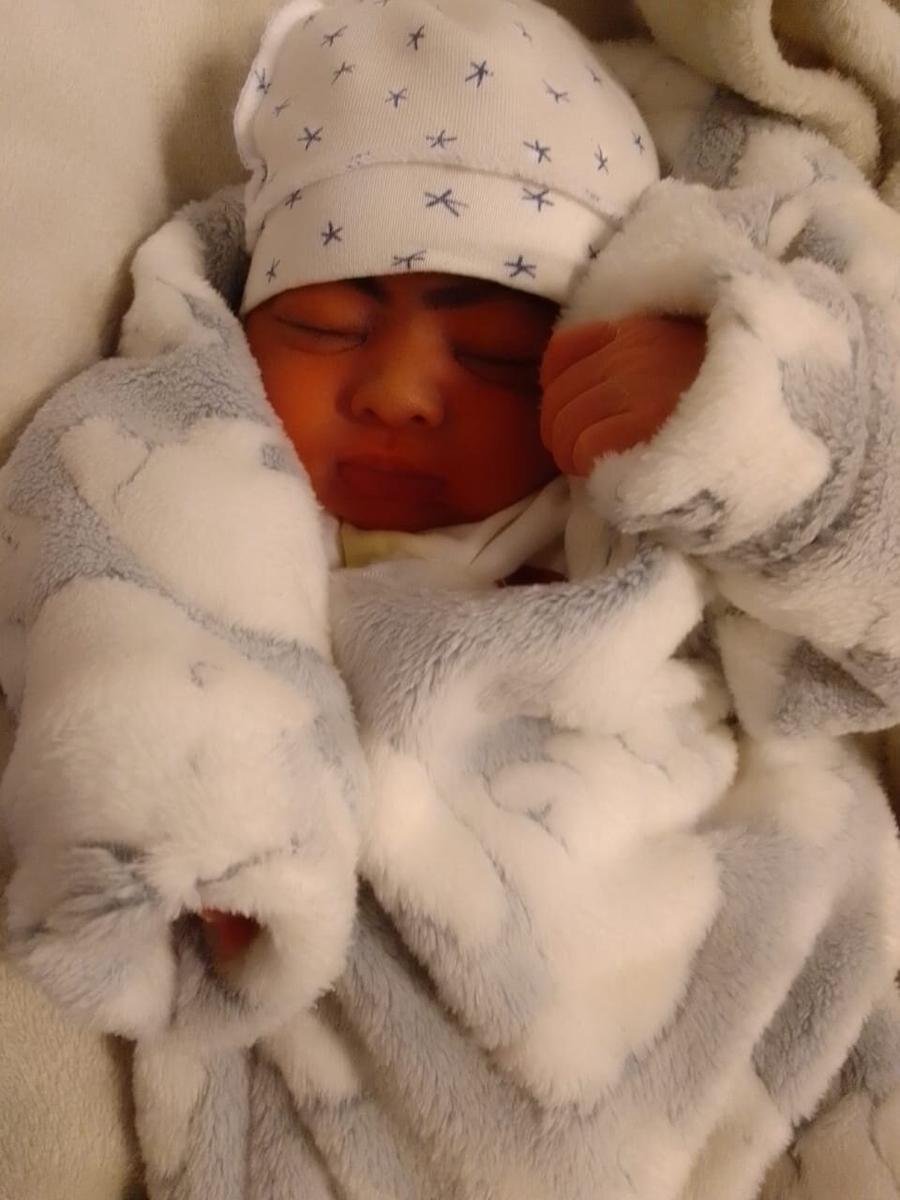
On Wednesday night, despite the fact that Kamila had given birth only hours earlier, Mir wasted no time in beginning to plot out how he would get his family of eight out of Ukraine.
“We needed to get out,” he said.
The process of fleeing Kabul was logistically simpler than what faced the family last week as Russian forces began their assault. In Afghanistan, Mir had been placed on a U.S. State Department list of approved evacuees because of the time he spent working as a fixer for USA Today. His brother, Ali, who now lives in Vienna, occasionally found himself working alongside him when he was reporting with McClatchy News. The pair have not seen each other in seven years.
“Initially, the family imagined they’d move to Canada,” Ali said in a call over WhatsApp Tuesday morning. Upon hearing about Canada’s newly announced immigration portal for Afghans, the family believed it would be the best place for them.
Prime Minister Justin Trudeau campaigned in last year’s federal election on a promise his government would resettle 40,000 Afghans and since August, it has welcomed 7,885 through a newly announced human rights scheme. Despite believing that they are perfect candidates for the program, Mir and Ali have struggled to navigate the system.
“I’ve written emails, made phone calls, but it’s just automated replies,” Ali said.
Then came Wednesday and a new war for them to navigate, putting the process of finding more permanent resettlement on hold.
The United Nations reported Wednesday that one million people have now crossed from Ukraine into the bordering countries of Poland, Moldova, Hungary and Slovakia as Russia’s siege of key cities continues.
Since last Thursday, Mir and his family had been zigzagging to and from border crossings, being denied again and again. Over the first weekend of the war, they attempted to cross through Slovakia, but were sent back three times.
“My wife, she was very tired,” Mir said during our second call this week. By Monday, the group had decided to attempt to cross into Poland. But that too would prove difficult.
I came to know the Safis through Caitlin Smith, a Canadian writer and composer who’s been a close friend of Ali’s for many years. Smith has spent the past week writing letters to Immigration Minister Sean Fraser, and the other night was hopping on a Zoom call to press NDP MP Jenny Kwan to prioritize the cases of Afghan refugees, particularly the ones like the Safis who are facing this harrowing, doubly displaced existence.
Throughout the week, we exchanged updates about the Safis’ case through WhatsApp. In a border town, amid a flood of refugees from war, it can be hard for a journalist not to get pulled into the story.
“The Safis are currently sheltering in an old school on the Ukrainian side of the border — they are at least warm enough to survive the night,” Smith messaged on the Monday night we connected.
The Safis would attempt to cross into Poland four times, but each time the Ukrainian border control demanded the proper papers for Sumayya, their days-old child.
“They told us, you need a birth certificate,” a tired Mir told me on the Tuesday after they’d attempted crossing for a third time. The refugee camp where they had been living in Ukraine since their arrival from Afghanistan had the original, but with the country only becoming more dangerous by the day, the risk of waiting for it by mail or leaving his family to retrieve it from the camp was something Mir couldn’t countenance.
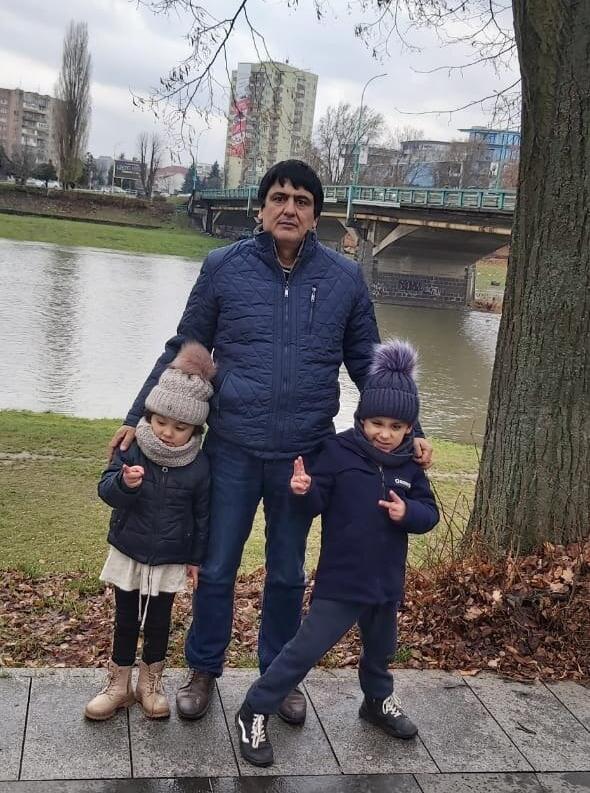
In normal circumstances, Mir and Kamila would be celebrating their new daughter’s first week of life. First smile, burp, maybe even full sleep through the night. For Sumayya, her first week of life has been marked by milestones no person should have to endure. Multiple denied attempts to cross borders, sleeping on cold concrete floors, bracing freezing temperatures for hours while a tired and aching mom attempts to nurse her.
By Wednesday, Mir felt he had no other option but to attempt the Polish border — birth certificate or not — again. He and his family were completely depleted. His wife was in agony, having spent the hours and days immediately after giving birth on this never-ending road to rejection. The children had barely slept in the six nights since their journey began.
While I was reporting at the Medkya border in the afternoon with Polish fixer Piotr Gajek, message notifications began streaming in. They were from Mir and they were frantic.
“We made it across Ukraine. Now the Polish guards are taking us back.”
Mir sent us his live location on WhatsApp. The pin icon pulsated and showed us the Safis were mere metres away but still on the wrong side of the dotted line. A lawyer from Frontex, an agency in the European Union tasked with overseeing border control of the European Schengen Area, confirmed that the authorities were obliged to let the Safis cross the border, regardless of the baby’s birth certificate. (Full disclosure: I helped secure the lawyer’s services.)
By 7 p.m., the phone pinged again.
“Now I am in Poland.”
On the phone Wednesday night, Mir told me that after he was processed in Przemysl, the volunteers took him to a grocery store to grab food and necessities. They had a car, and despite starting that day’s border crossing venture more than 12 hours earlier, they were set on getting to Berlin.
About nine hours later, they crossed into Germany.
“My kids, they were laughing and shouting, ‘Wow. We crossed. We are safe now,” he told me on the phone outside a hospital in Berlin. His wife and now 8-day-old baby are getting checked out as Sumayya is now having difficulty breathing.
“They’re running tests, but the doctors don’t know what [it] is,” he said, exhaustion in his voice.
“I’m so happy we’re here. But I’m so scared for my baby.”
Related Articles
Attack on Ukrainian nuclear plant triggers worldwide alarm
Advertisement Advertise With Us
Advertisement Advertise With Us