

EXCERPT: On morning of 9/11, ‘What’s happening to my city?’
Advertisement
Read this article for free:
or
Already have an account? Log in here »
To continue reading, please subscribe:
Digital Subscription
One year of digital access for only $75*
- Enjoy unlimited reading on winnipegfreepress.com
- Read the E-Edition, our digital replica newspaper
- Access News Break, our award-winning app
- Play interactive puzzles
*Billed as $5.77 plus GST every four weeks. After 52 weeks, price increases to the regular rate of $19.95 plus GST every four weeks. Offer available to new and qualified returning subscribers only. Cancel any time.
Monthly Digital Subscription
$4.99/week*
- Enjoy unlimited reading on winnipegfreepress.com
- Read the E-Edition, our digital replica newspaper
- Access News Break, our award-winning app
- Play interactive puzzles
*Billed as $19.95 plus GST every four weeks. Cancel any time.
To continue reading, please subscribe:
Add Free Press access to your Brandon Sun subscription for only an additional
$1 for the first 4 weeks*
- Enjoy unlimited reading on winnipegfreepress.com
- Read the E-Edition, our digital replica newspaper
- Access News Break, our award-winning app
- Play interactive puzzles
*Your next Brandon Sun subscription payment will increase by $1.00 and you will be charged $17.95 plus GST for four weeks. After four weeks, your payment will increase to $24.95 plus GST every four weeks.
Read unlimited articles for free today:
or
Already have an account? Log in here »
Hey there, time traveller!
This article was published 08/09/2021 (1870 days ago), so information in it may no longer be current.
The following account from Howie Rumberg, now deputy sports editor for The Associated Press, is excerpted from the book “September 11: The 9/11 Story, Aftermath and Legacy,” an in-depth look at AP’s coverage of 9/11 and the events that followed. On that day, Rumberg, working the overnight in AP Sports, came up out of a lower Manhattan subway and found himself in the middle of chaos.
___
Seventeen minutes. Twenty years later, unraveling the morning of Sept. 11, it feels like an eternity.
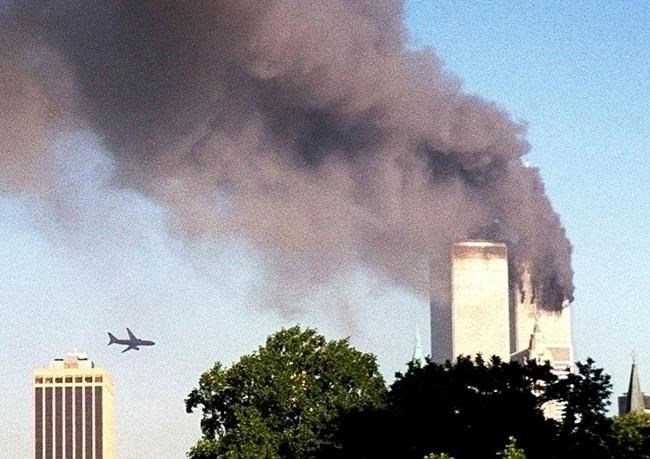
About 17 minutes passed between the time I stepped out of the subway station at Canal Street to rush-hour shouts of disbelief and horror seconds after American Airlines flight 11 struck the north tower, and the shocking boom of United Airlines flight 175 crashing into the south tower as I stood one block north of the World Trade Center complex.
Just off an overnight shift in the AP Sports department, a night that began by catching a glimpse of Michael Jackson emerging from Madison Square Garden into a shower of flashing strobe lights from fans and photographers, all I could think of was sleep – until I saw the jagged, burning hole in Tower One.
The explanation seemed implausible: A plane had flown right into the building. It had just happened. I didn’t even hear sirens yet, just the chorus of “Oh, my God!” from people instantly halted in their morning hustle.
I sprinted the 100 yards or so home, woke my girlfriend and breathlessly told her to look out the window. I then took her cell phone — I didn’t even have one then — and called the office. Did they need help?
“Yes. Go!” I was told by a voice I didn’t know.
I sprinted down Hudson Street, shouting at stunned people looking up at the building that we took for granted each day as it loomed over our neighborhood, “Did anyone see what happened?” A construction worker tried to describe the white bottom of a low-flying plane, but he was too shaken to focus.
The closer I got to the scene, the more intense the emotion got. Groups of gawkers formed on corners. Others raced away at the urging of just-arriving police. People on phones trying to explain where they were and what was happening.
As I approached the World Trade Center, it became apparent that it wasn’t debris falling from the higher floors but people overcome by the smoke and heat. It was shattering. But I focused on what I felt I needed to do.
Remembering the pictures from the first attacks on the World Trade Center in 1993, I ran for West Street, the western edge of the Trade Center and a large thoroughfare where many emergency vehicles gathered during those attacks. And there it was: a growing hive of flashing lights a few blocks south. I didn’t think it was a smart place to be if I wanted to remain close by, with all the police around, so I turned to walk back toward a more pedestrian-focused area.
Then an explosion jerked my attention back up to the sky. The building was not in view, but you could see the flames, black cloud and debris bursting out from what was certainly the south tower.
In an instant, the tone changed.
The shock — a plane hit the World Trade Center! — turned to terror and chaos once that emphatic strike made it obvious that New York City was under attack. Commuters turned scared gawkers became sprinters. One woman ran right out of her shoes. A man in a suit and tie dropped his briefcase and took off. I thought, “Why’d he have to leave the briefcase?” The silver case sat on Greenwich Street as people scrambled for safety. I’m not sure anything felt safe in that moment, in a place most likely crushed not too much later by the debris of the collapsed north tower.
On a corner just two blocks north of the towers, a woman paused. Through sobs, she screamed: “What’s happening to my city?” Then she ran off.
Twenty years later, with almost an entire generation gone by, I’m still not sure whether I have her answer.
Related Articles
Ground zero rebuilding still unfinished, 20 years later
Advertisement Advertise With Us
Advertisement Advertise With Us