

Ukrainian trains in helmet honoring fellow athletes killed in war. IOC says it’s banned for race
Advertisement
Read this article for free:
or
Already have an account? Log in here »
To continue reading, please subscribe:
Digital Subscription
One year of digital access for only $75*
- Enjoy unlimited reading on winnipegfreepress.com
- Read the E-Edition, our digital replica newspaper
- Access News Break, our award-winning app
- Play interactive puzzles
*Billed as $5.77 plus GST every four weeks. After 52 weeks, price increases to the regular rate of $19.95 plus GST every four weeks. Offer available to new and qualified returning subscribers only. Cancel any time.
Monthly Digital Subscription
$4.99/week*
- Enjoy unlimited reading on winnipegfreepress.com
- Read the E-Edition, our digital replica newspaper
- Access News Break, our award-winning app
- Play interactive puzzles
*Billed as $19.95 plus GST every four weeks. Cancel any time.
To continue reading, please subscribe:
Add Free Press access to your Brandon Sun subscription for only an additional
$1 for the first 4 weeks*
- Enjoy unlimited reading on winnipegfreepress.com
- Read the E-Edition, our digital replica newspaper
- Access News Break, our award-winning app
- Play interactive puzzles
*Your next Brandon Sun subscription payment will increase by $1.00 and you will be charged $17.95 plus GST for four weeks. After four weeks, your payment will increase to $24.95 plus GST every four weeks.
Read unlimited articles for free today:
or
Already have an account? Log in here »
Hey there, time traveller!
This article was published 10/02/2026 (236 days ago), so information in it may no longer be current.
CORTINA D’AMPEZZO, Italy (AP) — Ukrainian skeleton racer Vladyslav Heraskevych said Tuesday he still wants to compete at the Milan Cortina Games wearing a helmet that commemorates athletes from his country who were killed in the war with Russia, even though the International Olympic Committee said it cannot be used.
The IOC offered Heraskevych a chance to compete while wearing a black armband instead, calling it a compromise. The IOC said the helmet — emblazoned with images of more than 20 athletes and coaches who have been killed since the Russian invasion in 2022 — violates Olympic rule on political statements.
Heraskevych said he doesn’t plan to wear the armband.
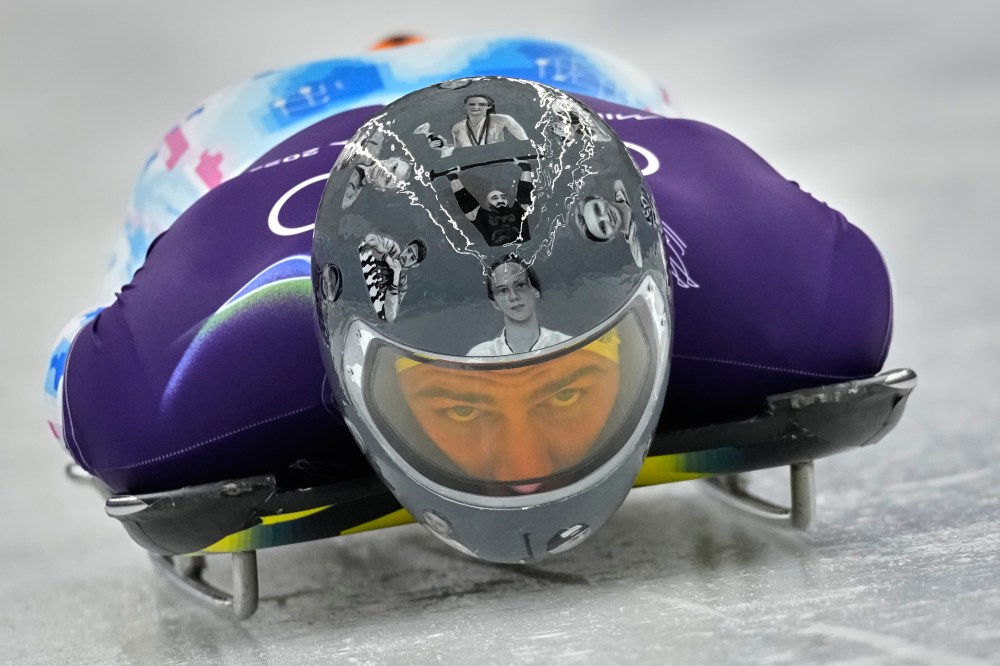
“We will continue to fight for the right to compete in this helmet,” Heraskevych said after his two training runs on Tuesday. “I truly believe that we didn’t violate any law and any rules.”
He plans to wear the helmet again for the final training runs Wednesday in advance of Thursday’s start of the two-day, four-heat Olympic race.
The IOC wrote to the Ukrainian Olympic Committee that it “was a fundamental principle” that the Games have to be separate from “political, religious and any other type of interference.” Ukraine’s Olympic committee said the helmet, it believes, is fully compliant with IOC rules since it “does not carry any political slogans, and does not express any racial discrimination.”
“What we’ve tried to do is to address his desires with compassion and understanding,” IOC spokesman Mark Adams said Tuesday. “He has expressed himself on social media and in the training and, as you know, we will not stop him expressing himself in press conferences, as he leaves competition in the mixed zone and elsewhere. We feel that this is a good compromise in the situation.”
Heraskevych can evidently train in the helmet without risk of IOC sanctioning. The IOC told the Ukrainians that Heraskevych would not be able to “compete” in the personalized helmet. It says the matter falls under Rule 50 of the Olympic Charter, which in part states that “no kind of demonstration or political, religious or racial propaganda is permitted in any Olympic sites, venues or other areas.”
Heraskevych was fourth at last year’s world championships and is generally considered a Games medal hopeful. He is popular among other sliders on the skeleton tour and has gotten support from many of them, not just in this instance but since the war began.
“Any type of war or conflict is wrong,” said Britain’s Matt Weston, the reigning world champion and overwhelming gold-medal favorite. “There’s ways we can always go about things without that. To be honest, I don’t really want to comment too much on that. It’s super sad that we’re in the situation, having to talk about it.”
The IOC noted it has banned armbands in the past but is willing to make an exception in Heraskevych’s case. The move by the IOC doesn’t mean all athletes can wear armbands, and if Heraskevych chooses to do so, it cannot include any text, Adams said.
“We don’t want everyone wearing a black armband for every competition,” Adams said. “But where there’s a good reasoning it will be considered properly.”
Heraskevych said he has seen Russian flags — which were supposed to be banned at these Games — in the stands at some events and wonders why they are allowed by the IOC.
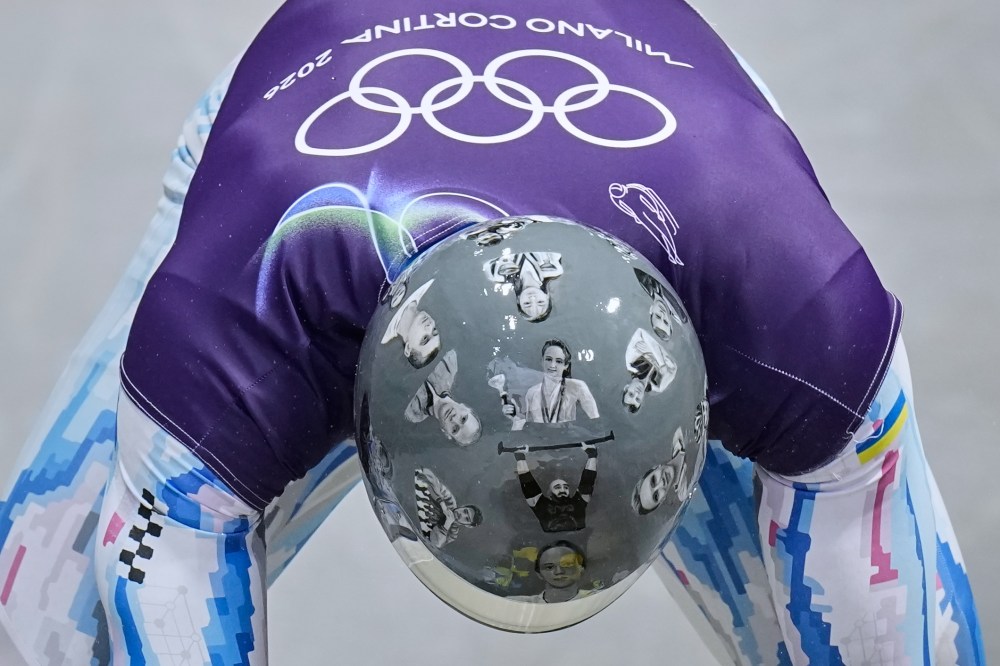
“I cannot understand how this helmet hurt anyone. It’s to pay tribute to athletes and some of them were medalists in the Youth Olympic Games,” Heraskevych told The Associated Press on Monday before Ukrainian sliding officials met with an IOC representative and learned the helmet would not be allowed. “That means they’re Olympic family. They were part of this Olympic family, so I cannot understand they would find a reason why not.”
Faces on the helmet include figure skater Dmytro Sharpar, a onetime Youth Olympic Games teammate of Heraskevych, boxer Pavlo Ishchenko, and hockey player Oleksiy Loginov. Some, Heraskevych said, were killed on the front lines; at least one died while trying to distribute aid to fellow Ukrainians. The Ukrainian sports outlet Tribuna published a list of 22 victims who are memorialized on the helmet, with the youngest victim being a 9-year-old.
Ukrainian President Volodymyr Zelenskyy weighed in on Heraskevych’s quest, with a post on his Instagram page saying he wanted to thank the slider for “reminding the world the price of our struggle.”
“It’s very nice to have such big support,” Heraskevych said.
Heraskevych, a flag bearer for Ukraine at last week’s opening ceremony, displayed a sign after his fourth and final run of the 2022 Beijing Olympics saying “No War in Ukraine.” Days after those Games ended, Russia invaded his country and the war has continued since.
___
AP Olympics: https://apnews.com/hub/milan-cortina-2026-winter-olympics
Related Articles
Here's the latest on Day 5 of the Milan Cortina Olympics as Canadians chase medals



Advertisement Advertise With Us
Advertisement Advertise With Us