

Japan wins another snowboard medal on the night big air queen Anna Gasser says goodbye
Advertisement
Read this article for free:
or
Already have an account? Log in here »
To continue reading, please subscribe:
Digital Subscription
One year of digital access for only $75*
- Enjoy unlimited reading on winnipegfreepress.com
- Read the E-Edition, our digital replica newspaper
- Access News Break, our award-winning app
- Play interactive puzzles
*Billed as $5.77 plus GST every four weeks. After 52 weeks, price increases to the regular rate of $19.95 plus GST every four weeks. Offer available to new and qualified returning subscribers only. Cancel any time.
Monthly Digital Subscription
$4.99/week*
- Enjoy unlimited reading on winnipegfreepress.com
- Read the E-Edition, our digital replica newspaper
- Access News Break, our award-winning app
- Play interactive puzzles
*Billed as $19.95 plus GST every four weeks. Cancel any time.
To continue reading, please subscribe:
Add Free Press access to your Brandon Sun subscription for only an additional
$1 for the first 4 weeks*
- Enjoy unlimited reading on winnipegfreepress.com
- Read the E-Edition, our digital replica newspaper
- Access News Break, our award-winning app
- Play interactive puzzles
*Your next Brandon Sun subscription payment will increase by $1.00 and you will be charged $17.95 plus GST for four weeks. After four weeks, your payment will increase to $24.95 plus GST every four weeks.
Read unlimited articles for free today:
or
Already have an account? Log in here »
Hey there, time traveller!
This article was published 09/02/2026 (237 days ago), so information in it may no longer be current.
LIVIGNO, Italy (AP) — On a frosty night in the Italian Alps, the queen of big air, Anna Gasser, bid adieu to her favorite Olympic event.
She left without a medal, but that didn’t make it all bad. The snowboarders who won them — led by the new queen, Kokomo Murase of Japan — all knew they had Gasser to thank for pushing the envelope to help the sport look as good as it did Monday night.
“I’m happy to pass on the crown, the big crown, to Kokomo,” said Gasser, who finished eighth. “She really deserves it and, yeah, it’s crazy to see how far the sport has come in the last years.”
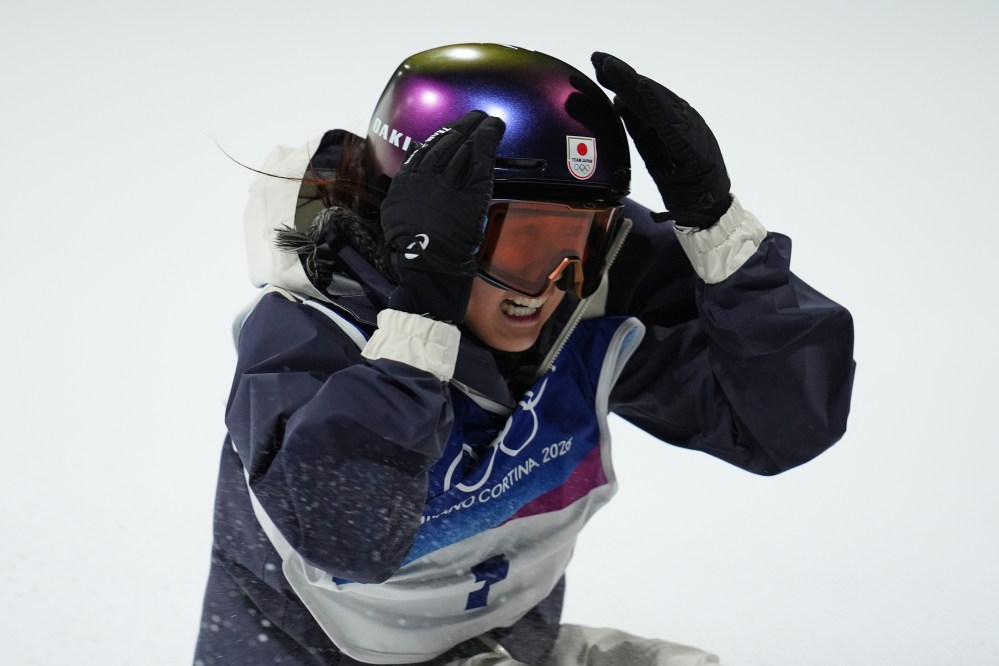
Kokomo, silver medalist Zoi Sadowski-Synnott and third-place finisher Seung-eun Yu all got to the podium with triple-cork, 1440-degree jumps — that’s three head-over-heels flips with another rotation mixed in. Those weren’t around in women’s big air at the last Olympics, where Gasser won her second straight gold medal.
“Progression,” a term snowboarders have co-opted over their 30-plus years in business, looked like this in the women’s final:
—The three medalists combined for five triple corks out of the six jumps that counted toward their scores.
—British 19-year-old Mia Brookes, who got the 1440 trend going three years ago, tried a 1620 this time. It has only been landed once in a competition, and she landed it this time but skidded an extra half revolution in the snow after her landing, which cut down on her score.
“I can definitely go home saying I gave it everything,” said Brookes, who finished fourth.
—Gasser, knowing the jumps she used to win four years ago would only be good for fifth or sixth in this one, opened her night with a 1440 that she didn’t land. She tried another one — also a miss. She had no regrets.
“I knew today was a day to go all-in with the tricks, so I’m not blaming myself,” she said. “I left everything out there.”
Loving all this from the crowd was Donna Carpenter, the owner of the snowboard company, Burton. Her late husband, Jake Burton Carpenter, turned that snowboard into a sport, and the name “Burton” was plastered on the bottom of more than half the 12 boards used in this contest.
“The most progressive contest I’ve ever seen,” Carpenter said. “It was incredible. Jake would’ve been happy with tonight.”
Virtually every big day in an Olympic snow park is a tribute to Burton Carpenter. This one felt a bit like a tribute to the 34-year-old Gasser, too.
Back in 2013, she was the first woman to land a trick called a Cab Double Cork 900.
Six years later, she added another revolution and became the first woman to do that, as well. She used that trick in China four years ago to get the gold. Always one of the highest jumpers in the game, she has amassed two world championships and a couple Winter X titles to go with her Olympic championships.
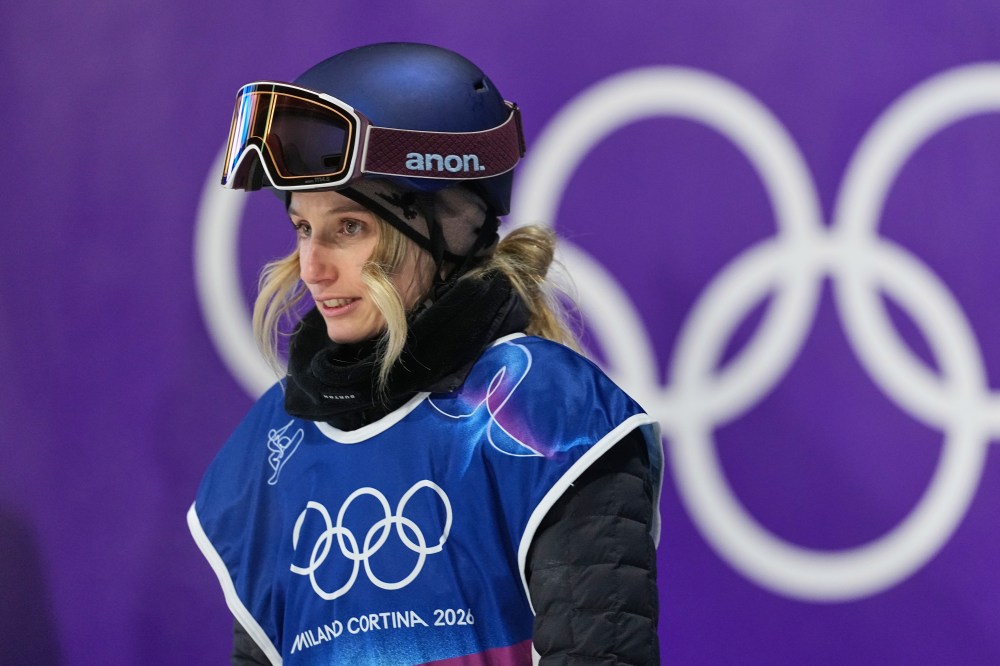
In maybe the most telling sign of how big she is in her sport, she made a recent cover of her home-country’s “Ski Austria” magazine — a near miracle in a land that loves skis and took decades to begrudgingly accept its younger cousin, the snowboard.
“She broke through that ski culture there,” Carpenter said. “A beautiful person and a beautiful competitor.”
Another glimpse of this sport’s future came in yet another sign of Japan’s ever-growing dominance in this sport, even away from the halfpipe that used to be its primary domain. Kokomo’s win gives Japan three big air medals after its men won two on Saturday.
The reason “we can achieve so much is because we love this sport so much, and I think that is really our strength,” Kokomo said.
She’ll be back on the mountain next Monday for slopestyle. Gasser will be there, too, for a few more big jumps in a game she helped shape for the better part of the last 15 years.
“I was so inspired by her snowboarding,” said Sadowski-Synnott, who now has four Olympic medals spread across slopestyle and and big air. “I feel she had led the forefront of women’s snowboard progress, and if I could name the one person who has had the biggest impact on snowboarding, it would be Anna Gasser.”
___
AP Winter Olympics: https://apnews.com/hub/milan-cortina-2026-winter-olympics
Related Articles
Spanish skater says it's 'amazing' to bring Minions to Olympic ice after music dispute



Advertisement Advertise With Us
Advertisement Advertise With Us