

Paris police are sealing off the Seine River ahead of the Olympics opening ceremony
Advertisement
Read this article for free:
or
Already have an account? Log in here »
To continue reading, please subscribe:
Digital Subscription
One year of digital access for only $75*
- Enjoy unlimited reading on winnipegfreepress.com
- Read the E-Edition, our digital replica newspaper
- Access News Break, our award-winning app
- Play interactive puzzles
*Billed as $5.77 plus GST every four weeks. After 52 weeks, price increases to the regular rate of $19.95 plus GST every four weeks. Offer available to new and qualified returning subscribers only. Cancel any time.
Monthly Digital Subscription
$4.99/week*
- Enjoy unlimited reading on winnipegfreepress.com
- Read the E-Edition, our digital replica newspaper
- Access News Break, our award-winning app
- Play interactive puzzles
*Billed as $19.95 plus GST every four weeks. Cancel any time.
To continue reading, please subscribe:
Add Free Press access to your Brandon Sun subscription for only an additional
$1 for the first 4 weeks*
- Enjoy unlimited reading on winnipegfreepress.com
- Read the E-Edition, our digital replica newspaper
- Access News Break, our award-winning app
- Play interactive puzzles
*Your next Brandon Sun subscription payment will increase by $1.00 and you will be charged $17.95 plus GST for four weeks. After four weeks, your payment will increase to $24.95 plus GST every four weeks.
Read unlimited articles for free today:
or
Already have an account? Log in here »
Hey there, time traveller!
This article was published 18/07/2024 (835 days ago), so information in it may no longer be current.
PARIS (AP) — A special kind of iron curtain came down across central Paris on Thursday, with the beginning of an Olympic anti-terrorism perimeter along the banks of the River Seine sealing off a kilometers-long (miles-long) area to Parisians and tourists who hadn’t applied in advance for a pass.
The words on many lips were “QR code,” the pass that grants access beyond snaking metal barriers that delineate the security zone set up to protect the Olympic Games’ opening ceremony on July 26.
“I didn’t know it started today,” said Emmanuelle Witt, a 35-year-old communications freelancer who was stopped by police near the Alma bridge while biking across town. She desperately went on her phone to fill out the online form to get her QR code, unaware that the vetting process could take several days.
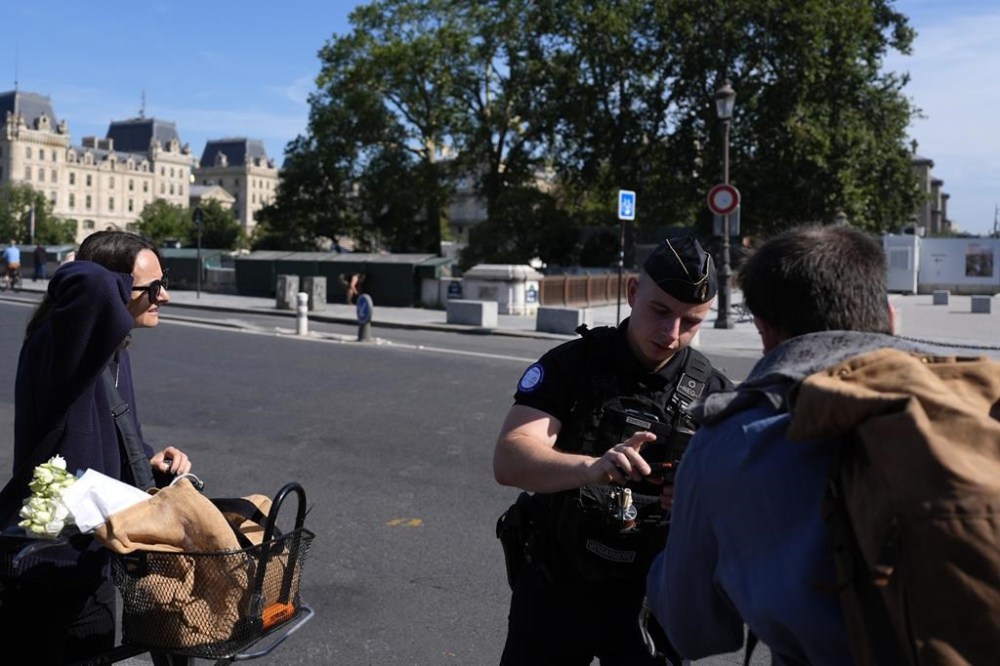
Those with the precious code – either on their phones or printed out on pieces of paper – passed smoothly past police checkpoints at gaps in the barriers taller than most people.
Those without got mostly turned away – with no amount of grumbling and cajoling making officers budge.
“That’s too much, that’s over the top, that whole thing is a pain,” grumbled Nassim Bennamou, a delivery man who was denied access to the street leading to Notre Dame Cathedral on his scooter.
“Even the GPS is confused, I have no idea how I’m going to work today,” he added.
While authorities announced the code system last year and have been meeting with local residents for months to explain the restrictions, not everyone was aware. Officers patiently explained to visitors without the pass how to reach iconic Paris monuments without going through the restricted zone.
“We had no idea we needed a QR code,” said Takao Sakamoto, 55, who was denied access to the Eiffel Tower near the Bir Hakeim Metro station. Visiting from Japan with his wife, he took a photo of the tower from a distance, behind fences and police cars. “That will do,” Sakamoto remarked with despair.
On the other hand, visitors who were lucky enough to come across officers who leniently let them pass without QR codes and others who’d equipped themselves with them were treated to the sight of near-empty riverside boulevards that, in normal times, heave with traffic.
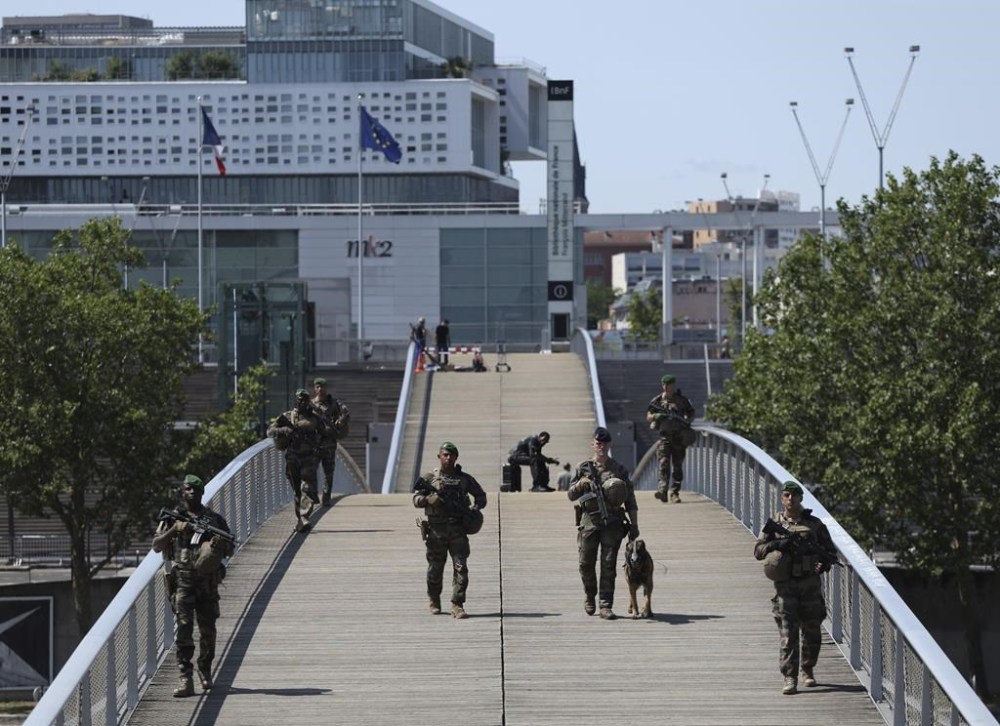
“There’s no one around!” sang a happy cyclist on a street he had largely to himself. With police seemingly everywhere, another man walking past a riverside café with fewer than usual customers loudly quipped: “You can leave your money and cell phones on the tables, there’s definitely no thieves!”
“It’s surreal, it really feels like we’re the only ones here,” said Sarah Bartnicka from Canada. Enjoying a morning jog with a friend, the 29-year-old took a selfie with a police officer on the deserted Iéna bridge to capture the moment.
Paris has repeatedly suffered deadly extremist attacks, most notably in 2015. Up to 45,000 police and gendarmes as well as 10,000 soldiers are being deployed for Olympic security.
“I understand why they’re doing this,” said Carla Money, a 64-year-old American who managed to pass the barriers with her family.
Some business owners inside the security zone grumbled that sharply reduced foot-fall would hurt their bottom line.
“They’ve locked me up like a prisoner,” said Raymond Pignol. His restaurant, L’Auberge Café, near the Pont Neuf that spans the Seine, is just inside the metal fencing.
The perimeter went into effect early Thursday morning and will last through the ceremony. As an exception, Paris has decided to hold the opening of its first Games in a century on the river rather than in a stadium, like previous host cities. Most of the river security measures will be lifted after the show.
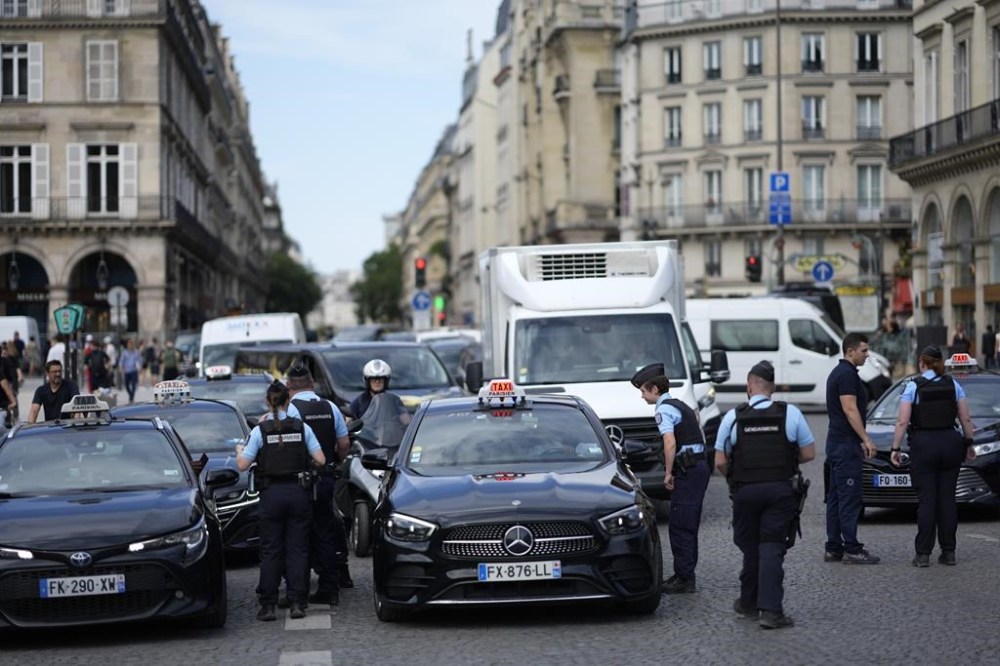
Officers were under instructions to be polite and patient as employees on their way to work and others dealt with the perimeter and the passes for the first time. But Paris police chief Laurent Nunez said that after the initial 24 hours of being accommodating, officers would apply the rules much more firmly, with no more looking the other way for those without QR codes.
___
Follow AP coverage of the Olympics at https://apnews.com/hub/2024-paris-olympic-games
Related Articles
Johnson brothers join forces in wheelchair basketball





Advertisement Advertise With Us
Advertisement Advertise With Us