

Not the time for brinkmanship
Advertisement
Read this article for free:
or
Already have an account? Log in here »
To continue reading, please subscribe:
Digital Subscription
One year of digital access for only $75*
- Enjoy unlimited reading on winnipegfreepress.com
- Read the E-Edition, our digital replica newspaper
- Access News Break, our award-winning app
- Play interactive puzzles
*Billed as $5.77 plus GST every four weeks. After 52 weeks, price increases to the regular rate of $19.95 plus GST every four weeks. Offer available to new and qualified returning subscribers only. Cancel any time.
Monthly Digital Subscription
$4.99/week*
- Enjoy unlimited reading on winnipegfreepress.com
- Read the E-Edition, our digital replica newspaper
- Access News Break, our award-winning app
- Play interactive puzzles
*Billed as $19.95 plus GST every four weeks. Cancel any time.
To continue reading, please subscribe:
Add Free Press access to your Brandon Sun subscription for only an additional
$1 for the first 4 weeks*
- Enjoy unlimited reading on winnipegfreepress.com
- Read the E-Edition, our digital replica newspaper
- Access News Break, our award-winning app
- Play interactive puzzles
*Your next Brandon Sun subscription payment will increase by $1.00 and you will be charged $17.95 plus GST for four weeks. After four weeks, your payment will increase to $24.95 plus GST every four weeks.
Read unlimited articles for free today:
or
Already have an account? Log in here »
Hey there, time traveller!
This article was published 05/05/2025 (536 days ago), so information in it may no longer be current.
With the federal election behind Canadians, it is time once again to turn our attention to Alberta.
Premier Danielle Smith, in the wake of last week’s federal Liberal victory, is humming a separatist tune lately, if not singing the song outright. On Tuesday last week, her government proposed legislation that would make it easier for citizens to call a referendum on their province’s secession from Canada.
Separatist movements are not new to Canada. Canadians are well-acquainted with the idea of Quebec separatism, particularly the 1995 referendum on whether or not Quebec should declare sovereignty, a vote which only barely fell to the “No” side, sparing the country a tremendous fracture.
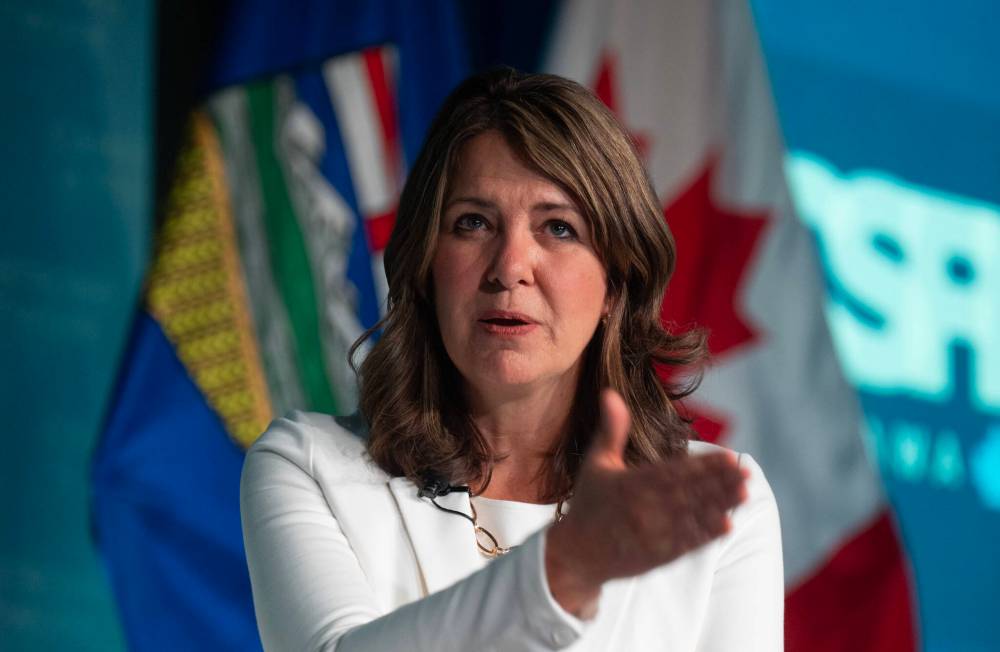
THE CANADIAN PRESS / Adrian Wyld
Alberta Premier Danielle Smith
Alberta separatism has historically been less prominent but nevertheless dates to the early 20th century. Recent years have seen it more obviously flare up — even before the election, prominent Western conservatives such as former Reform Party leader Preston Manning, writing in the Globe and Mail, called for “ways and means to peacefully secede.”
Alberta separatists believe, essentially, that their province has not been given due deference by the rest of Canada, or afforded as much as they believe their province to be owed. They see their part in Confederation as being a raw deal. This is tremendously misguided. Leaving Canada would create myriad headaches and pave many hard roads for Albertans and their leaders. Even if we assume Alberta secedes to become a sovereign entity, there is the question of how they’ll compensate for the loss of pre-existing federal resources, from civil services to military assets. There would be the question of what would happen to its relationship with the Crown, and therefore all Crown corporations operating within Alberta.
Then there is the issue of what would happen to the First Nations within Alberta’s borders, themselves sovereign bodies which have agreements with the Crown but not with this new political entity.
All in all, it would be a maelstrom of painful adjustments and lengthy negotiations that makes Brexit look pretty simple.
Or, they secede and join the United States, which in terms of government services and safety nets would likely present a huge culture shock to these new, liberated Albertans while creating an even more dire situation for First Nations on the land.
But this is all likely more thought on the matter than the average separatist has given to the subject, because ultimately separatism — at least in the case of Alberta — is more a tool of populist politicking than anything else.
Smith said she will look to protect Alberta from “future hostile acts” from Ottawa. In the same address she praised defeated Conservative Leader Pierre Poilievre, calling him a “true friend of Alberta.”
Prime Minister Mark Carney was hardly in office before he called the April 28 election; he has not had time to do anything which might meaningfully affect Albertans for good or ill. And yet, Smith’s government moves ahead with plans to make it easier to hold a separatist referendum, anyway. From this, one might get the impression that “not giving us our way” constitutes a hostile act.
Such talk might have its uses in less interesting times, but as for this time, right now, it invites trouble. Canadians must now contend with a real economic threat from our closest neighbour, a country led by a president who has repeatedly spoken of annexing this country. Smith knows this, and has been a target of criticism for cosying up to U.S. President Donald Trump.
While the provinces, territories and Ottawa may not agree on everything, we must be prepared to put up a unified front.
This is not the time to play petulant political games when a figure such as Trump is looking for any weakness in Canadian leadership he can find.
Related Articles
Alberta premier promises separation referendum in 2026 if petition signatures warrant
Advertisement Advertise With Us
Advertisement Advertise With Us
History
Updated on Tuesday, May 6, 2025 6:24 AM CDT: Adds references to territories