

Protection for those who need it most
Advertisement
Read this article for free:
or
Already have an account? Log in here »
To continue reading, please subscribe:
Digital Subscription
One year of digital access for only $75*
- Enjoy unlimited reading on winnipegfreepress.com
- Read the E-Edition, our digital replica newspaper
- Access News Break, our award-winning app
- Play interactive puzzles
*Billed as $5.77 plus GST every four weeks. After 52 weeks, price increases to the regular rate of $19.95 plus GST every four weeks. Offer available to new and qualified returning subscribers only. Cancel any time.
Monthly Digital Subscription
$4.99/week*
- Enjoy unlimited reading on winnipegfreepress.com
- Read the E-Edition, our digital replica newspaper
- Access News Break, our award-winning app
- Play interactive puzzles
*Billed as $19.95 plus GST every four weeks. Cancel any time.
To continue reading, please subscribe:
Add Free Press access to your Brandon Sun subscription for only an additional
$1 for the first 4 weeks*
- Enjoy unlimited reading on winnipegfreepress.com
- Read the E-Edition, our digital replica newspaper
- Access News Break, our award-winning app
- Play interactive puzzles
*Your next Brandon Sun subscription payment will increase by $1.00 and you will be charged $17.95 plus GST for four weeks. After four weeks, your payment will increase to $24.95 plus GST every four weeks.
Read unlimited articles for free today:
or
Already have an account? Log in here »
Hey there, time traveller!
This article was published 10/05/2024 (893 days ago), so information in it may no longer be current.
Manitoba has found itself at the centre of an important element of the country’s reconciliation journey.
The province has been selected as the location for a pilot project which will establish a Red Dress alert system to notify the public when an Indigenous girl, woman, two-spirit or gender-diverse person is reported missing.
The system gets its name from the symbolic red dress used to denote the plight of missing and murdered Indigenous women, girls, two-spirit and gender-diverse people. Nahanni Fontaine, chair of the provinces MMIWG2S+ and gender-based violence committee of cabinet, told the Free Press this was just one part of Manitoba’s efforts in tackling the issue, as it also leads efforts to end the crisis faced by these groups.
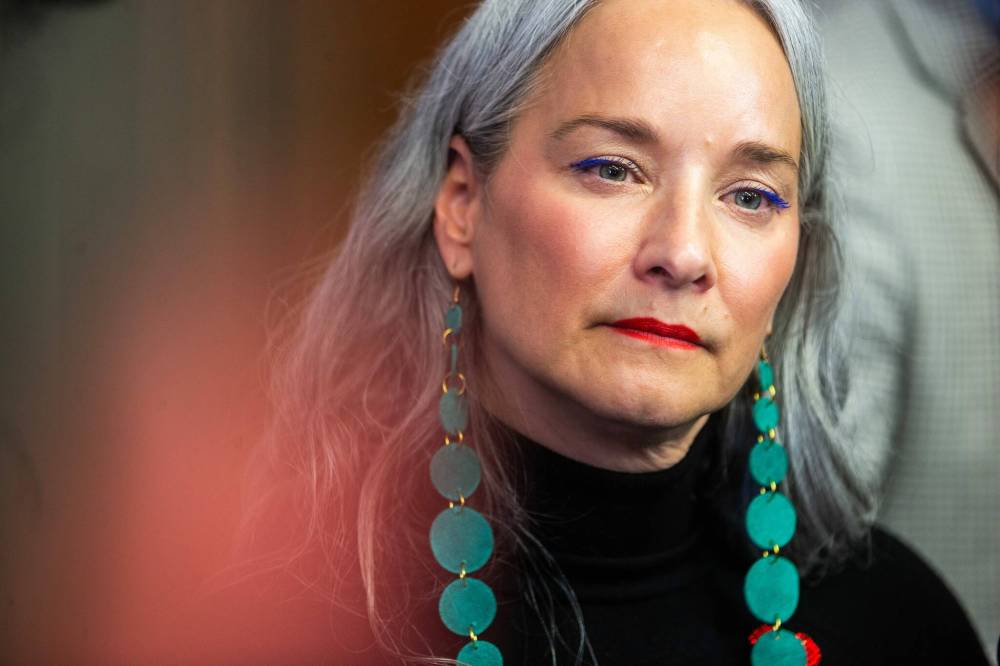
MIKAELA MACKENZIE / FREE PRESS
Manitoba families minister Nahanni Fontaine
The federal government, which is partnering with the province and Indigenous grassroots groups on the pilot project, is providing $1.3 million over three years to co-develop regional systems across the country. Manitoba, considered to be at the centre of the MMIWG2S+ crisis, is a fitting starting point for establishing the system.
Detractors may wonder why a special system is necessary. There are already Amber Alert systems in place for missing children, and other mechanisms for reporting other missing persons. While that may be the case, it is also the case that the MMIWG2S+ crisis is one that necessitates a greater effort.
Indigenous women and girls are 12 times more likely to be slain or go missing, according to the findings of a 2019 national inquiry. They are six times more likely to be the victim of a homicide, according to Statistics Canada.
What’s more, past negative experiences with law enforcement and traditional institutions have served to erode trust among Indigenous communities in the systems as they currently exist.
Creating a system unique to the problems they face, which can be tailor-made to address concerns and handle reports in a way that suits both those who use the system and those who work within it, is a plus. And indeed, this appears to be the idea. Fontaine told the Free Press that creating criteria for alerts will be a community effort developed partly by front-line workers.
Ironing out these details are crucial not just for Manitoba, but for the country. The idea is, eventually, to establish a national system, and so whatever Manitoba sets up, the rest of Canada is likely to follow. It’s important to get it right.
An alert system will not be a cure-all. It may help to locate and help missing people before the worst comes to pass. That is good as far as it goes. However, it remains the case that many of the 231 calls to justice laid out by the National Inquiry into Missing and Murdered Indigenous Women and Girls have gone uncompleted. There is still a great deal of work and healing to do.
What’s more, the system won’t be good for much if people don’t take it seriously.
Red Dress alerts will require not just for the system to work and work well, but for the public to respond accordingly. Hilda Anderson-Pyrz, chair of the National Family and Survivors Circle, told the Free Press that “(The system) says to society that we matter, that our voices are being heard,” and that is a message the public will have to get as well.
Receiving a Red Dress alert will mean keeping an eye out, reporting useful information. It will mean treating the safety and, possibly, rescue of the missing as a crucial, communal task.
People who are at greater risk of harm require a greater effort to protect — and we all have to do our part.
Related Articles
Province announces $15 million endowment fund for MMIWG2S+ families

Advertisement Advertise With Us
Advertisement Advertise With Us
History
Updated on Friday, May 10, 2024 7:51 AM CDT: Corrects reference to National Inquiry into Missing and Murdered Indigenous Women and Girls