

The coyote at the door
Advertisement
Read this article for free:
or
Already have an account? Log in here »
To continue reading, please subscribe:
Digital Subscription
One year of digital access for only $75*
- Enjoy unlimited reading on winnipegfreepress.com
- Read the E-Edition, our digital replica newspaper
- Access News Break, our award-winning app
- Play interactive puzzles
*Billed as $5.77 plus GST every four weeks. After 52 weeks, price increases to the regular rate of $19.95 plus GST every four weeks. Offer available to new and qualified returning subscribers only. Cancel any time.
Monthly Digital Subscription
$4.99/week*
- Enjoy unlimited reading on winnipegfreepress.com
- Read the E-Edition, our digital replica newspaper
- Access News Break, our award-winning app
- Play interactive puzzles
*Billed as $19.95 plus GST every four weeks. Cancel any time.
To continue reading, please subscribe:
Add Free Press access to your Brandon Sun subscription for only an additional
$1 for the first 4 weeks*
- Enjoy unlimited reading on winnipegfreepress.com
- Read the E-Edition, our digital replica newspaper
- Access News Break, our award-winning app
- Play interactive puzzles
*Your next Brandon Sun subscription payment will increase by $1.00 and you will be charged $17.95 plus GST for four weeks. After four weeks, your payment will increase to $24.95 plus GST every four weeks.
Read unlimited articles for free today:
or
Already have an account? Log in here »
Hey there, time traveller!
This article was published 07/07/2023 (1207 days ago), so information in it may no longer be current.
While urbanization has kept many humans safe from some of nature’s perils for centuries, recent events in Winnipeg are proof that safety is not guaranteed.
Over the past two weeks, the city has been shocked not once, but twice, as children — one aged four, the other nine — were victims of coyote attacks within the city’s borders. Thankfully, the children were able to be treated in hospital and released, but these attacks have put a spotlight on the delicate relationship between humans and the creatures that live beyond the borders of our modern, concrete settlements.
Winnipeggers aren’t strangers to the presence of various fauna on our streets. In many neighbourhoods, particularly those in the outer suburbs, rabbits, deer and even red foxes are far from unusual sights. But the presence of larger predators, such as coyotes, are more rare, as are attacks on humans — the attacks on the children are believed to be the first documented in Manitoba.
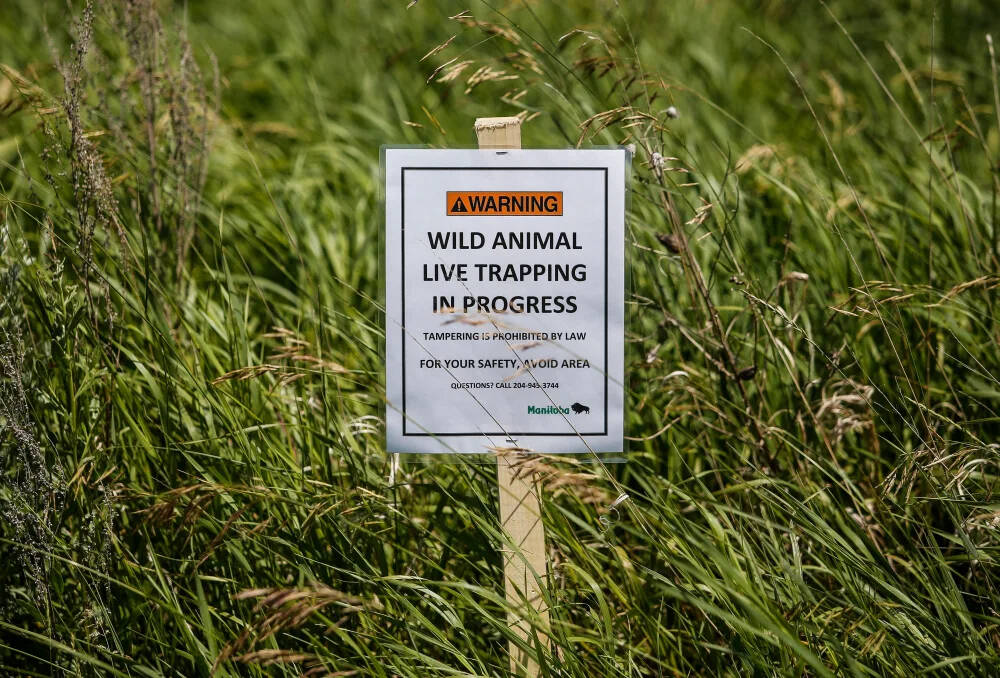
John Woods / Free Press files
Signs were posted near the location of a second coyote attack in the North Kildonan area of Winnipeg.
The attacks are not the first time coyotes have been cause for consternation in Winnipeg. In 2020, a section of Assiniboine Forest was shut down after coyotes began showing dangerous signs, including following hikers. The increased presence of the wild canines has been noted in cities all over the continent. The Edmonton Urban Coyote Project notes that because the animals are generalists — able to easily change what they eat and where they live — they can thrive practically anywhere.
Throw in a lack of competition from other, bigger carnivores — such as wolves — and cities, full of trash and smaller animals, are arenas in which the coyote can become a No. 1 predator.
In Winnipeg, two coyotes have been successfully trapped and euthanized following the attacks. Some may say that’s not enough, but those who call for a mass cull of the animals miss the lesson buried inside the shocking news.
You can’t fight nature.
Coyotes are part of Manitoba’s habitat, and they’re here to stay. The city may well grow larger, or denser, but the coyotes will remain. If we were to cull them in the immediate area, others will simply be drawn in, attracted to the city’s abundance of food as supplies in their own territories dwindle (gardeners will know this well from the effects of passing deer on their flowers).
So, just as we may occasionally spot a doe or cluster of cottontails in Winnipeg yards, so too must we accept that we will occasionally see something with fangs stalking the roadside.
It is in this situation where our habits must adapt. No longer can human beings expect safety from nature’s dangers just by virtue of being in a large urban environment.
Simple safety lessons must be taught, starting at a young age, for navigating the world in general.
“This is what a coyote looks like. If you see one, stay away from it (but don’t run from it).”
“Don’t feed them. Appearances to the contrary, they are not puppies.”
They might seem like simple lessons, but they’re becoming increasingly important for people of all ages.
None of this advice is to cast blame with regard to last week’s attacks. They were a surprise, a shock, something wholly unexpected in an environment once thought to be safe from such dangers. But we know now that is not the case anymore. We must all act accordingly.
Humanity has accomplished much over the centuries, thanks in great part to our taming — or perhaps dominating and exploiting — of nature.
But nature still has teeth, and given an opportunity, it’s going to use them.
Related Articles
Wild coyote pup sneaks into Winnipegger's home
Advertisement Advertise With Us
Advertisement Advertise With Us