

Prairie politicians fiddle: their provinces burn
Advertisement
Read this article for free:
or
Already have an account? Log in here »
To continue reading, please subscribe:
Digital Subscription
One year of digital access for only $75*
- Enjoy unlimited reading on winnipegfreepress.com
- Read the E-Edition, our digital replica newspaper
- Access News Break, our award-winning app
- Play interactive puzzles
*Billed as $5.77 plus GST every four weeks. After 52 weeks, price increases to the regular rate of $19.95 plus GST every four weeks. Offer available to new and qualified returning subscribers only. Cancel any time.
Monthly Digital Subscription
$4.99/week*
- Enjoy unlimited reading on winnipegfreepress.com
- Read the E-Edition, our digital replica newspaper
- Access News Break, our award-winning app
- Play interactive puzzles
*Billed as $19.95 plus GST every four weeks. Cancel any time.
To continue reading, please subscribe:
Add Free Press access to your Brandon Sun subscription for only an additional
$1 for the first 4 weeks*
- Enjoy unlimited reading on winnipegfreepress.com
- Read the E-Edition, our digital replica newspaper
- Access News Break, our award-winning app
- Play interactive puzzles
*Your next Brandon Sun subscription payment will increase by $1.00 and you will be charged $17.95 plus GST for four weeks. After four weeks, your payment will increase to $24.95 plus GST every four weeks.
Read unlimited articles for free today:
or
Already have an account? Log in here »
Hey there, time traveller!
This article was published 27/05/2023 (1246 days ago), so information in it may no longer be current.
Scott Forbes
Driving across the Prairies during the Alberta election campaign was a disturbingly surreal experience. Early, unprecedented, and out-of-control wildfires raged across northern Alberta and Saskatchewan sending a pall of choking smoke across the continent.
All the while, Prairie politicians did their best to ignore the reality burning around them.
The planet is heating up. As a direct consequence, the fire season grows longer and more severe each year. We know the primary cause: the burning of fossil fuels. Fossil fuels are the mainstay of the Alberta economy — and to a lesser extent, Saskatchewan’s as well.
In Saskatchewan, the vaunted Roughriders headed indoors for practice to avoid the dangerous smoke levels. On the very same day, Premier Scott Moe announced that he would ignore federal initiatives to green the electricity grid by 2035. Too expensive and too unreliable he said. Saskatchewan will carry on burning coal and gas.
Next door in Alberta, where the devastation wrought by the Fort McMurray fire is still a hot memory, a leaders debate was held in Edmonton 11 days before the provincial election. Current UCP Premier Danielle Smith faced off against former NDP Premier Rachel Notley, and just the day before — for the first time ever — an extreme weather response was activated in Edmonton because of the poor air quality from the wildfires.
What did the leader’s debate focus on?
It certainly wasn’t climate change. Even the topic of green energy was barely mentioned. It focused on Smith’s erratic behaviour as leader; their crumbling health-care system; and what both parties can do to boost an economy based largely on fossil fuels. The same fossil fuel industry that is largely responsible for climate change and the wildfires burning to the north.
Yet both Smith and Notley failed to connect the dots.
Further to the east in Manitoba sits another Conservative government. Here, Premiers Pallister and Stefanson have done their very best to ignore the reality of climate change. Yes, there is a nominal minister of Environment and Climate, but it is the most junior cabinet portfolio from which little of consequence arises. And if anyone objects to that statement, just compare the size of the PST or education tax cuts to any of their token climate change initiatives.
And in Ottawa, Conservative leader Pierre Poilievre has made rescinding the federal carbon tax a central policy plank.
These Conservative leaders all embrace a new libertarian brand of conservativism, one infested with anti-science zealots, who favour tribal political allegiance to facts, evidence and the reality that they breathe in.
The climate change policies of these governments (and Doug Ford in Ontario) illustrate the problem. Danielle Smith fiddles about more pipelines and more gas and oil extraction in Alberta while her province burns. Scott Moe is little better, leading the fight against federal carbon taxes, joined by Pallister and Stefanson.
Every province except the Prairies and Ontario is on the path to the clean energy transition that requires electrification of the economy. For example, in every province except the Prairies and Ontario, there are incentives for the purchase of electric vehicles. By contrast, in 2018 the Ford government scrapped an existing program. Manitoba and Alberta have none. And in Saskatchewan, Scott Moe introduced an electric vehicle tax!
History will not treat any of these conservative leaders kindly. In the not-too-distant future, their regressive policies will be viewed as criminal negligence, if not worse.
One does not have to look far back in history to find obvious parallels.
In the 19th century, whale oil was big business. The oil was used for lighting lamps, and the captains of the whaling industry became very rich. But that industry collapsed as an energy transition took hold. Whale oil was replaced by abundant and cheaper fossil fuels. Today it is the fossil fuel industry that is about to collapse under another energy transition: to abundant and cheaper renewable energy such as wind, solar, and geothermal. That spells doom for oil, gas and coal. The main difference between then and now, is that back then, the whaling industry just killed whales. The fossil fuel industry is killing the planet.
Alberta and Saskatchewan make up just one-seventh of Canada’s population but belch out nearly half of its greenhouse gases.
So on that drive across the Prairies, as thick smoke from the wildfires blanketed Alberta and Saskatchewan, so thick that even some water bombers couldn’t fly, one just couldn’t help but escape the thought: ain’t karma a bitch.
Scott Forbes is an ecologist at the University of Winnipeg.
Related Articles
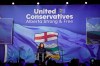
'Miracle on the Prairies:' Alberta United Conservatives win majority government
Advertisement Advertise With Us
Advertisement Advertise With Us