

Encampment-restriction motion at city hall strikes balance between public safety, compassion

Advertisement
Read this article for free:
or
Already have an account? Log in here »
To continue reading, please subscribe:
Digital Subscription
One year of digital access for only $75*
- Enjoy unlimited reading on winnipegfreepress.com
- Read the E-Edition, our digital replica newspaper
- Access News Break, our award-winning app
- Play interactive puzzles
*Billed as $5.77 plus GST every four weeks. After 52 weeks, price increases to the regular rate of $19.95 plus GST every four weeks. Offer available to new and qualified returning subscribers only. Cancel any time.
Monthly Digital Subscription
$4.99/week*
- Enjoy unlimited reading on winnipegfreepress.com
- Read the E-Edition, our digital replica newspaper
- Access News Break, our award-winning app
- Play interactive puzzles
*Billed as $19.95 plus GST every four weeks. Cancel any time.
To continue reading, please subscribe:
Add Free Press access to your Brandon Sun subscription for only an additional
$1 for the first 4 weeks*
- Enjoy unlimited reading on winnipegfreepress.com
- Read the E-Edition, our digital replica newspaper
- Access News Break, our award-winning app
- Play interactive puzzles
*Your next Brandon Sun subscription payment will increase by $1.00 and you will be charged $17.95 plus GST for four weeks. After four weeks, your payment will increase to $24.95 plus GST every four weeks.
Read unlimited articles for free today:
or
Already have an account? Log in here »
Hey there, time traveller!
This article was published 09/09/2025 (399 days ago), so information in it may no longer be current.
City hall’s latest motion to regulate homeless encampments is bound to spark controversy.
But on this one, Winnipeg city councillors probably struck the right balance between compassion for the homeless and public safety.
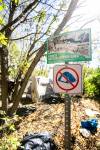
The motion, originally introduced by Daniel McIntyre Coun. Cindy Gilroy in July and amended Monday by the city’s community services committee, would prohibit homeless encampments near playgrounds, wading pools, splash pads and other spaces where children gather.

The recent amendments include a ban on encampments near rail lines, bus shelters or where “a hazard or obstruction to vehicular or pedestrian traffic exists.”
At the same time, they allow encampments in other public spaces, provided people are not trespassing or breaking other laws. The proposed changes still have to go to council for approval.
In a city that has struggled for years with rising homelessness and increasingly visible tent cities, this is not a perfect solution — because there is no perfect solution. But it’s a reasonable step forward.
Encampments are no longer confined to isolated riverbanks or tucked-away fields. Anyone who spends time downtown or in certain neighbourhoods knows they are now part of Winnipeg’s urban landscape.
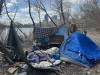
Blue and green tarps, makeshift shelters and open fires have become more common. Along with them so, too, have reports of discarded needles, human waste and the kinds of safety risks that worry parents and nearby residents.
For many homeless people, these encampments are not a lifestyle choice. They are a desperate last resort when shelter beds are full, unsafe or simply not an option. Some people can’t stay in shelters because of substance use, mental-health issues or strict curfews. Others simply feel safer outdoors.
Keeping encampments away from playgrounds, pools and spray pads is hardly unreasonable.
That’s the tension councillors are grappling with. A blanket ban on encampments in all public spaces would be heavy-handed and almost certainly unenforceable. But doing nothing isn’t an option either, especially when children are at risk of coming into contact with hazards in the places meant for play.
Keeping encampments away from playgrounds, pools and spray pads is hardly unreasonable. These are areas designed specifically for children. Parents should not have to weigh the risk of their kids stumbling across a needle or witnessing disturbing behaviour while spending time at the park.
The policy doesn’t criminalize homelessness. It doesn’t push people out of sight and out of mind entirely. It simply draws a line around places where society has a heightened duty to protect children.
Public policy is often about compromise. In this case, compromise means preserving safe play spaces for kids while still leaving flexibility for homeless people to set up camp in other areas.
This won’t solve homelessness — it’s not meant to. At best, this policy manages where encampments can and cannot appear. It doesn’t address the root causes — addiction, poverty, untreated mental illness and the lack of affordable housing.
Winnipeg’s growing encampments are just one symptom of a much larger social crisis. Overdose deaths are climbing. Rents are rising faster than incomes. Shelter systems are stretched to the limit. And governments at every level are struggling to keep up.
It’s worth remembering that city hall doesn’t control most of the levers that could solve or reduce homelessness.
That’s why some advocates bristle at any restrictions on encampments. They see them as a distraction from the urgent need for real housing solutions. They’re not wrong, but the city can’t simply ignore immediate safety concerns while it waits for systemic reforms.
It’s worth remembering that city hall doesn’t control most of the levers that could solve or reduce homelessness. Housing policy, health care, income supports — those are primarily provincial and federal responsibilities. City hall is left to deal with the visible fallout, often with limited tools.
That doesn’t absolve the city of responsibility. But it does explain why councillors are left debating measures such as this one — imperfect stopgaps designed to protect public spaces in the here and now.
Good public policy often leaves everyone a little unhappy. Homeless advocates worry the new rules could stigmatize people. Parents and residents may feel the city isn’t going far enough. But in the messy world of urban governance, a policy that splits the difference can sometimes be the most realistic path forward.
Nobody should pretend this motion is more than what it is: a narrow rule to shield kids from the risks that sometimes come with encampments. It’s not a solution to homelessness, and it won’t stop tents from appearing in other parts of the city.
But when the options are limited and the problem is complex, sometimes incremental steps are the best governments can do.
There will be no quick fixes and no policies that please everyone here. But shielding kids from encampments while leaving space for the homeless elsewhere feels like a fair middle ground — a small but meaningful step in a much bigger, ongoing struggle.
tom.brodbeck@freepress.mb.ca
Tom Brodbeck is an award-winning author and columnist with over 30 years experience in print media. He joined the Free Press in 2019. Born and raised in Montreal, Tom graduated from the University of Manitoba in 1993 with a Bachelor of Arts degree in economics and commerce. Read more about Tom.
Tom provides commentary and analysis on political and related issues at the municipal, provincial and federal level. His columns are built on research and coverage of local events. The Free Press’s editing team reviews Tom’s columns before they are posted online or published in print – part of the Free Press’s tradition, since 1872, of producing reliable independent journalism. Read more about Free Press’s history and mandate, and learn how our newsroom operates.
Our newsroom depends on a growing audience of readers to power our journalism. If you are not a paid reader, please consider becoming a subscriber.
Our newsroom depends on its audience of readers to power our journalism. Thank you for your support.
Tom Brodbeck is an award-winning author and columnist with over 30 years experience in print media. He joined the Free Press in 2019. Born and raised in Montreal, Tom graduated from the University of Manitoba in 1993 with a Bachelor of Arts degree in economics and commerce. Read more about Tom.
Tom provides commentary and analysis on political and related issues at the municipal, provincial and federal level. His columns are built on research and coverage of local events. The Free Press’s editing team reviews Tom’s columns before they are posted online or published in print – part of the Free Press’s tradition, since 1872, of producing reliable independent journalism. Read more about Free Press’s history and mandate, and learn how our newsroom operates.
Our newsroom depends on a growing audience of readers to power our journalism. If you are not a paid reader, please consider becoming a subscriber.
Our newsroom depends on its audience of readers to power our journalism. Thank you for your support.
Related Articles
‘Fear-mongering’ plagues efforts on homelessness








Advertisement Advertise With Us
Advertisement Advertise With Us