Historical Connections
Please review each article prior to use: grade-level applicability and curricular alignment might not be obvious from the headline alone.
Qatar and Poland — one is the bigger story
5 minute read Preview Monday, Sep. 15, 2025
Manitobans raise more than $81,000 for cancer research at Terry Fox Run
3 minute read Preview Sunday, Sep. 14, 2025Churchill and LNG would mix like oil and water
5 minute read Tuesday, Sep. 9, 2025Churchill has always been a place of connection and of change. However, last week’s remarks from Prime Minister Mark Carney that Churchill could become a year-round export terminal for liquefied natural gas (LNG) suggest a risky vision for the future that could imperil the balance and diversity that has allowed this unusual community on Hudson Bay to endure.
At its founding, Churchill connected Inuit, Dene and Cree communities with the Hudson Bay Company’s vast trading network. In the waning days of the fur trade, Churchill re-emerged as an important cold war base, housing thousands of troops.
When North America’s defence needs changed, Churchill again reinvented itself as a research hub for aerospace and a broad array of scientific enquiry. Through the second half of the 20th century, Churchill also became a critical social service centre for much of Hudson Bay and the central Arctic. Now it has emerged as one of Canada’s great ecotourism destinations. Few places better capture the adaptability and resilience of the North.
The prime minister and Premier Wab Kinew have both described Churchill LNG exports as a “nation-building” project. Investment in the transportation corridor that connects the Arctic to southern Canada through the port and railroad is indeed overdue. The Port of Churchill is a national asset with enormous potential and diverse strengths.
Gaza as a twisted real estate opportunity
5 minute read Preview Saturday, Sep. 6, 2025
Los Angeles school district settles with parents who sued over distance learning
3 minute read Preview Tuesday, Sep. 23, 2025
Swastikas still linger on some flags in Finland’s air force, but are on the way out
4 minute read Preview Tuesday, Oct. 7, 2025Sometimes we’re left with the power of words
5 minute read Monday, Jun. 23, 2025I’m not a head of state. I’m not a general. I’m not a billionaire. I’m a writer. And in times like these, that is both a burden and a responsibility.

Pray for rain — and plant more trees
5 minute read Preview Monday, Jun. 16, 2025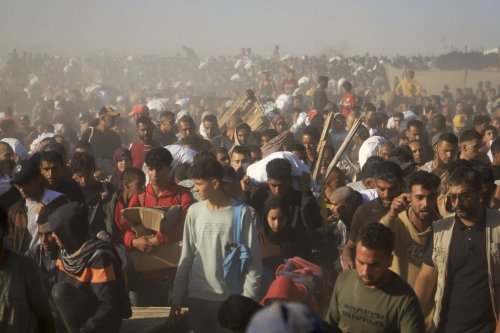
A Palestinian describes 15 minutes of terror trying to get food in the new Gaza distribution system
6 minute read Preview Tuesday, Sep. 23, 2025
Many survivors of Myanmar’s devastating quake in March still live in leaky tents
4 minute read Preview Tuesday, Oct. 7, 2025
Nova Scotia NDP says province too secretive, must release environmental racism report
3 minute read Preview Thursday, Sep. 25, 2025
Hudson’s Bay heads into last days of sale with lots of shoppers, little merchandise
5 minute read Preview Friday, May. 30, 2025
Chief says infrastructure drive could trigger another Idle No More protest movement
4 minute read Preview Monday, Sep. 22, 2025
Syria’s only female minister says lifting of economic sanctions offers hope for recovery
5 minute read Preview Tuesday, Oct. 7, 2025A suspected drone attack on a hospital in Sudan kills 6, activists say
2 minute read Thursday, Sep. 25, 2025CAIRO (AP) — A suspected drone attack by Sudanese paramilitaries Friday hit a hospital in southern Sudan, killing at least six people and knocking the facility out of service, officials and rights advocates said.
The Emergency Lawyers, a rights group, blamed the Rapid Support Forces for the attack on the Obeid International Hospital, al-Dhaman, in Obeid, the capital city of North Kordofan province. At least 15 others were wounded in the attack, it said.
In a statement on social media, the hospital said the attack resulted in severe damage to its main building. Services at the hospital, the main medical facility serving the region, were suspended until further notice, it said.
Sudan plunged into civil war on April 15, 2023, when simmering tensions between the military and the RSF exploded into open warfare in the capital Khartoum and other parts of the country.
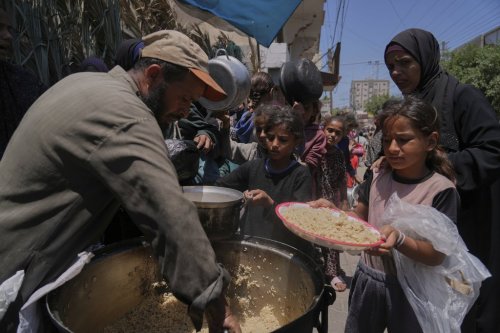
Live updates: Hamas considers Gaza ceasefire proposal as Israeli strikes kill at least 27
12 minute read Preview Thursday, Sep. 25, 2025
South Africa police minister says Trump ‘twisted’ facts to push baseless genocide claims
5 minute read Preview Monday, Sep. 22, 2025
Kashmir tourism bears the brunt after tourist massacre and India-Pakistan military strikes
5 minute read Preview Monday, Sep. 22, 2025
‘Special to the world’: Supporters hope to save beloved Drumheller dinosaur
4 minute read Preview Monday, Sep. 22, 2025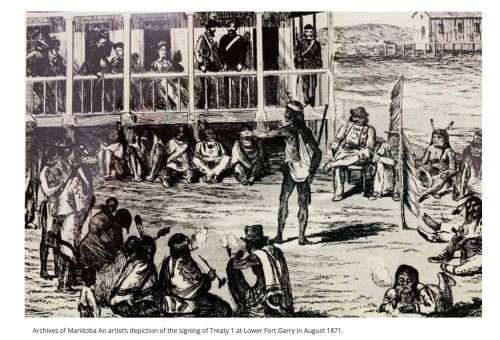
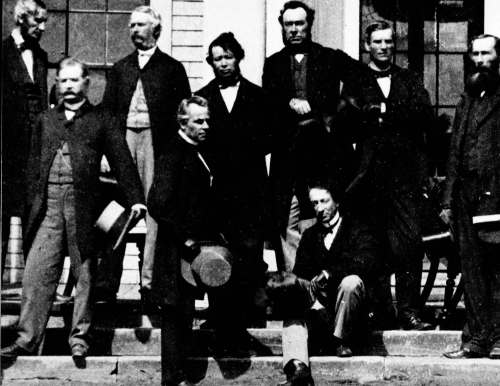
Rupert’s Land inhabitants blindsided by Canada’s purchase of their homeland in 1869
7 minute read Preview Saturday, Oct. 26, 2024
Disdain, confusion around officials’ handling of UFO reports
4 minute read Preview Saturday, May. 21, 2022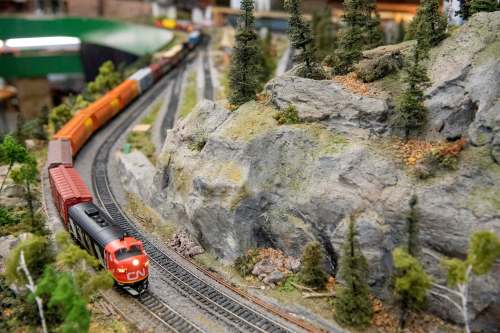
Winnipeg Railway Museum can punch your ticket to the past, but it also needs your help
7 minute read Preview Sunday, Aug. 15, 2021C’est au tour des missionnaires africains
4 minute read Saturday, Aug. 10, 2019Depuis une vingtaine d’années, la contribution de prêtres missionnaires venus d’Afrique est toujours plus évidente dans le diocèse de Saint-Boniface. Joseph Nnadi, professeur retraité de l’Université de Winnipeg, a réfléchi à ce phénomène (1).
Il aime dire de l’abbé d’origine haïtienne Jean-Baptiste Georges, qui séjournait à Saint-Boniface durant les vacances d’été de 1945 à 1949, qu’il s’agit du « premier prototype de missionnaire africain » à Saint-Boniface: « L’archevêque Georges Cabana le faisait venir ici pendant l’été pour l’aider à convaincre les Noirs qui habitaient Saint-Boniface et peut-être aussi Winnipeg de venir à l’église. Les Noirs comme les Autochtones se sentaient négligés, méprisés, déçus... Cet archevêque a devancé les autres. »
Il aura fallu attendre le début des années 1990 pour voir d’autres prêtres africains arriver à Winnipeg, sous l’impulsion de l’archevêque Antoine Hacault. « Aujourd’hui, sous la gouverne de l’archevêque de Saint- Boniface Mgr Albert LeGatt, il y a 61 prêtres en ministère actif, dont 16 sont africains. »
Ce phénomène est appelé « l’évangélisation en sens inversé ». Dans les années 1960, l’évangélisation allait de paire avec la colonisation. « À l’origine du mouvement, l’évangélisation se faisait dans un sens, un peu partout vers l’Afrique et le tiers-monde. Maintenant, les missionnaires quittent l’Afrique pour aller dans les pays où l’Église catholique existe de longue date. L’Afrique a des missionnaires parce qu’elle avait reçu des missionnaires. On voit ce phénomène en France, en Italie, en Angleterre, au Canada... »