Social Studies Grade 11: History of Canada

Please review each article prior to use: grade-level applicability and curricular alignment might not be obvious from the headline alone.
Lawyer, philanthropist had a fierce sense of social justice

Janine LeGal 7 minute read Preview

Lawyer, philanthropist had a fierce sense of social justice

Janine LeGal 7 minute read Saturday, Mar. 22, 2025

A luminary in human rights advocacy, Canadian lawyer Yude Henteleff was a natural explorer both in his travels and in his daily life. Henteleff lived 97 years with passion and dynamism.

He died Dec. 8, 2024.

Henteleff’s accomplishments and list of awards and accolades began at age 16 when he was elected president of the Jewish Youth Council and then to the youth division of the Canadian Jewish Congress. His activities in the Jewish community were extensive and lifelong.

The father, grandfather and partner lived life to the fullest, propelled by a fierce sense of social justice and belief in “tikkun olam,” a Hebrew phrase meaning “to repair the world.”

Read
Saturday, Mar. 22, 2025

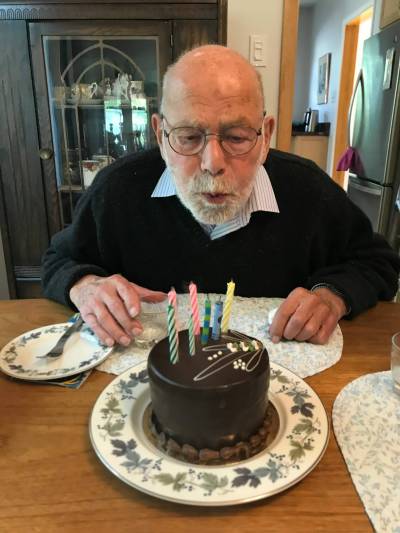
SUPPLIED Yude Henteleff on his 90th birthday - for Passages feature Winnipeg Free Press 2025

SUPPLIED

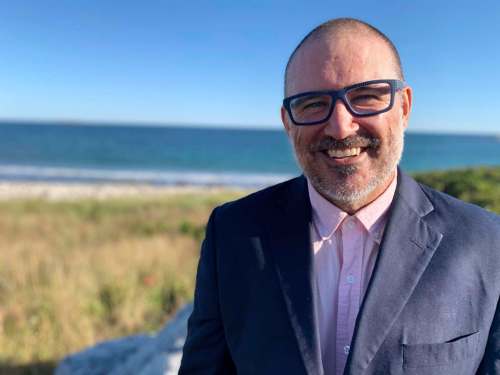
Yude Henteleff on his 90th birthday.

SUPPLIED Yude Henteleff on his 90th birthday.
No Subscription Required

Life of pioneer for women’s rights in Manitoba chronicled in new account

Reviewed by Faith Johnston 5 minute read Preview
No Subscription Required

Life of pioneer for women’s rights in Manitoba chronicled in new account

Reviewed by Faith Johnston 5 minute read Saturday, Dec. 21, 2024

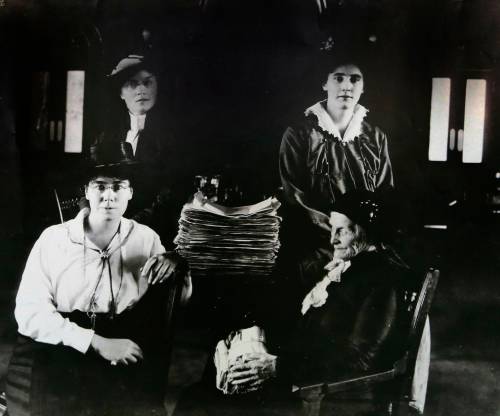
Manitobans with an interest in history are proud that our province was the first in Canada to grant women the vote, but if asked who led the women’s suffrage campaign here, most would say Nellie McClung. A minority might say it was a team effort. Few would name Lillian Beynon Thomas.

Law professor Robert Hawkins became interested in Thomas because of her determined efforts to have a dower act passed in Manitoba. After devoting several years to the dower campaign, Thomas realized it would never happen without women’s suffrage. So in 1913, she organized the Political Equality League to lead the fight.

Born in 1874, Thomas came from a relatively poor family homesteading near Hartney. After finishing high school, she taught in rural schools off and on for 13 years, saving enough money to further her education; in 1905, when only 11 per cent of university grads were women, Thomas graduated from Brandon University. The following year, having had enough of teaching, she landed a job with the Manitoba Free Press.

For the next 11 years, Thomas edited the women’s page of a widely distributed weekly, The Prairie Farmer, and for five years wrote a daily column in the Free Press as well.

Read
Saturday, Dec. 21, 2024

Free Press files

Clockwise, from top left: Lillian Beynon Thomas, Winona Dixon, Dr. Mary Crawford and Amelia Burritt presented the final petition for women’s suffrage on Dec. 23, 1915 to the Manitoba Legislature. The amendment to the Manitoba Elections Act allowing women to vote, the first such legislation in Canada, was passed on Jan. 28, 1916.

Free Press files
                                Clockwise, from top left: Lillian Beynon Thomas, Winona Dixon, Dr. Mary Crawford and Amelia Burritt presented the final petition for women’s suffrage on Dec. 23, 1915 to the Manitoba Legislature. The amendment to the Manitoba Elections Act allowing women to vote, the first such legislation in Canada, was passed on Jan. 28, 1916.
No Subscription Required

Rupert’s Land inhabitants blindsided by Canada’s purchase of their homeland in 1869

Tom Brodbeck 7 minute read Preview
No Subscription Required

Rupert’s Land inhabitants blindsided by Canada’s purchase of their homeland in 1869

Tom Brodbeck 7 minute read Saturday, Oct. 26, 2024

When the Hudson’s Bay Company (HBC) reached an agreement to sell Rupert’s Land to Canada in the spring of 1869, it came as a complete surprise to the people living in what is today Western Canada. They were neither consulted on the proposed annexation nor given any details about how it would affect their lives.

Read
Saturday, Oct. 26, 2024

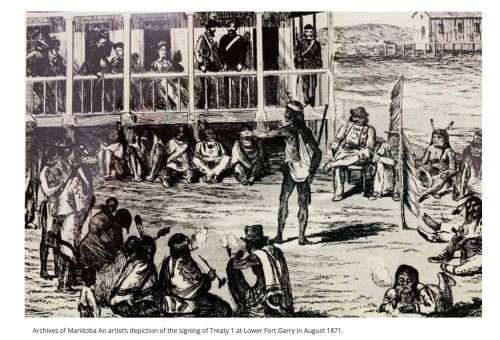
An artist’s depiction shows the signing of Treaty 1 at Lower Fort Garry in August 1871. (Archives of Manitoba)

An artist’s depiction shows the signing of Treaty 1 at Lower Fort Garry in August 1871. (Archives of Manitoba)
No Subscription Required

Rise of FLQ in 1960s documented in Montreal cartoonist’s graphic novel

Ben Sigurdson 4 minute read Preview
No Subscription Required

Rise of FLQ in 1960s documented in Montreal cartoonist’s graphic novel

Ben Sigurdson 4 minute read Friday, Nov. 3, 2023

Ever since he was a teenager, Montreal cartoonist Chris Oliveros has been fascinated by the story of the Front de libération du Québec (FLQ).

In high school, his history class was shown Robin Spry’s 1973 National Film Board documentary Action: The October Crisis of 1970, which detailed the acts of terrorism, including the kidnapping and murder of Quebec labour minister Pierre Laporte, carried out by the militant separatist group in Montreal — under the auspices of liberating Quebec from anglophone rule — and the military response that followed. (The film is available to watch free online at wfp.to/6pe.)

“I was really struck by the fact that events like these, these incredibly tumultuous events, kidnappings and the army in the streets of Montreal, all of this could happen here, in the city where I lived,” says Oliveros from his Montreal home. “I was really blown away.”

Earlier this month, Montreal publisher Drawn & Quarterly (which Oliveros founded in 1990) published his graphic novel Are You Willing To Die For The Cause?: Revolution in 1960s Quebec, the first of two books about the FLQ by the 57-year-old cartoonist.

Read
Friday, Nov. 3, 2023
No Subscription Required

Liberal insider reflects on struggle to entrench Indigenous rights during the constitutional process of the early 1980s

Jack Austin 8 minute read Preview
No Subscription Required

Liberal insider reflects on struggle to entrench Indigenous rights during the constitutional process of the early 1980s

Jack Austin 8 minute read Saturday, Mar. 18, 2023

The following is an abridged excerpt from Unlikely Insider: A West Coast Advocate in Ottawa, by Jack Austin, a former federal Liberal policy adviser, chief of staff to prime minister Pierre Trudeau and senator, with Edie Austin (McGill University Press, 2023). In the book the Liberal insider reflects on the struggle to entrench Indigenous rights during the constitutional process of the early 1980s.

Read
Saturday, Mar. 18, 2023

THE CANADIAN PRESS

Jack Austin, a former federal Liberal policy adviser, chief of staff to prime minister Pierre Trudeau and senator, speaks in the Canadian Senate in December 1981 arguing for Indigenous rights to be clearly entrenched in the Constitution as it was patriated from Britain.

THE CANADIAN PRESS
                                Jack Austin, a former federal Liberal policy adviser, chief of staff to prime minister Pierre Trudeau and senator, speaks in the Canadian Senate in December 1981 arguing for Indigenous rights to be clearly entrenched in the Constitution as it was patriated from Britain.

Laying the groundwork for Canadian autonomy

Allan Levine 5 minute read Saturday, Feb. 4, 2023

The Netflix series The Crown has not been kind to King Charles III. In the four previous seasons, as Prince of Wales, he has been frequently portrayed as an awkward, out-of-step royal who shamelessly married Diana when he was in love with Camilla, his current wife.
Indigenous issues no longer stuck on back burner

Niigaan Sinclair 5 minute read Preview

Indigenous issues no longer stuck on back burner

Niigaan Sinclair 5 minute read Monday, Aug. 23, 2021

Manitoba follows a standard formula for federal elections: other than the affluent suburbs, Winnipeg votes mostly Liberal while everywhere else — besides the north — goes Conservative.

With support for provincial Conservatives waning, anger at Justin Trudeau for calling an election during a pandemic, and the rise of the provincial NDP, there are strong indications that predictable Manitoba seats are up for grabs.

The appearance of Trudeau and O’Toole in the city Friday is evidence.

Why would both visit on the same day NDP Leader Jagmeet Singh toured unmarked graves at a former residential school in Saskatchewan?

Read
Monday, Aug. 23, 2021

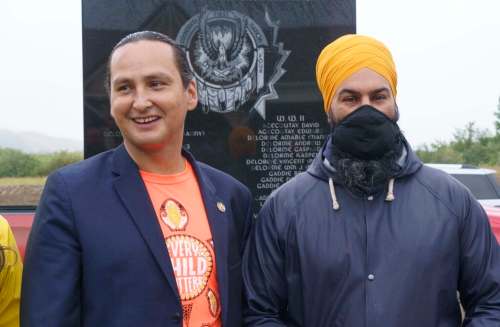
NDP Leader Jagmeet Singh is greeted by Cowessness Chief Cadmus Delorme on the Cowessness First Nation, Sask, Friday. THE CANADIAN PRESS/Paul Chiasson

NDP Leader Jagmeet Singh is greeted by Cowessness Chief Cadmus Delorme on the Cowessness First Nation, Sask, Friday. THE CANADIAN PRESS/Paul Chiasson

It’s time to Indigenize the Senate

Kluane Adamek 5 minute read Wednesday, Aug. 18, 2021

I agree with those who say this is an era of matriarchs.

The appointment of Inuk leader Mary Simon as Canada’s 30th Governor General is a vital step toward recognizing the significance of Indigenous peoples in Canada’s past, present and now future. A northerner with decades of experience and a woman grounded in culture, she represents a true shift in Canada, and beyond.

We are all celebrating. Earlier this month, the first ever woman, and LGBTTQ+, became Grand Chief Kahsennenhawe Sky-Deer. And now Roseanne Archibald is the first-ever woman to be Assembly of First Nations national chief.

These paradigm shifts give me hope, especially after a Canada Day unlike any other. There were fewer fireworks and less flag-waving. Orange shirts certainly outnumbered red ones. The nation took pause to reflect on the disturbing discovery of more than 1,000 unmarked graves, many related to children who have revealed themselves long after their deaths at residential schools.
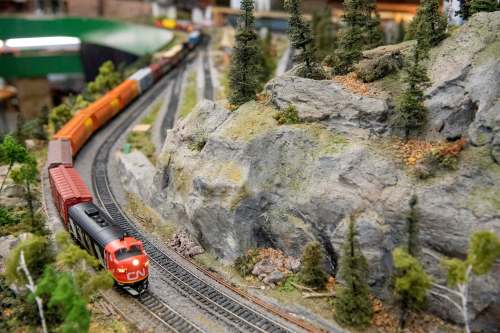
Winnipeg Railway Museum can punch your ticket to the past, but it also needs your help

Brenda Suderman 7 minute read Preview

Winnipeg Railway Museum can punch your ticket to the past, but it also needs your help

Brenda Suderman 7 minute read Sunday, Aug. 15, 2021

The Winnipeg Railway Museum, run by the Midwestern Rail Association and the Winnipeg Model Railway Club, is "the coolest indoor museum in Canada in the winter and the hottest ticket in town in summer."

Read
Sunday, Aug. 15, 2021

The not-for-profit museum relies on admission fees, donations and sales from its railway car gift shop to meet its modest annual budget of about $30,000. The museum’s board is working to find backers and new ways to raise operating funds. (Alex Lupul / Winnipeg Free Press)

The not-for-profit museum relies on admission fees, donations and sales from its railway car gift shop to meet its modest annual budget of about $30,000. The museum’s board is working to find backers and new ways to raise operating funds. (Alex Lupul / Winnipeg Free Press)

Harvesting rights were never surrendered

Jerry Daniels 4 minute read Thursday, Nov. 26, 2020

I AM dismayed that we are still arguing about the inherent rights of First Nation people to harvest from our lands and waters. Let me be clear, we have never given up our inherent right to hunt and fish.

The treaties we signed and the rulings of the highest courts of the Canadian state affirm our autonomy and freedom to engage in sustainable harvesting without interference from colonial governments.

This battle is happening across the country. Our Mi’kmaq relatives are fighting to protect their rights and livelihood on the East Coast, and here in what is now known as Manitoba, we have to defend against a provincial government that, in the middle of a global pandemic, is attempting to intimidate our people on their own land using the recently passed Wildlife Amendment Act.

Since the Wildlife Amendment Act came into effect on Oct. 10, more than three dozen people have faced charges or been given warnings by the provincial government, which has trumpeted their actions as “continuing enforcement” against “illegal hunting” in several recent news releases. Let’s be clear that the province is taking legal action against our people for exercising their inherent right to harvest; this debate is not about sport hunting. This is about our right to harvest to be able to provide for our families — the way we always have since time immemorial.
No Subscription Required

Documentary tells story of Ukrainian immigrants who put lives on the line for adopted homeland

Alan Small 7 minute read Preview
No Subscription Required

Documentary tells story of Ukrainian immigrants who put lives on the line for adopted homeland

Alan Small 7 minute read Friday, Nov. 6, 2020

A new war documentary follows a journey of acceptance for Ukrainian-Canadians that came at a heavy cost.

A Canadian War Story, directed by John Paskievich, a Winnipeg filmmaker and photographer, follows the plight of Ukrainian immigrants, who first came to Canada in the 1880s and for decades settled on homesteads across Western Canada, including Manitoba.

Those settlers, and their children, would join the Canadian effort during the Second World War, and the film offers their stories of sacrifice, tragedy and eventually victory.

“The film isn’t just a series of veterans’ testimonials, like how it was to be in Hong Kong or D-Day. It was a coming-of-age story,” says Paskievich, who spent three years making the hour-long movie.

Read
Friday, Nov. 6, 2020

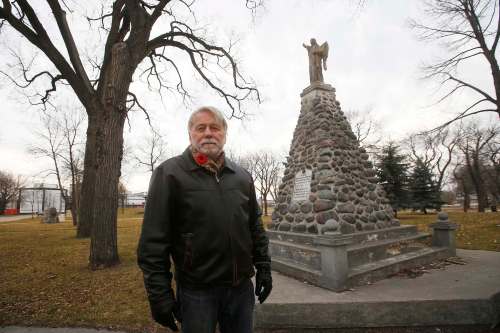
ohn Paskievich at a monument for Ukrainian soldiers killed in the Second World War; the filmmaker made A Canadian War Story over the course of three years. (John Woods / Winnipeg Free Press)

ohn Paskievich at a monument for Ukrainian soldiers killed in the Second World War; the filmmaker made A Canadian War Story over the course of three years. (John Woods / Winnipeg Free Press)
No Subscription Required

Claims of Indigenous ancestry by non-Indigenous Canadians on the rise

Reviewed by Sheilla Jones 5 minute read Preview
No Subscription Required

Claims of Indigenous ancestry by non-Indigenous Canadians on the rise

Reviewed by Sheilla Jones 5 minute read Saturday, Feb. 8, 2020

Writing about identity politics is fraught with political landmines. People tend to be highly sensitive to any challenge to how they identify themselves. It’s personal.

It is therefore intriguing that author Darryl Leroux has walked purposely right into the minefield. It’s political.

In Distorted Descent: White Claims to Indigenous Identity, Leroux describes the obsessive search by some heretofore non-Indigenous Canadians for long-ago Indigenous ancestors who can justify them identifying as Métis. According to Leroux, an associate professor of social justice and community studies at Saint Mary’s University in Halifax, the popularity of genealogical websites and online forums has created communities where race-shifters can organize. The motive, he warns, is not benign.

Leroux makes it clear that he is not talking about people who are seeking to reunite with their kin after being forcibly disconnected from their Indigenous identity through Indian residential schools, the Sixties Scoop or Indian Act policies.

Read
Saturday, Feb. 8, 2020

Supplied photo
Author Darryl Leroux has faced online attacks and threats of violence for his examination of claims by non-Indigenous Canadians of Métis status.

Supplied photo
Author Darryl Leroux has faced online attacks and threats of violence for his examination of claims by non-Indigenous Canadians of Métis status.
No Subscription Required

Canadian veterans' stories detail selfless sacrifice, struggle

Reviewed by Ian Stewart 4 minute read Preview
No Subscription Required

Canadian veterans' stories detail selfless sacrifice, struggle

Reviewed by Ian Stewart 4 minute read Friday, Nov. 10, 2017

The lives of the men and women who served and are serving in the Canadian Armed Forces are a mystery to many Canadians.

Remembrance Day may be a time when family memories of what a grandparent or great-grandparent did in the First World War or Second World War are vaguely recalled. Winnipeggers over 30 likely remember the flood of 1997, when the army was deployed to protect the city from the raging Red River, but what else have our Armed Forces done? Jody Mitic offers readers an answer.

In his 2015 autobiography Unflinching: The Making of a Canadian Sniper, Mitic told the story of his life in the Canadian Armed Forces: the physical and mental challenges he had to overcome, the years of training he endured, his deployment to Bosnia, becoming a sniper-team leader in Afghanistan, losing his legs to a landmine and overcoming this life-changing injury and post-traumatic stress disorder (PTSD).

Everyday Heroes is Mitic’s collection of 21 first-person accounts of life in the Canadian Armed Forces. He turns from his story to one “encouraging Canadians to get to know the men and women who wear the Canadian flag on their shoulders… to see beyond the uniform to the person.”

Read
Friday, Nov. 10, 2017

Jacques Boissinot / The Canadian Press files
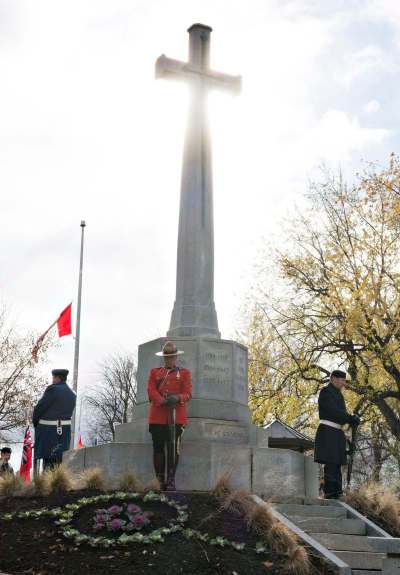
Canadian Armed Forces members and a RCMP officer stand at the Sacrifice Cross during a Remembrance Day ceremony Friday, November 11, 2016 in Quebec City.

Jacques Boissinot / The Canadian Press files
Canadian Armed Forces members and a RCMP officer stand at the Sacrifice Cross during a Remembrance Day ceremony Friday, November 11, 2016 in Quebec City.

A country born amid controversy

Allan Levine 5 minute read Preview

A country born amid controversy

Allan Levine 5 minute read Friday, Jun. 30, 2017

Given his penchant to portray Canadian history as a glorious fusion of brazen courage, underdog determination, generosity of spirit and the march of progress, Prime Minister Justin Trudeau definitely would have been in his element had he been in Toronto 150 years ago.

The new province of Ontario had the most to gain from Confederation. By virtue of its large population, Ontario’s politicians were to dominate the new federal or central government and the province’s economic potential was seemingly unlimited. (It is not by accident that the western boundary of Ontario set in the early 1880s extends as far as Kenora, 1,900 kilometres from Toronto.)

Thus, on July 1, 1867, there was great optimism among Toronto’s 50,000 citizens. The ringing of the bells at St. James Cathedral at midnight on June 30 had signified that the Dominion of Canada was now a reality.

The publisher of the Toronto Globe, George Brown, a key player who, along with John A. Macdonald and George-Étienne Cartier, had made Confederation a reality, had stayed up most of the night composing a 9,000-word article about the meaning of Confederation that took up the entire front page of the Globe on July 1. “We hail the birthday of a new nationality,” he wrote. “A United British America, with its four millions of people, takes its place this day among the nations of the world.”

Read
Friday, Jun. 30, 2017

National Archives of Canada / THE CANADIAN PRESS FILES
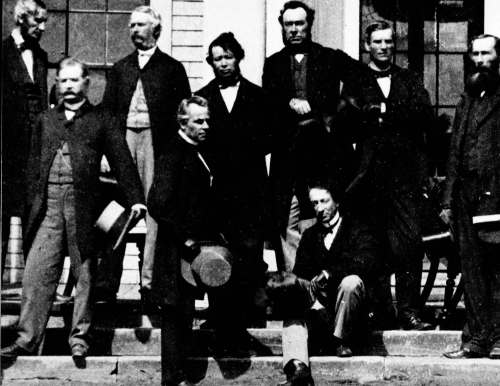
Several of the Fathers of Confederation at the Charlottetown Conference in September 1864. Sir John A. Macdonald and Georges-Étienne Cartier are in the foreground.

National Archives of Canada / THE CANADIAN PRESS FILES
Several of the Fathers of Confederation at the Charlottetown Conference in September 1864. Sir John A. Macdonald and Georges-Étienne Cartier are in the foreground.

While our 150th birthday party is a big, 'Dominion Day' began with respectful restraint

Randy Turner 16 minute read Preview

While our 150th birthday party is a big, 'Dominion Day' began with respectful restraint

Randy Turner 16 minute read Saturday, Oct. 11, 2025

It’s safe to say what is now called Canada Day had modest beginnings in these parts.As far back as 1869 — two years after Confederation and one year before Manitoba was born — the July 3 issue of the Nor’Wester, the paper of record for the “Colony of Assiniboia,” dutifully reported that celebrations on July 1 were muted.

“Dominion Day was kept in our little town by the raising of the ‘Canadian’ flag upon the now celebrated staff — said to be 70 feet, be the same 20 feet more or less — which flag was liberal sainted during the day by an ‘Anvil Chorus’ adapted to ‘God Save the Queen’ and ‘Hurrah! for the New Dominion,” the paper noted. “The affair was wound up by a large bonfire in the evening.

“Not a gun was heard, or a funeral note or anything else,” the account added, “but then you see the H.B.C. (Hudson Bay Company) is keeping her patriotism like champagne, well bottled and wired down, for a future occasion, when we may expect to see it burst forth in a manner calculated to astonish the natives.”

Of course, these were the days of the Riel Rebellion in the Red River Colony. Not exactly the time to be popping that “champagne” in public. Besides, the majority of the less than 1,000 colony settlers considered themselves British. And a vast majority of residents, the Métis under Riel, were literally at war with the new Canada.

Read
Saturday, Oct. 11, 2025

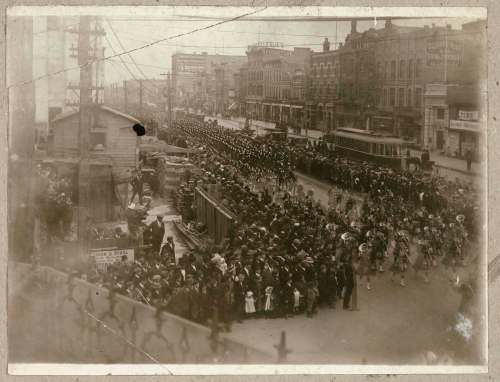
Jubilee parade 1897

Jubilee parade 1897

Canada’s autonomy took more than Vimy Ridge

Allan Levine 5 minute read Preview

Canada’s autonomy took more than Vimy Ridge

Allan Levine 5 minute read Monday, May. 8, 2017

Last month, on the occasion of the 100th anniversary of the Battle of Vimy Ridge, Prime Minister Justin Trudeau, as is his style, waxed eloquently about the terrible sacrifice of the soldiers who fought there and the battle’s larger meaning for Canadian history. But he went a bit overboard attributing to Vimy something that is not so: that Canada “was born” on that battlefield.

It is true that at Vimy, for the first time in the war, “the four divisions of the Canadian Corps fought together and drove the Germans off a ridge that dominated the terrain in the area of Arras in northern France,” as historian Jack Granatstein explains. Yet as he also adds, despite the 3,598 Canadians killed in the fighting, Vimy did not end the war, nor did Canada achieve autonomy within the British Empire.

This nation-building narrative was somewhat promoted in 1917 and then in 1936 when the Vimy memorial was opened, but it did not truly take hold for another generation. In 1967, on the 50th anniversary of the Vimy Ridge battle that coincided with Canada’s centennial, then-prime minister Lester Pearson reimagined Vimy as “the birth of a nation.”

The fact was that several months after the fighting at Vimy, Canada’s soldiers found themselves knee-deep in the mud in the area around the village of Passchendaele, near Ypres in Belgium. That battle had started at the end of July 1917, because the British commander, Sir Douglas Haig, had insisted stubbornly that the key to victory on the Western Front was capturing the Passchendaele ridge.

Read
Monday, May. 8, 2017

THE ASSOCIATED PRESS FILES
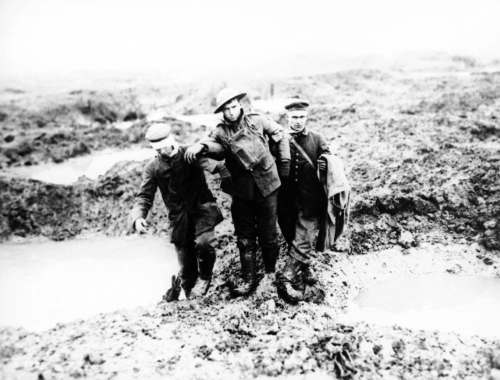
Wounded Canadian and German First World War soldiers help one another through the mud during the Battle of Passchendaele in Belgium in 1917.

THE ASSOCIATED PRESS FILES
Wounded Canadian and German First World War soldiers help one another through the mud during the Battle of Passchendaele in Belgium in 1917.

When war came to Winnipeg

Christian Cassidy 3 minute read Preview

When war came to Winnipeg

Christian Cassidy 3 minute read Monday, Oct. 6, 2025

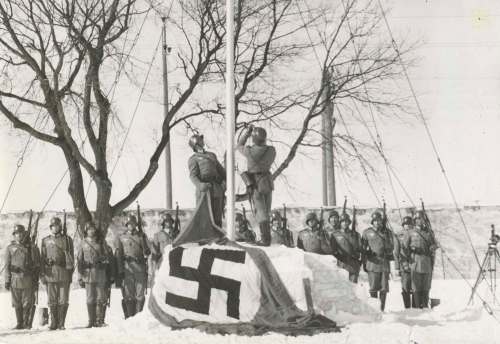
If Day, the simulated Nazi invasion of Winnipeg, was a daring publicity stunt that involved weeks of planning, thousands of volunteers and garnered media attention across North America. Most importantly, it raised millions of dollars for Canada’s war effort.

The purpose of If Day was to drum up sales for Victory Bonds. Sold to businesses and individuals, often through payroll deduction plans, they were an essential tool for financing Canada’s war effort.

Dr. Jody Perrun has researched If Day and Winnipeg’s participation in Victory Bond campaigns for his book The Patriotic Consensus: Unity, Morale, and the Second World War in Winnipeg. He estimates that of the $22 billion the federal government spent fighting the war between 1939 and 1945, more than $12 billion was offset through the sale of Victory Bonds.

The promotion of the bonds was the responsibility of the National War Finance Committee in Ottawa. The short-term sales campaigns were initially quite centralized, with a national theme and propaganda products that were forwarded to provincial committees who used rallies, concerts and other tried-and-true public events to make up their portion of the national sales goal.

Read
Monday, Oct. 6, 2025

Social justice fighters restore our faith in humanity

Shauna MacKinnon 5 minute read Tuesday, Dec. 20, 2016

On Dec. 12, housing and anti-poverty advocates gathered to recognize Clark Brownlee, a local activist who retired after a long engagement with social justice and policy advocacy. It was a much-needed reminder there is still good in the world.

It has been difficult not to lose faith in humanity in a world where millions of people recently saw fit to elect Donald Trump as leader of the United States.

Many Canadians are watching in horror as a new political era begins to take shape south of the border. It’s not just the United States that has seemingly gone mad. Racism in politics is rampant in Europe and Kelly Leitch has shown us Canada is not immune. In her bid for leadership of the Conservative party, Leitch has been vocal about her support for Trump and has pitched a number of racist policy proposals. She is currently a frontrunner.

So yes, it is hard to be hopeful at a time when hate and fear of “the other” seems to be inspiring a disturbing number of voters.
No Subscription Required

Vous auriez pu être résistant?

Daniel Bahuaud 4 minute read Preview
No Subscription Required

Vous auriez pu être résistant?

Daniel Bahuaud 4 minute read Saturday, Apr. 9, 2016

'Qu’est-ce que j’aurais fait dans la France occupée par les Allemands? Est-ce que je serais devenu un héros de la Résistance? Ou bien serais-je devenu nazi?"

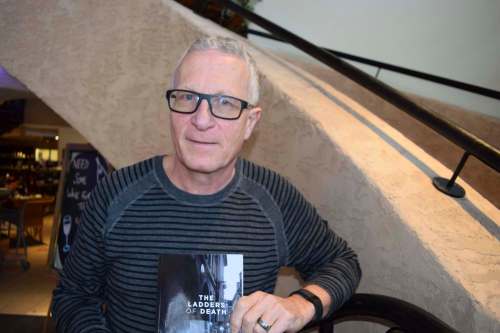
Voilà les questions qui ont conduit le médecin Philippe Erhard à écrire son tout premier roman, The Ladders of Death.

Erhard est médecin à Winnipeg depuis 1982. Depuis qu’il a quitté sa pratique générale à la Clinique Saint-Boniface en 2008 pour se lancer en médecine sportive à la Clinique Pan-Am, le natif de Belfort en France, travaille à un rythme plus décontracté.

"J’ai enfin le temps de réfléchir. En 2010, j’ai publié un livre sur le mieux-être, Being — A Hiking Guide through Life. J’étais inspiré par mon travail de médecin et par des souvenirs d’une randonnée à pied dans les Vosges. Depuis, et de plus en plus, je suis mes propres conseils sur l’importance de ralentir son train de vie et de se laisser vivre!"

Read
Saturday, Apr. 9, 2016

DANIEL BAHUAUD PHOTO
Philippe Erhard: "Ce sera un exercice mental très stimulant."

DANIEL BAHUAUD PHOTO
Philippe Erhard:
No Subscription Required

L’ impact d’une loi injuste et intransigeante

Par Daniel Bahuaud 5 minute read Preview
No Subscription Required

L’ impact d’une loi injuste et intransigeante

Par Daniel Bahuaud 5 minute read Saturday, Feb. 20, 2016

LE 10 mars 1916, le gouvernement de T. C.

Norris adopte une nouvelle loi scolaire.

L’enseignement du français devient illégal.

Normand Boisvert est un des acteurs clés dans la renaissance du français scolaire. Il nous partage son point de vue.

Read
Saturday, Feb. 20, 2016

DANIEL BAHUAUD PHOTO
Normand Boisvert: “La Loi Thornton a eu pour résultat d’encourager un sentiment de honte parmi de nombreux francophones. Certains ont perdu la langue parce qu’ils ne la voulaient plus. Ils se sont assimilés pour ne pas se démarquer des autres.”

DANIEL BAHUAUD PHOTO
Normand Boisvert: “La Loi Thornton a eu pour résultat d’encourager un sentiment de honte parmi de nombreux francophones. Certains ont perdu la langue parce qu’ils ne la voulaient plus. Ils se sont assimilés pour ne pas se démarquer des autres.”

Century of progress: 'Prairie grit' helped Manitoba women secure the right to vote

Mia Rabson 7 minute read Preview

Century of progress: 'Prairie grit' helped Manitoba women secure the right to vote

Mia Rabson 7 minute read Monday, Oct. 6, 2025

OTTAWA — Almost a century after Nellie McClung pushed Manitoba to become the first province to allow women to vote or run for office, she would have been pretty proud of what women have achieved, says her granddaughter Marcia McClung.

But she also probably would have been a little disappointed to see women have not achieved true equality, be it in the workplace, the political world or even in many families.

Although Nellie McClung dreamed that if women could secure the right to vote, all the other rights to become equals with men would surely follow, she knew when she died, in 1951, that had not happened.

“She did acknowledge there wouldn’t have been any progress without the vote,” Marcia said in an interview with the Winnipeg Free Press. “It was a really significant step.”

Read
Monday, Oct. 6, 2025

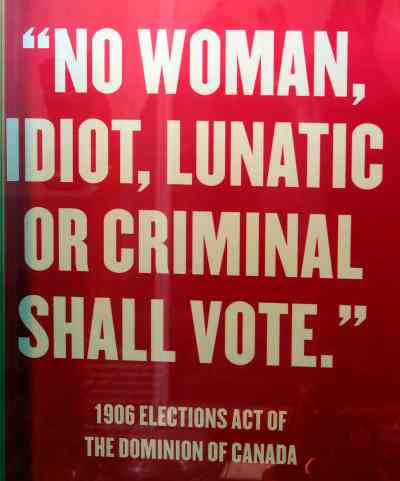
BORIS MINKEVICH / WINNIPEG FREE PRESS
This is painted on the back side of one of the glass protective boxes.

BORIS MINKEVICH / WINNIPEG FREE PRESS
This is painted on the back side of one of the glass protective boxes.
No Subscription Required

Témoignage de survivantes de l’Holocauste à l’USB

Ruby Irene Pratka 5 minute read Preview
No Subscription Required

Témoignage de survivantes de l’Holocauste à l’USB

Ruby Irene Pratka 5 minute read Saturday, Dec. 5, 2015

Le père Patrick Desbois, un prêtre catholique français réputé pour son travail de recherche sur l’Holocauste, en est convaincu: “Les génocides ne commencent pas avec les chambres de gaz. Ils commencent plutôt par des petits manquements de respect.” Des petites indignités comme celle qui restera gravée à jamais dans la mémoire de Régine Rubinfeld Frankel.

On est en 1942. La jeune Régine, âgée d’une dizaine d’années, est partie de la maison où sa famille se cachait, avec un carnet de rations, chercher des vivres dans la ville la plus proche. Au lieu de retourner à pied avec ses sacs — un trajet de huit kilomètres — elle a décidé de prendre le bus. Mais le chauffeur, une connaissance, exige qu’elle descende plusieurs kilomètres avant son arrêt, alors que la nuit tombe.

“Même maintenant quand j’en parle, j’ai envie de pleurer, parce que je me demande toujours pourquoi il n’y avait pas une seule personne dans ce bus qui a dit: ‘Laisse-la!’ ”

Régine Rubinfeld Frankel et sa sœur, Rachel Rubinfeld Fink, ont raconté leurs souvenirs lors d’une conférence intitulée “Plus Jamais”, présentée à l’Université de Saint-Boniface le 9 novembre.

Read
Saturday, Dec. 5, 2015

Ruby Irene Pratka photo
Régine Rubinfeld Frankel, à gauche, et sa sœur Rachel Rubinfeld Fink.

Ruby Irene Pratka photo
Régine Rubinfeld Frankel, à gauche, et sa sœur Rachel Rubinfeld Fink.
No Subscription Required

Boom and gloom

By Stefan Epp-Koop 7 minute read Preview
No Subscription Required

Boom and gloom

By Stefan Epp-Koop 7 minute read Saturday, Nov. 21, 2015

Stefan Epp-Koop's We're Going to Run This City explores the dynamic political movement that came out of the 1919 General Strike, the largest labour protest in Canadian history, and the ramifications for Winnipeg throughout the 1920s and 1930s. Winnipeg was a deeply divided city. On one side, the conservative political descendants of the General Strike's Citizen's Committee of 1000 advocated for minimal government and low taxes. On the other side were the Independent Labour Party and the Communist Party of Canada, two groups rooted in the city's working class, though often in conflict with each other.

The political strength of the left would ebb and flow throughout the 1920s and 1930s but peaked in the mid-1930s when the ILP's John Queen became mayor and the two parties on the left combined to hold a majority of council seats. Astonishingly, Winnipeg was governed by a mayor who had served jail time for his role in the General Strike.

Winnipeg had grown rapidly in the early decades of the 20th century. The city had all the appearances of a boom town, tripling in size in the first decade. Businesses flocked to the city to service the growing population of Winnipeg and the Canadian West. Manufacturers, wholesalers, and retailers opened in the city, establishing it as the pre-eminent commercial hub of Western Canada. The city also profited from the growing agricultural production of the Prairies as the home of the grain exchange and many companies producing agricultural implements and supplies.

Optimism abounded, anything was possible. Civic boosters imagined Winnipeg as the "Chicago of the North," a world-class city. That became the commonly accepted narrative of the city's growth. Indeed, many Winnipeggers did become quite wealthy during those boom years, and there was significant economic opportunity for those who were able to access it.

Read
Saturday, Nov. 21, 2015
No Subscription Required

Les souvenirs d’un vétéran de Bosnie et d’Afghanistan

Par Daniel Bahuaud 4 minute read Preview
No Subscription Required

Les souvenirs d’un vétéran de Bosnie et d’Afghanistan

Par Daniel Bahuaud 4 minute read Saturday, Nov. 14, 2015

On n'a jamais tiré sur Marc Lavoie. Ni en Bosnie, ni en Afghanistan. Mais l'adjudant-maître du 38e Groupe-brigade du Canada connaît intimement les zones sinistrées par la guerre.

Lorsque Lavoie est arrivé en Bosnie, en 1997, la période de violence armée dans l'ancienne Yougoslavie était révolue. Le natif de Kapuskasing, aujourd'hui adjudant-maître chargé du maintien de l'équipement du 38e Groupe-brigade du Canada, se souvient "bien clairement" des ravages de la guerre.

"Les forces canadiennes faisaient alors partie de la mission de l'OTAN, chargée de stabiliser les zones sinistrées en Bosnie-Herzégovine, Croatie, Macédoine et au Kosovo. J'étais stationné la base canadienne de Drvar, en Bosnie, pour mes deux tours de mission. "J'assumais le maintien des véhicules, des génératrices d'électricité et d'autres équipements militaires. Parfois, il fallait quitter la base pour remorquer des véhicules qui avait été touchés par des mines.

"Le grand défi c'était de stabiliser la région. On était l pour aider les habitants du pays se remettre sur pied. Des villages entiers avaient été dévastés par la guerre. Dans bien des endroits, les gens vivaient comme au 19e siècle. On chargeait nos camions de bois pour le chauffage, sans parler d'eau potable.

Read
Saturday, Nov. 14, 2015

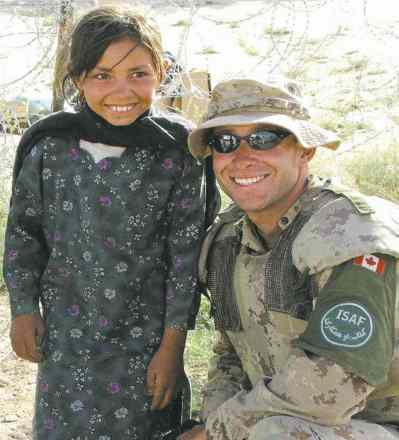
Marc Lavoie photo
La jeune Minyaka et Marc Lavoie, au march�� de Kaboul, la capitale de l�Afghanistan, en 2005.

Marc Lavoie photo
La jeune Minyaka et Marc Lavoie, au march�� de Kaboul, la capitale de l�Afghanistan, en 2005.