

Manitoba premier eyes northern development that could include a pipeline
Advertisement
Read this article for free:
or
Already have an account? Log in here »
To continue reading, please subscribe:
Digital Subscription
One year of digital access for only $75*
- Enjoy unlimited reading on winnipegfreepress.com
- Read the E-Edition, our digital replica newspaper
- Access News Break, our award-winning app
- Play interactive puzzles
*Billed as $5.77 plus GST every four weeks. After 52 weeks, price increases to the regular rate of $19.95 plus GST every four weeks. Offer available to new and qualified returning subscribers only. Cancel any time.
Monthly Digital Subscription
$4.99/week*
- Enjoy unlimited reading on winnipegfreepress.com
- Read the E-Edition, our digital replica newspaper
- Access News Break, our award-winning app
- Play interactive puzzles
*Billed as $19.95 plus GST every four weeks. Cancel any time.
To continue reading, please subscribe:
Add Free Press access to your Brandon Sun subscription for only an additional
$1 for the first 4 weeks*
- Enjoy unlimited reading on winnipegfreepress.com
- Read the E-Edition, our digital replica newspaper
- Access News Break, our award-winning app
- Play interactive puzzles
*Your next Brandon Sun subscription payment will increase by $1.00 and you will be charged $17.95 plus GST for four weeks. After four weeks, your payment will increase to $24.95 plus GST every four weeks.
Read unlimited articles for free today:
or
Already have an account? Log in here »
Hey there, time traveller!
This article was published 06/06/2025 (493 days ago), so information in it may no longer be current.
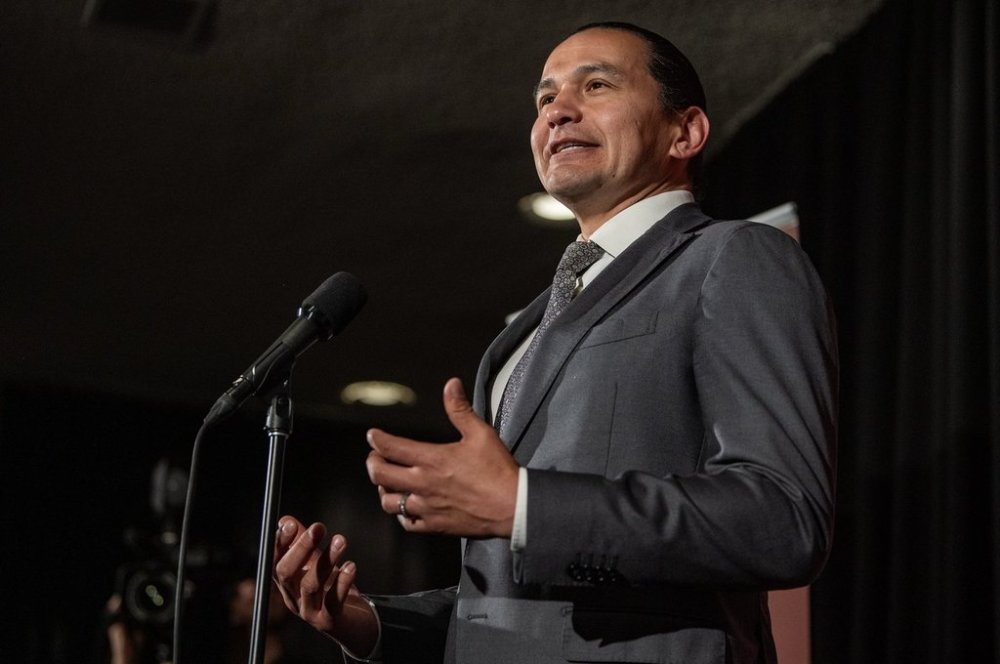
WINNIPEG – Manitoba Premier Wab Kinew promoted his province Friday as the route for a future trade corridor, which could include a pipeline, in order to get goods from Western Canada to overseas markets.
“The politics are (that) something needs to get built in Western Canada. I think everybody understands that,” Kinew told a breakfast meeting of the Manitoba Chambers of Commerce.
“And if you’ve been following the news, B. C.? Ontario? Maybe. We’ll see. But Manitoba’s open for business, and I think in time Manitoba will show itself as a path to getting natural resources to tidewater across Canada.”
The Alberta government has been pushing for a pipeline across northern British Columbia, but the idea is not supported by the B.C. government.
Kinew said Manitoba is looking at boosting shipments through Hudson Bay, currently served by the Port of Churchill, which is ice-free for only a brief period every year. There have been calls for a second port on the bay, further south at Port Nelson, combined with more rail service and a pipeline, in order to boost exports to Europe and other destinations.
Kinew said he’s open to different options, but the private sector has to put forward ideas.
A trade corridor could ship Manitoba’s low-carbon hydroelectricity westward to the other Prairie provinces, he said. And a pipeline heading the other direction is a possibility.
“What is the product that makes sense? Are we going to be looking at liquefaction and then maybe it’s a (liquefied natural gas) thing?” Kinew told reporters after his speech.
“Are we looking at oil and gas projects? Are we looking at something novel like green hydrogen or maybe a potash slurry? These are the things that we can signal to the private sector we’re open to having a discussion about.”
Pipeline development in the north could face opposition from environmentalists and others. Much of the area near the coast of Hudson Bay is protected, including Wapusk National Park.
Kinew also told the business crowd Friday his NDP government is finalizing a memorandum with British Columbia to cut trade barriers between the two provinces.
Similar to a recent deal with Ontario, it’s aimed at allowing more goods and services to flow freely. Kinew said it will give Manitobans access to another big Canadian market.
Prime Minister Mark Carney has pledged to break down internal trade barriers by Canada Day, and Ontario, Nova Scotia and other provinces have been working on reciprocal agreements.
This report by The Canadian Press was first published June 6, 2025
Related Articles
Liberals table bill to speed up approvals for major 'national interest' projects






Advertisement Advertise With Us