

How tiny Lesotho ended up with the highest US tariffs in the world
Advertisement
Read this article for free:
or
Already have an account? Log in here »
To continue reading, please subscribe:
Digital Subscription
One year of digital access for only $75*
- Enjoy unlimited reading on winnipegfreepress.com
- Read the E-Edition, our digital replica newspaper
- Access News Break, our award-winning app
- Play interactive puzzles
*Billed as $5.77 plus GST every four weeks. After 52 weeks, price increases to the regular rate of $19.95 plus GST every four weeks. Offer available to new and qualified returning subscribers only. Cancel any time.
Monthly Digital Subscription
$4.99/week*
- Enjoy unlimited reading on winnipegfreepress.com
- Read the E-Edition, our digital replica newspaper
- Access News Break, our award-winning app
- Play interactive puzzles
*Billed as $19.95 plus GST every four weeks. Cancel any time.
To continue reading, please subscribe:
Add Free Press access to your Brandon Sun subscription for only an additional
$1 for the first 4 weeks*
- Enjoy unlimited reading on winnipegfreepress.com
- Read the E-Edition, our digital replica newspaper
- Access News Break, our award-winning app
- Play interactive puzzles
*Your next Brandon Sun subscription payment will increase by $1.00 and you will be charged $17.95 plus GST for four weeks. After four weeks, your payment will increase to $24.95 plus GST every four weeks.
Read unlimited articles for free today:
or
Already have an account? Log in here »
Hey there, time traveller!
This article was published 04/04/2025 (563 days ago), so information in it may no longer be current.
JOHANNESBURG (AP) — If you have ever bought a pair of jeans from an American brand like Levi’s or Wrangler, chances are they were manufactured at a factory in the small southern African nation of Lesotho.
Textile manufacturing is one of Lesotho’s key industries, exporting some 75% of its output to the United States.
This is expected to change after U.S. President Donald Trump slapped a 50% tariff on imports from Lesotho, the highest among all countries. According to Trump, Lesotho charges a 99% tariff on U.S. goods, but the government said it doesn’t know how the U.S. administration calculated that figure. Government officials did not say Thursday what Lesotho’s tariffs on U.S. goods are.

Here is what the high tariffs mean for Lesotho:
A country ‘nobody has ever heard of’
Trump made fun of Lesotho in a speech in March, calling it a nation that “nobody has ever heard of.” Lesotho’s foreign minister reminded him that the U.S. has a diplomatic mission there.
Last year, the landlocked kingdom bordered on all sides by South Africa with a population of 2.3 million people, celebrated 200 years of the founding of the Basotho nation and 58 years of independence from British rule.
Its picturesque scenery and mountainous views draw visitors from Africa and across the world, and during winter, Lesotho becomes one of the most sought-after skiing destinations.
What are Lesotho’s exports and the economy?
Lesotho does not pay tariffs on exports to Botswana, Namibia, South Africa and Swaziland since it is a member of regional economic blocs such as the Southern African Customs Union. Main exports include clothing, diamonds, water, power, wool and mohair.
The new tariffs announced by Trump mean that American consumers will pay more for goods made in Lesotho, making them less competitive in the U.S market.
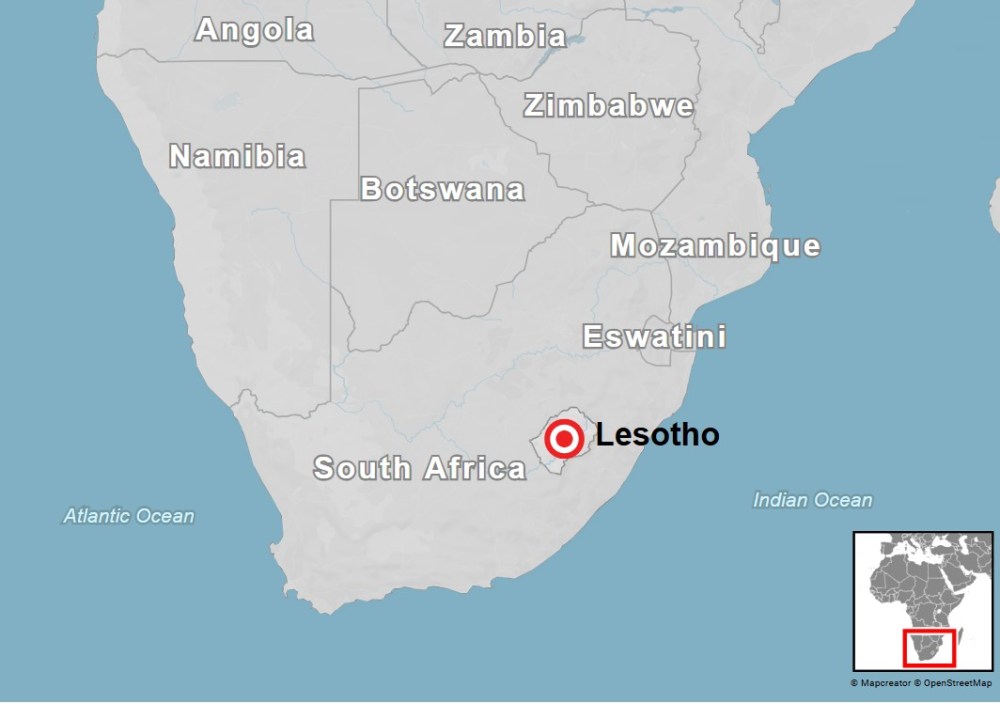
According to the Office of the U.S. Trade Representative, in 2024, U.S.-Lesotho bilateral trade stood at $240.1 million. Apart from clothing, Lesotho’s exports also include diamonds and other goods.
Classified as a lower-middle income country by the World Bank, nearly half of Lesotho’s 2.3 million population live below the poverty line, while a quarter are unemployed.
How has Lesotho reacted to tariffs?
Lesotho’s Trade Minister Mokhethi Shelile said his country will be on the prowl for new markets and use the Africa Continental Free Trade Area to increase exports to favourable destinations in Africa.
The government would also urgently send a delegation to the U.S. to negotiate a workable arrangement. Shelile said he’s concerned about the possible closure of textile factories, which employ about 12,000 people in Lesotho.
Related Articles
As stock market continues plummeting over tariffs, Trump spends the day at his golf course








Advertisement Advertise With Us
Advertisement Advertise With Us