

Tourism recovery not expected until next year, Destination Canada report finds
Advertisement
Read this article for free:
or
Already have an account? Log in here »
To continue reading, please subscribe:
Digital Subscription
One year of digital access for only $75*
- Enjoy unlimited reading on winnipegfreepress.com
- Read the E-Edition, our digital replica newspaper
- Access News Break, our award-winning app
- Play interactive puzzles
*Billed as $5.77 plus GST every four weeks. After 52 weeks, price increases to the regular rate of $19.95 plus GST every four weeks. Offer available to new and qualified returning subscribers only. Cancel any time.
Monthly Digital Subscription
$4.99/week*
- Enjoy unlimited reading on winnipegfreepress.com
- Read the E-Edition, our digital replica newspaper
- Access News Break, our award-winning app
- Play interactive puzzles
*Billed as $19.95 plus GST every four weeks. Cancel any time.
To continue reading, please subscribe:
Add Free Press access to your Brandon Sun subscription for only an additional
$1 for the first 4 weeks*
- Enjoy unlimited reading on winnipegfreepress.com
- Read the E-Edition, our digital replica newspaper
- Access News Break, our award-winning app
- Play interactive puzzles
*Your next Brandon Sun subscription payment will increase by $1.00 and you will be charged $17.95 plus GST for four weeks. After four weeks, your payment will increase to $24.95 plus GST every four weeks.
Read unlimited articles for free today:
or
Already have an account? Log in here »
Hey there, time traveller!
This article was published 12/12/2023 (1051 days ago), so information in it may no longer be current.
A full recovery in the tourism industry is unlikely until next year, Destination Canada predicts, even as the rebound comes quicker than expected ahead of a bigger bounce-back forecast for 2025.
In a new report, the Crown corporation said Tuesday the number of overnight leisure and business visits in the country will fall two percentage points short of 2019 levels by the end of this year. Projections show it beating pre-pandemic figures by a whisker in 2024.
Destination Canada, which promotes tourism across the country, said nominal spending in the sector will hit $109.5 billion in 2023, topping 2019 levels of roughly $105 billion. But the total for this year was fuelled partly by inflation, and would actually need to reach about $122 billion to match pre-pandemic spending in real terms, according to the Bank of Canada’s inflation calculator.
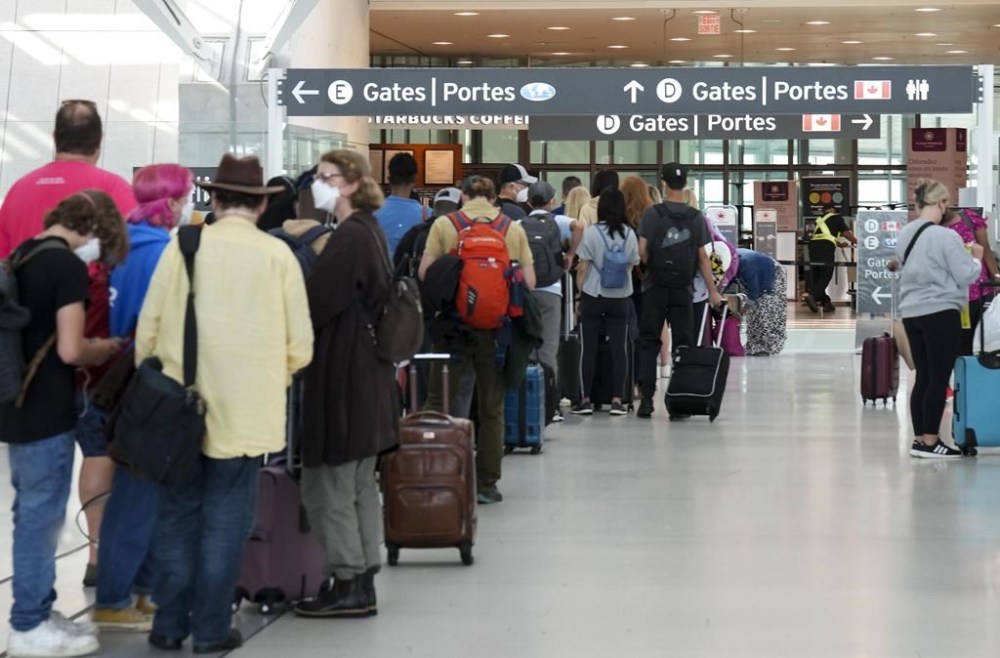
“(Spending) has been propped up of course by inflation,” Meaghan Ferrigno, Destination Canada’s chief data and analytics officer, said in an interview. As measured by real value, tourism revenues may not reach those of 2019 for another two to three years, she said.
One bright spot is the importance that many still place on travel, despite rising interest rates taking a bigger bite out of disposable income.
“Travel is remaining a key priority for consumers. Even in today’s economic climate, globally consumers are really allocating a larger share of their wallet to experiences over goods. And that’s what’s really driving to our current state of recovery,” Ferrigno said.
The report said there’s an opportunity for the tourism sector to hit $160 billion in annual revenue by 2030 but that “capacity constraints” could limit that total to $140 billion, “which when adjusted for inflation shows no real growth.”
Luring wealthier tourists, building out the workforce and attracting more visitors outside of peak season are all key to industry growth, organization CEO Marsha Walden said.
“This is a truly pivotal moment for our industry,” Walden said in a news release.
“If we work together, we can achieve what’s possible and recapture our position as a top destination for global tourism and create wealth and well-being for all of Canada.”
The projected annual tourism growth rate of nearly six per cent through 2030 is expected to exceed overall economic growth in Canada, according to Destination Canada. But that pace looks sluggish next to global tourism revenues that are forecasted to climb by more than seven per cent each year.
“Other countries have really upped their game, and Canada has not kept pace,” Ferrigno said, pointing to public and private investment in tourism in other G7 countries.
However, she said Canada remains among the top long-haul destination for five of its key markets: the United States, United Kingdom, Mexico, France and Germany.
Leisure comprised the main driver of travel over the past two years, hitting pre-pandemic levels in 2022 with $72.4 billion in revenue, according to the Crown corporation. Now, corporate travel is finally starting to pick up too — a critical factor in filling hotels, restaurants and conference centres outside of peak months in the summer and winter holidays.
“We’re seeing leads come back next year, but the events actually happening two to three years out,” Ferrigno said. “That’s where you see that longer tail.
Even if tourism revenue goes up as projected, costs such as labour, food and fuel are rising too.
“Businesses big and small across Canada are really feeling that pinch on bottom-line profitability.”
This report by The Canadian Press was first published Dec. 12, 2023.
Related Articles
Restaurateur considering implementing cancellation fees
Advertisement Advertise With Us
Advertisement Advertise With Us