Political pressure to stop rate hikes now coming from premiers, as BoC decision nears
Advertisement
Read this article for free:
or
Already have an account? Log in here »
To continue reading, please subscribe:
Digital Subscription
One year of digital access for only $75*
- Enjoy unlimited reading on winnipegfreepress.com
- Read the E-Edition, our digital replica newspaper
- Access News Break, our award-winning app
- Play interactive puzzles
*Billed as $5.77 plus GST every four weeks. After 52 weeks, price increases to the regular rate of $19.95 plus GST every four weeks. Offer available to new and qualified returning subscribers only. Cancel any time.
Monthly Digital Subscription
$4.99/week*
- Enjoy unlimited reading on winnipegfreepress.com
- Read the E-Edition, our digital replica newspaper
- Access News Break, our award-winning app
- Play interactive puzzles
*Billed as $19.95 plus GST every four weeks. Cancel any time.
To continue reading, please subscribe:
Add Free Press access to your Brandon Sun subscription for only an additional
$1 for the first 4 weeks*
- Enjoy unlimited reading on winnipegfreepress.com
- Read the E-Edition, our digital replica newspaper
- Access News Break, our award-winning app
- Play interactive puzzles
*Your next Brandon Sun subscription payment will increase by $1.00 and you will be charged $17.95 plus GST for four weeks. After four weeks, your payment will increase to $24.95 plus GST every four weeks.
Read unlimited articles for free today:
or
Already have an account? Log in here »
Hey there, time traveller!
This article was published 05/09/2023 (1127 days ago), so information in it may no longer be current.
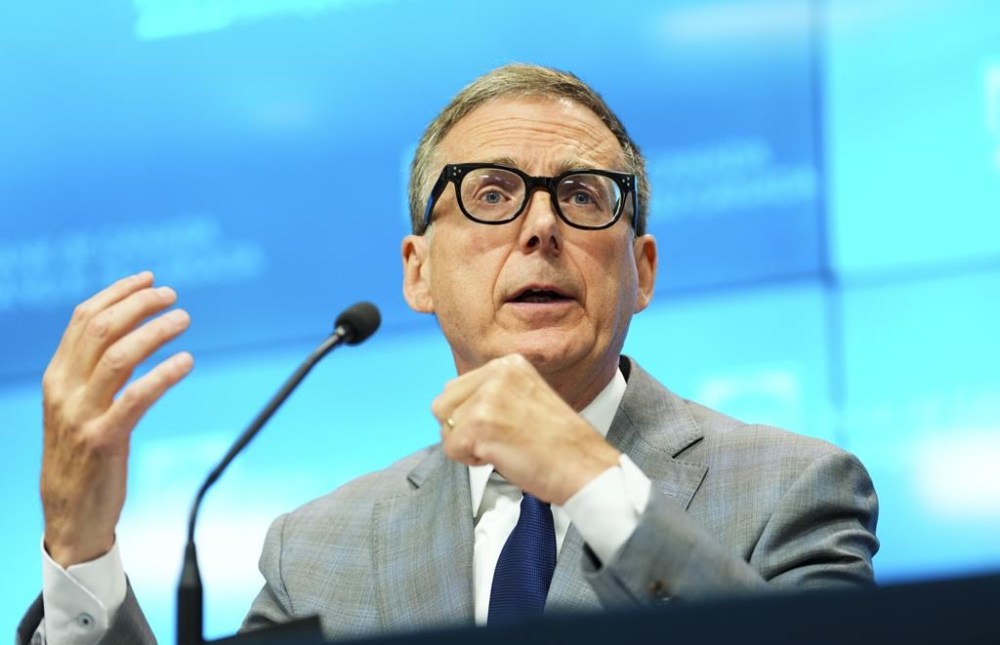
OTTAWA – Two premiers have sent letters to Bank of Canada governor Tiff Macklem urging against another rate hike, as the provincial leaders attempt to sway the central bank’s interest rate decision slated for Wednesday.
Ontario Premier Doug Ford sent a letter on Sunday saying families and businesses cannot afford the “crushing impact of further rate hikes,” echoing a letter British Columbia Premier David Eby sent on Thursday.
Associate professor and founding director of McGill University’s Max Bell School of Public Policy, Christopher Ragan says it’s “unfortunate” that the premiers felt that sending these letters was useful.
“It’s pretty easy to find people that will argue that the (central) bank shouldn’t raise interest rates anymore,” Ragan said.
But having premiers send letters to the governor “invariably brings in a political element” to the debate, he said.
The Bank of Canada is an independent institution that receives its mandate from the federal government and is responsible for maintaining a two per cent inflation target.
However, the central bank has been no stranger to political pressure and critiques over the last couple of years as it has navigated a tumultuous economic period marred by a pandemic-induced downturn followed by runaway inflation.
With inflation still above two per cent, monetary policy expert Jeremy Kronick said the central bank is required to carry out its mandate.
“They don’t control the mandate: the mandate is set by an agreement between them and federal government. And so for them, they have to continue to do what they think is best to get inflation back down to two per cent,” said Kronick, who heads financial and monetary policy research at the C.D. Howe Institute.
The letters from the premiers come as forecasters widely anticipate the central bank to hold its key interest rate steady as the economy begins to buckle under the weight of higher interest rates.
The Bank of Canada is not commenting on the letters Macklem has received due to a communications ‘blackout’ period it observes ahead of interest rate announcements.
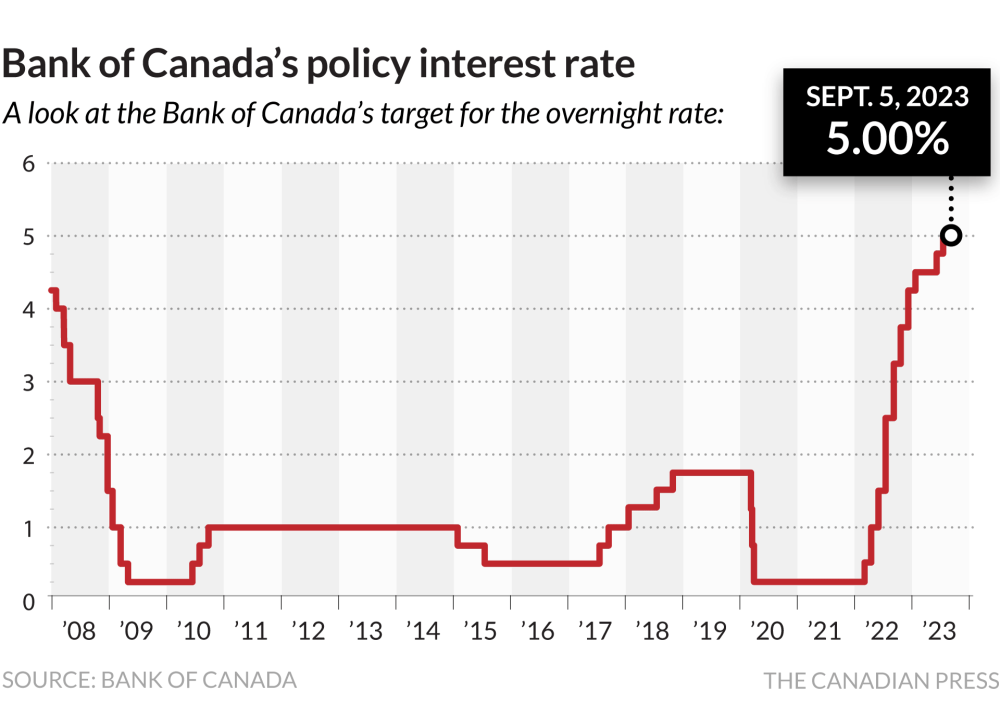
The central bank has aggressively raised interest rates since March 2022 to clamp down on decades-high inflation, including raises at its last two meetings in June and July in response to a hot economy.
But over the summer, more signs have emerged that the economy is actually slowing down: the unemployment rate has been on the rise and real gross domestic product unexpectedly contracted in the second quarter.
These signs have convinced most forecasters that the central bank will stay on the sidelines this week, holding its key interest rate at 5.0 per cent — the highest it’s been since 2001.
The central bank has faced opposition for its rate hikes from labour groups and some policy thinkers who argue that the suffering the rate hikes will cause workers exceeds the benefits.
Politicians have also weighed in on the Bank of Canada’s operations over the last couple of years. Conservative Leader Pierre Poilievre has attacked the Bank of Canada for its policy response to the COVID-19 pandemic and vowed to fire Macklem if his party forms government.
Meanwhile, NDP Leader Jagmeet Singh has argued the Bank of Canada’s approach to inflation is “wrong,” calling its key interest rate a “blunt” instrument.
The political critiques have raised concerns about interference into the Bank of Canada and questions about how elected officials should approach discussing the central bank’s policies.
Ragan said monetary policy shouldn’t be protected from the type of criticism other policies face, but history shows that central banks that are not independent from government are more likely to make policy choices that fuel inflation.
Instead of debating its day-to-day operations, Ragan said elected officials should focus on debating what the Bank of Canada’s mandate should be.
The central bank’s mandate dictates what the target inflation rate should be, for example, and could stipulate other priorities for the institution.
“I think that is a very important place where government, elected officials get involved. But then once you’ve established what the mandate is, I think there’s a real advantage in just letting the central bank do its job,” he said.
This report by The Canadian Press was first published Sept. 5, 2023.