

Parent group urges funds to help spot reading disabilities sooner

Advertisement
Read this article for free:
or
Already have an account? Log in here »
To continue reading, please subscribe:
Digital Subscription
One year of digital access for only $75*
- Enjoy unlimited reading on winnipegfreepress.com
- Read the E-Edition, our digital replica newspaper
- Access News Break, our award-winning app
- Play interactive puzzles
*Billed as $5.77 plus GST every four weeks. After 52 weeks, price increases to the regular rate of $19.95 plus GST every four weeks. Offer available to new and qualified returning subscribers only. Cancel any time.
Monthly Digital Subscription
$4.99/week*
- Enjoy unlimited reading on winnipegfreepress.com
- Read the E-Edition, our digital replica newspaper
- Access News Break, our award-winning app
- Play interactive puzzles
*Billed as $19.95 plus GST every four weeks. Cancel any time.
To continue reading, please subscribe:
Add Free Press access to your Brandon Sun subscription for only an additional
$1 for the first 4 weeks*
- Enjoy unlimited reading on winnipegfreepress.com
- Read the E-Edition, our digital replica newspaper
- Access News Break, our award-winning app
- Play interactive puzzles
*Your next Brandon Sun subscription payment will increase by $1.00 and you will be charged $17.95 plus GST for four weeks. After four weeks, your payment will increase to $24.95 plus GST every four weeks.
Read unlimited articles for free today:
or
Already have an account? Log in here »
Hey there, time traveller!
This article was published 10/02/2026 (235 days ago), so information in it may no longer be current.
It may be too late for their children, but parents are appealing to school boards to fund teacher training to spot struggling readers sooner.
Caregiver Advocates for Literacy Equity is launching a new campaign this week, against the backdrop of I Love to Read Month.
The coalition represents dozens of families, many of whom have children with dyslexia. It is planning a series of presentations for trustees across Manitoba.
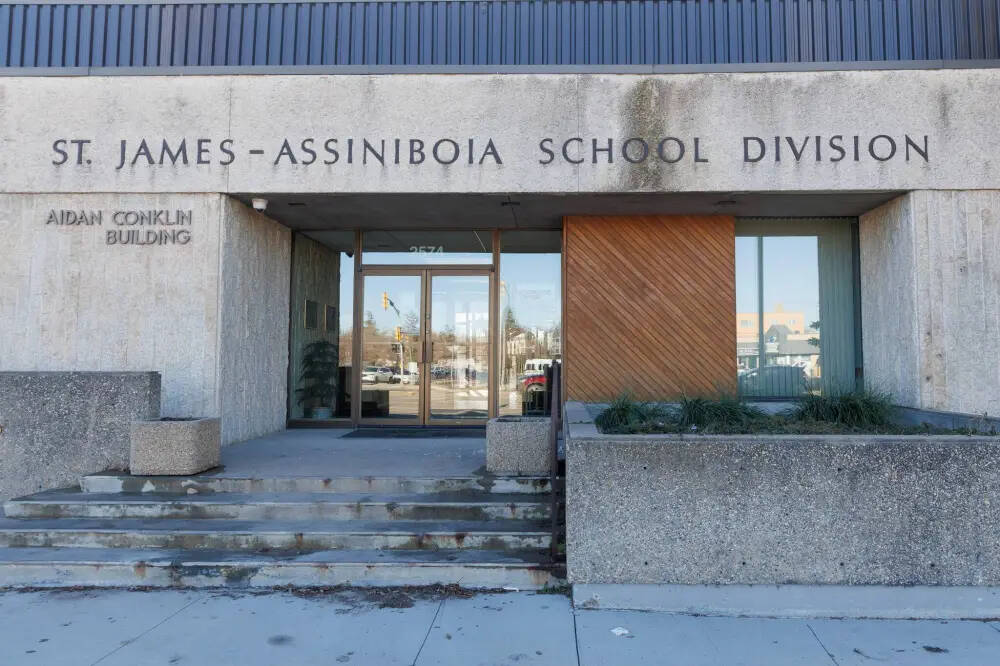
The St. James-Assiniboia School Division heard a presentation Tuesday from a concerned parent encouraging schools to do more to help struggling readers. (Mike Deal/Free Press files)
“The damage has been done to my son, sadly — we’re trying to propel things forward for him — but I just want to make a change for other kids,” said Allison Guercio, a mother of two in Winnipeg.
Guercio’s family has paid $30,000 for private tutoring in recent years to help her now 12-year-old learn to read.
She wants to create a sense of urgency around preparing teachers for new universal screening requirements this fall.
The group is calling on schools to start using evidence-based tools in kindergarten and fund training for all teachers to both administer them and analyze findings.
The families also want to see divisions closely track and collect data to inform long-term planning.
Guercio prepared a presentation for the St. James-Assiniboia School Division on Tuesday. Other parents are reaching out to boards, from Sunrise to Brandon, to deliver the same message.
Starting next fall, Manitoba elementary schools will be required by law to systematically screen students for reading difficulties.
The changes mandate that every child is tested twice in at least three years, between kindergarten to Grade 4. Families will be alerted of results via report cards.
In cases where a student is found to be struggling, the school is expected to intervene and keep close tabs on them.
The Public Schools Amendment Act (Early Reading Screening) officially comes into force this summer.
The education minister has provided school divisions with criteria for selecting and piloting evidence-based tools.
Natalie Riediger has been vocal about her support for the changes on paper, but she said compliance will be key.
“Change is hard. It’s going to be really hard and we have to continue to apply pressure,” said Riediger, who has two children, a fifth grader and eighth grader, with dyslexia.
“The pressure has to come from us parents and boards for change — for our kids’ human rights to be realized, for their right to read to be realized.”
Riediger said parents want to make sure teachers are getting the support they need, as that hasn’t always been the case.
The Manitoba Human Rights Commission “Right to Read” project revealed many teachers have not been equipped with science-backed methods to teach reading or scan for signs of struggle.
Its authors endorsed the use of direct, explicit and systematic instruction in phonics for all students. They also called for changes to improve early detection, along with professional development to support teachers.
Guercio’s son, who was in Grade 1 when the COVID-19 pandemic was declared, spent his initial school years pivoting to and from remote learning.
Concerns about his challenges with reading aloud and writing were brushed off as a result, his mother said.
“I kept being told, ‘you need to read more with him,’” she said.
Concerned about the boy’s well-being, self-esteem and frequent tears, the family paid for a private clinical psychologist assessment at the end of his Grade 3 year. He was diagnosed with dyslexia, dysgraphia and ADHD.
The St. James-Assiniboia School Division started using Acadience Reading to check on Grade 1 and 2 students’ progress this fall.
The River East Transcona School Division has chosen the same tool, which is available in English and French.
“We’re not just putting the tool in the hand of the teachers. We’re supporting them with understanding the why, the how and the what next,” chief superintendent Sandra Herbst said.
Nine of her division’s 28 elementary schools are piloting Acadience Reading — which takes about 10 minutes to administer per student — this year.
Teachers in all of these sites spent a full day learning how to use it in October. Another half-day of professional development focused on how to score and analyze results.
Herbst met with a delegate from the parent literacy coalition on Monday.
maggie.macintosh@freepress.mb.ca
Maggie Macintosh
Education reporter
Maggie Macintosh reports on education for the Free Press. Originally from Hamilton, Ont., she first reported for the Free Press in 2017. Read more about Maggie.
Funding for the Free Press education reporter comes from the Government of Canada through the Local Journalism Initiative.
Every piece of reporting Maggie produces is reviewed by an editing team before it is posted online or published in print — part of the Free Press‘s tradition, since 1872, of producing reliable independent journalism. Read more about Free Press’s history and mandate, and learn how our newsroom operates.
Our newsroom depends on a growing audience of readers to power our journalism. If you are not a paid reader, please consider becoming a subscriber.
Our newsroom depends on its audience of readers to power our journalism. Thank you for your support.
Maggie Macintosh
Education reporter
Maggie Macintosh reports on education for the Free Press. Originally from Hamilton, Ont., she first reported for the Free Press in 2017. Read more about Maggie.
Funding for the Free Press education reporter comes from the Government of Canada through the Local Journalism Initiative.
Every piece of reporting Maggie produces is reviewed by an editing team before it is posted online or published in print — part of the Free Press‘s tradition, since 1872, of producing reliable independent journalism. Read more about Free Press’s history and mandate, and learn how our newsroom operates.
Our newsroom depends on a growing audience of readers to power our journalism. If you are not a paid reader, please consider becoming a subscriber.
Our newsroom depends on its audience of readers to power our journalism. Thank you for your support.
Advertisement Advertise With Us
Advertisement Advertise With Us