

Winnipeg-Gimli commuter line proposed in rail relocation talks

Advertisement
Read this article for free:
or
Already have an account? Log in here »
To continue reading, please subscribe:
Digital Subscription
One year of digital access for only $75*
- Enjoy unlimited reading on winnipegfreepress.com
- Read the E-Edition, our digital replica newspaper
- Access News Break, our award-winning app
- Play interactive puzzles
*Billed as $5.77 plus GST every four weeks. After 52 weeks, price increases to the regular rate of $19.95 plus GST every four weeks. Offer available to new and qualified returning subscribers only. Cancel any time.
Monthly Digital Subscription
$4.99/week*
- Enjoy unlimited reading on winnipegfreepress.com
- Read the E-Edition, our digital replica newspaper
- Access News Break, our award-winning app
- Play interactive puzzles
*Billed as $19.95 plus GST every four weeks. Cancel any time.
To continue reading, please subscribe:
Add Free Press access to your Brandon Sun subscription for only an additional
$1 for the first 4 weeks*
- Enjoy unlimited reading on winnipegfreepress.com
- Read the E-Edition, our digital replica newspaper
- Access News Break, our award-winning app
- Play interactive puzzles
*Your next Brandon Sun subscription payment will increase by $1.00 and you will be charged $17.95 plus GST for four weeks. After four weeks, your payment will increase to $24.95 plus GST every four weeks.
Read unlimited articles for free today:
or
Already have an account? Log in here »
Hey there, time traveller!
This article was published 11/11/2025 (339 days ago), so information in it may no longer be current.
Public discussions have sparked the idea of building a potential commuter rail corridor between Winnipeg and Gimli as Manitoba’s railway relocation talks continue.
The former federal Liberal transport minister leading Manitoba’s study on railway relocation says recent talks have raised the possibility of reworking the CP Winnipeg Beach subdivision — a stretch of rail line that runs from Winnipeg to Gimli — to transport passengers and light cargo.
The idea wasn’t included in the province’s most recent interim report, released last month. Lloyd Axworthy, who is heading the two-year, $200,000 rail relocation feasibility study announced in October 2024, said the concept surfaced after that report was completed.
MIKE DEAL / FREE PRESS FILES
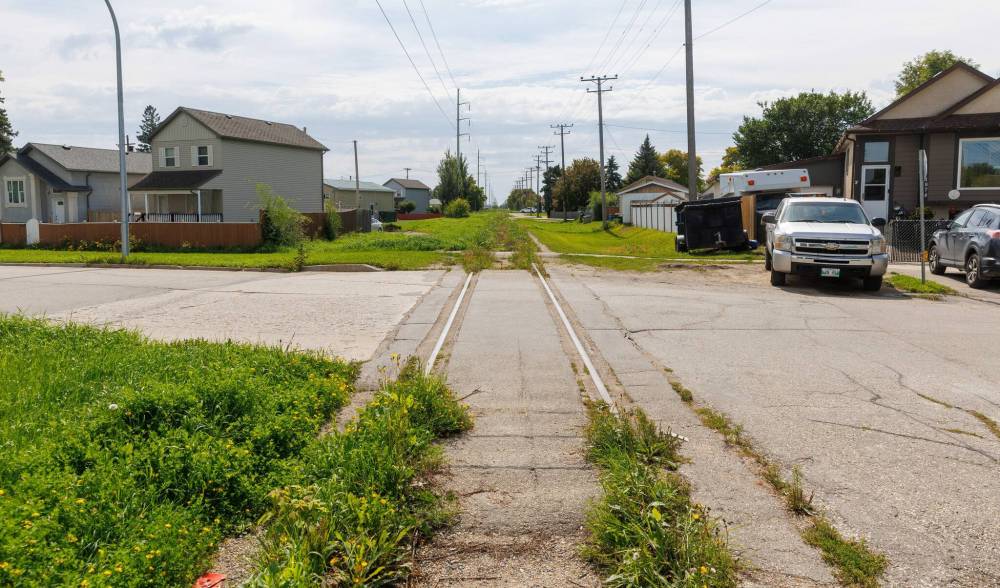
A stretch of abandoned rail line near Pacific Avenue West. A previous study found 75 per cent of Winnipeggers live within 800 metres of a rail line.
“We’ve had some quite important meetings discussing rail line development in the Winnipeg region with a lot of the municipalities,” Axworthy said on Tuesday.
“We met with the metro commission to talk to them about how we might be able to look at extending some public transit rail lines out of Winnipeg, so that we’re not just captive to the Perimeter Highway.”
During six public consultations, Axworthy said residents expressed not only a desire for more green space and housing but also for improved public transit options. More and more people are looking beyond the Perimeter for housing. The rail line runs parallel with Highway 8, which Axworthy said is becoming an overcrowded highway.
He’s scheduled for more meetings in Winnipeg next week and said Mayor Scott Gillingham has shown interest in the proposal.
A light-rail transportation line could strengthen Winnipeg’s position as a transportation hub, Axworthy said. The team has also studied European models that use short, electrified rail cars for regional connections, technology that could help spur a new industry in the city.
“Winnipeg is on track to be close to one million people by 2030, so we have to take into account that a lot of that development is going to be happening, and you want to have it in a way that it spreads more and more, and instead consolidate around a rail line that’s already there and refurbish it.”
City planners were already eyeing a four-kilometre stretch of disused rail lines in Winnipeg’s Brooklands neighbourhood as the first step toward reimagining the city’s rail network, transforming the abandoned corridor into a new green space.
The Westland Project near Notre Dame Avenue and Keewatin Street is one of five pilot projects being looked at in the latest interim report, released by the province late last month. A consultant hired to design the Brooklands redevelopment will present recommendations to the province next month, the report states.
Another pilot proposal involves relocating a small active section of the Burlington Northern Santa Fe line through River Heights. The team is also exploring options in St. Boniface and Point Douglas, and considering converting a spur line that serves the North End Sewage Treatment Plant.
Some community meetings have already been held. Axworthy said residents raised concerns about pollution and the transport of hazardous goods in urban areas. A wider public forum could be held next year.
JUSTIN TANG / THE CANADIAN PRESS FILES
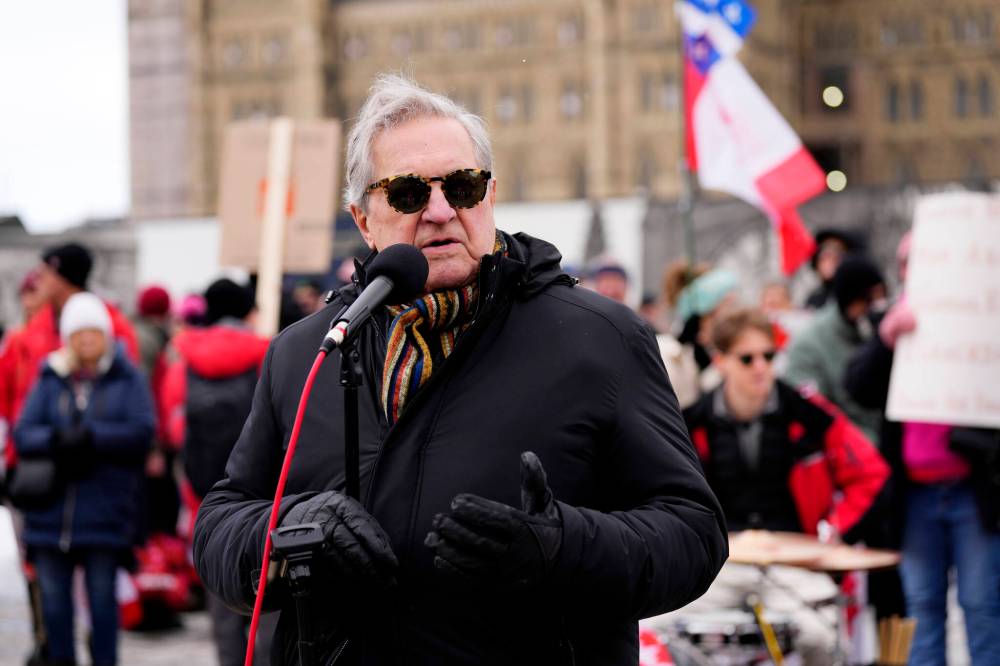
Former federal transport minister Lloyd Axworthy is leading the two-year rail relocation feasibility study.
“But what we’re finding, the more we get into the study, is that there are some fairly significant issues emerging, such as how do we provide a kind of regional rail system as opposed to just a city-based one,” Axworthy said.
He described the study as an evolving process, with new ideas and recommendations emerging each week.
An average of 50 trains travel daily along Winnipeg’s 240 kilometres of active rail lines. A previous study found 75 per cent of Winnipeggers live within 800 metres of a rail line, with 240 crossings across the city.
The interim report also urges a review of consolidating the 200-hectare (465-acre) Canadian Pacific Kansas City railyard that separates Winnipeg’s North End from the inner city, following the 2023 CP–Kansas City Southern merger. It calls for financial and technical analyses of phased relocations of both the CPKC and CN’s 321-hectare (793-acre) Symington Yards to reduce impacts on nearby neighbourhoods.
A final report with recommendations and projected costs is expected to be submitted to the province in October 2026. Axworthy said the study team doesn’t have to wait until then to make recommendations, however.
“We’ve been doing a lot of the prep work, meeting with people, holding consultations, looking at maps and engineering studies,” he said. “From now on, it’s really about implementation and how do we get things done.”
scott.billeck@freepress.mb.ca
Scott Billeck is a general assignment reporter for the Free Press. A Creative Communications graduate from Red River College, Scott has more than a decade’s worth of experience covering hockey, football and global pandemics. He joined the Free Press in 2024. Read more about Scott.
Every piece of reporting Scott produces is reviewed by an editing team before it is posted online or published in print — part of the Free Press‘s tradition, since 1872, of producing reliable independent journalism. Read more about Free Press’s history and mandate, and learn how our newsroom operates.
Our newsroom depends on a growing audience of readers to power our journalism. If you are not a paid reader, please consider becoming a subscriber.
Our newsroom depends on its audience of readers to power our journalism. Thank you for your support.
Scott Billeck is a general assignment reporter for the Free Press. A Creative Communications graduate from Red River College, Scott has more than a decade’s worth of experience covering hockey, football and global pandemics. He joined the Free Press in 2024. Read more about Scott.
Every piece of reporting Scott produces is reviewed by an editing team before it is posted online or published in print — part of the Free Press‘s tradition, since 1872, of producing reliable independent journalism. Read more about Free Press’s history and mandate, and learn how our newsroom operates.
Our newsroom depends on a growing audience of readers to power our journalism. If you are not a paid reader, please consider becoming a subscriber.
Our newsroom depends on its audience of readers to power our journalism. Thank you for your support.
Related Articles
Brooklands active-transportation corridor initial proposal from rail relocation study




Advertisement Advertise With Us
Advertisement Advertise With Us