Icy reaction to city’s snow-clearing pilot project Reduced plowing on residential streets part of 2025 budget
Read this article for free:
or
Already have an account? Log in here »
To continue reading, please subscribe:
Digital Subscription
One year of digital access for only $75*
- Enjoy unlimited reading on winnipegfreepress.com
- Read the E-Edition, our digital replica newspaper
- Access News Break, our award-winning app
- Play interactive puzzles
*Billed as $5.77 plus GST every four weeks. After 52 weeks, price increases to the regular rate of $19.95 plus GST every four weeks. Offer available to new and qualified returning subscribers only. Cancel any time.
Monthly Digital Subscription
$4.99/week*
- Enjoy unlimited reading on winnipegfreepress.com
- Read the E-Edition, our digital replica newspaper
- Access News Break, our award-winning app
- Play interactive puzzles
*Billed as $19.95 plus GST every four weeks. Cancel any time.
To continue reading, please subscribe:
Add Free Press access to your Brandon Sun subscription for only an additional
$1 for the first 4 weeks*
- Enjoy unlimited reading on winnipegfreepress.com
- Read the E-Edition, our digital replica newspaper
- Access News Break, our award-winning app
- Play interactive puzzles
*Your next Brandon Sun subscription payment will increase by $1.00 and you will be charged $17.95 plus GST for four weeks. After four weeks, your payment will increase to $24.95 plus GST every four weeks.
Read unlimited articles for free today:
or
Already have an account? Log in here »
Hey there, time traveller!
This article was published 12/12/2024 (675 days ago), so information in it may no longer be current.
Some Winnipeggers fear a pilot project that would increase the amount of snow required to trigger residential street clearing will make roads impassable and force people to stay home more often.
The City of Winnipeg’s preliminary budget proposes raising that threshold to 15 cm of snow from 10 cm, which would start next fall and last throughout next winter. The city believes that could prevent the need for one citywide residential snow-clearing operation per year, which typically costs from $2.75 million to $5 million.
However, some residents believe any savings would come with serious side-effects.
RUTH BONNEVILLE / FREE PRESS
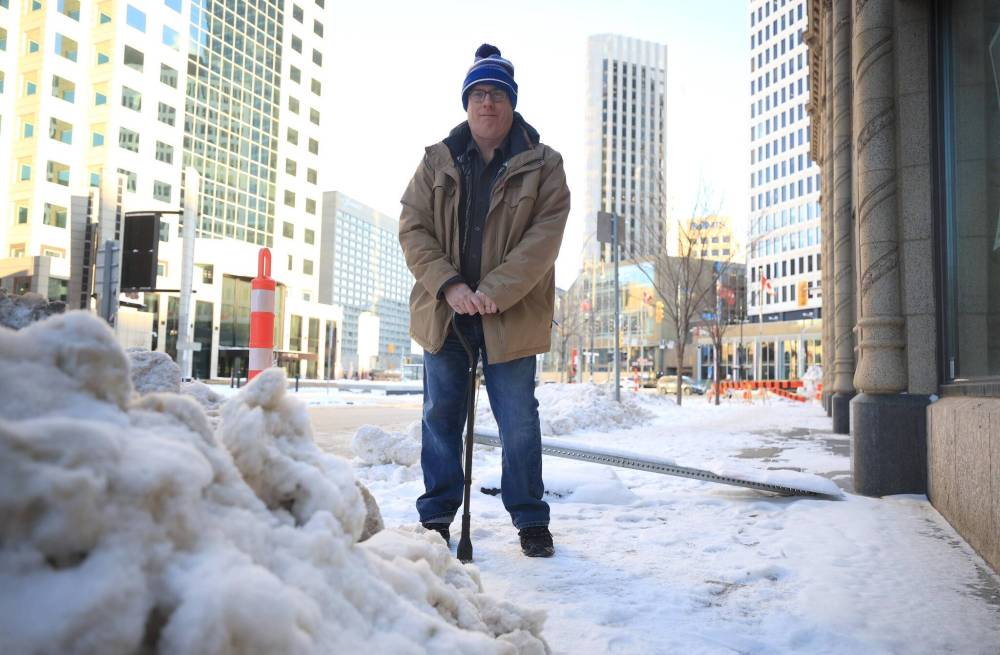
David Kron, executive director of the Cerebral Palsy Association of Manitoba, is concerned more Winnipeggers could be stuck inside in winter as a result of an upcoming snow-clearing pilot project.“(The 15 cm mark is) a lot of snow, so I am concerned. Even at the current standard, there’s a lot of sidewalks and roads that are not passable. For myself, I use a cane and I use a manual (wheelchair). (After this change, I would be) housebound. I can’t clear everything to get down the street,” said David Kron, executive director of the Cerebral Palsy Association of Manitoba.
“It’s not just the disability community, it’s seniors, it’s families with strollers, it’s everybody. It’s a pretty big change. That 10 cm is established for a reason.”
Kron fears the change could put work, shopping and other activities out of reach on some winter days, while allowing more ice ruts to build up over the winter season.
“(Clearing is) an essential service… I don’t want budget restraints to affect mobility and accessibility rights in Winnipeg,” he said.
Melissa Graham, executive director of the Manitoba League of Persons with Disabilities, said she fears the change would have a negative effect on the economy.
“It doesn’t make any sense as a cost-saving measure. If you’re preventing people from getting to work to make money (and) to spend money in the city, that also has an impact,” said Graham. “Snow clearing is… an important public service.”
An active transportation advocate said the shift could impede travel on roads that connect Winnipeggers to cycling and walking paths, as well as Winnipeg Transit routes.
“That’s a concern that, if we’re kind of (reducing snow removal), that catchment area disappears and that you’re going to see subsequent drops for … transit, but also for walking and biking in general,” said Mark Cohoe, executive director of Bike Winnipeg.
Mayor Scott Gillingham stressed the change is limited to a pilot project and the city’s permanent snow-clearing policy remains intact.
“We have not cut a service. We have not changed a policy. We are looking to run a pilot project.”–Mayor Scott Gillingham
“What we want to do is run a pilot project to test some innovation, to test, also, if 5 cm of snow would make a noticeable difference in service level. I ask folks to please be patient… It’s too soon to judge until a (pilot) project has been run,” said Gillingham.
The mayor said the test does not amount to a service cut.
“We have not cut a service. We have not changed a policy. We are looking to run a pilot project,” he said.
Coun. Janice Lukes, chairwoman of public works, echoed the mayor’s comments.
“We’ll try it out. If it doesn’t work, it doesn’t work,” said Lukes (Waverley West).
The city received 5,056 service requests related to snow and ice control last winter, including 288 about snow removal on residential streets, a city official confirmed Thursday.
An Island Lakes resident said he is glad the change will be tested before any permanent policy change takes place and is optimistic it could save money without much immediate impact.
“The good news is it’s a trial period… As long as the main roads are cleared sufficiently to move the traffic, the residential streets are less of a concern, at least until spring,” said Lindsey Wilson.
Wilson said he does fear allowing more snow to accumulate before it’s removed could lead to large ice ruts.
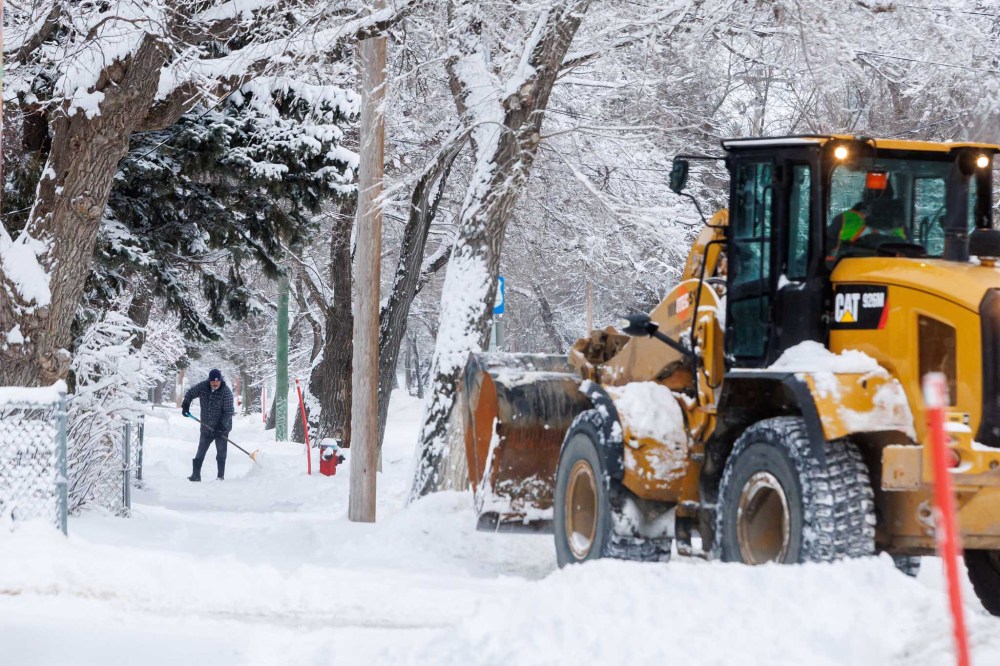
The city received 5,056 service requests related to snow and ice control last winter, including 288 about snow removal on residential streets, a city official confirmed Thursday.
The head of the city’s largest union said he’d prefer the municipal government seek savings by allowing public crews to take on a portion of the snow-clearing work.
“We’d look to see some of this work come back in house, being done by non-profit city staff. We’d be always willing, open to doing a pilot project or some shared services that way so that we can (ensure) we’re not beholden to the (private) profit-driven sector,” said Gord Delbridge, president of the Canadian Union of Public Employees Local 500.
City council will cast a final vote on the budget, which includes the proposed pilot project, on Jan. 29.
joyanne.pursaga@freepress.mb.ca
X: @joyanne_pursaga
Have your say on budget
The City of Winnipeg is seeking feedback from residents on the preliminary 2025 update to its multi-year budget.
The update, which would impose a 5.95 per cent property tax increase, was presented at a special meeting of the executive policy committee Wednesday.
Residents can complete an online survey available until Jan. 5, provide written feedback for the public record and register to appear as a delegation before committees or council.
Public meetings to hear delegations and consider changes to the preliminary budget begin Jan. 13. Council will vote on the preliminary budget on Jan. 29.
More information is available at winnipeg.ca/budget2025.

Joyanne is city hall reporter for the Winnipeg Free Press. A reporter since 2004, she began covering politics exclusively in 2012, writing on city hall and the Manitoba Legislature for the Winnipeg Sun before joining the Free Press in early 2020. Read more about Joyanne.
Every piece of reporting Joyanne produces is reviewed by an editing team before it is posted online or published in print — part of the Free Press‘s tradition, since 1872, of producing reliable independent journalism. Read more about Free Press’s history and mandate, and learn how our newsroom operates.
Our newsroom depends on a growing audience of readers to power our journalism. If you are not a paid reader, please consider becoming a subscriber.
Our newsroom depends on its audience of readers to power our journalism. Thank you for your support.
Related Articles
Pilot to reduce residential plowing doomed after city snowed under by complaints