

Driven deeper into hiding
Manitoba, U.S. border officials detail ‘real shift’ in smuggling, warn would-be migrants about winter dangers

Advertisement
Read this article for free:
or
Already have an account? Log in here »
To continue reading, please subscribe:
Digital Subscription
One year of digital access for only $75*
- Enjoy unlimited reading on winnipegfreepress.com
- Read the E-Edition, our digital replica newspaper
- Access News Break, our award-winning app
- Play interactive puzzles
*Billed as $5.77 plus GST every four weeks. After 52 weeks, price increases to the regular rate of $19.95 plus GST every four weeks. Offer available to new and qualified returning subscribers only. Cancel any time.
Monthly Digital Subscription
$4.99/week*
- Enjoy unlimited reading on winnipegfreepress.com
- Read the E-Edition, our digital replica newspaper
- Access News Break, our award-winning app
- Play interactive puzzles
*Billed as $19.95 plus GST every four weeks. Cancel any time.
To continue reading, please subscribe:
Add Free Press access to your Brandon Sun subscription for only an additional
$1 for the first 4 weeks*
- Enjoy unlimited reading on winnipegfreepress.com
- Read the E-Edition, our digital replica newspaper
- Access News Break, our award-winning app
- Play interactive puzzles
*Your next Brandon Sun subscription payment will increase by $1.00 and you will be charged $17.95 plus GST for four weeks. After four weeks, your payment will increase to $24.95 plus GST every four weeks.
Read unlimited articles for free today:
or
Already have an account? Log in here »
Hey there, time traveller!
This article was published 10/10/2024 (741 days ago), so information in it may no longer be current.
PEMBINA, N.D. — RCMP and American border officials are warning that legislative changes appear to have driven migrants who are illegally crossing the international boundary deeper into the shadows, as the number of people intercepted by Mounties increased this year.
Changes made to the Canada-U.S. Safe Third Country Agreement in 2023 mean people who walk into either country between ports of entry are to be turned back if they are found within 14 days of their arrival, but are able to attempt asylum claims after that period.
RCMP Sgt. Lance Goldau, who oversees the Manitoba border enforcement team out of the Altona detachment, said the migrants his team catches now tend to spend those two weeks in hiding.
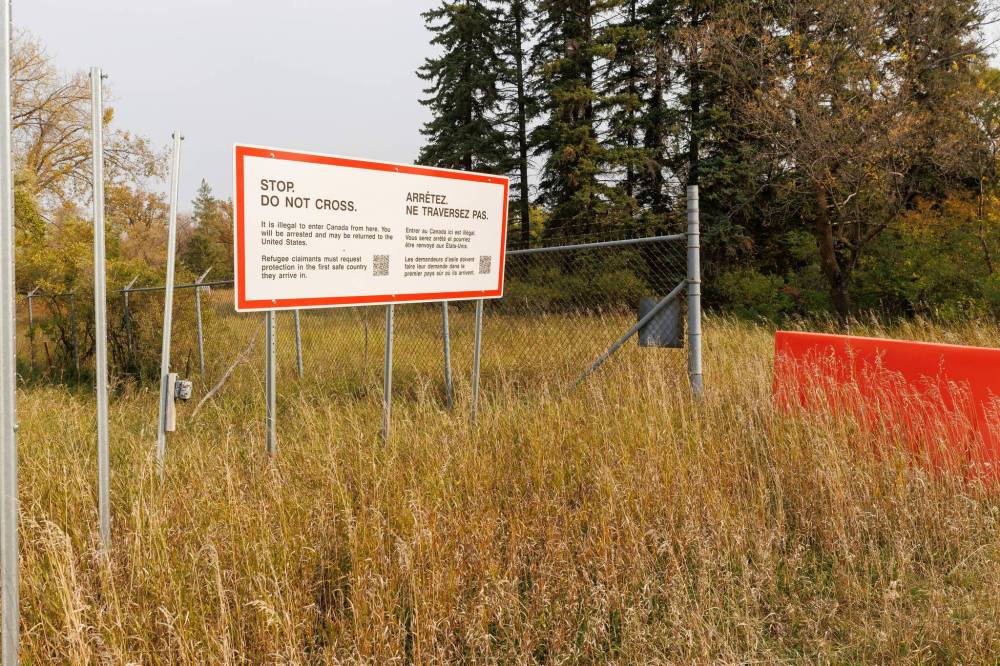
MIKE DEAL / FREE PRESS
A sign tells people not to cross the border at the old border crossing in Emerson, Man. RCMP officers and agents from United States Border Patrol met Thursday morning to talk about border safety.
A group of migrants, mostly from the west African nation of Chad, told Mounties after they were arrested earlier this year that their smuggler instructed them to claim they had hid in a shed in Blumenort for 15 days after crossing.
Migrants used to immediately call 911 or seek shelter in nearby towns after crossing the border, Goldau said, before making asylum claims and awaiting immigration hearings.
“We have seen a real shift … on how these people are moving across the border,” said Goldau, adding it has pushed the illegal migration further underground.
“They are evading apprehension, they’re avoiding arrest, and they’re doing anything they can to stay in Canada for that 14-day window.”
Goldau made the comments at a news conference in Pembina, N.D., just south of the Emerson border crossing, as RCMP and U.S. Customs and Border Protection officials warned would-be migrants of the extreme danger they will face if they attempt to cross in the winter months.
“They don’t comprehend how cold it can get,” said Customs and Border Protection Chief Patrol Agent Scott Garrett (Grand Forks sector). “This can be a matter of life or death.”
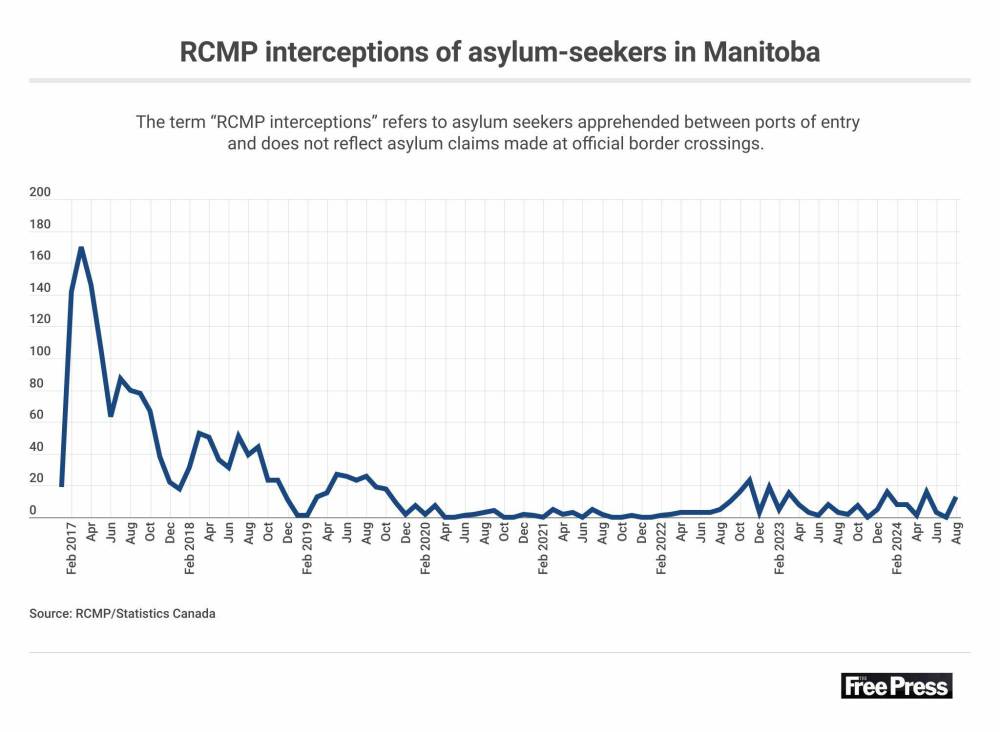
The warning from border officials is not an empty one. A family of four from India froze to death in a snow-packed field while trying to walk into the U.S. just east of Emerson during a January 2022 blizzard.
Jagdish Patel, 39, his wife, Vaishaliben, 37, their daughter, Vihangi, 11, and son, Dharmik, 3, were found dead metres from the border. The Patels were trying to emigrate to the U.S., where they had family.
“It haunts us as investigators, but troubles us further as human beings,” said Goldau of the deaths.
Goldau said migrants often try to escape their countries for political, social or religious reasons. Most pay smugglers to get them to the border, and depending on their country of origin and other factors, the prices can range from hundreds of dollars to more than $10,000.
Smugglers no longer take migrants across themselves, instead providing them with GPS coordinates for smartphones directing them where to go, which border officials said is an attempt to avoid prosecution.
Many migrants are dropped off far from a port of entry and left to fend for themselves, with only vague directions to connect with someone waiting for them on the other side. Some migrants are left unaware of the extreme weather and geography they could encounter.
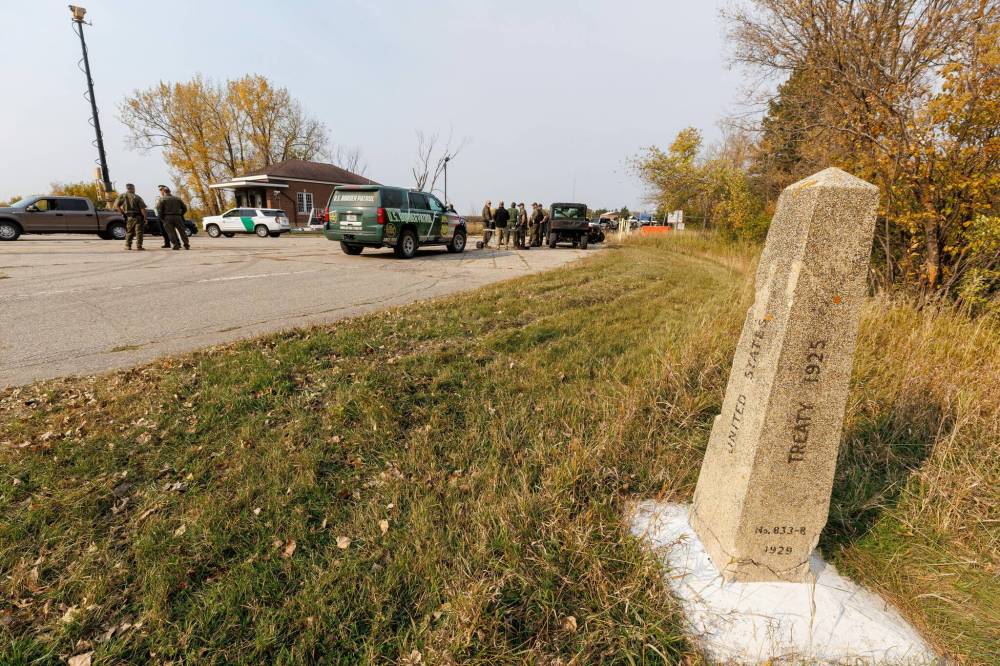
MIKE DEAL / FREE PRESS
Canadian and U.S. law enforcement issued public warnings about illegal border crossings.
The officials warned would-be migrants that the human smugglers see them as dollar signs and care little for their safety and well-being.
Garrett said, despite messages and warnings from border patrol and other agencies about winter dangers, migrants are still attempting to make the crossings.
Garrett said his agency has determined that Mexican cartels, who control all smuggling at the southwest border between the U.S. and Mexico, have gotten involved at the northern border, though the cartel members themselves have so far remained in Mexico.
The cartels have so-called “plaza bosses,” who control smuggling in certain regions of influence.
“We’re beginning to see that the plaza bosses on the southwest are paying for the flights and the migrants to come up into Canada and then get farmed out along the border to go back down south,” said Garrett, noting most of those migrants are either Mexican or Central American.
Garrett and Goldau said changes this year, requiring Mexican citizens to obtain a visa for specific purposes in order to fly to Canada, have begun to slow the number of Mexican migrants in the area.
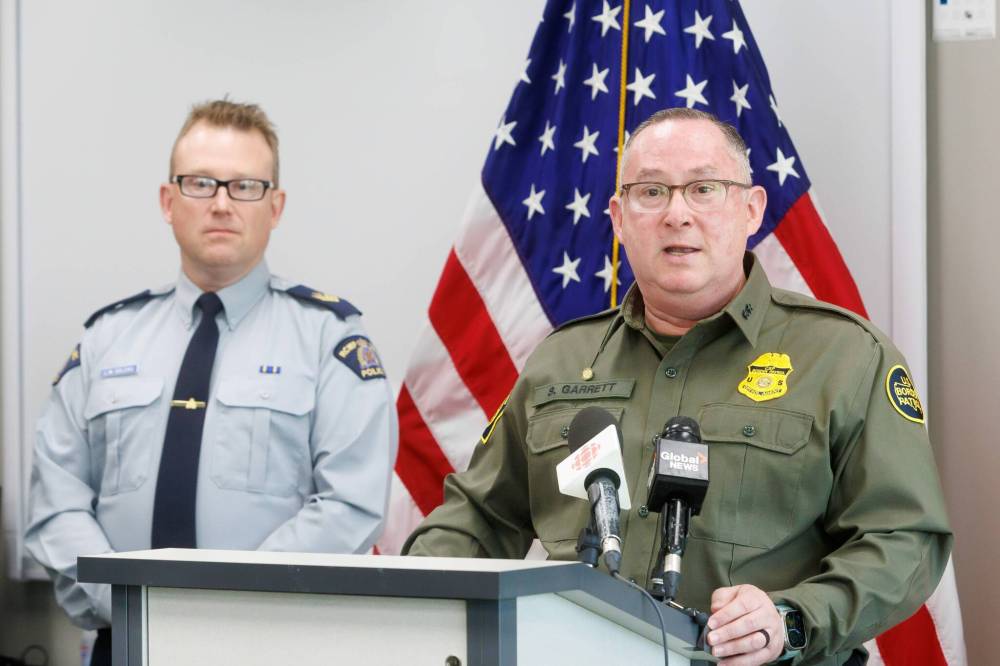
MIKE DEAL / FREE PRESS
Sergeant Lance Goldau (left), head of the Manitoba RCMP’s Integrated Border Enforcement Team, and U.S. Chief Border Patrol Agent Scott Garrett speak during a press conference at their headquarters in Pembina, North Dakota, Thursday morning.
Goldau said RCMP investigations have not yet identified a large-scale organized criminal element involved in smugglings into Canada, though Mounties and their partners are working on it.
“So far, our investigations have just pointed to local smaller groups that are essentially trying to help either people from their home country, or some kind of a family tie or a friendship kind of tie,” Goldau said. “We haven’t delved deep enough into that yet, to have those answers, to see what kind of bigger criminal footprint it may have.”
erik.pindera@freepress.mb.ca
Erik Pindera is a reporter for the Free Press, mostly focusing on crime and justice. The born-and-bred Winnipegger attended Red River College Polytechnic, wrote for the community newspaper in Kenora, Ont. and reported on television and radio in Winnipeg before joining the Free Press in 2020. Read more about Erik.
Every piece of reporting Erik produces is reviewed by an editing team before it is posted online or published in print — part of the Free Press‘s tradition, since 1872, of producing reliable independent journalism. Read more about Free Press’s history and mandate, and learn how our newsroom operates.
Our newsroom depends on a growing audience of readers to power our journalism. If you are not a paid reader, please consider becoming a subscriber.
Our newsroom depends on its audience of readers to power our journalism. Thank you for your support.
BORDER CROSSINGS BY THE NUMBERS
The number of people attempting dangerous illegal border crossings into Manitoba appears to have increased.
RCMP released figures Wednesday show Mounties have arrested 85 migrants in Manitoba so far this year, compared to a total of 75 last year.
Most of the people involved this year were from African countries, including Chad, Congo, Eritrea, Guinea, Mali, Mauritania, Morocco, Sudan and Somalia. Others were from Brazil, Cuba, Iraq, Saint Helena and Yemen.
Grand Forks sector Customs and Border Protection Chief Patrol Agent Scott Garrett, whose American agents are responsible for the border from North Dakota and Minnesota, said his team had made 218 arrests of people who crossed from Canada as of August this year, compared to 300 last year.
Border patrol agent David Marcus, a spokesman, said the agency expects they will be just shy of 300 arrests by year’s end.
Garrett said most migrants arrested this year have come from Mexico, Romania and India.
Illegal crossings in both directions began to rise again after COVID-19 pandemic travel restrictions started to ease.
Though there has been an increase in crossings in recent years, the numbers still pale compared to a massive uptick in crossings into Canada from the U.S. in 2017, after Donald Trump’s presidential election victory in November 2016.
A record 1,018 would-be asylum seekers were intercepted on the Canadian side in 2017. The figures dropped to 22 people in 2021.
RCMP announced Wednesday that a Winnipeg man has been charged with human smuggling after a vehicle with five foreign nationals from Africa inside was pulled over east of Emerson on the night of Sept. 28.
— Erik Pindera
Erik Pindera is a reporter for the Free Press, mostly focusing on crime and justice. The born-and-bred Winnipegger attended Red River College Polytechnic, wrote for the community newspaper in Kenora, Ont. and reported on television and radio in Winnipeg before joining the Free Press in 2020. Read more about Erik.
Every piece of reporting Erik produces is reviewed by an editing team before it is posted online or published in print — part of the Free Press‘s tradition, since 1872, of producing reliable independent journalism. Read more about Free Press’s history and mandate, and learn how our newsroom operates.
Our newsroom depends on a growing audience of readers to power our journalism. If you are not a paid reader, please consider becoming a subscriber.
Our newsroom depends on its audience of readers to power our journalism. Thank you for your support.
Related Articles
Winnipeg man charged with human smuggling after SUV stopped near Canada-U.S. border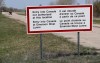




Advertisement Advertise With Us
Advertisement Advertise With Us
History
Updated on Thursday, October 10, 2024 5:22 PM CDT: Adds photos, details.