

Insecticide used to fight skeeters no longer on market: city

Advertisement
Read this article for free:
or
Already have an account? Log in here »
To continue reading, please subscribe:
Digital Subscription
One year of digital access for only $75*
- Enjoy unlimited reading on winnipegfreepress.com
- Read the E-Edition, our digital replica newspaper
- Access News Break, our award-winning app
- Play interactive puzzles
*Billed as $5.77 plus GST every four weeks. After 52 weeks, price increases to the regular rate of $19.95 plus GST every four weeks. Offer available to new and qualified returning subscribers only. Cancel any time.
Monthly Digital Subscription
$4.99/week*
- Enjoy unlimited reading on winnipegfreepress.com
- Read the E-Edition, our digital replica newspaper
- Access News Break, our award-winning app
- Play interactive puzzles
*Billed as $19.95 plus GST every four weeks. Cancel any time.
To continue reading, please subscribe:
Add Free Press access to your Brandon Sun subscription for only an additional
$1 for the first 4 weeks*
- Enjoy unlimited reading on winnipegfreepress.com
- Read the E-Edition, our digital replica newspaper
- Access News Break, our award-winning app
- Play interactive puzzles
*Your next Brandon Sun subscription payment will increase by $1.00 and you will be charged $17.95 plus GST for four weeks. After four weeks, your payment will increase to $24.95 plus GST every four weeks.
Read unlimited articles for free today:
or
Already have an account? Log in here »
Hey there, time traveller!
This article was published 04/04/2024 (892 days ago), so information in it may no longer be current.
The City of Winnipeg could be forced to end mosquito fogging when its insecticide supply runs out in two to four years — unless it can find an alternative.
A city report says Deltagard can no longer be ordered.
“The loss of DeltaGard for adult nuisance mosquito control leaves the City of Winnipeg with no viable alternatives as the current insecticides registered for (that use)… all have negative aspects. As such, the city must decide what the long-term plan will be for its adult nuisance mosquito control program,” the report notes.

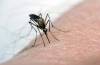
John Woods / Free Press Files
Fogging has been part of Winnipeg’s mosquito control program since the 1950s, but it may be coming to an end thanks to the fact that city officials are having trouble finding a suitable replacement for the insecticide currently in use, Deltagard, which can no longer be ordered in Canada.
The city learned last year that DeltaGard would no longer be available for sale in Canada after 2023.
Local officials still have enough of the product to treat Winnipeg four times, which officials expect would last about two to four years.
While city staff look for alternative insecticides, the report notes more drastic changes could be considered if the supply dwindles before one is found.
Options include phasing out fogging, such as by: using up DeltaGard based on current policy; extending the supply by raising the threshold to trigger a fogging operation (such as requiring average daily adult mosquito trap counts of 50 instead of 25 to stretch the supply up to 10 years); or restricting fogging only to times when it’s needed to control mosquito-borne West Nile virus.
However, fogging hasn’t been needed that often in recent years, said David Wade, the city’s superintendent of insect control.
The city carried out fogging operations in just three years since it began using DeltaGard in 2017 and 90 per cent of the city’s insect control budget is devoted to larviciding, said Wade.
“Larviciding is where we spend our money and our time. The (fogging) program is the last resort,” he said.
The insect control boss said he does expect a “passionate” response from Winnipeggers on both sides of the argument, if elected officials seek to rule out fogging for nuisance mosquitoes.
Wade said it has been challenging to find an alternative fogging product, since the city had ended its use of Malathion and some other products are believed to contain carcinogens.
It can also take years to get a new product approved for use in Canada.
Fogging has been part of Winnipeg mosquito control since 1950.
The head of council’s community services committee said he’d like city officials to continue to look for products to keep it as an option.
“If there’s a wet season where we have a lot of precipitation and a lot of standing water, I think there’s always going to be a role for fogging,” said Coun. Evan Duncan.
Duncan (Charleswood-Tuxedo-Westwood) said he believes many residents still support using fogging to get rid of nuisance mosquitoes.
“I think that when Winnipeggers, and I’m one of them, see the fog trucks going up and down the streets, we’re thinking, finally, the bugs will be out of our hair, off our skin… and that’s a good thing in the summer,” he said.
Duncan stressed larviciding remains a critical and effective part of mosquito control that won’t be affected if the DeltaGard supply runs out before an alternative is found.
Coun. Jeff Browaty also said the city should maintain its ability to fog for mosquitoes.
“When it comes to things like West Nile virus… I think it would be a problem if we lost all capability to do a fog if we had an emergency situation. (Also) our summers in Manitoba are short and having a beautiful summer evening kind of ruined by being swarmed by mosquitoes is a problem,” said Browaty (North Kildonan).
If the program is phased out, the city could consider increasing its larviciding budget to boost mosquito control, the report notes.
Wade said the provincial government determines when to carry out mosquito control for West Nile virus, which occurs separately from city policy.
Council’s community services committee is slated to discuss the report on April 10.
joyanne.pursaga@freepress.mb.ca
X: @joyanne_pursaga
Joyanne is city hall reporter for the Winnipeg Free Press. A reporter since 2004, she began covering politics exclusively in 2012, writing on city hall and the Manitoba Legislature for the Winnipeg Sun before joining the Free Press in early 2020. Read more about Joyanne.
Every piece of reporting Joyanne produces is reviewed by an editing team before it is posted online or published in print — part of the Free Press‘s tradition, since 1872, of producing reliable independent journalism. Read more about Free Press’s history and mandate, and learn how our newsroom operates.
Our newsroom depends on a growing audience of readers to power our journalism. If you are not a paid reader, please consider becoming a subscriber.
Our newsroom depends on its audience of readers to power our journalism. Thank you for your support.
Joyanne is city hall reporter for the Winnipeg Free Press. A reporter since 2004, she began covering politics exclusively in 2012, writing on city hall and the Manitoba Legislature for the Winnipeg Sun before joining the Free Press in early 2020. Read more about Joyanne.
Every piece of reporting Joyanne produces is reviewed by an editing team before it is posted online or published in print — part of the Free Press‘s tradition, since 1872, of producing reliable independent journalism. Read more about Free Press’s history and mandate, and learn how our newsroom operates.
Our newsroom depends on a growing audience of readers to power our journalism. If you are not a paid reader, please consider becoming a subscriber.
Our newsroom depends on its audience of readers to power our journalism. Thank you for your support.
Related Articles
City launches annual mosquito control offensive
Advertisement Advertise With Us
Advertisement Advertise With Us