
The deals on the bus Winnipeg’s Transit Master Plan offers hope for improved service and safety, but only if the provincial and federal governments buy in
Read this article for free:
or
Already have an account? Log in here »
To continue reading, please subscribe:
Digital Subscription
One year of digital access for only $75*
- Enjoy unlimited reading on winnipegfreepress.com
- Read the E-Edition, our digital replica newspaper
- Access News Break, our award-winning app
- Play interactive puzzles
*Billed as $5.77 plus GST every four weeks. After 52 weeks, price increases to the regular rate of $19.95 plus GST every four weeks. Offer available to new and qualified returning subscribers only. Cancel any time.
Monthly Digital Subscription
$4.99/week*
- Enjoy unlimited reading on winnipegfreepress.com
- Read the E-Edition, our digital replica newspaper
- Access News Break, our award-winning app
- Play interactive puzzles
*Billed as $19.95 plus GST every four weeks. Cancel any time.
To continue reading, please subscribe:
Add Free Press access to your Brandon Sun subscription for only an additional
$1 for the first 4 weeks*
- Enjoy unlimited reading on winnipegfreepress.com
- Read the E-Edition, our digital replica newspaper
- Access News Break, our award-winning app
- Play interactive puzzles
*Your next Brandon Sun subscription payment will increase by $1.00 and you will be charged $17.95 plus GST for four weeks. After four weeks, your payment will increase to $24.95 plus GST every four weeks.
Read unlimited articles for free today:
or
Already have an account? Log in here »
Hey there, time traveller!
This article was published 01/01/2024 (1004 days ago), so information in it may no longer be current.
On Lisbon’s century-old Remodelado trams, the oldest electric tram system in Europe, there are a number of ways to pay the €3 fare.
Once you climb aboard one of the clattering, shuddering yellow trams — many of which are nearly 90 years old — you can pay with cash. Riders can also use a pre-loaded, plastic-coated paper transit card or just tap a credit card or smartphone on a glowing, wireless fare reader that has been elegantly installed.
In Transit
A special series examining the state of Winnipeg’s public transportation system
Read the full series here.
The modern convenience of true mobile ticketing on one of the oldest public transit systems in the world. It’s evidence some cities understand that leading-edge amenities, such as mobile ticketing, are essential for the future of transit.
Lamentably, Winnipeg is not one of those cities. For evidence, let’s look at the Peggo card.
The Peggo smart card program was first proposed back in 2003, re-announced by former mayor Sam Katz in 2006. Following that pledge, city council said it would be fully functional in the fall of 2013 but further delays pushed it to mid-2016.
By then, it had taken 13 years and an astounding $18 million of taxpayer money to bring it to life. However, by the time Peggo was rolling out in Winnipeg, digital point-of-sale technology had already made quantum leaps forward.
ATMs were already allowing people to take out cash anywhere in the world, and smartphone pay technology had arrived, negating the need to carry any payment cards. Even worse than Peggo being outmoded, users complain the cards don’t work and that it takes up to 48 hours to reload with funds.
Peggo is, however, just the tip of the behind-the-scenes iceberg.
Winnipeg’s transit system is reliant totally on buses, as the city missed opportunities over the years to embrace some form of light rail. Even so, the city has moved at a glacial pace when it comes to building rapid infrastructure to move buses more quickly and efficiently.
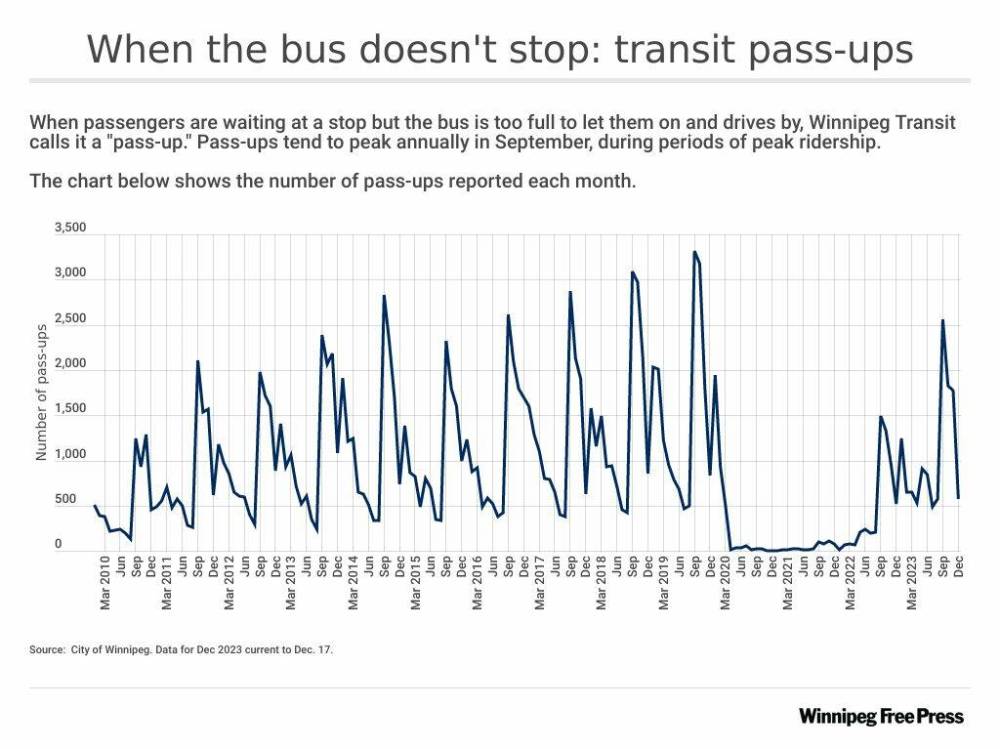
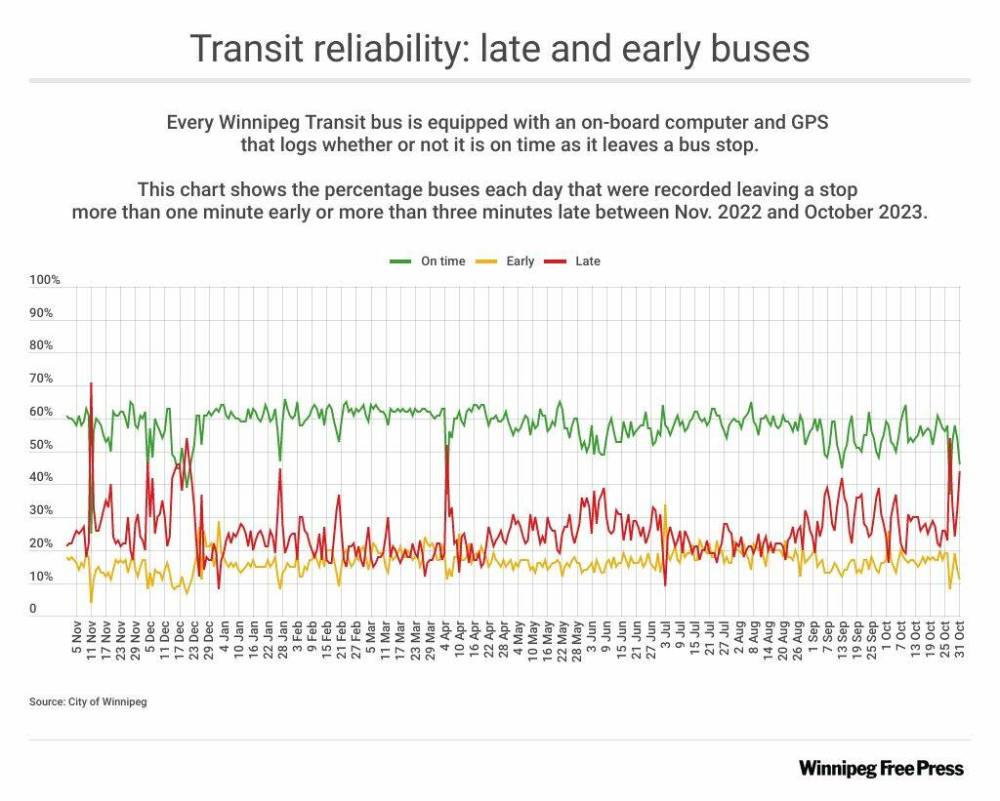
And it is unreliable: on some routes chronic delays are a reality; on others, there aren’t enough buses to meet passenger demand.
Winnipeg Transit is also suffering from a safety problem. Despite escalating numbers of incidents involving volatile passengers, the bus network currently operates without any kind of comprehensive security force, although one is being trained starting later this month.
Taken together, all these problems don’t speak well for the future of Winnipeg Transit. But there is hope.
The Winnipeg Transit Master Plan, approved by council in 2021 and scheduled to start rolling out in 2025, represents nothing less than a re-invention of the city’s approach to public transit.
If it is to be believed, the master plan will result in a more extensive, more reliable transit network with more rapid transit infrastructure, more zero-emission buses equipped with broadband wireless communications and — down the road — true mobile ticketing options.
The plan would eventually see downtown finally become a true transit hub, with new dedicated bus-rapid-transit (BRT) lanes running alongside and through the historic Union Station on Main Street.
It’s an ambitious and incredibly expensive dream. But is it doable?
Mayor Scott Gillingham said the master plan has to work because the alternative — relying on the outdated and sometimes dysfunctional system we have now — is simply not an option.
“I’m working and council is working very hard to deliver the Transit Master Plan and the new routes on an expedited basis,” Gillingham said in an interview.
“It’s important for the growth of our city, it’s important to meet greenhouse gas emission targets. It’s important to provide a service that so many Winnipeggers depend upon… The goal is to make Transit have an option for people who don’t think it’s an option right now and make it a choice for people that don’t consider it a choice right now. We want to see more people making use of our transit system.”
In many ways, Winnipeg could not have picked a more challenging time to unleash its visionary master transit plan.
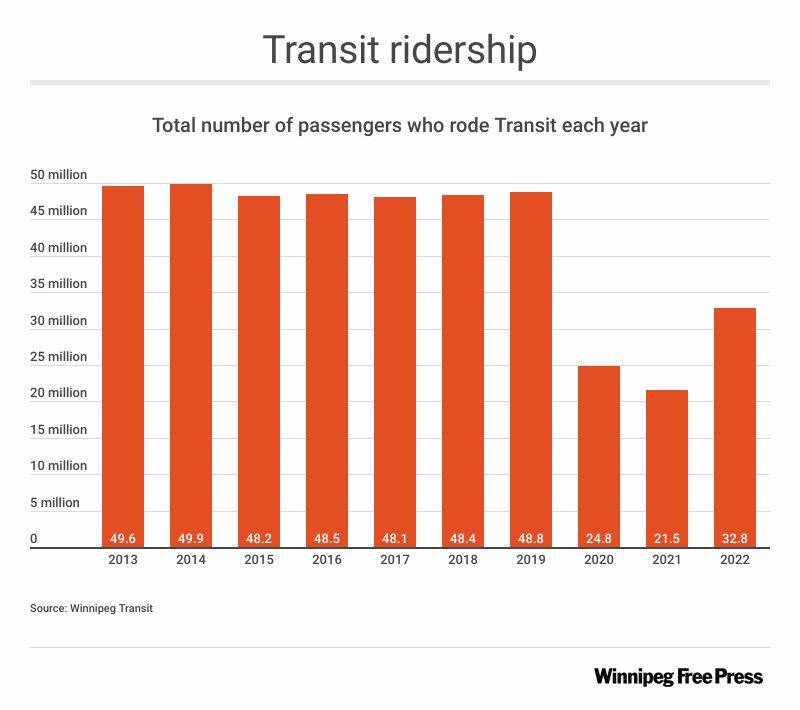
Public transit systems all over the world are in a state of crisis. The pandemic dramatically reduced ridership and save for a few major cities, passengers have stayed away now that COVID-19 conditions have moderated. As ridership and fare revenues have declined, municipal governments have been squeezed by skyrocketing operating costs.
And then, there are the concerns about safety. A tough economy that has left many people struggling, along with soaring rates of mental health and addictions, has translated into an epidemic of street crime that flows through most urban transit systems.
“My increasing sense is that we’re in a mode of polycrisis,” said Shauna Brail, associate professor with the Institute for Management & Innovation at the University of Toronto. “Polycrisis essentially means that there are multiple crises converging all together at the same time. And while this isn’t necessarily new for 2023, we’re really seeing the impacts of this right now.”
Brail said the pandemic, and the work-from-home revolution, gutted transit ridership all over the world. And as employers and employees continue to wrestle with the scope of hybrid work, there is uncertainty around when pre-pandemic ridership levels will return. (Ridership in Winnipeg is currently at 94 per cent of pre-pandemic levels.)
If governments begin to see the declining ridership as a permanent or structural change, then they are more likely to delay improvements or expansion in service, reduce service and increase fares in a desperate bid to cover operating costs, Brail said. However, that will quickly lead governments into a policy “doom loop” where knee-jerk decisions made hastily today continue to drive down ridership, which in turn dampens enthusiasm for future investment, she added.
The reality is that population growth along with the pressing need to reduce vehicular traffic to address climate change means that transit will have to be bigger and better in the future, Brail said. And it will have to be more disruptive to vehicular traffic with more dedicated transit lanes and less space for automobiles.
The blueprint for the future of transit in Winnipeg or any other city involves immediate and long-term efforts, Brail said.
In the immediate term, buses have to be made safer for passengers and operators, routes need to be more convenient and reliable, and there needs to be a broader use of technology to allow for mobile ticketing and ridership tracking to plan and adjust routes to meet demand, she said.
“If you make it more convenient to ride the bus than to drive in your own vehicle, then you’re drawing ridership and revenues to the bus, you’re helping to reduce emissions, and you’re generating more potential bus-related investment in culture in your city. And so there are cities that have said, ‘We’re going to let people in private automobiles sit in traffic longer. Right, that is what a (dedicated) bus lane does. It speeds up the process for people on the bus.’”
Does Winnipeg’s Transit Master Plan check all the boxes for a modern, high-functioning transit system? In many ways, it does.
The first phase, which is fully funded by the three levels of government and readying for a June 2025 release, is a total re-imagining of service.
According to the master plan, $20 million will be spent on infrastructure to support the new routes, and another $17 million on a Bus Radio and Intelligent Transportation System, a wireless communication hub to be installed in every bus that will eventually allow for better real-time security and true mobile ticketing.
All these innovations are consistent with the re-imagining of public transit in other cities in Canada and around the world that do not have rail systems: better functioning networks, more frequent and reliable service, more dedictated BRT infrastructure.
Bjorn Radstrom, manager of transit service development, said the first phase will add capacity and reduce travel times for most riders without adding more buses. Although that may seem nearly impossible, Radstrom said that by streamlining and simplifying routes and reducing the number of buses sharing the same streets, everything will move more quickly and, thus, more predictably.
“The simplified network where you’ve only got one, maybe two or three routes (on the same street) allows us to focus on managing the spacing between all the buses and making sure things flow properly,” Radstrom said.
The new route system will require more transfers, Radstrom said, but with the goal of providing service every 15 minutes for the majority of each day — seven days a week — confidence is high the new network design will move people more quickly.
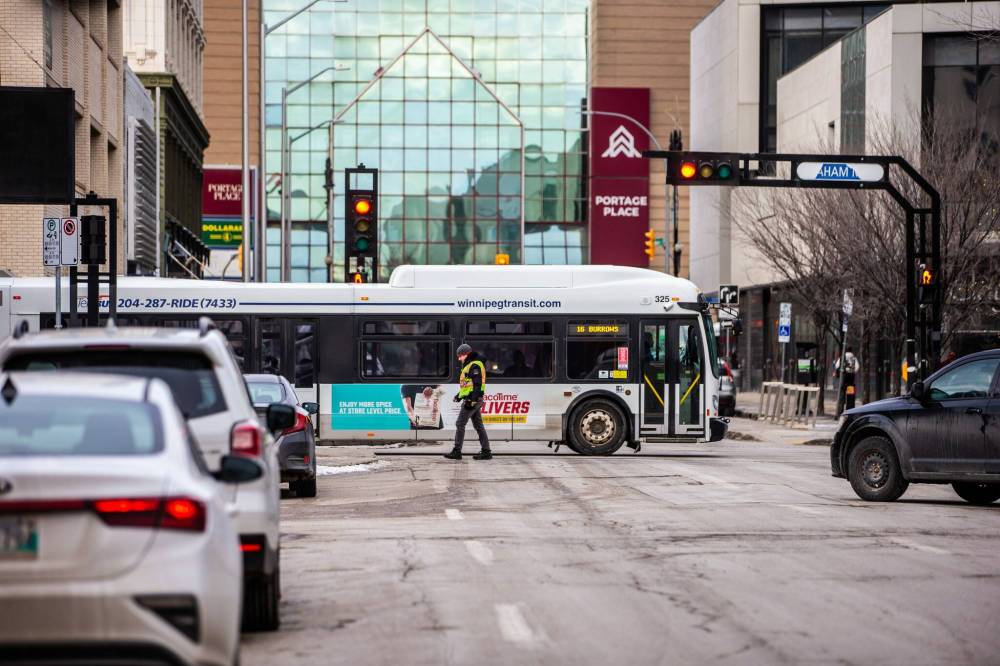
However, the new route network is just the start when it comes to the master plan. The city is also moving ahead with two other extremely costly projects that will be needed to achieve the plan’s full vision.
A replacement of its North Transit Garage to hold more buses, and provide maintenance for more zero-emission electric and hydrogen fuel cell buses, is estimated right now at $200 million. However, almost everyone expects that total to rise significantly.
And the cost of the biggest of the big-ticket items — the complete overhaul of rapid transit in downtown Winnipeg — remains a mystery.
Right now, the city is currently estimating it will cost $355 million to add new rapid transit lanes, convert Union Station to a BRT hub and add other related infrastructure. However, there is also an acknowledgement that this figure is based on 2020 calculations, and is already out of date.
The city will have to recalculate the total price tag following a detailed design phase and the expectation is that the total price tag will go up substantially. How substantially? Neither the mayor nor senior civic officials would even hazard a guess at this point.
With nine-figure price tags, the need for tripartite funding will be critical for the master plan to work.
Gillingham said there has been progress to date on getting the federal and provincial governments to share in the costs of purchasing new zero-emission buses and underwriting some of the design and planning for the redesign of downtown transit.
However, Gillingham said the city is still suffering from decisions made by the now-former Progressive Conservative government to abandon an agreement to share Winnipeg Transit costs 50-50 while also freezing operating grants to municipalities. Talks are underway now with the new NDP government — which is deep into the planning of its first budget — on both the operating grants and transit funding, but no firm promises have been made, he said.
Gillingham has gone out of his way to emphasize that help from senior levels of government on operating costs is essential.
Earlier in December, Gillingham issued a news release warning that Winnipeg Transit’s annual subsidy — the amount of taxpayer money needed to pay for transit above and beyond what it earns through fares — could increase by as much as $39 million annually. That, Gillingham noted, is equivalent to a five-per-cent property tax increase.
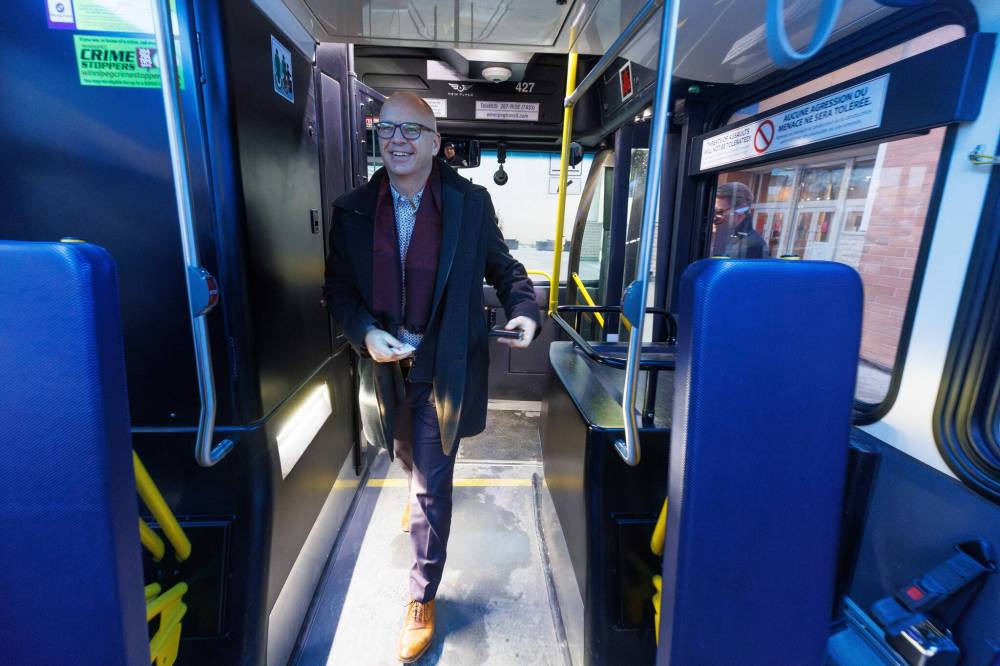
Gillingham said he is committed to covering those additional costs and delivering on the Transit Master Plan without additional property tax hikes. If the provincial and federal governments do not step up, the city will have no choice but to delay the master plan.
The federal government does have a new national “permanent” transit funding plan that might be used for operating costs. And the new NDP provincial government made some campaign promises on transit, including $8 million to fund routes to underserved parts of Winnipeg. However, Transit was not mentioned in the government’s recent throne speech, and that has left municipal leaders on edge.
“I’m certainly hoping to get some certainty from the provincial government before we finalize our budget,” the mayor said. “So that’s why the conversations with the (province) are so important in the coming weeks. I think the timeline of implementing the master plan certainly depends upon continued and increased participation and investment from senior levels of government.”
dan.lett@winnipegfreepress.com

Dan Lett is a columnist for the Free Press, providing opinion and commentary on politics in Winnipeg and beyond. Born and raised in Toronto, Dan joined the Free Press in 1986. Read more about Dan.
Dan’s columns are built on facts and reactions, but offer his personal views through arguments and analysis. The Free Press’ editing team reviews Dan’s columns before they are posted online or published in print — part of the our tradition, since 1872, of producing reliable independent journalism. Read more about Free Press’s history and mandate, and learn how our newsroom operates.
Our newsroom depends on a growing audience of readers to power our journalism. If you are not a paid reader, please consider becoming a subscriber.
Our newsroom depends on its audience of readers to power our journalism. Thank you for your support.
Related Articles
The bus has 10,000 stories, inside and out — and a front-row seat to every one














History
Updated on Monday, January 1, 2024 4:40 PM CST: Adds web headline