

Wildfire smoke measured at dangerous levels in city

Advertisement
Read this article for free:
or
Already have an account? Log in here »
To continue reading, please subscribe:
Digital Subscription
One year of digital access for only $75*
- Enjoy unlimited reading on winnipegfreepress.com
- Read the E-Edition, our digital replica newspaper
- Access News Break, our award-winning app
- Play interactive puzzles
*Billed as $5.77 plus GST every four weeks. After 52 weeks, price increases to the regular rate of $19.95 plus GST every four weeks. Offer available to new and qualified returning subscribers only. Cancel any time.
Monthly Digital Subscription
$4.99/week*
- Enjoy unlimited reading on winnipegfreepress.com
- Read the E-Edition, our digital replica newspaper
- Access News Break, our award-winning app
- Play interactive puzzles
*Billed as $19.95 plus GST every four weeks. Cancel any time.
To continue reading, please subscribe:
Add Free Press access to your Brandon Sun subscription for only an additional
$1 for the first 4 weeks*
- Enjoy unlimited reading on winnipegfreepress.com
- Read the E-Edition, our digital replica newspaper
- Access News Break, our award-winning app
- Play interactive puzzles
*Your next Brandon Sun subscription payment will increase by $1.00 and you will be charged $17.95 plus GST for four weeks. After four weeks, your payment will increase to $24.95 plus GST every four weeks.
Read unlimited articles for free today:
or
Already have an account? Log in here »
Hey there, time traveller!
This article was published 17/05/2023 (1242 days ago), so information in it may no longer be current.
Potentially harmful smoke has been blowing through Winnipeg.
Environment and Climate Change Canada issued a special air-quality statement Tuesday for a large swath of southern Manitoba and on Wednesday it was updated to include all of southern Manitoba, and as far north to Grand Rapids and Poplar River First Nation.
Meteorologist Jesse Wagar said that by mid-afternoon Wednesday the weather service’s air monitor, located just west of downtown, was showing a reading of between 15 to 25 micrograms per cubic metre of air, but non-agency monitors in a couple of other areas of the city had shown readings as high as 75.
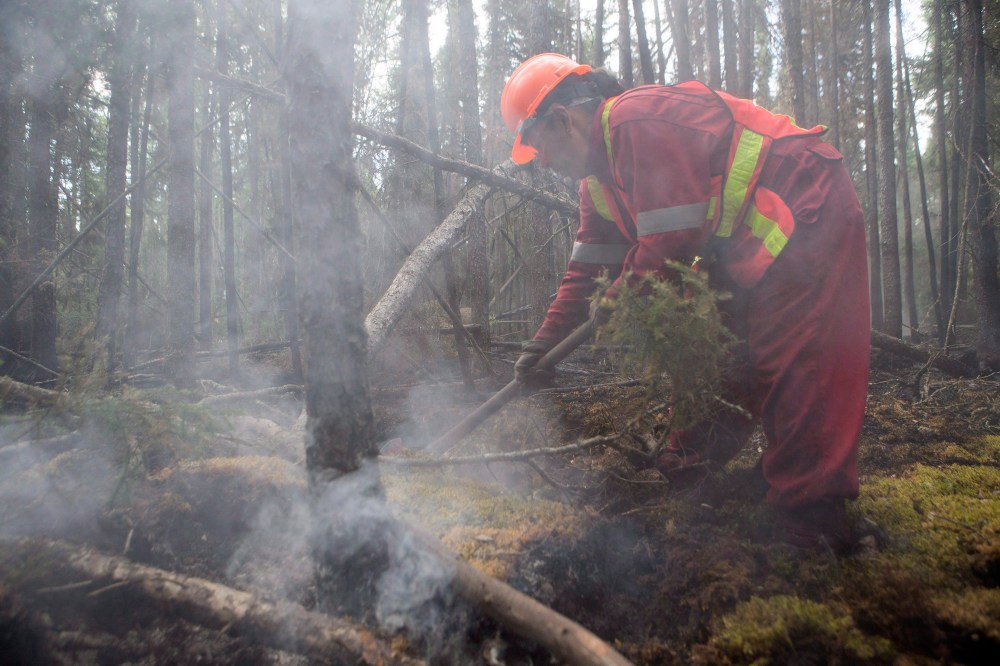
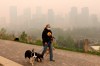
The smoke blowing through Winnipeg is from forest fires in northern Saskatchewan. (Liam Richards / Canadian Press files)
Levels up to 50 are considered good, but anything higher can cause health problems.
“It has been really bad out there,” Wagar said. “It will take quite a push to dissipate it.”
Wagar said the rain parts of Winnipeg received early in the afternoon could have done more harm than good.
“Sometimes, all it does is bring down even more smoke from high in the atmosphere,” she said.
The smoke blowing through Winnipeg is from forest fires in northern Saskatchewan. Other blazes in the northern Alberta area are adding to the problem across the province.
Wagar said conditions are expected to get better overnight Thursday as the smoke continues south to the United States.
Environment Canada has been recommending that while the wildfire smoke is around, people should close their windows, set their air conditioners to recirculate air and, if the smoke is a problem in a residence, consider going to places such as a mall, community centre or library.
kevin.rollason@freepress.mb.ca
Kevin Rollason is a general assignment reporter at the Free Press. He graduated from Western University with a Masters of Journalism in 1985 and worked at the Winnipeg Sun until 1988, when he joined the Free Press. He has served as the Free Press’s city hall and law courts reporter and has won several awards, including a National Newspaper Award. Read more about Kevin.
Every piece of reporting Kevin produces is reviewed by an editing team before it is posted online or published in print — part of the Free Press‘s tradition, since 1872, of producing reliable independent journalism. Read more about Free Press’s history and mandate, and learn how our newsroom operates.
Our newsroom depends on a growing audience of readers to power our journalism. If you are not a paid reader, please consider becoming a subscriber.
Our newsroom depends on its audience of readers to power our journalism. Thank you for your support.
Kevin Rollason is a general assignment reporter at the Free Press. He graduated from Western University with a Masters of Journalism in 1985 and worked at the Winnipeg Sun until 1988, when he joined the Free Press. He has served as the Free Press’s city hall and law courts reporter and has won several awards, including a National Newspaper Award. Read more about Kevin.
Every piece of reporting Kevin produces is reviewed by an editing team before it is posted online or published in print — part of the Free Press‘s tradition, since 1872, of producing reliable independent journalism. Read more about Free Press’s history and mandate, and learn how our newsroom operates.
Our newsroom depends on a growing audience of readers to power our journalism. If you are not a paid reader, please consider becoming a subscriber.
Our newsroom depends on its audience of readers to power our journalism. Thank you for your support.
Related Articles
Evacuated Alberta town reopens as fire fears ease
Advertisement Advertise With Us