

WRHA seeks to ramp up ‘home is best’ long-term care philosophy

Advertisement
Read this article for free:
or
Already have an account? Log in here »
To continue reading, please subscribe:
Digital Subscription
One year of digital access for only $75*
- Enjoy unlimited reading on winnipegfreepress.com
- Read the E-Edition, our digital replica newspaper
- Access News Break, our award-winning app
- Play interactive puzzles
*Billed as $5.77 plus GST every four weeks. After 52 weeks, price increases to the regular rate of $19.95 plus GST every four weeks. Offer available to new and qualified returning subscribers only. Cancel any time.
Monthly Digital Subscription
$4.99/week*
- Enjoy unlimited reading on winnipegfreepress.com
- Read the E-Edition, our digital replica newspaper
- Access News Break, our award-winning app
- Play interactive puzzles
*Billed as $19.95 plus GST every four weeks. Cancel any time.
To continue reading, please subscribe:
Add Free Press access to your Brandon Sun subscription for only an additional
$1 for the first 4 weeks*
- Enjoy unlimited reading on winnipegfreepress.com
- Read the E-Edition, our digital replica newspaper
- Access News Break, our award-winning app
- Play interactive puzzles
*Your next Brandon Sun subscription payment will increase by $1.00 and you will be charged $17.95 plus GST for four weeks. After four weeks, your payment will increase to $24.95 plus GST every four weeks.
Read unlimited articles for free today:
or
Already have an account? Log in here »
Hey there, time traveller!
This article was published 08/08/2022 (1499 days ago), so information in it may no longer be current.
The Winnipeg Regional Health Authority plans to have the majority of its patients seeking personal care services waiting from home, rather than from hospital, for spaces to open up.
According to a leaked memo, sent to WRHA care teams (acute, long term and community) by continuing care and community health services regional lead Gina Trinidad on July 25, the decision — dubbed “the 60/40 project” — is “a system-wide commitment to the ‘home is best’ philosophy.”
“The goal is to have clients supported in the community for as long as safely possible prior to admission to PCH (personal care home),” the memo states.
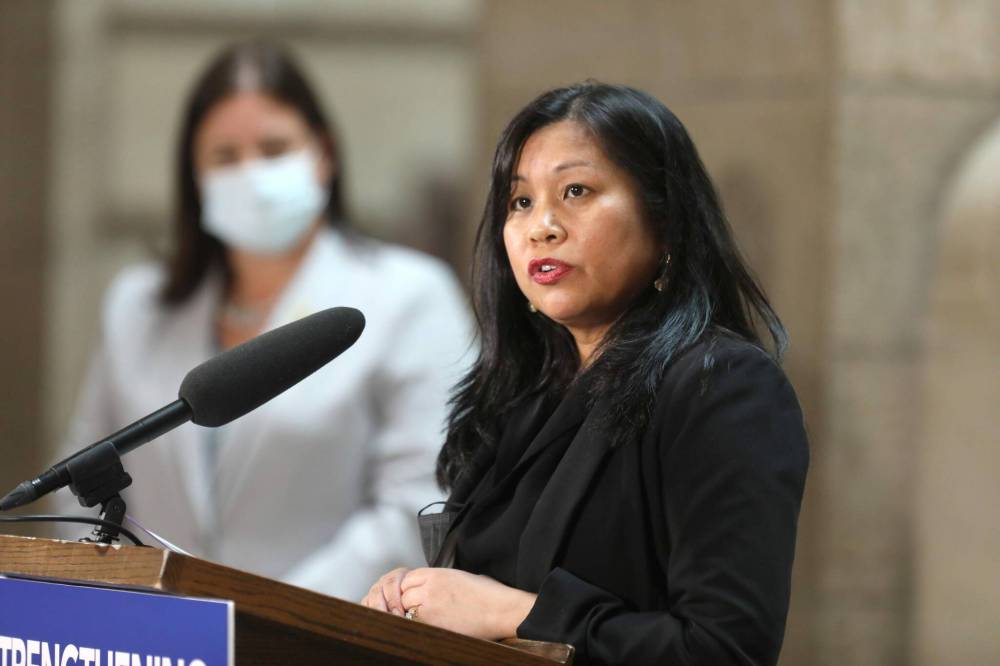
RUTH BONNEVILLE / FREE PRESS FILES
According to a leaked memo by Gina Trinidad on July 25, the decision — dubbed “the 60/40 project” — is “a system-wide commitment to the ‘home is best’ philosophy.”
“This is expected to result in improved care for clients — preventing avoidable hospitalization and deconditioning prior to placement in PCH and preventing premature placement into PCH.”
A set of leaked slides on the 60/40 project say the goal is to have it in place by March, and the WRHA is currently looking into policy revisions for hospital discharges, updating communiques to patients, families and staff, and other processes to streamline.
Among those is reinforcing a “first available bed strategy” for the 40 per cent still being transferred to personal care homes from hospitals.
Not every prospective long-term care client will be made to wait from home. If a patient can’t be sent home, they will be assessed for long-term care suitability and then sent to the first available bed found by the WRHA access hub while they wait for space in their preferred personal care centre to open up.
A WRHA spokesperson said the program kicked off in June, and is already underway. Since it began, around 32 per cent of personal care home clients were coming from home as opposed to hospital.
“For those individuals whose care needs can be best met in a PCH setting, we want to ensure that they are able to readily access this option from home rather than hospital,” the spokesperson said in an email Monday.
When asked for comment on the project and possible concerns surrounding it, a provincial spokesperson provided similar information on the initiative.
Among concerns, the program is alarming because it’s not coming with additional funding for home care services, Canadian Association of Retired Persons Manitoba chapter vice-president Carmen Nedohin said.
It is an issue exacerbated by wage freezes, staff cutbacks and burn out, she said.
“60/40 sounds like a fiscal target to me, more than taking into consideration what was in the best interest of the person’s health,” Nedohin said Monday.
“If they went from the home to the personal care home, that would be an ideal situation, but only if they had the support system in place, the people in place,” she said. “This is like building a house but you’re starting with putting the roof on it as opposed to the basement and the structure.”
Without enough long-term care workers receiving fair wages, those sent to wait at home will have to rely on family support, many of whom will be unable to meet their loved one’s needs because they aren’t professionals, Nedohin said.
Without the hospital stay as an aspect of care, she added, possible injuries or unchecked issues that could be spotted by a health-care worker may go unseen, causing extra stress on a senior already in a difficult situation.
“The only thing I can think of is that they’re doing this to try and free up hospital beds because of the cuts that (the provincial government) made, and the staff shortages now have put our system in such turmoil.”
NDP health critic Uzoma Asagwara questioned what a reinforced first available bed strategy would look like for seniors.
“We know that that isn’t working for a ton of Manitoba families whose loved ones are being sent hundreds of kilometres away from home,” Asagwara said.
“Seniors should have better options available to them than being forced to return home with inadequate home care support, inadequate health-care support or going to whatever bed becomes first available, even if that bed is 400 kilometres away and it means they will not have contact with their families.”
malak.abas@freepress.mb.ca
Malak Abas is a city reporter at the Free Press. Born and raised in Winnipeg’s North End, she led the campus paper at the University of Manitoba before joining the Free Press in 2020. Read more about Malak.
Every piece of reporting Malak produces is reviewed by an editing team before it is posted online or published in print — part of the Free Press‘s tradition, since 1872, of producing reliable independent journalism. Read more about Free Press’s history and mandate, and learn how our newsroom operates.
Our newsroom depends on a growing audience of readers to power our journalism. If you are not a paid reader, please consider becoming a subscriber.
Our newsroom depends on its audience of readers to power our journalism. Thank you for your support.
Malak Abas is a city reporter at the Free Press. Born and raised in Winnipeg’s North End, she led the campus paper at the University of Manitoba before joining the Free Press in 2020. Read more about Malak.
Every piece of reporting Malak produces is reviewed by an editing team before it is posted online or published in print — part of the Free Press‘s tradition, since 1872, of producing reliable independent journalism. Read more about Free Press’s history and mandate, and learn how our newsroom operates.
Our newsroom depends on a growing audience of readers to power our journalism. If you are not a paid reader, please consider becoming a subscriber.
Our newsroom depends on its audience of readers to power our journalism. Thank you for your support.
Related Articles
New home care strategy humane but hopeless
Advertisement Advertise With Us
Advertisement Advertise With Us