

A list of this year’s Nobel Prize winners
Advertisement
Read this article for free:
or
Already have an account? Log in here »
To continue reading, please subscribe:
Digital Subscription
One year of digital access for only $75*
- Enjoy unlimited reading on winnipegfreepress.com
- Read the E-Edition, our digital replica newspaper
- Access News Break, our award-winning app
- Play interactive puzzles
*Billed as $5.77 plus GST every four weeks. After 52 weeks, price increases to the regular rate of $19.95 plus GST every four weeks. Offer available to new and qualified returning subscribers only. Cancel any time.
Monthly Digital Subscription
$4.99/week*
- Enjoy unlimited reading on winnipegfreepress.com
- Read the E-Edition, our digital replica newspaper
- Access News Break, our award-winning app
- Play interactive puzzles
*Billed as $19.95 plus GST every four weeks. Cancel any time.
To continue reading, please subscribe:
Add Free Press access to your Brandon Sun subscription for only an additional
$1 for the first 4 weeks*
- Enjoy unlimited reading on winnipegfreepress.com
- Read the E-Edition, our digital replica newspaper
- Access News Break, our award-winning app
- Play interactive puzzles
*Your next Brandon Sun subscription payment will increase by $1.00 and you will be charged $17.95 plus GST for four weeks. After four weeks, your payment will increase to $24.95 plus GST every four weeks.
Read unlimited articles for free today:
or
Already have an account? Log in here »
Hey there, time traveller!
This article was published 10/10/2025 (353 days ago), so information in it may no longer be current.
STOCKHOLM (AP) — The announcement Monday that three laureates will share the Nobel memorial prize in economics for explaining innovation-driven growth brings this year’s Nobel awards to a close.
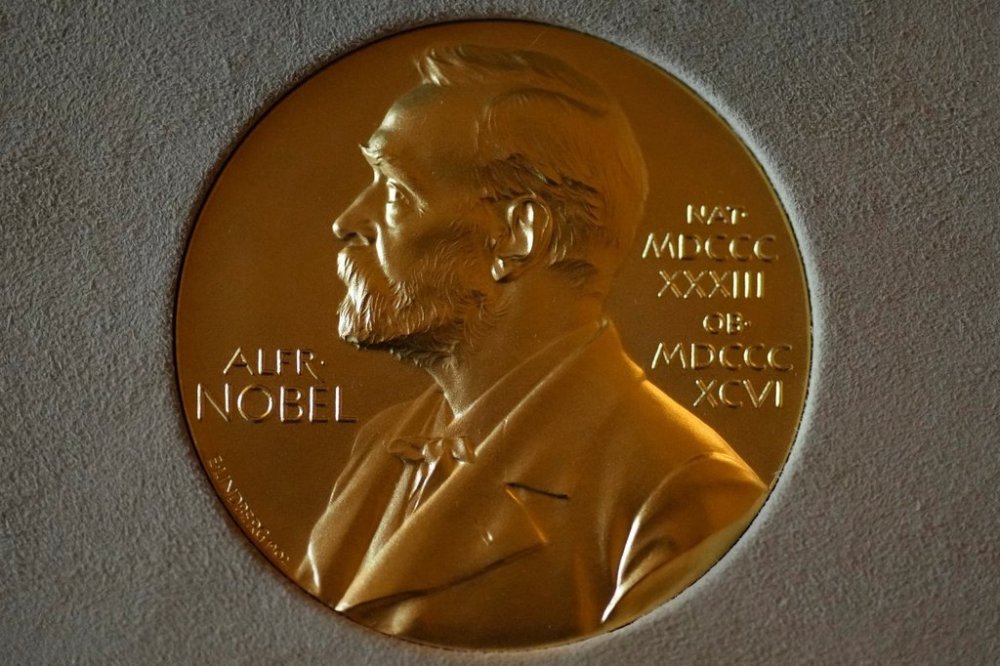
All but the Nobel Peace Prize, which was announced on Friday in the Norwegian capital, Oslo, are announced in Stockholm. The award ceremonies will be held on Dec. 10, the anniversary of the death of Alfred Nobel, who founded the prizes.
Here are this year’s winners:
Medicine
On Oct. 6, the Nobel Prize in medicine was awarded to three scientists for their work on the immune system.
Mary E. Brunkow, Fred Ramsdell and Dr. Shimon Sakaguchi uncovered a key pathway the body uses to keep the immune system in check, viewed as critical to understanding autoimmune diseases such as Type 1 diabetes, rheumatoid arthritis and lupus.
In separate projects, the trio identified the importance of what are now called regulatory T cells. Scientists are using those findings in a variety of ways: to discover better treatments for autoimmune diseases, to improve organ transplant success and to enhance the body’s own fight against cancer, among others.
Brunkow, 64, is now a senior program manager at the Institute for Systems Biology in Seattle. Ramsdell, 64, is a scientific adviser for San Francisco-based Sonoma Biotherapeutics. Sakaguchi, 74, is a distinguished professor at the Immunology Frontier Research Center at Osaka University in Japan.
Physics
On Oct. 7, the Nobel Prize in physics was awarded to another trio of scientists for their research on the “weirdness” of subatomic particles called quantum tunneling. That has enabled the ultrasensitive measurements achieved by MRI machines and laid the groundwork for better cellphones and faster computers.
The work by John Clarke, Michel H. Devoret and John M. Martinis took the seeming contradictions of the subatomic world — where light can be both a wave and a particle, and parts of atoms can tunnel through seemingly impenetrable barriers — and applied them in the more traditional physics of digital devices. The results of their findings are just starting to appear in advanced technology and could pave the way for the development of supercharged computing.
Clarke, 83, conducted his research at the University of California, Berkeley; Martinis, 67, at the University of California, Santa Barbara; and Devoret, 72, is at Yale and also at the University of California, Santa Barbara. Clarke spearheaded the project.
Chemistry
On Oct. 8, another scientific trio won the Nobel Prize in chemistry for their development of new molecular structures that can trap vast quantities of gas inside. Experts say the work lays the groundwork to potentially suck greenhouse gases out of the atmosphere or harvest moisture from desert environments.
Experts say the work of Susumu Kitagawa, Richard Robson and Omar M. Yaghi “may contribute to solving some of humankind’s greatest challenges.”
Kitagawa, 74, is with Japan’s Kyoto University, while Robson, 88, is affiliated with the University of Melbourne in Australia. Yaghi, 60, is with the University of California, Berkeley.
Literature
On Oct. 9, Hungarian writer László Krasznahorkai won the Nobel Prize in literature for work the judges said upholds the power of art in the midst of “apocalyptic terror.” His surreal and anarchic novels combine a bleak world view with mordant humor.
Krasznahorkai, 71, has written more than 20 books, including “The Melancholy of Resistance,” a surreal, disturbing tale involving a traveling circus and a stuffed whale, and “Baron Wenckheim’s Homecoming,” the sprawling saga of a gambling-addicted aristocrat.
Krasznahorkai has been a vocal critic of autocratic Hungarian Prime Minister Viktor Orbán, especially his government’s lack of support for Ukraine after Russia launched an all-out war.
Peace
On Oct. 10, María Corina Machado of Venezuela won the Nobel Peace Prize, and was lauded for being a “key, unifying figure in a political opposition that was once deeply divided.”
Machado, who turned 58 this week, was set to run against President Nicolás Maduro in last year’s presidential election, but the government disqualified her. The lead-up to the election saw widespread repression, including disqualifications, arrests and human rights violations. Maduro’s government has routinely targeted its real or perceived opponents.
Machado went into hiding and hasn’t been seen in public since January, and as a result it’s unclear whether she will attend the awards ceremony in Stockholm in December.
Machado becomes the 20th woman to win the Nobel Peace Prize, of the 112 individuals who have been honored.
Economics
On Oct. 13, Joel Mokyr, Philippe Aghion and Peter Howitt won the Nobel memorial prize in economics. They were honored for their research into the impact of innovation on economic growth and how new technologies replace older ones, a key economic concept known as “creative destruction.”
The winners represent contrasting but complementary approaches to economics. Mokyr is an economic historian who delved into long-term trends using historical sources, while Howitt and Aghion relied on mathematics to explain how creative destruction works.
Dutch-born Mokyr, 79, is from Northwestern University; Aghion, 69, from the Collège de France and the London School of Economics; and Canadian-born Howitt, 79, from Brown University.

Advertisement Advertise With Us
Advertisement Advertise With Us