

‘It frustrates me:’ Kenney says new coronavirus stifling oil and gas economy
Advertisement
Read this article for free:
or
Already have an account? Log in here »
To continue reading, please subscribe:
Digital Subscription
One year of digital access for only $75*
- Enjoy unlimited reading on winnipegfreepress.com
- Read the E-Edition, our digital replica newspaper
- Access News Break, our award-winning app
- Play interactive puzzles
*Billed as $5.77 plus GST every four weeks. After 52 weeks, price increases to the regular rate of $19.95 plus GST every four weeks. Offer available to new and qualified returning subscribers only. Cancel any time.
Monthly Digital Subscription
$4.99/week*
- Enjoy unlimited reading on winnipegfreepress.com
- Read the E-Edition, our digital replica newspaper
- Access News Break, our award-winning app
- Play interactive puzzles
*Billed as $19.95 plus GST every four weeks. Cancel any time.
To continue reading, please subscribe:
Add Free Press access to your Brandon Sun subscription for only an additional
$1 for the first 4 weeks*
- Enjoy unlimited reading on winnipegfreepress.com
- Read the E-Edition, our digital replica newspaper
- Access News Break, our award-winning app
- Play interactive puzzles
*Your next Brandon Sun subscription payment will increase by $1.00 and you will be charged $17.95 plus GST for four weeks. After four weeks, your payment will increase to $24.95 plus GST every four weeks.
Read unlimited articles for free today:
or
Already have an account? Log in here »
Hey there, time traveller!
This article was published 02/03/2020 (2418 days ago), so information in it may no longer be current.
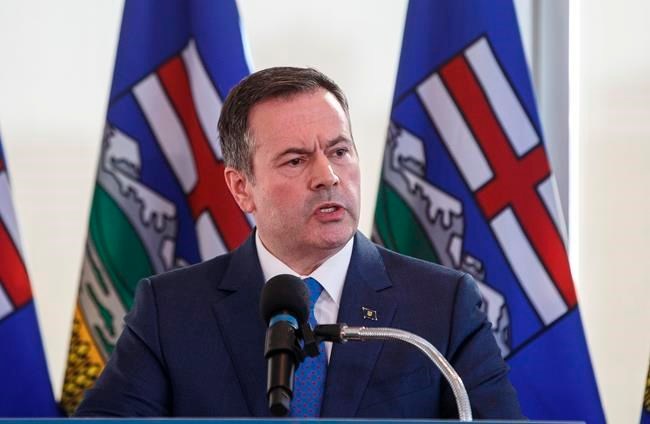
EDMONTON – Alberta Premier Jason Kenney says it’s going to be a bumpy ride as oil prices fall due to reduced demand tied to the novel coronavirus outbreak.
“I won’t hide it: it frustrates me that I think we’re doing everything that we reasonably can to get this economy moving again. And yet we’re being sideswiped by global events that are beyond our control,” Kenney said Monday.
Alberta must keep leveraging the benefits of its well-educated and young workforce, along with its low-tax environment, while it waits for new pipeline projects to come online, he said.
The province is in a better position to weather low prices, because oil companies in the province have used lean times to find ways to reduce operating costs over the last five years, Kenney added.
“They’ve made lemonade out of the lemons of the 2015 downturn,” he said.
“We may be in for a bumpy ride as a result of the coronavirus, but that is a global situation. It’s not specific to Alberta, and we still have all of these amazing advantages.”
Spread of the novel coronavirus, also known as COVID-19, has resulted in a downturn in the global economy, including oil prices. Alberta’s budget, introduced last week, is banking on the West Texas Intermediate benchmark for oil at $US58 a barrel, but it has been hovering of late below $50.
Kenney promised voters in last spring’s election that his United Conservative government would bring back jobs. But since last June, 50,000 full-time jobs have been lost and unemployment is about seven per cent.
Kenney’s government has promised a recommitment to job creation, and on Monday, Kenney and Energy Minister Sonya Savage announced a $100-million loan to the Orphan Well Association to clean up more abandoned sites. They say it will create a projected 500 direct and spin-off jobs.
The premier has promised to eradicate Alberta’s $6.8-billion deficit by 2023, in part by keeping spending costs in line. The Opposition NDP says the province is compromising front-line services by cutting staff in health, education and elsewhere.
Also Monday, the Northern Alberta Institute of Technology announced it is offering voluntary buyout deals for up to 240 staff, or about nine per cent of its workforce. Last week, the Southern Alberta Institute of Technology announced 230 positions will be eliminated, some by not filling existing vacancies.
NDP Advanced Education critic David Eggen said the cuts put the lie to Kenney’s promise to grow the economy through an educated workforce.
This report by The Canadian Press was first published March 2, 2020
Related Articles
Federal help coming for local COVID-19 fights: PM
Advertisement Advertise With Us