

The culinary art of cultural cuisine
Red River course focuses on Indigenous cooking techniques, ingredients

Advertisement
Read this article for free:
or
Already have an account? Log in here »
To continue reading, please subscribe:
Digital Subscription
One year of digital access for only $75*
- Enjoy unlimited reading on winnipegfreepress.com
- Read the E-Edition, our digital replica newspaper
- Access News Break, our award-winning app
- Play interactive puzzles
*Billed as $5.77 plus GST every four weeks. After 52 weeks, price increases to the regular rate of $19.95 plus GST every four weeks. Offer available to new and qualified returning subscribers only. Cancel any time.
Monthly Digital Subscription
$4.99/week*
- Enjoy unlimited reading on winnipegfreepress.com
- Read the E-Edition, our digital replica newspaper
- Access News Break, our award-winning app
- Play interactive puzzles
*Billed as $19.95 plus GST every four weeks. Cancel any time.
To continue reading, please subscribe:
Add Free Press access to your Brandon Sun subscription for only an additional
$1 for the first 4 weeks*
- Enjoy unlimited reading on winnipegfreepress.com
- Read the E-Edition, our digital replica newspaper
- Access News Break, our award-winning app
- Play interactive puzzles
*Your next Brandon Sun subscription payment will increase by $1.00 and you will be charged $17.95 plus GST for four weeks. After four weeks, your payment will increase to $24.95 plus GST every four weeks.
Read unlimited articles for free today:
or
Already have an account? Log in here »
Hey there, time traveller!
This article was published 26/03/2025 (557 days ago), so information in it may no longer be current.
With the lunch rush over, the kitchen takes a collective sigh of relief. Jokes are cracked while the flattop is scraped clean and smiles float around the room as prep stations are tidied for the next day’s service.
Gabriel Nanacowop, who had some nerves about overseeing Wiisinin Diner as chef-of-the-day, is feeling particularly satisfied.
“It was good, fast-paced,” says Nanacowop, one of 11 students enrolled in Red River College Polytechnic’s Indigenous Culinary Skills program.
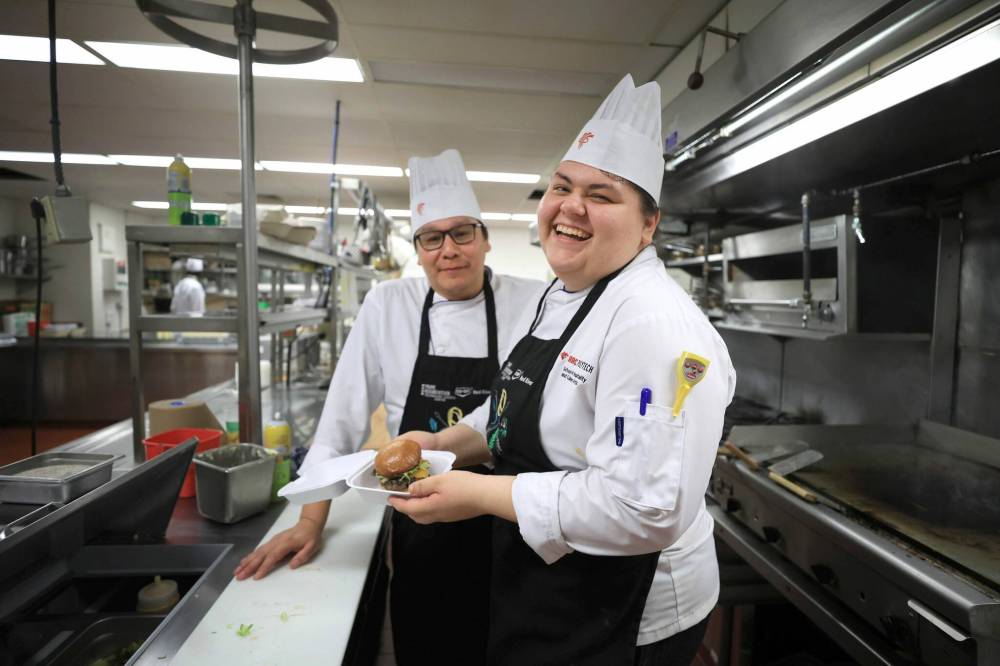
Ruth Bonneville / Free Pres
Gabriel Nanacowop (left) and Kendrah Sinclair finish preparing lunch with their classmates for guests at Wiisinin Diner.
Red River has been offering the yearlong certificate program for nearly a decade. In it, Indigenous students are given a crash course on food preparation, kitchen safety and business basics, with a focus on cultural ingredients and cooking techniques.
The Wiisinin Diner — the name means “to eat” in Ojibwa — is an annual opportunity for the students to put everything they’ve learned to the test before heading off on work placements.
Each pupil rotates through the various kitchen and dining room positions, from acting as sous chef to serving customers.
The pop-up restaurant at the college’s Notre Dame campus is open to the public for breakfast and lunch Tuesdays through Fridays until April 25. Its springtime opening is an anticipated event.
“I’m amazed how busy we’ve become. We get a lot of loyal customers over the years, staff and students alike, so we’re continuing to grow,” says chef Joseph Alex, a program instructor for the last eight years.
Last Thursday, the team blew past its sales estimate. In his daily debrief, Alex lauded the students on their teamwork, communication, speed and food quality.
A lot has changed since the first class in September — and not just in the group’s cooking and baking abilities.
“They don’t really talk a lot in the beginning and throughout the year, when they realize we’re all part of the same kind of family or community, then they start opening up a lot,” says Alex, 44, adding the program has been an important part of his own growth.
His mother, a survivor of the ’60s Scoop, was adopted by a Mennonite family and Alex grew up in southern Manitoba without much exposure to his heritage. He started working in restaurant kitchens as a teenager and graduated from culinary school in his 30s — all the while taking note of the industry’s demographics.
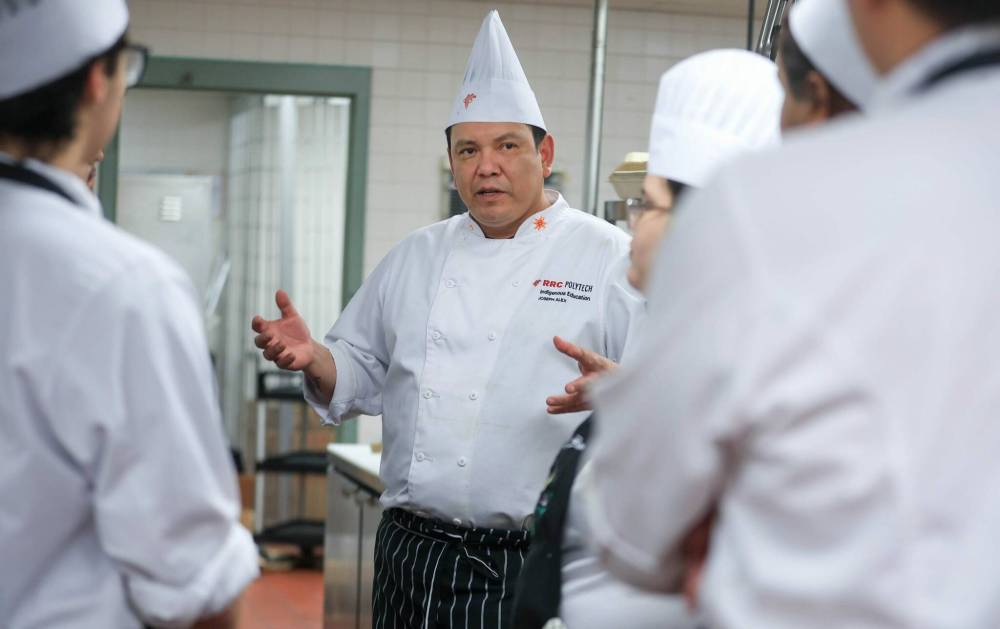
Ruth Bonneville / Free Press
Instructor Joseph Alex always wanted to teach younger Indigenous people to cook.
“There wasn’t a lot of Indigenous representation in the kitchens. I’ve always wanted to teach younger Indigenous people to be chefs,” Alex says.
The Wiisinin menu includes a fusion of contemporary comfort food and traditional ingredients, such as wild rice pancakes; a three sisters salad made with squash, beans and corn; a bannock taco; and poutine topped with bison chili.
Students also practice open-fire cooking and learn about the ways colonization and modern convenience foods have contributed to disproportionately high rates of diabetes in Indigenous communities.
For Alex, teaching has been a gateway to better understanding his own ancestry.
“Sometimes I feel like students have lost their identity. They’re not sure about some of these ingredients or the techniques that our ancestors are more familiar with. It’s not only to teach them about it, but it’s also a journey for me as well to learn about all this,” he says.
Nanacowop, 45, has always wanted to be a chef. Hailing from Lake St. Martin First Nation, he learned the basics by following along with chef Stephen Yan’s long-running CBC cooking show, Wok with Yan.
“Cooking has always been in my heart. In my family, I’m the cook,” he says.
A lifelong learner and the self-described veteran of his cohort, Nanacowop is looking forward to adding the culinary skills program to his growing collection of Red River certificates.
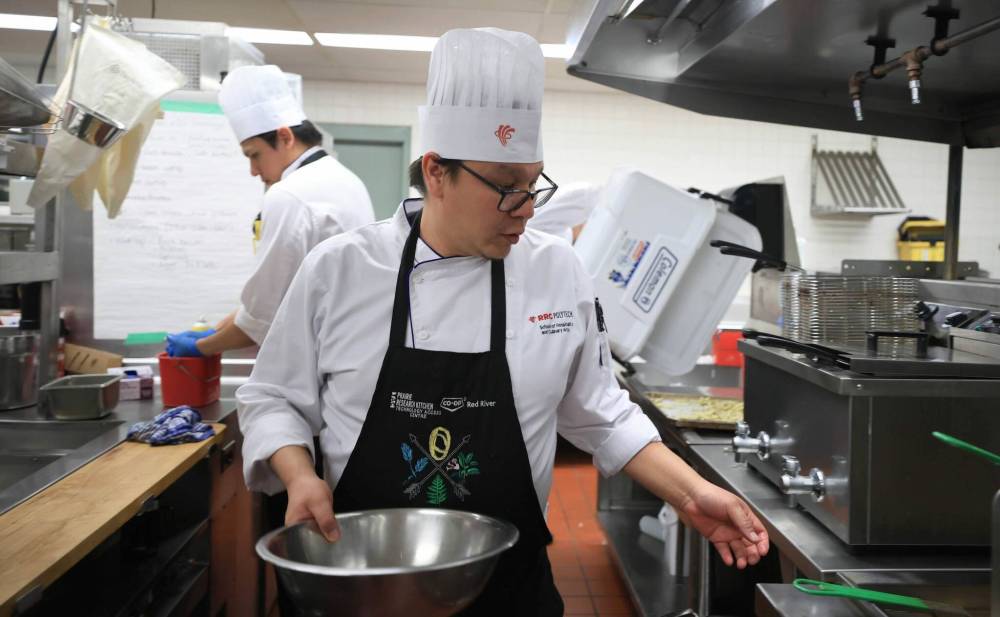
Ruth Bonneville / Free Press
Gabriel Nanacowop is one of 11 students enrolled in Red River College Polytech’s Indigenous Culinary Skills program.
“I was always told that no one in my family would ever accomplish college life and I’m the first one to ever do that — it feels great,” he says.
In addition to figuring out how to make emulsions and perfecting his seasoning game, Nanacowop enjoys sharing what he’s learned with visiting First Nation school groups.
“I love that because these young people are the next generation that will come here after we’re gone,” he says.
Kendrah Sinclair, 18, didn’t know what she wanted to do after graduating high school.
“I didn’t really have a passion for anything, but I knew I liked to cook because of my grandma. I never knew how it felt to be inspired before I came here,” she says.
Growing up with her grandparents in Peguis First Nation, Sinclair spent a lot of time in the kitchen helping her grandma make spaghetti, bannock and cookies.
Over the last six months of physically demanding schoolwork and challenging exams, nightly phone calls with her “immensely proud” grandma have kept her going.
The connections with her classmates have also helped ease the transition to living in the city full time — a common situation for students coming from smaller, rural and remote communities.
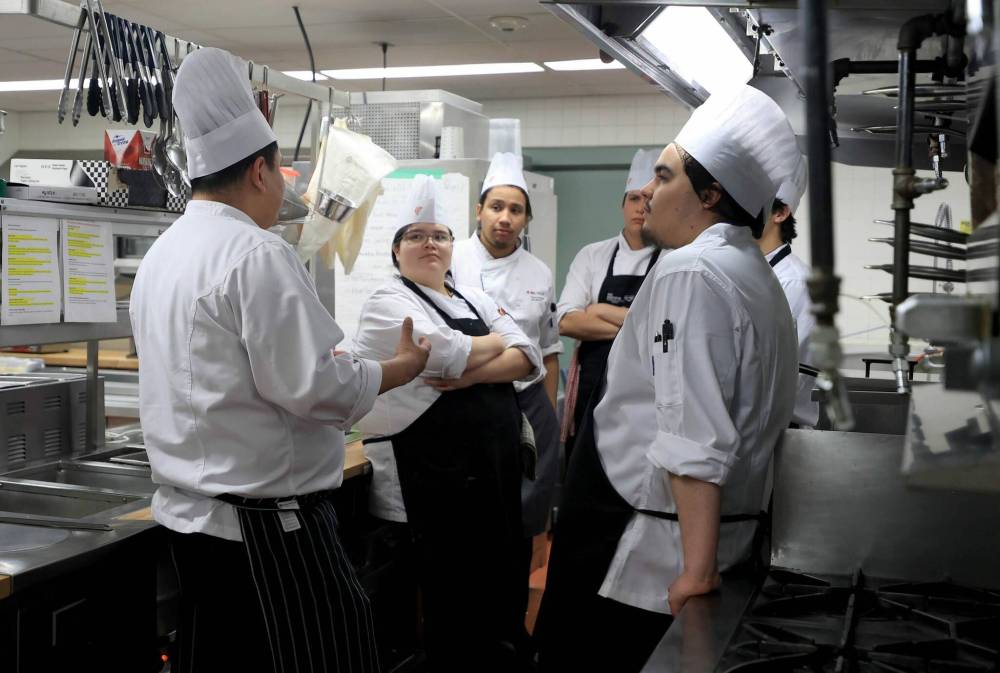
Ruth Bonneville / Free Press
Instructor chef Joseph Alex (left) holds a debriefing session following the lunch rush at the Wiisinin Diner.
“It’s nice to be in class here, because we’re all so close and we all talk to each other,” Sinclair says.
When she graduates in a few months armed with stellar knife skills, Sinclair hopes to find work and mentorship in an Indigenous-led kitchen. First Nation cuisine and representation has become more prevalent in Winnipeg over the last decade as more Indigenous chefs make their mark on the local restaurant scene.
“People are like, ‘Oh you want to be like (celebrity chef) Gordon Ramsay?’ And I’m like, ‘No, I want to be like Jennifer Ballantyne,’” Sinclair says, referring to the executive chef of Manoomin Restaurant in the Wyndham Garden Hotel.
“She’s her own self, she has her own kitchen and the food she produces out of there is just amazing.”
eva.wasney@winnipegfreepress.com
Eva Wasney has been a reporter with the Free Press Arts & Life department since 2019. Read more about Eva.
Every piece of reporting Eva produces is reviewed by an editing team before it is posted online or published in print — part of the Free Press‘s tradition, since 1872, of producing reliable independent journalism. Read more about Free Press’s history and mandate, and learn how our newsroom operates.
Our newsroom depends on a growing audience of readers to power our journalism. If you are not a paid reader, please consider becoming a subscriber.
Our newsroom depends on its audience of readers to power our journalism. Thank you for your support.
Wiisinin Diner
Red River College Polytechnic, 2055 Notre Dame Ave.
• Now until April 25
• The diner is located in the Prairie Lights Dining Room and is open Tuesdays through Fridays. Breakfast service runs from 9 to 10:30 a.m.; all menu items are $8. Lunch service runs from 11:30 a.m. to 1:30 p.m.; menu items are $12 with an Indigenous-inspired buffet available Fridays are $16 per plate. Visit rrc.ca for more information.
Eva Wasney has been a reporter with the Free Press Arts & Life department since 2019. Read more about Eva.
Every piece of reporting Eva produces is reviewed by an editing team before it is posted online or published in print — part of the Free Press‘s tradition, since 1872, of producing reliable independent journalism. Read more about Free Press’s history and mandate, and learn how our newsroom operates.
Our newsroom depends on a growing audience of readers to power our journalism. If you are not a paid reader, please consider becoming a subscriber.
Our newsroom depends on its audience of readers to power our journalism. Thank you for your support.
Advertisement Advertise With Us
Advertisement Advertise With Us