

Artist behind banned Ukrainian Olympic helmet calls tribute ‘great heroism’
Advertisement
Read this article for free:
or
Already have an account? Log in here »
To continue reading, please subscribe:
Digital Subscription
One year of digital access for only $75*
- Enjoy unlimited reading on winnipegfreepress.com
- Read the E-Edition, our digital replica newspaper
- Access News Break, our award-winning app
- Play interactive puzzles
*Billed as $5.77 plus GST every four weeks. After 52 weeks, price increases to the regular rate of $19.95 plus GST every four weeks. Offer available to new and qualified returning subscribers only. Cancel any time.
Monthly Digital Subscription
$4.99/week*
- Enjoy unlimited reading on winnipegfreepress.com
- Read the E-Edition, our digital replica newspaper
- Access News Break, our award-winning app
- Play interactive puzzles
*Billed as $19.95 plus GST every four weeks. Cancel any time.
To continue reading, please subscribe:
Add Free Press access to your Brandon Sun subscription for only an additional
$1 for the first 4 weeks*
- Enjoy unlimited reading on winnipegfreepress.com
- Read the E-Edition, our digital replica newspaper
- Access News Break, our award-winning app
- Play interactive puzzles
*Your next Brandon Sun subscription payment will increase by $1.00 and you will be charged $17.95 plus GST for four weeks. After four weeks, your payment will increase to $24.95 plus GST every four weeks.
Read unlimited articles for free today:
or
Already have an account? Log in here »
Hey there, time traveller!
This article was published 12/02/2026 (232 days ago), so information in it may no longer be current.
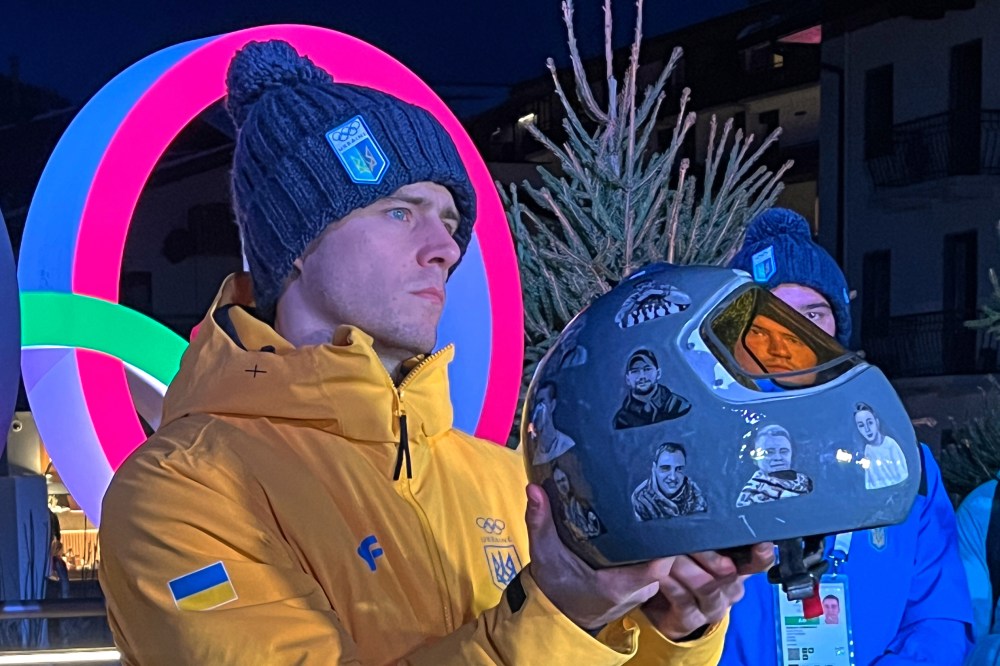
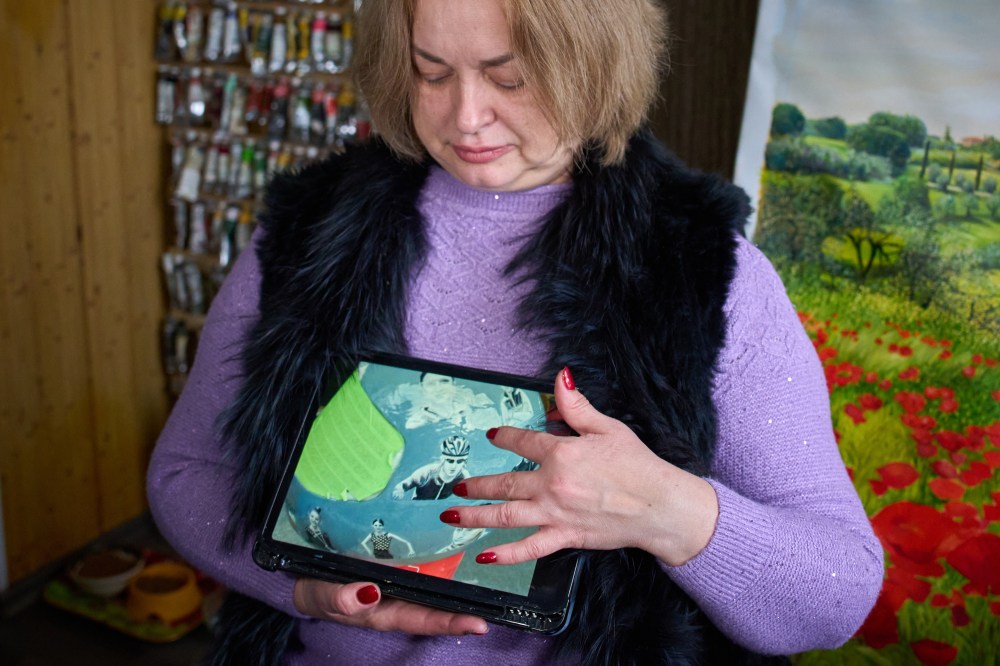
KYIV, Ukraine (AP) — The artist who painted a controversial helmet that got Ukrainian skeleton racer Vladyslav Heraskevych banned from the Milan Cortina Winter Olympics said his refusal to stop wearing the helmet was “a great act of heroism.”
Artist Iryna Prots meticulously painted upon Heraskevych’s helmet portraits of over 20 Ukrainian athletes and coaches killed since Russia launched its full-scale invasion in 2022. The helmet drew international attention after the IOC said it violated rules banning political messages. Heraskevych’s insistence on wearing it anyway got him barred.
“He could have refused, he could have said, ‘Fine, I’ll wear another helmet and fight for a medal,’” Prots, 52, told The Associated Press inside her home in Kyiv. “He didn’t do that. To stand up for his truth — that is great heroism.”
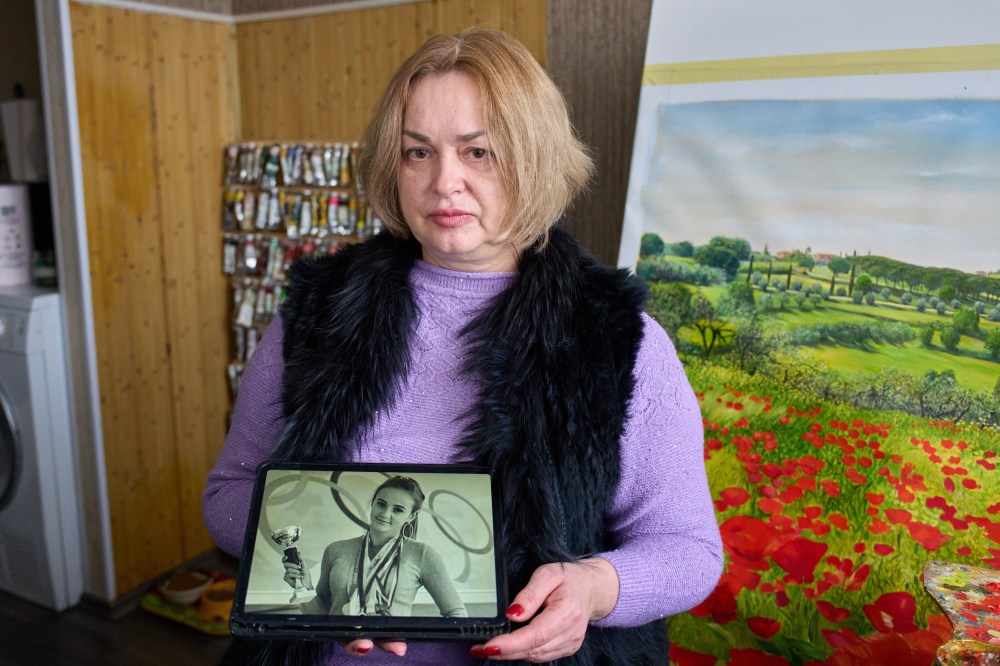
Heraskevych came up with the idea for the helmet design and his father, a longtime friend of Prots, asked her to paint it.
“It had to be done, and it had to be finished in time,” Prots said. “These were athletes who could have been standing there at the Olympics, but they are no longer here.”
The project marked a sharp departure from Prots’ usual work: Tuscan landscapes that are regularly exhibited in a small gallery in the Italian town of Montepulciano.
She travels to Italy several times a year and said those visits shaped her belief that many Europeans remain poorly informed about the realities of the war in Ukraine.
“I understand that when a war is somewhere far away, people get used to it,” she said. “They have their own lives. But we are fighting every day. Fighting to survive.”
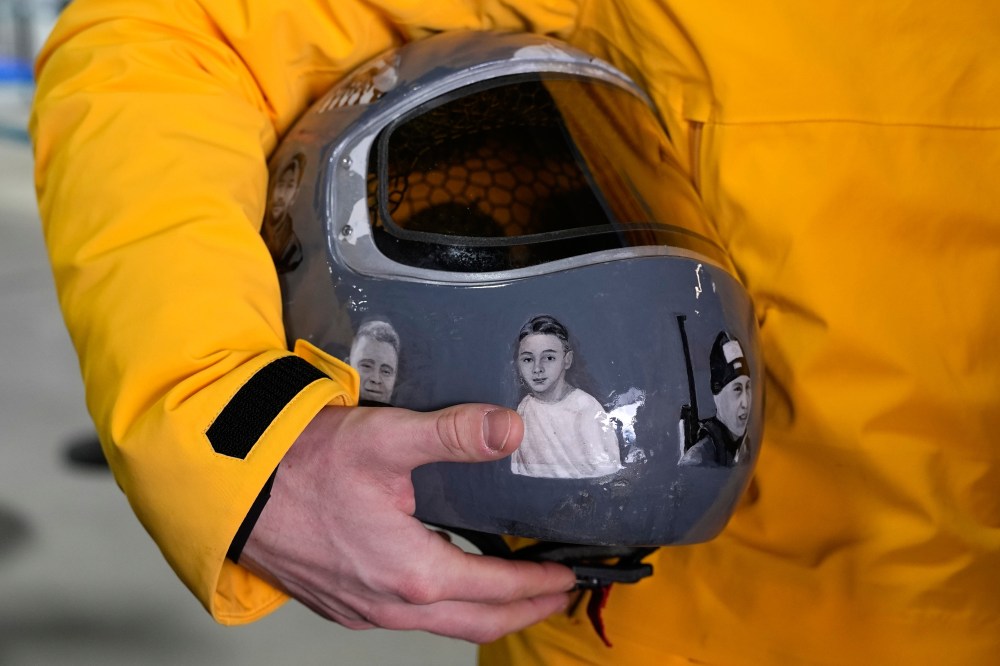
Working from photographs of the fallen athletes and coaches, Prots said the emotional weight of the task was immediate.
“This is pain — pain for our country,” she said. “For the fact that we lost Olympic champions, essentially, and coaches who were raising this generation of Olympic champions.”
Prots said she believes the stories of the athletes depicted on the helmet deserve to be known globally, especially as international sporting events continue with the war still ongoing.
“The Olympics are supposed to symbolize peace,” she said. “But today it’s hard for me to understand how there is celebration, anthems, dancing and singing, while we live under air raid sirens and bombs.”
Despite constant Russian air attacks on Ukraine’s capital, Prots said she will continue to paint.
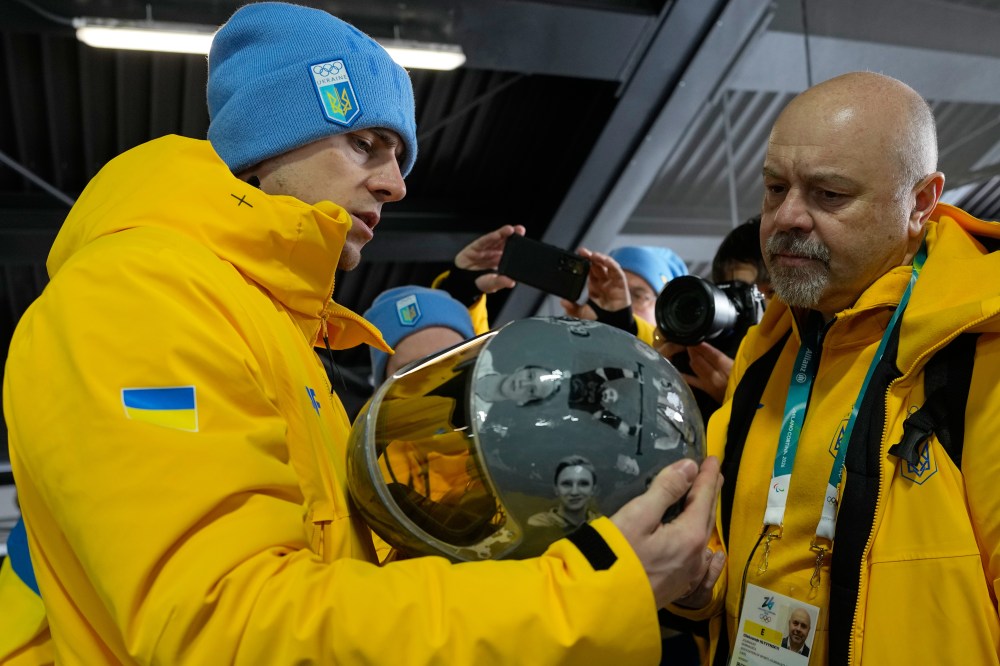
“I keep painting beauty and nature,” she said. “It’s a form of resistance of my soul — believing that peace will return and that birds will sing in the fields again, not sirens.” ___
AP journalist Dmytro Zhyhinas contributed to this report.
Related Articles
Janine Flock grabs a tense midway lead in women's skeleton, chasing elusive Olympic gold






Advertisement Advertise With Us
Advertisement Advertise With Us