

Many parts to fighting addictions crisis
Advertisement
Read this article for free:
or
Already have an account? Log in here »
To continue reading, please subscribe:
Digital Subscription
One year of digital access for only $75*
- Enjoy unlimited reading on winnipegfreepress.com
- Read the E-Edition, our digital replica newspaper
- Access News Break, our award-winning app
- Play interactive puzzles
*Billed as $5.77 plus GST every four weeks. After 52 weeks, price increases to the regular rate of $19.95 plus GST every four weeks. Offer available to new and qualified returning subscribers only. Cancel any time.
Monthly Digital Subscription
$4.99/week*
- Enjoy unlimited reading on winnipegfreepress.com
- Read the E-Edition, our digital replica newspaper
- Access News Break, our award-winning app
- Play interactive puzzles
*Billed as $19.95 plus GST every four weeks. Cancel any time.
To continue reading, please subscribe:
Add Free Press access to your Brandon Sun subscription for only an additional
$1 for the first 4 weeks*
- Enjoy unlimited reading on winnipegfreepress.com
- Read the E-Edition, our digital replica newspaper
- Access News Break, our award-winning app
- Play interactive puzzles
*Your next Brandon Sun subscription payment will increase by $1.00 and you will be charged $17.95 plus GST for four weeks. After four weeks, your payment will increase to $24.95 plus GST every four weeks.
Read unlimited articles for free today:
or
Already have an account? Log in here »
Hey there, time traveller!
This article was published 17/05/2025 (519 days ago), so information in it may no longer be current.
The evidence of Winnipeg’s ongoing addictions crisis is all around — so you may want to watch your step.
The Free Press reported earlier this week that city staff had removed 944 used needles from downtown parks, along with more than 200 pipes, 28 bags with drugs or traces of drugs, and needle-disposal kits, between April 22 and May 1.
A city project to send staffers to clean up such dangerous debris from “high risk” parks will run until October.
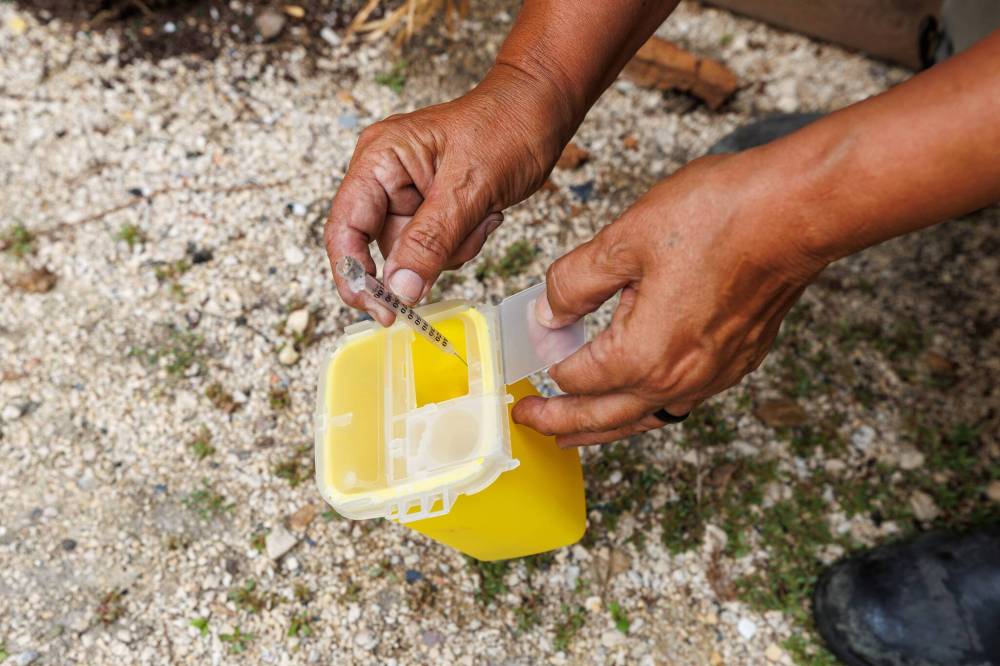
MIKE DEAL/WINNIPEG FREE PRESS
Discarded needles
It’s a solid bit of civil service, for the city to take responsibility for removing used drug paraphernalia — particularly the needles, which pose a huge risk to those visiting the park. Winnipeggers owe their thanks to the workers taking on this unsavoury task.
However, we should hope that soon such an exhaustive effort is not necessary in the near future. As Mayor Scott Gillingham correctly noted, the detritus littering city parks is only a byproduct of the city’s drug crisis, and dealing with that crisis must be a priority.
Supervised consumption sites, including one currently and controversially proposed for the Point Douglas neighbourhood, will be part of the solution. Giving drug users a safe place to consume their supply — and leave behind spent materials for safe disposal — means less of it ends up in the grass at the local park. Levi Foy, executive director of Sunshine House, told the Free Press it is also the case that drug users will seek out other public spaces, such as libraries, for these activities for want of a supervised consumption site.
The need to get a handle on the addictions crisis is great: according to the city’s website, the Winnipeg Fire Paramedic Service responds to 10,000 service calls related to substance use per year. Last year, 570 Manitobans died over suspected drug-related causes last year, the highest number ever recorded in the province. These deaths are attributed in part to a toxic drug supply, something a supervised consumption site — which can check drugs to see if they have been tampered with — will also help to address.
But it will take more than just going down the SCS route.
There are also non-governmental solutions, such as the work of advocacy and non-profit groups which go out of their way to help with the cleanup, and provide services to those in the grip of addictions. They deserve, and crucially need, support for the work they do.
The city and province should both lend an ear, and useful dollars, to their cause.
As ever, dealing with the problem for good comes down to the long, tiring work of addressing the root causes of this crisis.
A provincial strategy to address homeless and relocate individuals from risky encampment living is making progress, albeit more slowly than once expected. Stable solutions on the poverty and housing fronts will be key to addressing the addictions crisis, but those are complex problems in need of comprehensive solutions, none of which will be found overnight, or even by year’s end.
In the meantime, civic authorities and good Samaritans will have to do their best to ensure a safe environment for everyone. While the city waits for supervised sites to come online, cleanup efforts like the one at downtown parks are important for giving us peace of mind on that front.
City council approved $60,000 for this seasonal work to be done. It will require more funding if the project is to be extended into the winter.
Based on results so far, it seems well worth the money.

Advertisement Advertise With Us
Advertisement Advertise With Us