
Non-profits decry province’s lack of consultation ahead of homeless strategy launch, underwhelming start
Read this article for free:
or
Already have an account? Log in here »
To continue reading, please subscribe:
Digital Subscription
One year of digital access for only $75*
- Enjoy unlimited reading on winnipegfreepress.com
- Read the E-Edition, our digital replica newspaper
- Access News Break, our award-winning app
- Play interactive puzzles
*Billed as $5.77 plus GST every four weeks. After 52 weeks, price increases to the regular rate of $19.95 plus GST every four weeks. Offer available to new and qualified returning subscribers only. Cancel any time.
Monthly Digital Subscription
$4.99/week*
- Enjoy unlimited reading on winnipegfreepress.com
- Read the E-Edition, our digital replica newspaper
- Access News Break, our award-winning app
- Play interactive puzzles
*Billed as $19.95 plus GST every four weeks. Cancel any time.
To continue reading, please subscribe:
Add Free Press access to your Brandon Sun subscription for only an additional
$1 for the first 4 weeks*
- Enjoy unlimited reading on winnipegfreepress.com
- Read the E-Edition, our digital replica newspaper
- Access News Break, our award-winning app
- Play interactive puzzles
*Your next Brandon Sun subscription payment will increase by $1.00 and you will be charged $17.95 plus GST for four weeks. After four weeks, your payment will increase to $24.95 plus GST every four weeks.
Read unlimited articles for free today:
or
Already have an account? Log in here »
Hey there, time traveller!
This article was published 03/03/2025 (603 days ago), so information in it may no longer be current.
The Kinew government is facing criticism for not consulting enough with non-profit homeless groups on its new strategy to empty encampments — which moved just one person during the program’s first month.
“Community organizations are doing that work every day,” Right to Housing Coalition member Shauna MacKinnon told the Free Press.
“It just isn’t sustainable because they don’t have the right housing, nor sufficient supports for people,” the University of Winnipeg urban and inner-city studies department chair said.
“There hasn’t been any real detail put to that plan and, if there has been, it hasn’t been shared with us. It all seems very top-down.”–Marion Willis
At a mid-January press conference, Premier Wab Kinew unveiled a plan to end chronic homelessness within two terms of government. He said it would begin in February, aiming to clear 300 people from Winnipeg encampments, one encampment at a time, with a 30-day window to move people into appropriate housing with needed supports.
JOHN WOODS / FREE PRESS FILES The premier’s homelessness strategy was to begin last month, aiming to clear 300 people from Winnipeg encampments.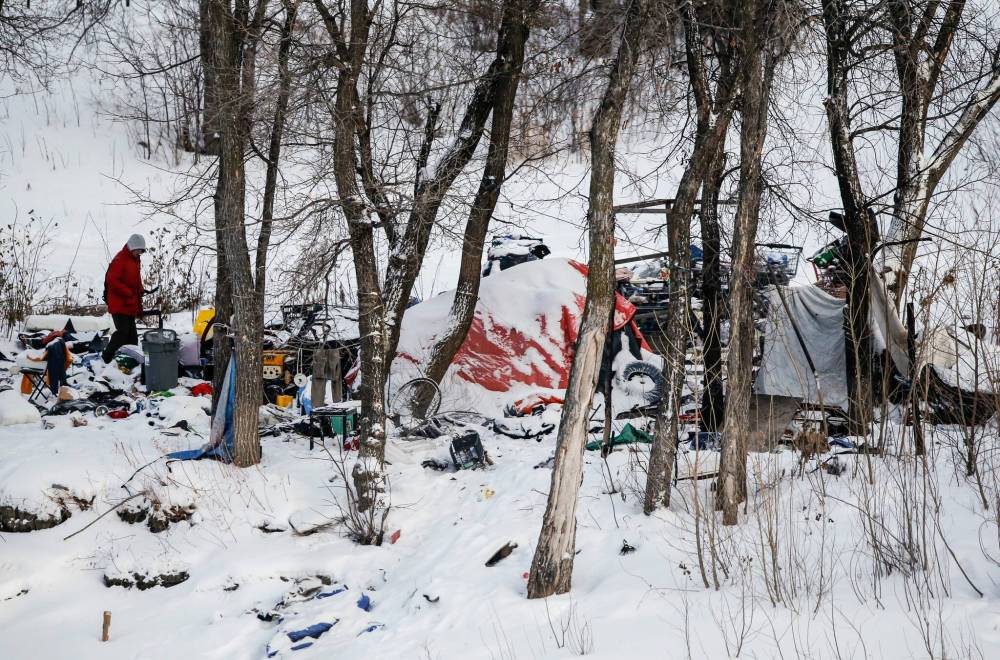
The premier appointed Tessa Blaikie Whitecloud — who left her job running Siloam Mission — to take the lead as his special adviser on homelessness.
Blaikie Whitecloud said as of last week, one encampment resident was successfully housed through the strategy.
“We’ve acknowledged from the beginning that it’s going to take time,” she said.
On Feb. 24, she hosted a meeting at Thunderbird House and asked non-profit organizations for input on supportive housing and what policies and procedures that contribute to homelessness the government should address.
Many in attendance were hoping for more information about the strategy but came away with more questions, said Lorie English, executive director of the West Central Women’s Resource Centre.
“It’s just frustrating for the sector that we have very little (information), and that this is now a retroactive consultation after they’ve already announced the strategy,” English said.
Blaikie Whitecloud said the meeting was an opportunity to consult with front-line organizations.

“What I really heard is that there is a bunch of brilliant people working in the sector with beautiful hearts and clear ideas on solutions,” she said. “I’m just so excited to continue to learn from them and develop a plan that brings in everything that they have to say and makes ending chronic homelessness in our mandate possible.”
One of the reasons the homelessness strategy “had to come together so quickly” was so the province could secure $7.5 million from the federal Unsheltered Homelessness and Encampments Initiative, she said.
“That’s going to help the rest of that $20 million that we’ve contributed go further,” she said. A federal government news release issued last week said it’s part of a two-year agreement with matching provincial funds to establish a 20- to 30-bed supportive-housing facility prioritizing people living in encampments.
The province had already announced $20 million over two years for its homelessness strategy.
Blaikie Whitecloud said she is still reviewing the input from her meeting with non-profit organizations.
“You need to address the addictions crisis, and then you’ll also end all this encampment living — it’s the same right across the country,” said Marion Willis of St. Boniface Street Links, which supports people with addiction, homelessness and mental-health challenges.
She said she left the meeting with unanswered questions.
“I really don’t know what it is exactly that they’re trying to do, because there hasn’t been any real detail put to that plan and, if there has been, it hasn’t been shared with us. It all seems very top-down,” Willis said.
MacKinnon said the current approach seems to be more of a PR strategy.
“The government needs to be more concerned about fleshing out its strategy” by collaborating with other departments and levels of government and “the people who are the ground doing their best with far too few resources,” she said.
JOHN WOODS / FREE PRESS FILES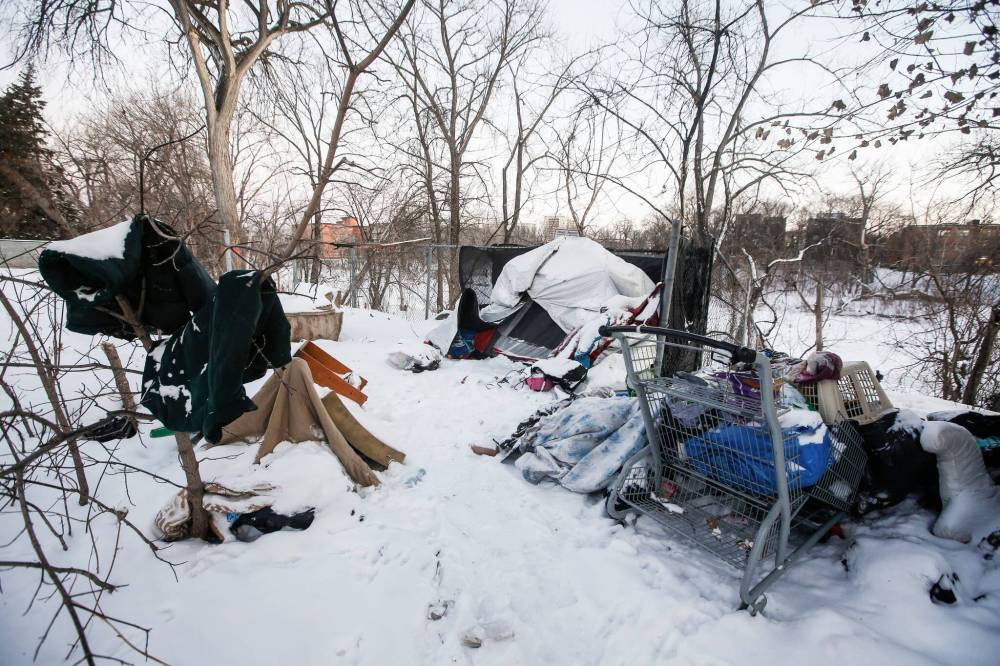
The plan to clear encampments arrives when numbers are expected to grow, as milder weather allows people to leave emergency shelters to stay outdoors.
“That happens every spring and is kind of like clockwork,” said Blaikie Whitecloud. “We are still going to be able to see encampments come down as those people get moved into appropriate housing,” she said. “We are going to have those housing units come online — also adjacent to spring — so we can start to support people in a good way.”
Blaikie Whitecloud wouldn’t say where the housing units are located. The province confirmed Monday 40 units will be coming online in March and April as part of the 300 units planned for Winnipeg.
The concern is there’s not enough supportive housing available for the strategy to succeed and meet public expectations, said English.
The West End resource centre helps women and gender-diverse people experiencing all types of homelessness — from couch surfing to encampments.
“The 300 units that they have planned to come online is nowhere near what will be needed to move folks within encampments, if that’s the goal,” said English, adding the strategy was released without a detailed plan for moving people and providing needed wraparound supports.
“The thing that worries me is that we’ve now put out this narrative publicly that encampments, once they’ve been identified, will be decommissioned,” she said.
“For the folks who don’t… work in our sector, what they hear is, ‘If there’s an encampment that’s troublesome to me, in 30 days that camp is gone.’ That’s not realistic, because we’re only doing one encampment at a time — we don’t even know yet if 30 days is a realistic timeline,” said English.
“(It has) set the sector up to look like we’re not doing our jobs, and they’ve set themselves up to look like they can’t live up to the commitment they’ve just made,” she said.
“Consultation needs to come first… before we make a public commitment that we actually can live up to.”
carol.sanders@freepress.mb.ca

Carol Sanders
Legislature reporter
Carol Sanders is a reporter at the Free Press legislature bureau. The former general assignment reporter and copy editor joined the paper in 1997. Read more about Carol.
Every piece of reporting Carol produces is reviewed by an editing team before it is posted online or published in print — part of the Free Press‘s tradition, since 1872, of producing reliable independent journalism. Read more about Free Press’s history and mandate, and learn how our newsroom operates.
Our newsroom depends on a growing audience of readers to power our journalism. If you are not a paid reader, please consider becoming a subscriber.
Our newsroom depends on its audience of readers to power our journalism. Thank you for your support.
Related Articles
Manitoba government moves first encampment resident into home as part of project





History
Updated on Monday, March 3, 2025 3:42 PM CST: Corrects spelling of Whitecloud
Updated on Monday, March 3, 2025 4:19 PM CST: Formatting
Updated on Monday, March 3, 2025 5:01 PM CST: Revises lede
Updated on Monday, March 3, 2025 5:25 PM CST: Updates after housing unit figures confirmed